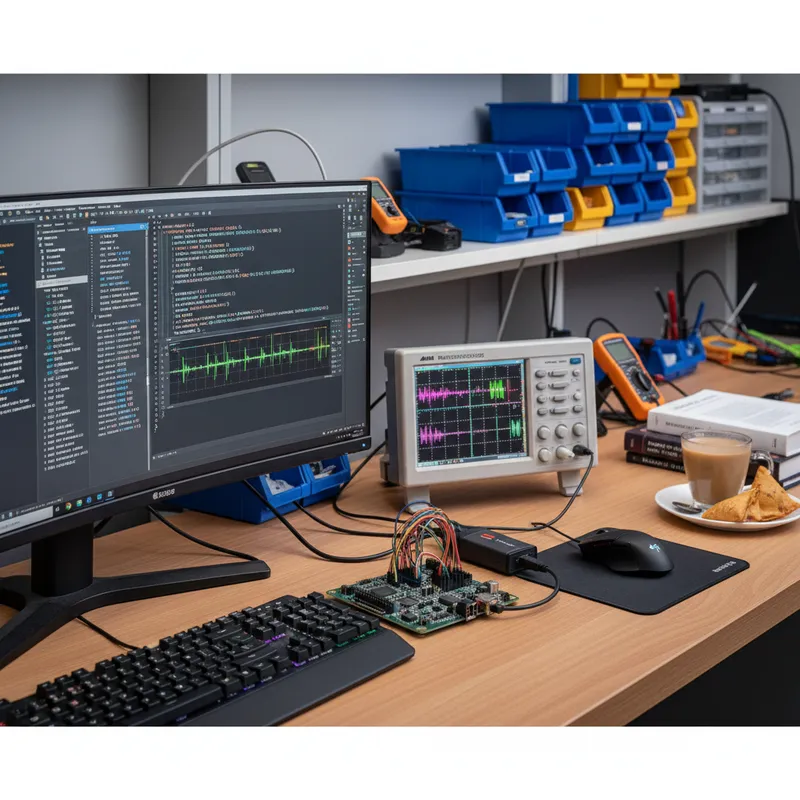
Embedded firmware development has a protocol sprawl problem. A typical sensor board might combine I2C temperature sensors, an SPI flash for configuration storage, a UART debug console, and a 1-Wire authentication IC, all on the same PCB. Debugging this board traditionally requires a dedicated tool for each bus: an I2C adapter for sensor register reads, an SPI programmer for flash operations, a USB-to-UART bridge for console output, and perhaps a logic analyzer to correlate timing across all of them.
That is four instruments, four sets of drivers, four software applications, and a tangle of cables competing for desk space.
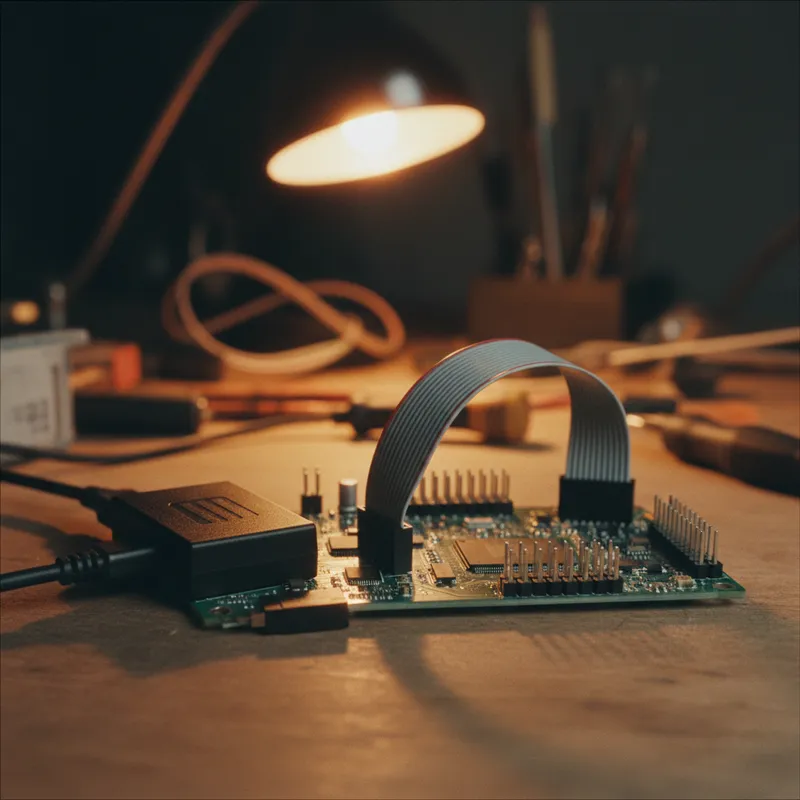
The Binho Nova addresses this directly. Binho lists its protocols as exactly I2C, SPI, UART and 1-Wire, with 5x shared GPIO pins, in a single USB host adapter. One instrument. One cable. One software environment.
Protocol Coverage That Matters
The Nova’s protocol support is not a checkbox exercise, the speeds and capabilities are practical for real embedded work.
I2C runs from standard mode (100 kHz) through fast mode (400 kHz), fast mode plus (1 MHz), and all the way to high-speed mode at 3.4 MHz. This range covers everything from legacy temperature sensors to high-bandwidth IMUs and PMICs that specify fast mode plus or higher. The Nova handles clock stretching and repeated start conditions correctly, a detail that matters when working with devices like fuel gauges and smart battery packs that use clock stretching extensively.
SPI operates up to 12 MHz with configurable polarity and phase (all four SPI modes). For firmware engineers programming SPI NOR flash, reading SPI-attached ADCs, or communicating with SPI display controllers, 12 MHz provides fast enough throughput for iterative development without the signal integrity demands of 50+ MHz operation.
UART reaches 1 Mbps, covering the vast majority of embedded debug consoles and sensor modules that communicate over serial. Engineers working with GPS modules, Bluetooth HCI interfaces, or custom UART peripherals can monitor and inject data without switching to a separate USB-to-serial adapter.
1-Wire rounds out the set, and it is the protocol most often missing when a team assembles a bench from single-purpose adapters. 1-Wire is what reads DS18B20 temperature sensors, DS28E-series authentication ICs, and iButton devices, all of which remain common in industrial and medical equipment. Having it on the same instrument as I2C and SPI removes the custom bit-bang workaround that otherwise appears in every project that touches one of these parts.
GPIO and Power
The Nova provides 5x GPIO pins, shared with the protocol pins rather than dedicated. On a bring-up bench those become target resets, chip selects, and rail enables, which is enough to make a debug sequence repeatable without hand-jumpering the board between runs.
The instrument itself is 3.3 V logic and, in Binho’s words, “5 V powered directly from USB, no separate supply needed”, over USB Type-C on a USB 2.0 Full Speed, 12 Mbps link. For a bench tool that lives permanently plugged into a laptop, not needing a second brick on the desk is a real convenience.
If your work needs dedicated GPIO, higher SPI clock rates, RS-485, or MIPI I3C, that is the boundary of the Nova and the point at which the Binho Pulsar or Binho Supernova becomes the right instrument. Our Nova vs Supernova vs Pulsar comparison sets all three against Binho’s published specifications.
Cross-Platform Software Ecosystem
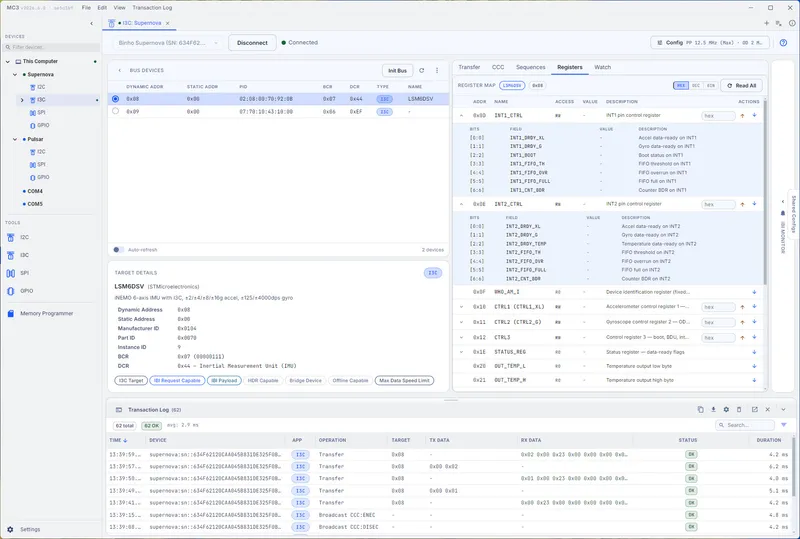
The Nova works on Windows, macOS, and Linux through a common software stack. The Mission Control GUI application provides interactive protocol transactions, sending I2C reads, SPI transfers, and UART data through a graphical interface that displays results in real time. For repeatable workflows, the Python SDK enables scripted operations: a single Python script can program an SPI flash, verify I2C sensor registers, and log UART output as part of a board-level bring-up sequence.
Scripts written for the Nova’s I2C and SPI interfaces are directly portable to the Binho Supernova and Binho Pulsar. This means a team can develop their bring-up scripts on the Nova and later run the same scripts on the Supernova (when I3C capability is needed) or the Pulsar (when RS-485 or a 50 MHz SPI controller is needed) without rewriting test code.
Where the Nova Fits
The Nova is the right choice for engineers whose boards are conventional serial designs. It does not have the Supernova’s I3C capability or its 50 MHz SPI controller, and it does not have the Pulsar’s RS-485 interface or programmable downstream power. What it does have is the one protocol the other two do not currently list as shipping: 1-Wire is part of the Nova’s published protocol set, while Binho lists 1-Wire on the Pulsar as coming soon and does not list it for the Supernova at all.
For firmware teams working on sensor boards, IoT devices, industrial controllers, or medical instruments where multiple serial protocols coexist on a single PCB, the Nova eliminates the tool-switching overhead that fragments debug sessions and slows development cycles.
Why Buy from GSAS
GSAS Micro Systems is an authorized Binho engineering partner in India, providing the Nova with INR invoicing, local inventory, and technical support. Our applications engineers help teams select between the Nova, Supernova, and Pulsar based on protocol requirements and deployment context, and provide hands-on guidance for integrating Binho adapters into automated test workflows. Contact GSAS from offices in Bengaluru, Hyderabad, Chennai, Pune, Mumbai, and Delhi NCR for evaluation units and application engineering support.
Also appears in:
Interested in Binho tools?
Talk to our application engineers for personalized tool recommendations.
More from Binho
View all →
I3C FAQ for Firmware Teams: What the Bus Is, What Changes, and What You Need on the Bench
31 Jul · 8 min
Running the Binho Supernova as an I3C Target: Emulating a Device Against Your Own Controller
31 Jul · 7 min
Binho Mission Control 3 (Public Preview): Point-and-Click I2C, SPI, I3C, and GPIO
20 Jul · 5 min
Binho Mission Control: Point-and-Click I2C, SPI, and UART Without Writing Code
7 Apr · 5 min
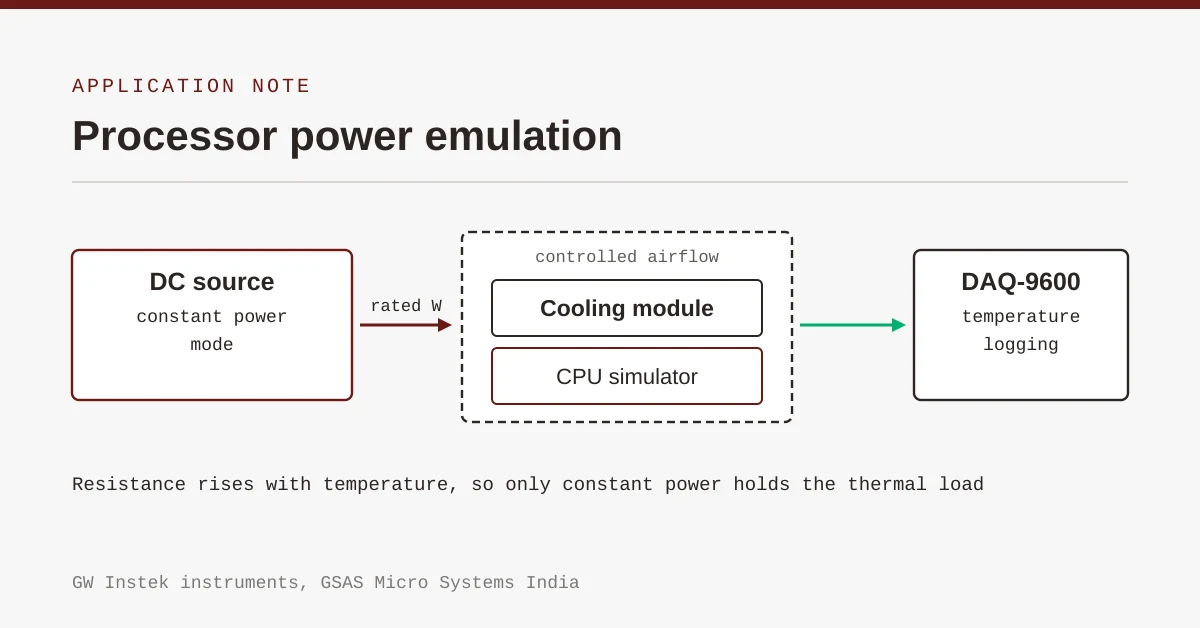
Emulating Processor Power for Thermal Testing: Why Constant Power
7 Oct · 7 min
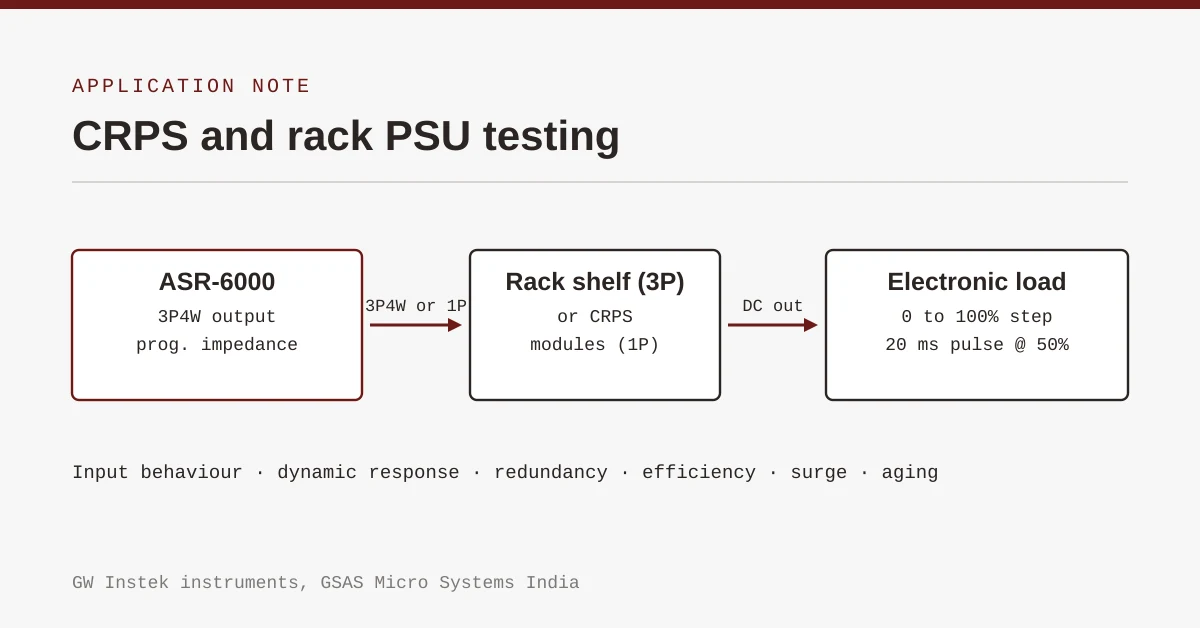
CRPS and Rack Power Supply Testing: The Six Tests That Matter
7 Oct · 7 min