In short
Simulation runs RTL in software with full visibility and is where most functional verification happens; hardware emulation maps the design onto dedicated hardware to run far longer workloads, such as booting software, while keeping debug visibility; FPGA prototyping maps the design onto FPGAs for the highest speed, mainly for software development and system validation, with less visibility. Most SoC teams use all three in sequence.
Simulation, hardware emulation and FPGA prototyping are three ways to run a chip design before silicon exists. Simulation runs RTL in software with full visibility. Emulation maps the design onto dedicated hardware so long workloads, such as booting software, run while debug visibility is kept. FPGA prototyping maps the design onto FPGAs for the highest speed, mainly for software development and system validation. Most SoC teams use all three.
This is a vendor-neutral explainer for Indian SoC, ASIC and FPGA teams, with Siemens’ Veloce CS line used as the worked example of how one vendor divides the hardware side. GSAS does not supply Veloce. We supply the simulation and formal side (Questa One and Questa FPGA Essentials) and support FPGA design, verification and prototyping on FPGA boards.
The Three Methods in One Table
| RTL simulation | Hardware emulation | FPGA prototyping | |
|---|---|---|---|
| Runs on | Software, on servers | Purpose-built emulation hardware | One or more FPGAs |
| Relative speed | Slowest | Much faster than simulation | Fastest of the three |
| Debug visibility | Full: every signal, every cycle | High, designed for hardware debug | Limited; needs planned probes |
| Bring-up effort | Lowest | Moderate | Highest, especially across many FPGAs |
| Design capacity | Limited by compute and time | Very large designs | Limited by FPGA count and partitioning |
| Main users | RTL designers, verification engineers | Verification and hardware-software teams | Software and system validation teams |
| Best for | Block and subsystem verification, coverage closure | Full-SoC verification, OS boot, power and performance analysis | Software development, system integration, demos |
The trade-off running through every row is visibility against speed. The faster a method runs, the less it shows you about what is happening inside the design.
RTL Simulation: Where Verification Starts
Simulation compiles the RTL and testbench and runs them in software. Every signal is visible, any test can be rerun exactly, and constrained-random testing, UVM, assertions and coverage all live here. That is why most functional bugs are found in simulation.
Its limit is speed on large workloads. A test that needs billions of clock cycles, such as booting an operating system on a full SoC, can take far too long to be practical.
Simulation sits alongside two other techniques that need no hardware at all:
- Static checks such as lint and clock- and reset-domain crossing (CDC/RDC) analysis read the RTL without a testbench.
- Formal verification proves properties exhaustively for every legal input, which suits control logic and protocols.
Siemens’ Questa One portfolio covers all three: Questa One Sim for simulation, Questa Lint, CDC and RDC for static checks, and Questa One SFV for formal. Our Questa One page maps each product to its job.
Hardware Emulation: Full-Chip Verification at Speed
An emulator compiles the design onto dedicated hardware built for verification. It runs much faster than simulation while keeping the ability to see inside the design, which makes it the usual platform for:
- running the full SoC with real software, including operating system boot
- hardware-software co-verification, where firmware and RTL are debugged together
- system-level power and performance analysis on realistic workloads
Siemens’ emulation platform is Veloce Strato CS, which Siemens describes as “the latest hardware from Siemens HAV for full capacity system-on-chip (SoC) and Integrated Circuit (IC) design emulation.”
FPGA Prototyping: Speed for Software Teams
An FPGA prototype maps the design onto one or more FPGAs. It runs fastest of the three, close enough to real time that software teams can develop drivers and applications against it and system teams can connect real interfaces. The cost is effort and visibility: large designs must be partitioned across FPGAs, and seeing inside the design needs probes planned in advance.
Siemens splits prototyping into two platforms:
- Veloce Primo CS, an enterprise prototyping platform that Siemens describes as “fully congruent” with Veloce Strato CS and as supporting software validation.
- Veloce proFPGA CS, a software prototyping platform that Siemens describes as “optimized for software verification and HW/SW system integration validation.”
At the smaller end, many teams prototype a single subsystem or processor core on one FPGA board long before they need multi-FPGA hardware. GSAS supports this with FPGA prototyping boards such as the Arm MPS3 and with our FPGA design and FPGA verification engineering.
How Siemens Connects the Three: The Veloce CS Example
Siemens’ Veloce CS line is a useful illustration of how a vendor ties the hardware methods together. Siemens states that “Veloce OS software, Veloce Solutions and Veloce Apps enables flexibility for customers to easily move between these platforms,” and that the emulation and enterprise prototyping platforms “scale from 40MG to 40+BG,” with the software prototyping platform scaling “from single FPGA to 12 BG multi blade system.”
Siemens also links the hardware to its simulation tools. Its Questa One launch release describes connected verification “across Siemens’ Questa One, Tessent DFT and Veloce CS emulation and prototyping systems,” and says accelerated verification IP lets the same compliance test suite, testbench and stimulus used on Questa One Sim be reused on Veloce CS.
For Siemens’ own detail, see the Veloce CS page and the hardware-assisted verification overview. Siemens also ran a User2User Hardware-Assisted Verification Forum in Bengaluru in July 2026, which we highlighted for Indian verification teams.
Which Method Should Your Team Use When?
| If you need to… | Use |
|---|---|
| Verify a block or subsystem and close coverage | RTL simulation |
| Catch lint, CDC or RDC issues before any testbench exists | Static checks |
| Prove a control or protocol property for every input | Formal verification |
| Boot an OS or run real software on the full SoC with debug visibility | Hardware emulation |
| Give software developers a fast platform months before silicon | FPGA prototyping |
| Validate an ASIC architecture or a single core on real hardware early | Single-FPGA prototyping board |
A typical SoC programme moves from left to right through these methods as the design matures: static checks and simulation from the first RTL, formal on critical blocks, then emulation and prototyping as the full chip comes together. Bugs found earlier are cheaper to fix, which is why the early, high-visibility methods carry most of the verification load.
Where GSAS Fits
GSAS Micro Systems is an authorized Siemens EDA partner in India and a value added distributor/reseller for Siemens EDA products. We have a dedicated FAE team ready to help you with custom built solutions matching your needs. For pre-silicon verification, that covers:
- Questa One: simulation, lint, CDC/RDC, formal, debug and the Questa One Agentic Toolkit.
- Questa FPGA Essentials: FPGA simulation with UVM and RTL lint.
- Tessent: design-for-test, which Siemens connects to Questa One for DFT pattern verification.
- FPGA prototyping and engineering: prototyping boards and our FPGA design and FPGA verification teams.
Veloce emulation and prototyping hardware is outside what GSAS supplies; for it, contact Siemens directly. Our engineers work with SoC and FPGA teams in Bengaluru, Hyderabad, Chennai, Pune, Mumbai and Delhi NCR.
References
- Siemens, Veloce CS: IC emulation and prototyping
- Siemens, Veloce hardware-assisted verification
- Siemens, Questa One smart verification solution
- Siemens press release, Questa One smart verification solution, 13 May 2025
Also appears in:
Interested in Siemens EDA tools?
Talk to our application engineers for personalized tool recommendations.
More from Siemens EDA
View all →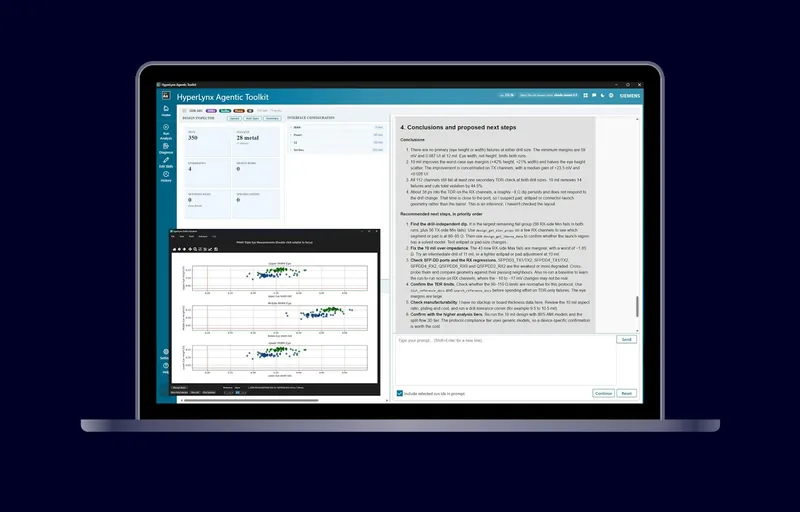
HyperLynx Agentic Toolkit: What It Means for India
13 Nov · 7 min

Siemens EDA Customer Results: 10 Published Case Studies
13 Nov · 8 min
Siemens Self-Verifying EDA AI Agents: What It Means for India
13 Nov · 7 min
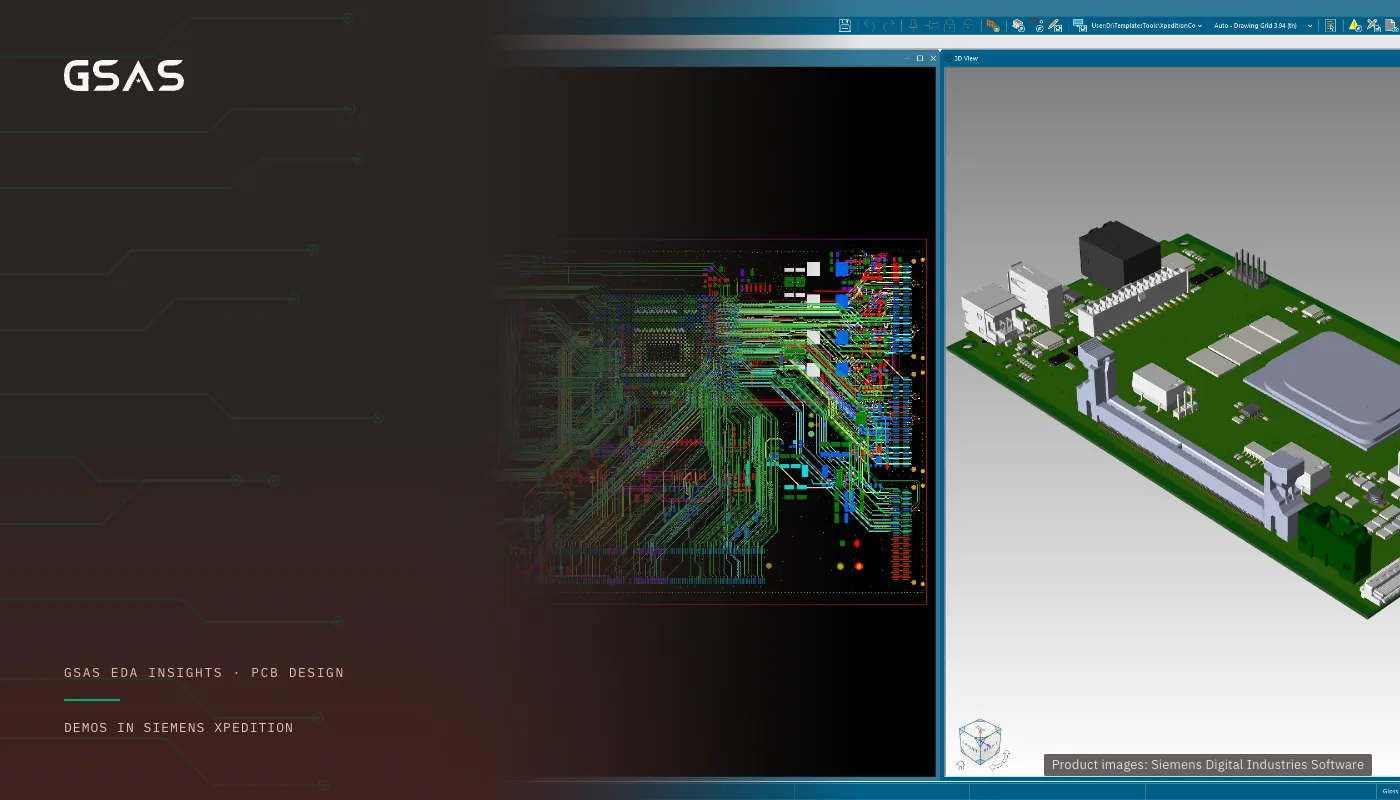
GSAS EDA Insights: A Free Five-Part PCB Design Webinar Series with Siemens Xpedition
9 Nov · 5 min
Choosing Debug and Trace Tools for Indian Automotive Tier-1s
13 Nov · 11 min
GW Instek LCR-7000 and GPM-8340: New in India for 2026
13 Nov · 6 min