
From Dedicated Analyzers to Multi-Protocol USB Adapters: A Bench Tool Evolution
Ten years ago, a well-equipped embedded engineer’s bench had a dedicated tool for every protocol: a USB-to-I2C adapter for sensor register reads, a USB-to-SPI programmer for external flash, a USB-to-UART bridge for serial console access, a CAN bus analyzer for automotive work, and a logic analyzer to correlate signals across all of them. Five instruments, five driver stacks, five software applications, and a cable management problem that never quite got solved.
That approach is giving way to multi-protocol USB adapters that consolidate several protocol interfaces into a single device. The shift is driven by practical engineering realities, not marketing, and it is reshaping how embedded teams in Bengaluru, Pune, Chennai, and Hyderabad equip their development labs.
Why Consolidation Is Happening
Board complexity is increasing. A modern IoT board might include I2C sensors, SPI flash, a UART debug console, an RS-485 link to a legacy subsystem, and an I3C sensor hub interface, all on the same PCB. Debugging this board with single-protocol tools means switching between 4–5 instruments repeatedly during a single debug session. Each switch breaks concentration and adds time.
Protocol diversity per engineer is growing. Fifteen years ago, an engineer might specialize in one or two protocols. Today, the same engineer works across I2C, SPI, UART, CAN, and increasingly I3C within a single product development cycle. The “one tool per protocol” model does not scale when every engineer needs access to five protocols.
Python scripting has changed expectations. Engineers now expect to script their bench workflows, running automated test sequences that exercise multiple buses in a coordinated script rather than manually operating separate tools. Multi-protocol adapters with unified Python SDKs make this possible; separate single-protocol tools with incompatible APIs make it painful.
Lab budgets are finite. Equipping a 10-person engineering team with dedicated I2C, SPI, UART, and CAN tools for every bench costs significantly more than providing multi-protocol adapters. For startups and small engineering teams in India, the cost difference determines whether engineers have adequate tools or are sharing a single set among the team.
What Multi-Protocol Adapters Do Differently
The key difference is not just hardware consolidation, it is the unified software and scripting environment. A multi-protocol adapter like the Binho Nova (I2C, SPI, UART, 1-Wire, GPIO) or Binho Pulsar (I2C, SPI, UART, RS-485, GPIO) provides a single software application and a single Python SDK for all protocols.
This means an engineer can write a single Python script that:
- Reads an I2C temperature sensor to check thermal conditions
- Programs an SPI flash with updated configuration data
- Monitors UART output for boot messages
- Sends an RS-485 command to trigger a system state change
- Verifies the response across all buses
With single-protocol tools, this script would need to import 4–5 different libraries, manage 4–5 USB connections, and handle the coordination logic between incompatible APIs. With a multi-protocol adapter, it is one library, one connection, one coordinate set of protocol transactions.
What Multi-Protocol Adapters Do Not Replace
Multi-protocol adapters have limitations that dedicated tools handle better:
Deep protocol analysis. A dedicated logic analyzer with deep capture memory, complex triggering, and protocol-specific decoders (Saleae Logic, for example) provides analysis depth that a multi-protocol adapter cannot match. The adapter gives you quick bus access and basic monitoring; the logic analyzer gives you deep forensic analysis.
High-speed interfaces. Protocols above 50 MHz (high-speed SPI, QSPI, SDIO) and high-bandwidth buses (USB, PCIe, Ethernet) are beyond the scope of current multi-protocol adapters. Dedicated tools serve these interfaces.
Volume programming. For high-volume MCU programming, dedicated gang programmers (like the Elprotronic S-GANG) provide the throughput, isolation, and reliability that manufacturing floors demand. Multi-protocol adapters are development and debug tools, not gang programmers.
The practical approach is complementary: a multi-protocol adapter on every engineer’s bench for daily protocol access, a shared logic analyzer for deep debug sessions, and dedicated production tools on the factory floor.
The Binho Lineup as a Case Study
Binho’s three adapters illustrate how multi-protocol consolidation works across different engineering domains:
Binho Nova: The general-purpose adapter. Binho lists I2C up to 3.4 MHz, SPI up to 12 MHz, UART up to 1 Mbps and 1-Wire, with 5x shared GPIO, powered directly from USB. For firmware engineers working on sensor boards, IoT devices, and industrial controllers where multiple low-speed serial protocols coexist.
Binho Supernova: The I3C specialist. I3C, I2C, SPI. For semiconductor design teams and advanced sensor platform developers working with MIPI I3C.
Binho Pulsar: The industrial and field adapter. Binho lists a 50 MHz SPI controller, a 1 MHz I2C controller, UART, half-duplex RS-485 rated -7 V to +12 V common-mode, and 6x GPIO as shipping, with programmable 1.2 V to 3.3 V downstream power. CAN-FD and 1-Wire remain on Binho’s coming-soon list for this adapter, so treat them as roadmap.
All three share the Mission Control GUI and Python SDK. Scripts transfer between adapters for protocols they share in common. Teams can standardize on the Binho ecosystem while deploying different adapters to different engineering roles.
Impact on Indian Engineering Teams
For engineering teams across India, the consolidation trend has direct benefits:
Lower per-engineer tooling cost. One multi-protocol adapter costs less than 3–4 single-protocol tools. More engineers get adequate bench equipment within the same lab budget.
Faster onboarding. New engineers learn one software environment instead of 4–5. For companies in Bengaluru and Hyderabad hiring embedded engineers at scale, reduced onboarding time is operationally valuable.
Simplified procurement. One vendor, one PO, one set of spare parts. For procurement teams managing lab equipment across multiple engineering sites in Chennai, Pune, Mumbai, and Delhi NCR, consolidation simplifies the supply chain.
Portable workflows. Scripts written on one engineer’s bench work on another’s. When an engineer in Bengaluru writes a sensor validation script, an engineer in Hyderabad can run it on an identical tool without adaptation.
Why Buy from GSAS
GSAS Micro Systems is an authorized Binho engineering partner in India. We help engineering teams select the right combination of Nova, Supernova, and Pulsar for their development workflows, and provide the tools with INR invoicing, local inventory, and applications engineering support. Our team in Bengaluru, Hyderabad, Chennai, Pune, Mumbai, and Delhi NCR can assess your lab’s protocol needs and recommend a tooling strategy. Contact us for a consultation or evaluation units.
Also appears in:
Interested in Binho tools?
Talk to our application engineers for personalized tool recommendations.
More from Binho
View all →
I3C FAQ for Firmware Teams: What the Bus Is, What Changes, and What You Need on the Bench
31 Jul · 8 min
Running the Binho Supernova as an I3C Target: Emulating a Device Against Your Own Controller
31 Jul · 7 min
Binho Mission Control 3 (Public Preview): Point-and-Click I2C, SPI, I3C, and GPIO
20 Jul · 5 min
Binho Mission Control: Point-and-Click I2C, SPI, and UART Without Writing Code
7 Apr · 5 min
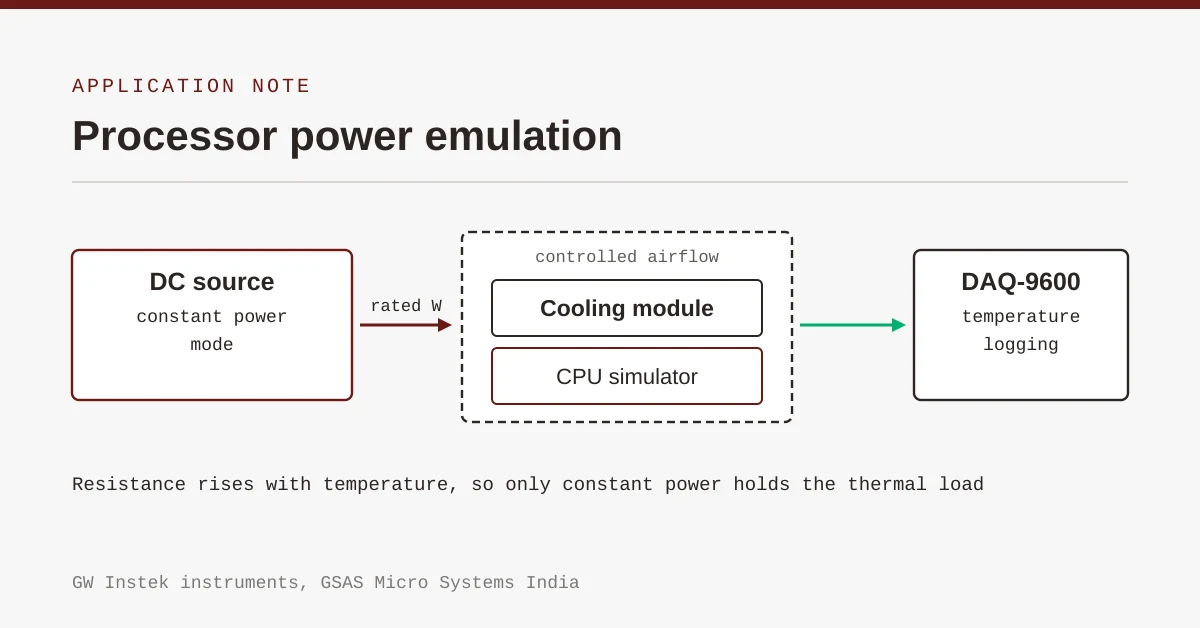
Emulating Processor Power for Thermal Testing: Why Constant Power
7 Oct · 7 min
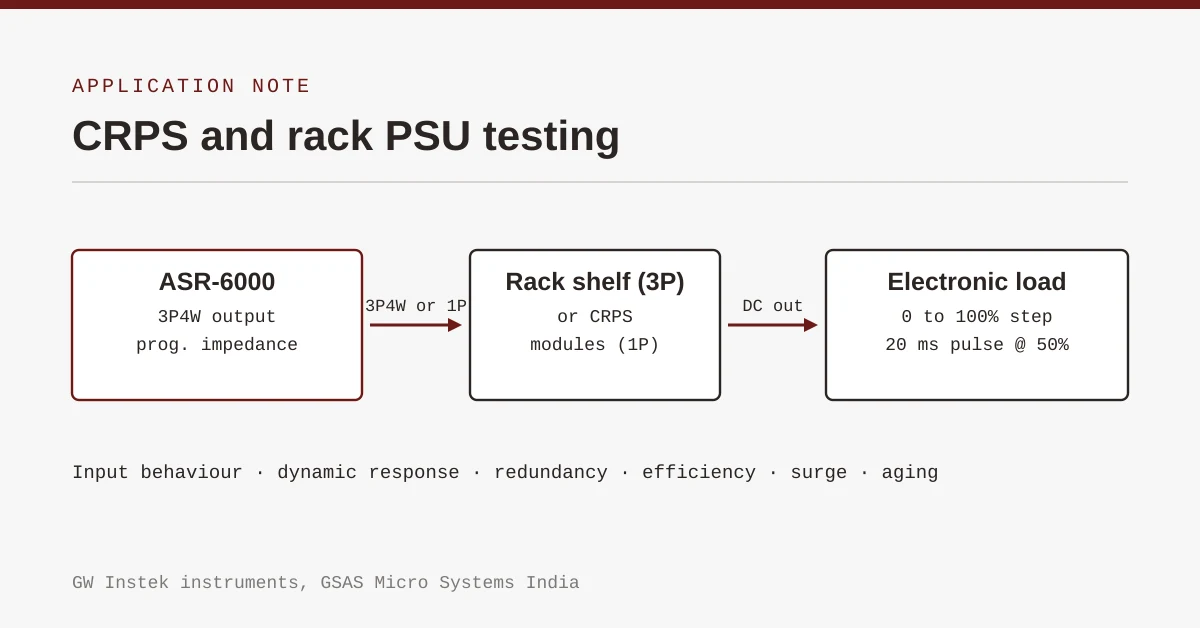
CRPS and Rack Power Supply Testing: The Six Tests That Matter
7 Oct · 7 min