
 Cadence
 Virtual Test Drive (VTD)
Driving Simulation (ADAS/AV)Driving simulation platform for ADAS, autonomous driving, and vehicle-in-the-loop testing with physics-based sensor models. Buy in India from GSAS with local support.
Platform
Driving simulation for ADAS/AD validation
Sensors
Camera, LiDAR, radar, ultrasonic (physics-based)
Standards
OpenDRIVE, OpenSCENARIO, OpenCRG
Integration
SiL, HiL, ViL, DiL testing
Scenarios
Deterministic + stochastic scenario generation
Licensing
Per-solver or MSC One token pool
Overview
About Virtual Test Drive (VTD)
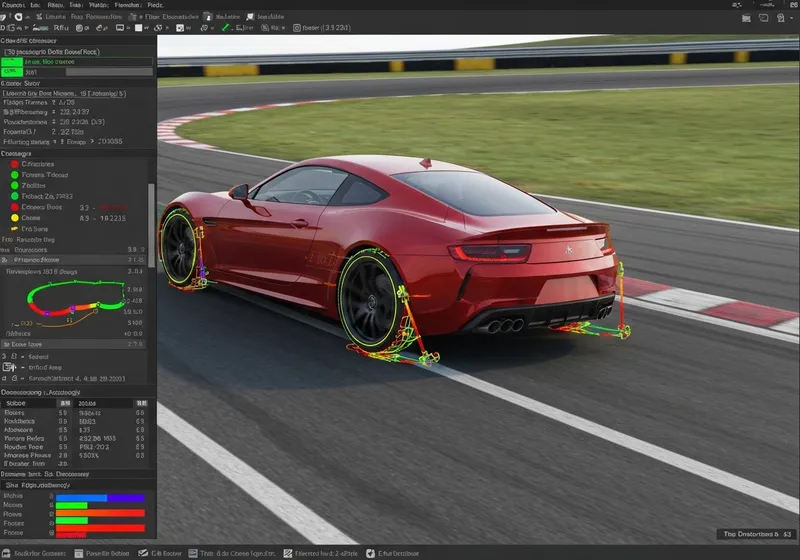
Virtual Test Drive (VTD) is the Cadence driving simulation platform for developing and validating advanced driver-assistance systems (ADAS) and autonomous driving (AD) functions. VTD creates high-fidelity virtual driving environments with physics-based sensor simulation, camera, LiDAR, radar, and ultrasonic, enabling engineers to test perception, planning, and control algorithms in millions of scenarios that would be dangerous, impractical, or prohibitively expensive to replicate on physical test tracks. The platform supports the full V-model from early algorithm development through software-in-the-loop (SiL), hardware-in-the-loop (HiL), vehicle-in-the-loop (ViL), and driver-in-the-loop (DiL) testing.
VTD’s open architecture is built on industry standards, OpenDRIVE for road networks, OpenSCENARIO for test scenarios, and OpenCRG for road surface profiles, ensuring interoperability with third-party tools and OEM simulation ecosystems. The scenario engine supports both deterministic replay (for regression testing and certification evidence) and stochastic variation (for corner-case discovery and robustness testing). Physics-based sensor models account for weather effects (rain, fog, snow, glare), material reflectivity, and sensor-specific artifacts, providing realistic sensor data streams for perception algorithm validation rather than simplified ground-truth inputs.
For Indian automotive OEMs and tier-1 suppliers developing ADAS functions (automatic emergency braking, lane keeping, adaptive cruise control) and autonomous driving systems, VTD provides the virtual validation platform required for safety case development under ISO 21448 (SOTIF) and functional safety standards. GSAS provides VTD licensing, integration support, and training for Indian ADAS/AD development teams.
Platform Capabilities
| Capability | Detail |
|---|---|
| Sensor Simulation | Physics-based camera, LiDAR, radar, ultrasonic models |
| Road Network | OpenDRIVE standard, procedural and hand-crafted roads |
| Scenario Engine | OpenSCENARIO, deterministic + stochastic generation |
| Road Surface | OpenCRG high-fidelity surface profiles |
| Weather & Lighting | Rain, fog, snow, night, sun glare, dynamic conditions |
| Traffic Simulation | Intelligent traffic participants with behavioral models |
| Integration | SiL, HiL, ViL, DiL, FMI co-simulation |
| Visualization | Real-time 3D rendering, image generation for camera models |
| Pricing | Request Quote |
Watch the Virtual Test Drive (VTD) on YouTube
Key Applications
- ADAS Validation: AEB, LKA, ACC, blind spot detection, parking assist function testing
- Autonomous Driving: L3/L4/L5 perception, planning, and control algorithm development
- Safety Case: ISO 21448 (SOTIF) and ISO 26262 virtual validation evidence
- Sensor Development: Camera, LiDAR, and radar sensor model calibration and validation
- Homologation: Euro NCAP virtual testing, regulatory scenario coverage
Blog
Cadence Insights
MSC Software Is Now Part of Cadence: What the Hexagon Acquisition Means for Indian Simulation Teams
Cadence has completed its acquisition of Hexagon's Design & Engineering business, the home of MSC Nastran, Adams, Marc, Cradle CFD, Actran, Romax, and VTD. For Indian engineering teams running these tools, nothing changes day to day. Here's what actually happened, what stays the same, and what gets better.
Adams Multibody Dynamics: The Standard for Vehicle Dynamics Simulation in India
Adams from Cadence is the most widely used multibody dynamics platform for vehicle dynamics, suspension development, and ride-handling analysis. Here is what makes it the industry reference, and how Indian automotive teams use it.
MSC Nastran: Six Decades of Structural FEA and Why It Still Matters in India
MSC Nastran is the reference structural FEA solver for aerospace certification, automotive NVH, and heavy engineering. Here is why Indian engineering teams rely on it, from SOL 101 to SOL 700.
Related products
More from Cadence
All Cadence products →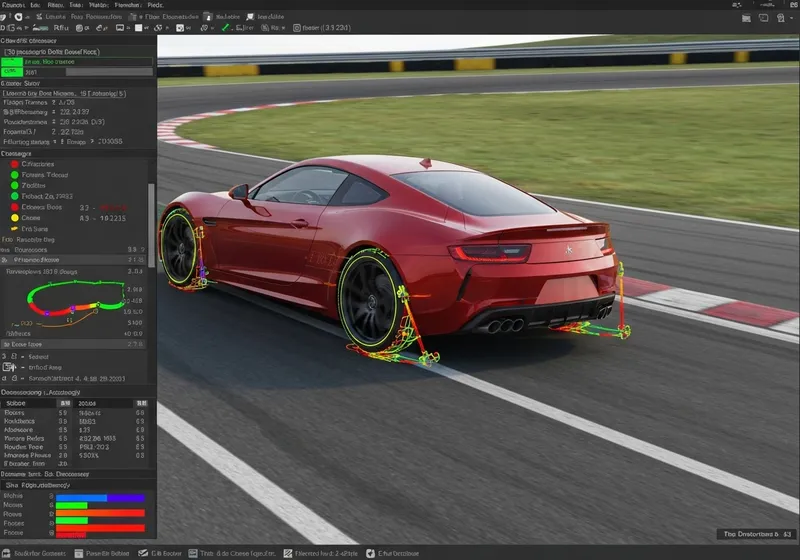
Interested in Virtual Test Drive (VTD)?
Get pricing, an evaluation unit, or a technical consultation from our application engineers.