
When an automotive OEM or tier-1 supplier needs to predict how a vehicle will ride, handle, and respond to road inputs before a physical prototype exists, Adams is typically the first tool they reach for. Developed over four decades and now part of the Cadence simulation portfolio, Adams (Automatic Dynamic Analysis of Mechanical Systems) is the most widely deployed multibody dynamics (MBD) simulation platform in the global automotive industry. Its installed base spans every major OEM and most tier-1 suspension, powertrain, and chassis suppliers worldwide.
For Indian automotive teams, OEMs in Pune and Chennai, tier-1 suppliers in Bengaluru and Delhi NCR, and R&D centres across the country, Adams provides the vehicle dynamics fidelity that simplified analytical models and spreadsheet-based calculations cannot deliver.
What Adams Actually Does
Adams simulates the dynamic behavior of mechanical systems, assemblies of rigid and flexible bodies connected by joints, bushings, springs, dampers, contacts, and force elements. Unlike finite element analysis (FEA) that examines stress within individual parts, Adams models the system-level motion: how components interact, how forces propagate through the assembly, and how the complete mechanism behaves under operating conditions.
In the automotive context, this translates to:
- Suspension kinematics and compliance (K&C): toe, camber, caster change through wheel travel and under lateral, longitudinal, and braking forces
- Full-vehicle ride and handling: steady-state cornering, lane change, slalom, and combined manoeuvres
- Road load prediction: extracting load histories at component attachment points for durability testing
- Powertrain and driveline dynamics: torsional vibration, gear rattle, clutch engagement transients
- Steering system analysis: rack force, returnability, on-centre feel
Adams Car, Adams Chassis, and Adams Driveline provide template-based modelling environments with pre-built vehicle subsystem templates. Engineers parameterise the templates with their suspension geometry, bushing properties, spring and damper characteristics, and tire model data, then run standardised events (ISO lane change, constant radius cornering, road profile excitation) to evaluate vehicle-level performance.
Why Not Just Use FEA?
A common question from teams new to MBD is why they cannot simply use their existing FEA solver for dynamic analysis. The answer is computational efficiency and modelling philosophy.
An FEA model of a full vehicle suspension with deformable bodies might contain millions of degrees of freedom and require hours of compute time for a single event. An Adams model of the same suspension, using rigid bodies with force elements and selectively flexible components (via Adams Flex integration with MSC Nastran), runs in minutes. This speed difference is not a shortcut, it reflects the fact that MBD captures the dominant system-level dynamics correctly while FEA captures local stress fields.
Both are needed, but for different questions.
The practical consequence: an Adams model enables hundreds or thousands of simulation runs, parameter sweeps, design of experiments, optimisation studies, in the time it takes FEA to run a handful of cases. For suspension development, where the design space is defined by dozens of hardpoint coordinates, bushing rates, and spring-damper characteristics, this throughput is essential.
Adams in the Indian Automotive Ecosystem
Indian automotive development has reached a maturity level where vehicle dynamics simulation is no longer optional. The reasons are both technical and commercial:
Platform development for global markets. Indian OEMs developing vehicles for export must meet ride and handling standards benchmarked against global competitors. Tuning suspension on physical prototypes alone is too slow and too expensive when the target is a moving benchmark.
Electric vehicle dynamics. EV architectures, with heavy battery packs, different weight distributions, and instant torque delivery, create dynamics challenges that differ fundamentally from ICE vehicles. Adams models the coupled effects of battery mass placement on ride quality, handling balance, and durability loads simultaneously.
Supplier competitiveness. Tier-1 suspension and chassis suppliers competing for global OEM business need to demonstrate simulation-led development capability. Adams is the common language, when a global OEM asks for K&C simulation data, they typically expect Adams results.
Co-Simulation: Adams + Nastran + Controls
Adams does not work in isolation. Two integration capabilities are particularly valuable:
Adams Flex: imports MSC Nastran superelements (Craig-Bampton modal representations) into Adams as flexible bodies. This captures structural flexibility effects, bushing bracket compliance, subframe bending, steering column flexibility, that rigid-body models miss. The structural fidelity of Nastran combined with the dynamic simulation speed of Adams.
Adams Controls: co-simulates with MATLAB/Simulink or any FMI-compliant controls model. For mechatronic systems, active suspension, electronic stability control, electric power steering, regenerative braking, the mechanical dynamics (Adams) and control logic (Simulink) run simultaneously, exchanging signals at every time step.
Getting Started with Adams in India
GSAS provides Adams licensing in India with INR invoicing through the MSC One token pool, which also covers MSC Nastran, Marc, Actran, Simufact, and Digimat under a shared token allocation. This means teams can access the full Cadence simulation portfolio without committing to individual solver licenses.
Our application engineering team supports Indian automotive customers with Adams training workshops covering suspension modelling, driveline dynamics, and Adams-Nastran flexible body integration. We assist with model setup, template customisation, tire model integration (MF-Tire, FTire), and Adams-Controls coupling for ADAS and EV development programmes.
Teams in Bengaluru, Hyderabad, Chennai, Pune, Mumbai, Delhi NCR, and Visakhapatnam can contact GSAS for Adams evaluation licenses, training, and technical consulting.
Also appears in:
Interested in Cadence tools?
Talk to our application engineers for personalized tool recommendations.
More from Cadence
View all →
MSC Software Is Now Part of Cadence: What the Hexagon Acquisition Means for Indian Simulation Teams
28 May · 6 min

MSC Nastran: Six Decades of Structural FEA and Why It Still Matters in India
4 Apr · 6 min
Actran Acoustic Simulation: Solving the EV NVH Challenge in India
3 Apr · 6 min
Virtual Test Drive (VTD): Simulating Billions of Kilometres for ADAS Validation in India
2 Apr · 6 min
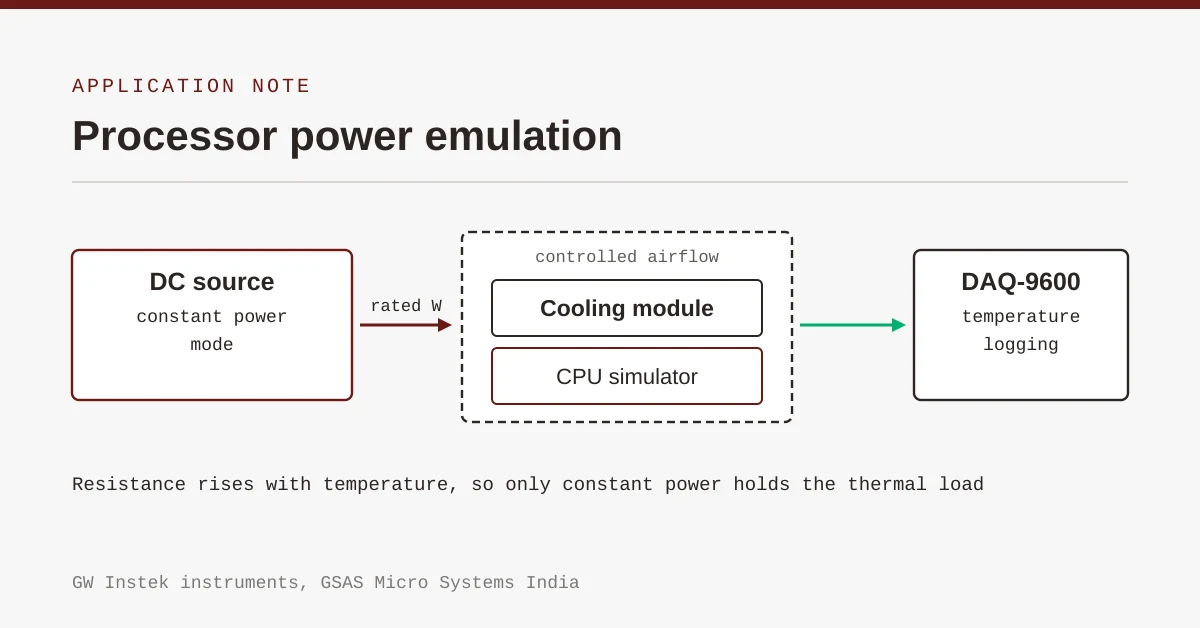
Emulating Processor Power for Thermal Testing: Why Constant Power
7 Oct · 7 min
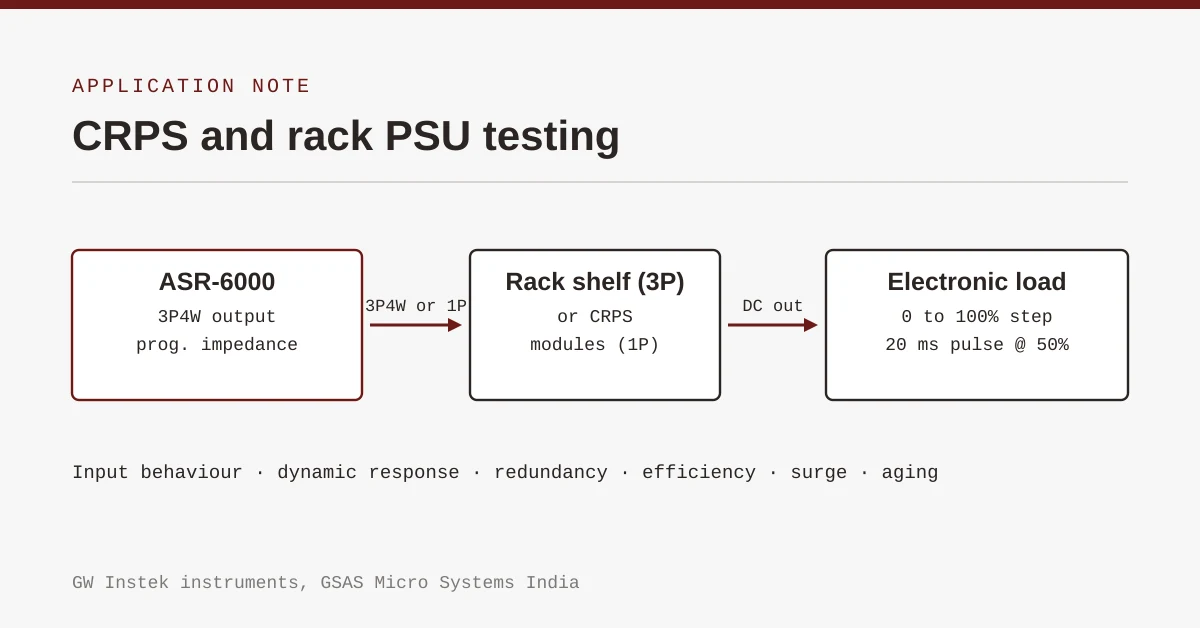
CRPS and Rack Power Supply Testing: The Six Tests That Matter
7 Oct · 7 min