LoRa (Long Range) wireless technology has become the default choice for IoT applications that need to send small amounts of data over distances that Wi-Fi and Bluetooth cannot reach, agricultural sensor networks, water metering systems, environmental monitoring stations, industrial telemetry, and smart city infrastructure. In India, where sensor deployments often span kilometers of agricultural land, urban infrastructure, or industrial campuses, LoRa’s ability to deliver multi-kilometer range on a coin-cell battery makes it uniquely suited to the country’s IoT ambitions.
This guide covers everything an engineer needs to go from an unboxed REYAX RYLR998 module to a working LoRa link between two devices, configured for legal operation in India’s ISM bands. We cover frequency selection, AT command configuration, spreading factor and bandwidth tradeoffs, practical range optimization, antenna considerations, and the regulatory framework governing sub-GHz ISM operation in India.
India’s Sub-GHz ISM Bands
Before configuring any radio module, the first question is: what frequency are you legally permitted to use? In India, the Wireless Planning and Coordination Wing (WPC) of the Department of Telecommunications regulates spectrum allocation. The relevant ISM (Industrial, Scientific, and Medical) band for LoRa operation in India is the 865-867 MHz band, which is designated for low-power wireless communication without an individual license.
The key regulatory parameters for the 865-867 MHz band are:
- Frequency range: 865.0 to 867.0 MHz
- Maximum transmit power: 1 W EIRP (30 dBm), though most deployments use lower power
- Channelization: Specific channel plans depend on the protocol; for proprietary LoRa P2P, any frequency within the band is usable
- Duty cycle: No explicit duty cycle limit in the Indian regulation, unlike the EU’s 1% duty cycle restriction, but good engineering practice still limits transmission duty cycle for battery life and spectrum sharing
The RYLR998 supports both 868 MHz and 915 MHz bands. For India, configure the module to operate within the 865-867 MHz range. The exact frequency is set via AT command, as described below.
The RYLR998: Hardware Overview
The REYAX RYLR998 is built on the Semtech SX1262, the current-generation LoRa transceiver that improves on the previous SX1276 with higher transmit power (+22 dBm vs. +20 dBm), better receiver sensitivity (-148 dBm), lower sleep current (under 2 uA), and a more efficient power amplifier architecture.
The module exposes a UART interface with AT command firmware. This means you do not need to write SPI driver code, implement the LoRa MAC layer, or understand the SX1262 register map. You connect four wires, TX, RX, VCC (2.0-3.6 V), and GND, send ASCII AT commands over the UART, and the module handles all RF operations internally.
The module includes a U.FL antenna connector (or a PCB antenna pad, depending on the variant), a complete impedance matching network, and all required passive components. An external antenna connects via the U.FL connector. Alternatively, the PCB antenna pad supports a directly soldered PCB antenna for space-constrained designs.
First Configuration: AT Commands
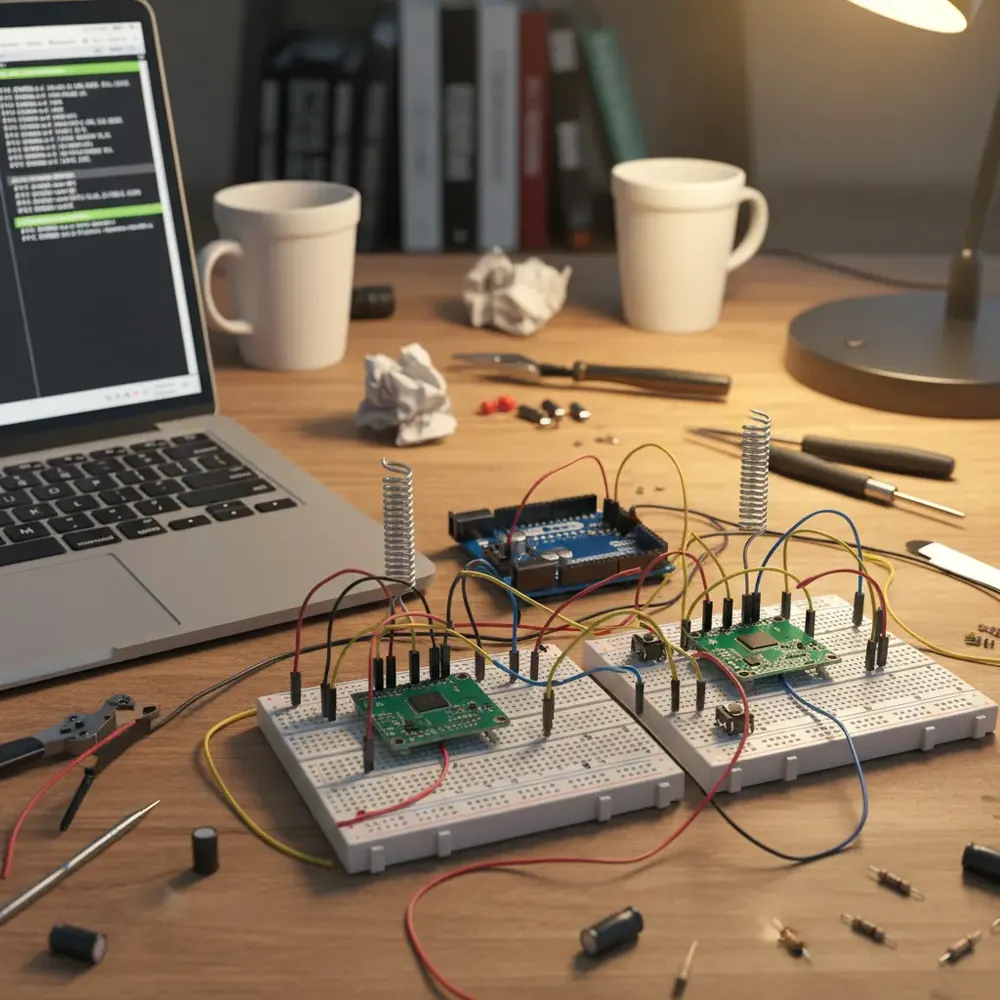
Connect the RYLR998 to a USB-to-UART adapter (3.3 V logic) and open a serial terminal at 115200 baud, 8N1. The module responds to standard AT commands.
Check the module is alive:
```
AT
```
Expected response: `+OK`
Set the operating frequency for India (866 MHz center):
```
AT+BAND=866000000
```
This sets the carrier frequency to 866.0 MHz, centered in the Indian 865-867 MHz ISM band. The parameter is in Hz.
Set the network ID (to isolate your devices from others):
```
AT+NETWORKID=5
```
Network IDs range from 0 to 16. Only modules with the same network ID will communicate with each other.
Set the device address:
```
AT+ADDRESS=1
```
Each module gets a unique address (0-65535) within the network.
Set the RF parameters (spreading factor, bandwidth, coding rate, preamble):
```
AT+PARAMETER=10,7,1,12
```
This sets: spreading factor 10, bandwidth 125 kHz (parameter 7), coding rate 4/5 (parameter 1), preamble length 12 symbols. These parameter choices are explained in detail below.
Set transmit power:
```
AT+CRFOP=15
```
Sets the transmit output power to 15 dBm. The range is 0-22 dBm. For initial testing, 15 dBm is sufficient. Increase to 22 dBm for maximum range once the link is established.
Sending Your First Message
With two RYLR998 modules configured to the same band, network ID, and RF parameters (but different addresses), sending a message is straightforward.
On module 1 (address 1), send a message to module 2 (address 2):
```
AT+SEND=2,5,Hello
```
The parameters are: destination address (2), payload length (5), and the payload data (Hello).
Module 2 will output:
```
+RCV=1,5,Hello,-45,12
```
This indicates: received from address 1, payload length 5, payload “Hello”, RSSI -45 dBm, SNR 12 dB.
If you see this response, the link is working. The RSSI and SNR values tell you about link quality, RSSI closer to 0 dBm means stronger signal, and SNR above 0 dB means the signal is above the noise floor.
Understanding Spreading Factor and Bandwidth
The spreading factor (SF) and bandwidth (BW) parameters control the fundamental tradeoff between range, data rate, and time-on-air.
Spreading factor ranges from 7 to 12 in LoRa. Higher spreading factors increase the processing gain, enabling the receiver to decode weaker signals, extending range. But each step up in SF doubles the time-on-air, halving the effective data rate and doubling the energy consumed per packet.
| SF | Relative Range | Approximate Data Rate (BW=125 kHz) | Time-on-Air Factor |
|---|---|---|---|
| 7 | Baseline | 5.5 kbps | 1x |
| 8 | +2.5 dB | 3.1 kbps | 2x |
| 9 | +5 dB | 1.8 kbps | 4x |
| 10 | +7.5 dB | 1.0 kbps | 8x |
| 11 | +10 dB | 0.6 kbps | 16x |
| 12 | +12.5 dB | 0.3 kbps | 32x |
Bandwidth controls the frequency spread of the chirp signal. Lower bandwidth improves sensitivity (extending range) but reduces data rate and increases sensitivity to crystal frequency offset. The RYLR998 supports 125 kHz (parameter 7), 250 kHz (parameter 8), and 500 kHz (parameter 9) bandwidth.
For most Indian IoT deployments, SF 10 with 125 kHz bandwidth provides a good balance: sufficient range for multi-kilometer links while keeping time-on-air reasonable for battery-operated devices. For maximum range (rural agricultural deployments, for example), SF 12 with 125 kHz bandwidth extracts every decibel of link budget. For higher throughput at shorter range (campus or factory deployments), SF 7 with 250 kHz bandwidth maximizes data rate.
Range Optimization Tips
Achieving the RYLR998’s rated 16+ km range requires attention to several factors beyond RF parameter selection.
Antenna height matters more than transmit power. Raising the antenna from 1 m to 10 m above ground can add 10-20 dB of effective link budget, equivalent to increasing transmit power by 100-fold. For fixed gateway installations, mount the antenna as high as practically possible, ideally with clear line of sight to the service area. Antenna selection and orientation. The RYLR998’s U.FL connector accepts external antennas. A quarter-wave whip antenna (approximately 8.6 cm for 866 MHz) provides omnidirectional coverage. A higher-gain collinear antenna (5-8 dBi) concentrates radiation toward the horizon, extending range in flat terrain at the expense of coverage at steep angles. Orient the antenna vertically for vertical polarization consistency between nodes. Avoid obstructions in the Fresnel zone. LoRa signals at 866 MHz propagate primarily by line of sight, with diffraction around obstacles. The Fresnel zone, the ellipsoidal region around the direct path between transmitter and receiver, must be substantially clear of obstructions for optimal performance. Buildings, trees, and terrain that intrude into the Fresnel zone cause signal attenuation beyond free-space path loss. Manage interference. The 865-867 MHz band is shared with other ISM users. Survey the RF environment at your deployment site to identify potential interferers. If interference is present on specific frequencies, shift the channel frequency to a cleaner part of the band. Reduce cable loss. If using coaxial cable between the module and an elevated antenna, use low-loss cable (LMR-400 or equivalent). Standard RG-58 cable loses approximately 0.2 dB per meter at 866 MHz, a 10 m cable run loses 2 dB, equivalent to reducing transmit power by 37%.
WPC Regulatory Considerations
Operating a LoRa network in India’s 865-867 MHz band falls under the WPC’s delicensed spectrum framework. Key points for engineers and project managers:
- No individual license is required for operation within the 865-867 MHz band at powers up to 1 W EIRP.
- The RYLR998 is pre-certified for FCC and CE markets. For India, the module operates within the WPC’s delicensed parameters when configured to the 865-867 MHz band at compliant power levels.
- For commercial deployments, verify current WPC regulations as parameters may be updated. The National Frequency Allocation Plan (NFAP) published by WPC is the authoritative reference.
- Gateway devices that connect to the internet (LoRa-to-IP gateways) may require additional compliance considerations depending on the deployment context.
For product designs intended for mass production, consult with a regulatory compliance specialist to confirm that the complete product (not just the module) meets all applicable Indian emission and immunity standards.
Beyond Point-to-Point: Building a Sensor Network
The RYLR998’s AT command interface supports point-to-point and star topology networks natively. A central gateway node (with a known address) receives data from multiple sensor nodes, each with a unique address. The gateway can be a Raspberry Pi, ESP32, STM32, or any MCU with a UART port running at 115200 baud.
For more complex deployments requiring mesh networking, over-the-air firmware updates, or cloud integration, consider the LoRaWAN protocol stack, the REYAX RYLR993 and RYLR498 modules provide LoRaWAN Class A/B/C support with AT command interfaces, enabling connection to LoRaWAN network servers (The Things Network, Chirpstack, etc.) for scalable IoT infrastructure.
Get LoRa Modules and Support from GSAS India
GSAS Micro Systems is an authorized REYAX distribution partner in India, stocking RYLR998 modules and the complete REYAX wireless module portfolio from Indian inventory with INR invoicing. Our applications engineering team provides module selection guidance across the REYAX LoRa range (RYLR896, RYLR993, RYLR998, RYLR999, RYLR498), antenna design consultation, RF regulatory support for Indian ISM band deployments, and volume supply planning for OEM production runs. Whether you are building a smart agriculture sensor network, a water metering system, an environmental monitoring deployment, or an industrial telemetry solution, contact us from Bengaluru, Chennai, Hyderabad, Delhi NCR, Mumbai, or Pune to get started.
Also appears in:
Interested in REYAX tools?
Talk to our application engineers for personalized tool recommendations.
More from REYAX
View all →
RYB5510 Deep Dive: BLE 5.4, Thread, and Matter on a Single Module
5 Apr · 4 min

RYLR998 Deep Dive: Why This LoRa Module Is the Go-To Choice for IoT Projects in India
5 Apr · 4 min

RYS8830 GNSS Module: Multi-Constellation Positioning for Indian Fleet and Asset Tracking
5 Apr · 4 min
Industrial Condition Monitoring with Wireless Sensors: A Practical Guide for Indian Factories
4 Apr · 4 min
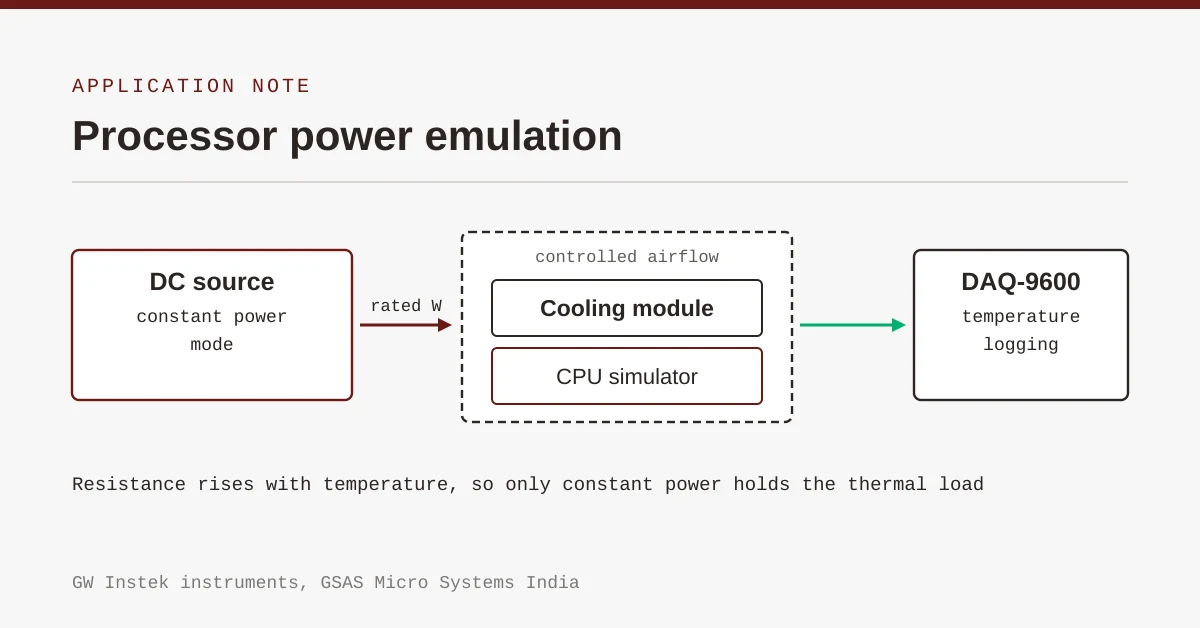
Emulating Processor Power for Thermal Testing: Why Constant Power
7 Oct · 7 min
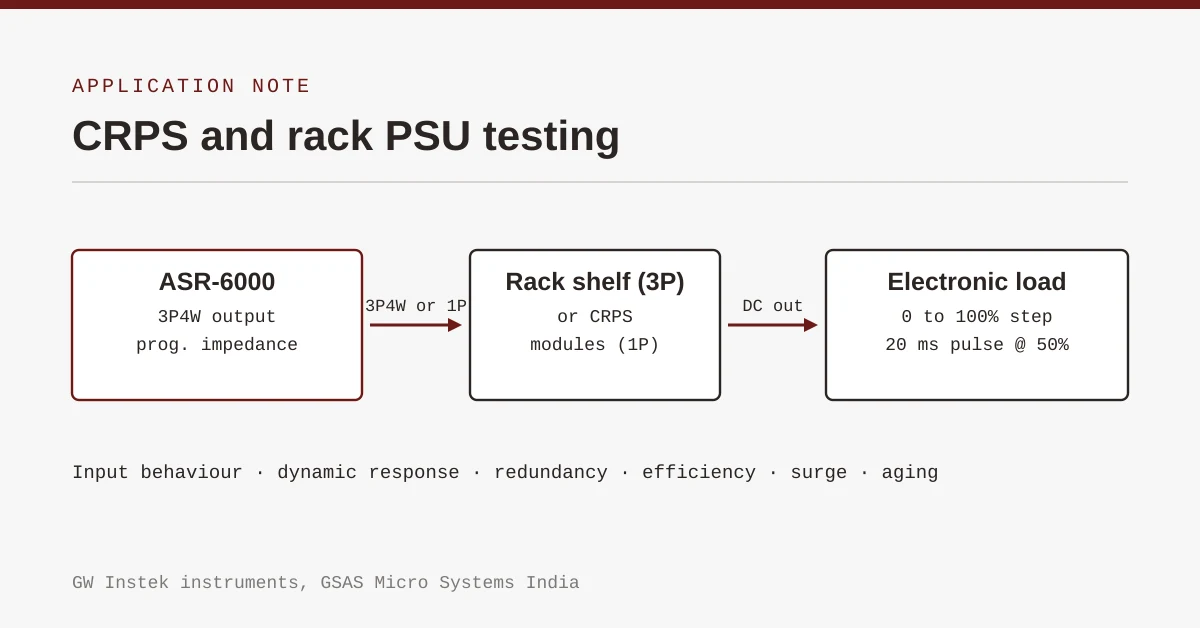
CRPS and Rack Power Supply Testing: The Six Tests That Matter
7 Oct · 7 min