Two Architectures, One Family
The PEL-5000 family consists of two product lines optimized for different test scenarios:
PEL-5000G: the high-voltage, high-transient variant. With 1200 V maximum input voltage, Turbo Mode for 1.5x transient current capability, and Surge Mode for pulse-load simulation, the PEL-5000G targets applications where the DUT operates at high voltages or produces transient events that exceed steady-state ratings.
PEL-5000C: the high-power parallel variant. Designed for aggregate loads up to 192 kW through 8-unit parallel operation, with CV (constant voltage) mode available even in parallel configuration and built-in MPPT test capability for solar panel characterization.
PEL-5000G: Turbo and Surge Modes
Standard electronic loads are rated for continuous operation at their nameplate current. When a DUT produces a current spike, motor inrush, capacitor charging, fault events, the load must either absorb it (risking overcurrent protection trips) or be oversized for the transient.
The PEL-5000G’s Turbo Mode addresses this by providing 1.5x the rated current for transient events. A 100A-rated PEL-5000G can absorb 150A transients without tripping, eliminating the need to oversize the load for occasional current peaks.
Surge Mode extends this further for pulse-load applications, testing pulsed power supplies, radar transmitters, and other equipment that delivers energy in short, high-current bursts.
1200 V Input Range
The 1200 V maximum input voltage covers the voltage range of modern EV battery packs (400V and 800V architectures), high-voltage DC bus systems, solar string inverters, and industrial DC power distribution. A single PEL-5000G unit can test DUTs from 0 to 1200 V without range switching or reconfiguration.
PEL-5000C: Parallel Scaling to 192 kW
The PEL-5000C supports up to 8 units in master-slave parallel operation. Under master-slave control, the parallel array behaves as a single logical load, the master unit distributes the load setpoint across all slave units, handles current sharing, and presents a single communication interface to the test automation system.
Key parallel capabilities:
- 192 kW aggregate: 8 units at 24 kW each
- CV in parallel mode: constant voltage regulation maintained across the parallel array, essential for battery simulation where the load must hold a specific voltage
- Dynamic load sharing: automatic current balancing across parallel units without manual trimming
Solar Panel MPPT Testing
The PEL-5000C includes a built-in MPPT (Maximum Power Point Tracking) test mode that sweeps the I-V curve of a solar panel or panel string. The load automatically varies the operating point across the full voltage-current envelope, records the power at each point, and identifies the maximum power point.
This capability is directly relevant to India’s solar manufacturing and installation sectors. Panel manufacturers use MPPT testing for production quality verification, confirming that each panel meets its rated power output. Installers and system integrators use it for commissioning verification of installed strings.
EV Charger Testing Application
India’s EV charging infrastructure is expanding rapidly, with DC fast chargers operating at 50 kW to 350 kW. Testing these chargers requires an electronic load that can simulate the battery pack being charged, absorbing the charger’s DC output while maintaining the voltage profile that the charger expects.
The PEL-5000C in parallel configuration provides the power absorption capacity, while CV mode simulates the battery voltage profile. Combined with a DAQ-9600 for measurement and logging, this creates a complete DC fast charger test station.
For charger manufacturers in Bengaluru, Pune, Chennai, and Hyderabad, the PEL-5000C parallel array provides a scalable test solution that grows with production volume.
Availability Through GSAS
GSAS Micro Systems provides the PEL-5000G and PEL-5000C in India as an authorized GW Instek partner. Services include load sizing for your specific DUT, parallel array rack configuration, SCPI automation integration, and demo units from offices in Bengaluru, Hyderabad, Chennai, Pune, Mumbai, and Delhi NCR.
Also appears in:
Interested in GW Instek tools?
Talk to our application engineers for personalized tool recommendations.
More from GW Instek
View all →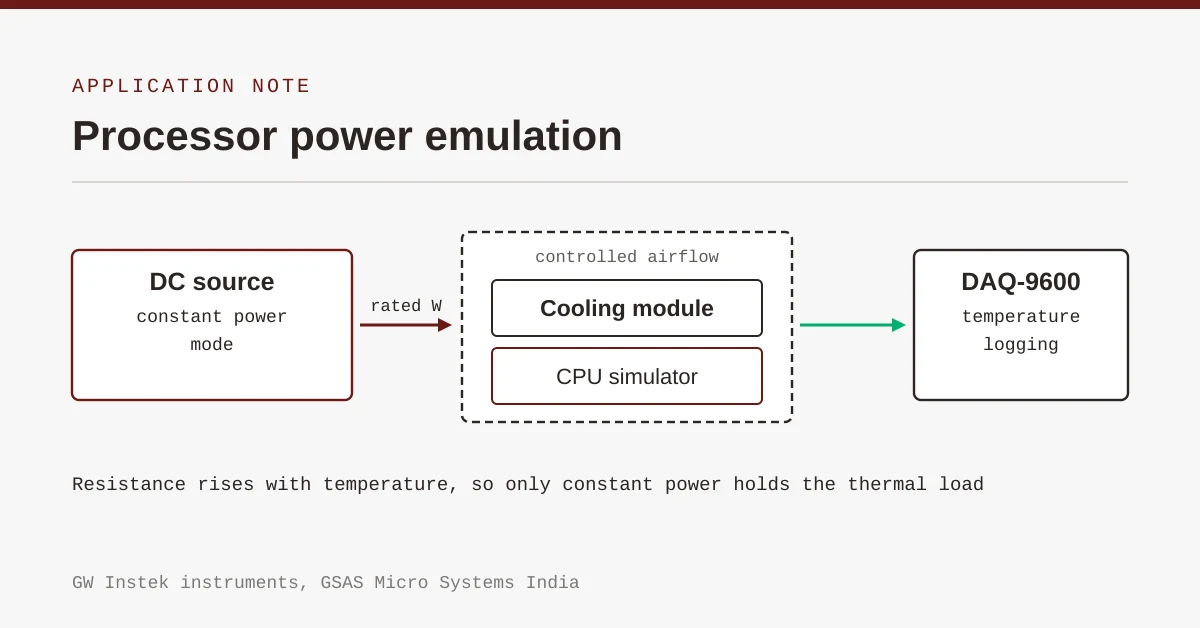
Emulating Processor Power for Thermal Testing: Why Constant Power
7 Oct · 7 min
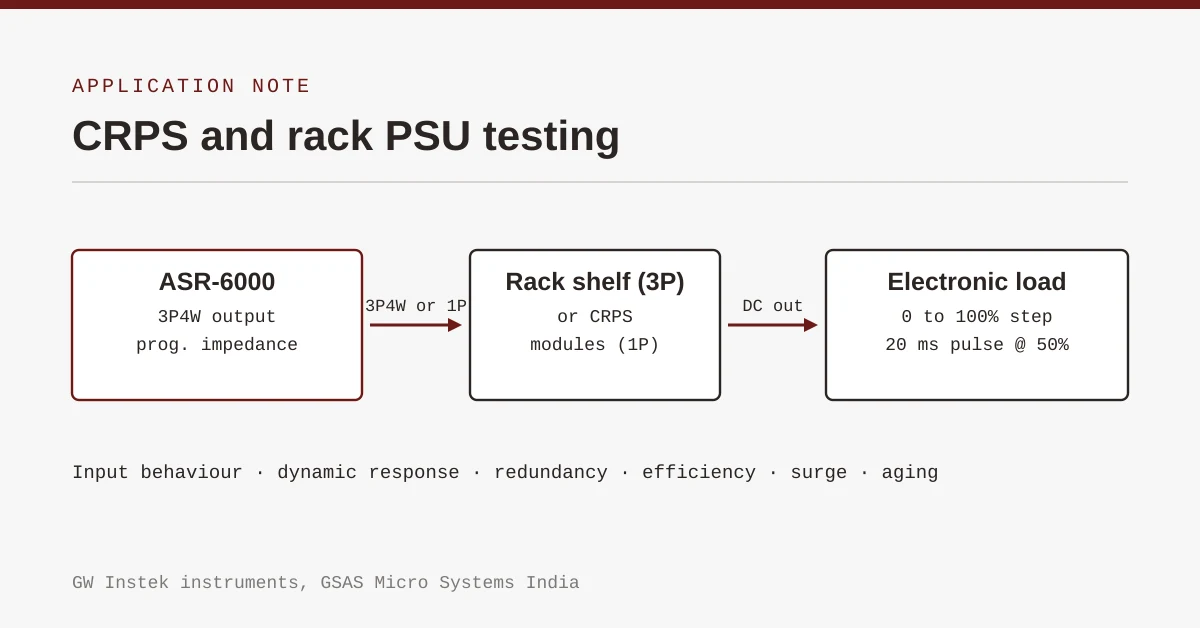
CRPS and Rack Power Supply Testing: The Six Tests That Matter
7 Oct · 7 min
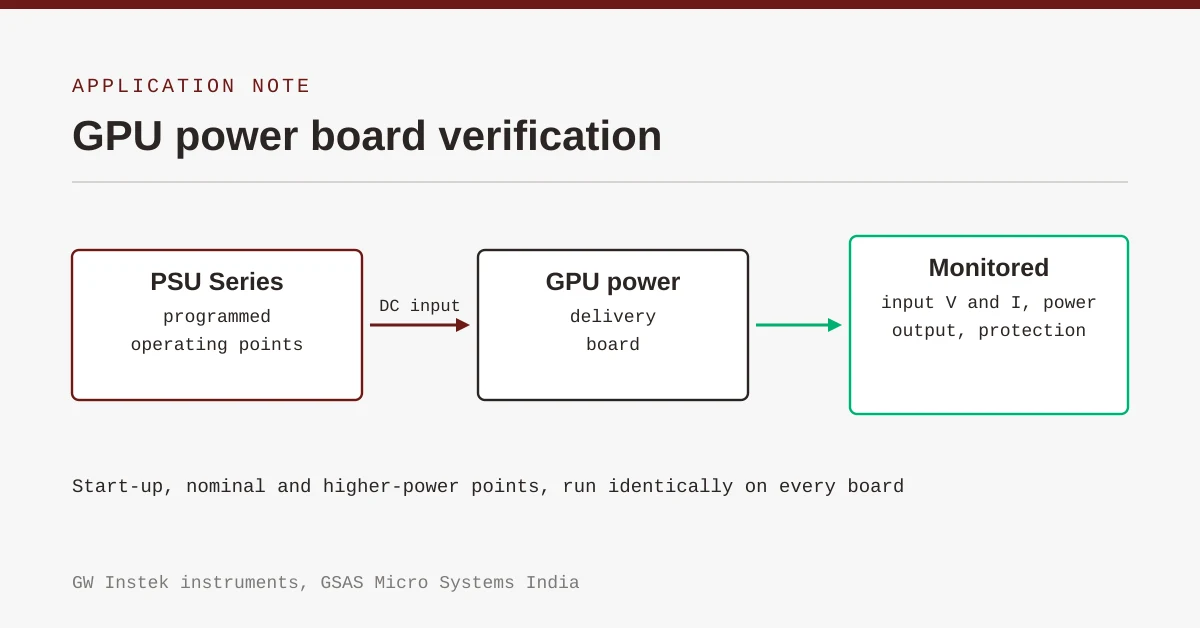
GPU Power Board Testing: DC Input Verification Before Integration
7 Oct · 6 min
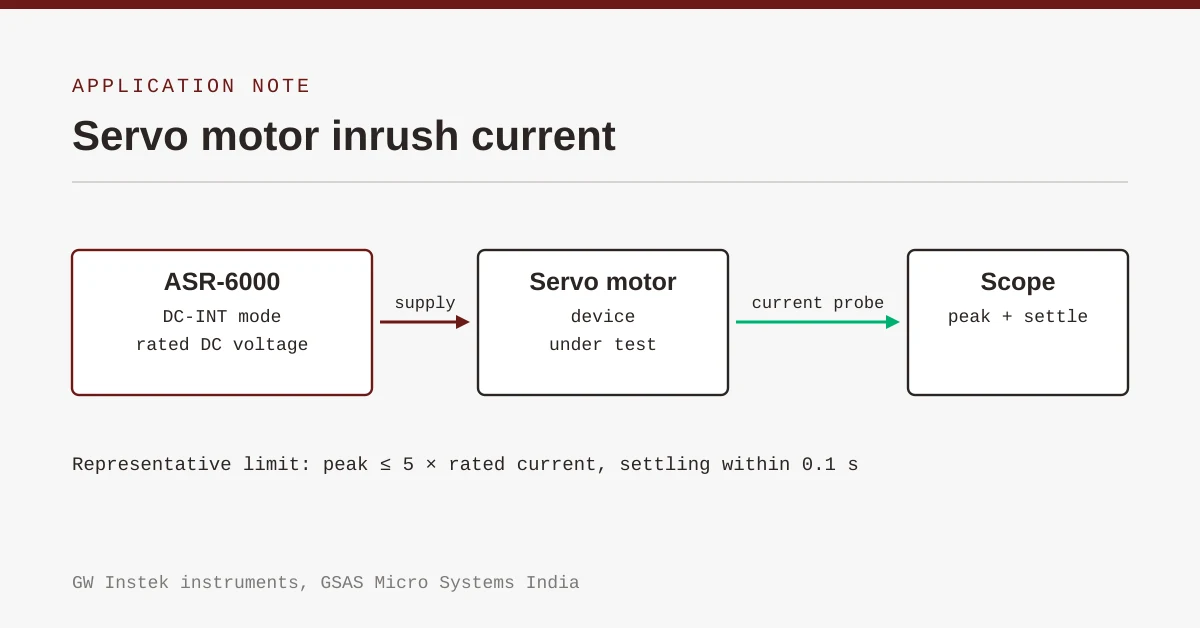
Servo Motor Inrush Current Testing: Method, Limits and Bench
7 Oct · 6 min
SuperTest Van Gogh 6.0: C23, C++23 and the C++20 Modules Gap
6 Oct · 7 min
AI Inside the Engineering Process: What Is Worth Automating, and What Still Needs an Engineer
21 Sept · 11 min