
The Legacy Electronics Problem
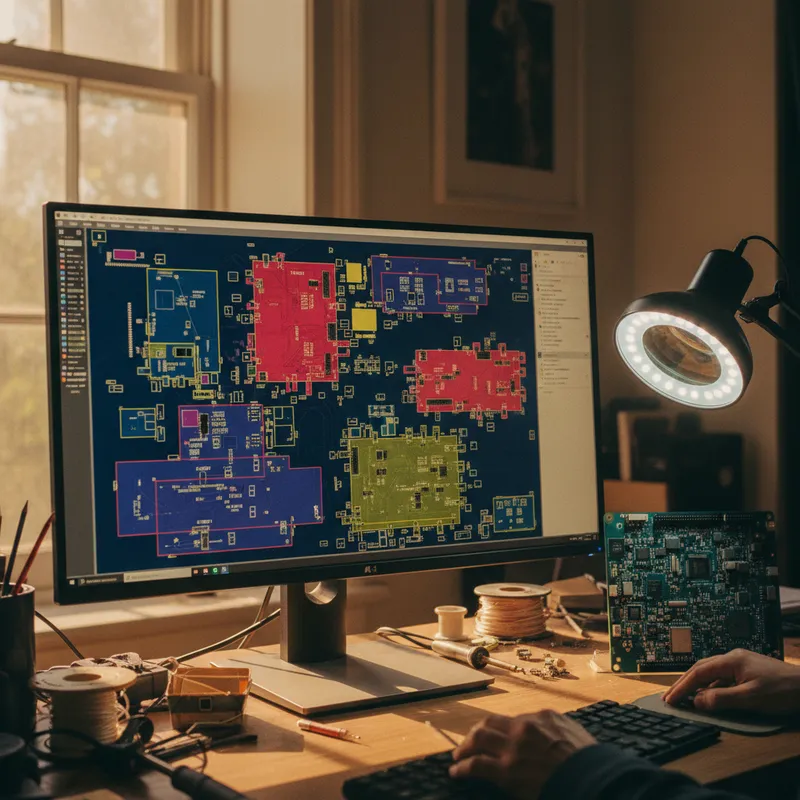
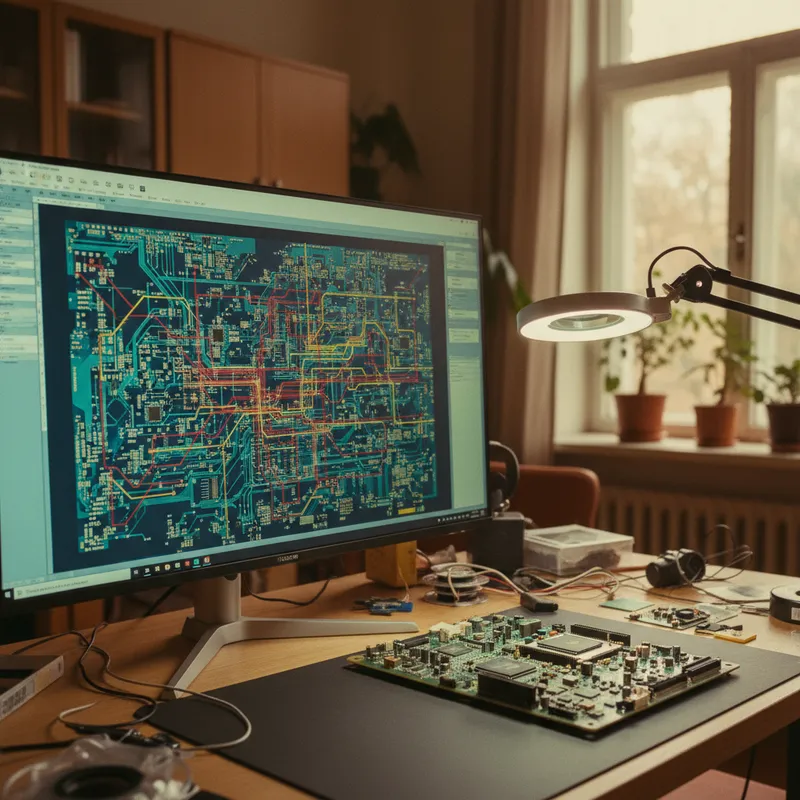
Across India, critical infrastructure depends on electronic systems designed and manufactured 10, 15, or even 25 years ago. Defence platforms, railway signalling systems, power generation controls, industrial automation, and medical imaging equipment all contain PCBs that were state-of-the-art when installed but are now well past their original design life.
These boards cannot simply be replaced. The original manufacturer may have ceased production. The components on the boards may be obsolete. The design documentation, schematics, netlists, bill of materials, may be lost, restricted, or never available to the end user. Yet the equipment must continue operating because the replacement system costs crore and takes years to deploy.
This is where VI curve tracing becomes indispensable.
Why Conventional Diagnostics Fail on Legacy Boards
No Schematics
Traditional troubleshooting relies on schematics to trace signal paths, identify voltage rails, and locate test points. For legacy boards where schematics are unavailable, either because the OEM does not release them, or because the documentation has been lost over decades, conventional troubleshooting becomes guesswork.
Obsolete Components
When a fault is identified on a legacy board, the failed component may be a part number that has been obsolete for a decade. Finding a suitable replacement requires understanding exactly what the component does and what its specifications are, information that is difficult to obtain without design documentation.
No Replacement Boards
The board-swap approach fails entirely when no replacement exists. The only option is board-level repair.
How VI Curve Tracing Solves the Problem
VI curve tracing addresses all three challenges through a single principle: you do not need to understand the circuit to diagnose the fault.
The Golden Reference Approach
-
Start with a working board. Every legacy system has at least one operational unit, or can source one from a sister installation, a storage facility, or a retired-but-functional system.
-
Record the golden reference. Using a FADOS 9F1 or FADOS 7F1, probe every accessible test point on the working board and store the VI curve signatures in the FADOS reference database. For comprehensive coverage, the FADOS MUX can automate this across up to 100 points.
-
Compare the faulty board. Probe the same test points on the failed board. The FADOS software overlays the measured curves against the stored reference, immediately highlighting which nodes have deviated.
-
Interpret the deviations. A node that shows a vertical line where the reference shows a capacitive ellipse indicates a short. A node showing a horizontal line where the reference shows a semiconductor junction indicates an open. The technician does not need to know the circuit design, the deviation pattern itself identifies the fault type.
-
Replace the faulty component. With the fault localized to a specific component, the technician can identify the part (by marking, package type, and board position), source a suitable replacement (including cross-referenced modern equivalents for obsolete parts), and perform the repair.
Building a Reference Library
For organizations maintaining fleets of legacy equipment, defence depots, railway workshops, industrial plants, building a reference library is a strategic investment:
- Record references from every operational board type in the fleet
- Label and version-control the references by board part number and revision
- Store backup copies of reference databases off-site
This library becomes more valuable over time as working boards become scarcer. The reference captured today from a functioning board may be irreplaceable in five years.
Applications in India
Defence Electronics
India’s defence sector maintains platforms with operational lifetimes of 20–30 years. Radar systems, communication equipment, electronic warfare suites, and weapon system controllers all contain legacy PCBs. Base repair depots (BRDs) and depot-level maintenance facilities in Bengaluru, Hyderabad, and other locations are increasingly adopting VI curve tracing for legacy board repair.
Railways
Indian Railways operates signalling, communication, and control systems spanning multiple decades of technology. Interlocking systems, axle counters, track circuits, and station automation controllers contain boards that must be maintained for the life of the installation.
Industrial Automation
Manufacturing plants across India, in Pune, Chennai, Coimbatore, Ahmedabad, and the industrial belts of western and southern India, rely on PLCs, DCS controllers, and custom boards from the 2000s and earlier. Downtime from a failed board can cost lakhs per hour in lost production.
Medical Equipment
Hospitals and diagnostic centres maintain CT scanners, MRI systems, ultrasound machines, and patient monitoring equipment with boards that are 10–15 years old. OEM service contracts are expensive, and board-level repair offers a cost-effective alternative.
The Organizational Shift
Adopting VI curve tracing for legacy maintenance is not just a tool purchase, it requires an organizational commitment to build and maintain reference libraries, train technicians in signature interpretation, and integrate VI testing into maintenance workflows.
The payoff is substantial: equipment that would otherwise be retired for lack of maintainability remains operational, at a fraction of the cost of system replacement.
Why Buy FADOS from GSAS
GSAS Micro Systems is an authorized ProT Ar-Ge partner and ODM assembler. We work with defence depots, railway workshops, industrial plants, and medical service organizations to deploy VI curve tracing for legacy board maintenance.
Offices in Bengaluru, Hyderabad, Chennai, Pune, Mumbai, Delhi NCR, and Visakhapatnam.
- INR invoicing with GST-compliant documentation
- On-site training tailored to your specific legacy board types
- Reference library development assistance
- Local service and calibration
Also appears in:
Interested in ProT Ar-Ge tools?
Talk to our application engineers for personalized tool recommendations.
More from ProT Ar-Ge
View all →
FADOS Test Reports and GSAS Agent: Turning Board Test Results into an Auditable Record
4 Aug · 8 min
FADOS Circuit Board Tester: Complete Guide for Indian Repair Teams
16 Apr · 13 min
FADOS XI Frequency Scanning and VI Curve Tracing for PCB Diagnostics
16 Apr · 11 min
FADOS XI Non-Contact Short Circuit Detection: Find PCB Shorts in Seconds
16 Apr · 9 min
Emulating Processor Power for Thermal Testing: Why Constant Power
7 Oct · 7 min
CRPS and Rack Power Supply Testing: The Six Tests That Matter
7 Oct · 7 min