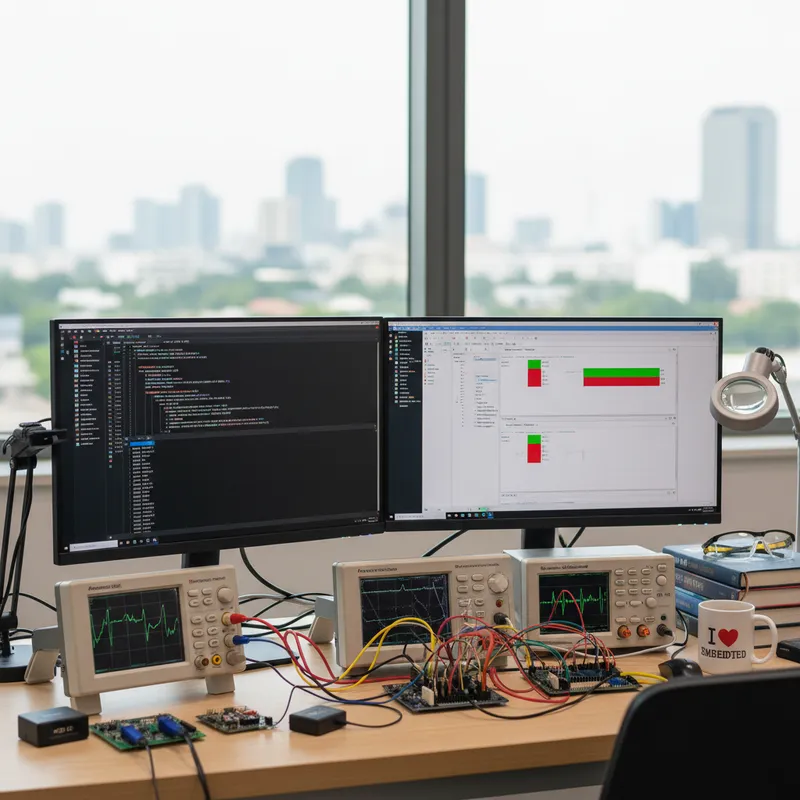
Getting Started With File Comparison, featured image

Getting Started With File Comparison

GSAS Engineering · · 1 min read

Getting Started With File Comparison

One major benefit of using a version control system is the ability to compare PCB design revisions against one another. If you’re comparing code, using a code difference tool is relatively straightforward. You’re just comparing text.

But if you are comparing PCB designs, you need a version control system that is electrically intelligent. It’s important to know who made a change, and when they made it. Altium Designer® and Altium 365® make file comparison easy.

You can compare schematics and layouts in detail locally, or through any web browser.

Join us in this webinar where we’ll cover:

  • Advantages of comparing PCB design data
  • What file types can be compared
  • How to locally and remotely compare different versions of your design files
  • How to revert to a previous project version

Timing:

Wednesday, 28th September 2022 | 2:30 PM to 03:30 PM

Webinar Recording


About GSAS Webinar Series

GSAS Micro Systems regularly hosts webinars, workshops, and technical seminars to help India’s embedded engineering community stay current with the latest tools, techniques, and industry standards. Our events feature hands-on demonstrations and expert guidance from our applications engineering team.

Request a private session for your engineering team, or browse our complete event archive.

Also appears in:

Need embedded development tools?

Talk to our application engineers for personalized tool recommendations.
Stay in the Loop

Get monthly compliance updates, product insights, and engineering best practices delivered to your inbox.

Related Articles

I3C FAQ for firmware teams covering MIPI I3C bus fundamentals, tooling and adoption in India, from GSAS
Technical Guides Binho Semiconductor Design

I3C FAQ for Firmware Teams: What the Bus Is, What Changes, and What You Need on the Bench

MIPI Alliance describes I3C as the successor to I2C, with legacy compatibility so that I3C and I2C devices can coexist on the same bus, a two-wire interface that supports in-band interrupts to reduce pin count, plus multi-controller support and dynamic addressing. This FAQ answers the questions firmware teams actually ask before adopting it.

31 Jul 2026 · 8 min read
Binho Supernova running in I3C target mode to emulate a device against a customer controller, supported in India by GSAS
Technical Guides Binho Semiconductor Design

Running the Binho Supernova as an I3C Target: Emulating a Device Against Your Own Controller

Binho specifies the Supernova's I3C role as Controller or Target, which means the same adapter can stand in as the device under test rather than only driving one. That second direction is how a team validates its own I3C controller, its ENTDAA implementation and its interrupt handling, before the target silicon exists.

31 Jul 2026 · 7 min read
Functional verification engineer in India reviewing RTL waveforms, coverage charts and a regression dashboard, Siemens Questa One and the Questa Prime to Questa One rename explained by GSAS
Questa Siemens EDA Semiconductor Design

What Happened to Questa Prime and ModelSim?

Siemens has consolidated its Questa verification line under a single brand. The Questa product hub now returns a 301 redirect to the Questa One page, the ModelSim URL redirects to Questa One Sim, and Questa Prime no longer appears on any Siemens public product page. Here is what Questa One actually contains, what Siemens says the word One means, and what Indian verification teams should check before treating this as only a name change.

31 Jul 2026 · 11 min read