The global market for automotive domain controllers reached $4.8 billion in 2024 and is projected to reach nearly $14 billion by 2032, growing at 10.9% annually (Fortune Business Insights). This isn’t incremental growth, it’s a fundamental shift in how vehicles are architected.
From 150 ECUs to Centralized Compute
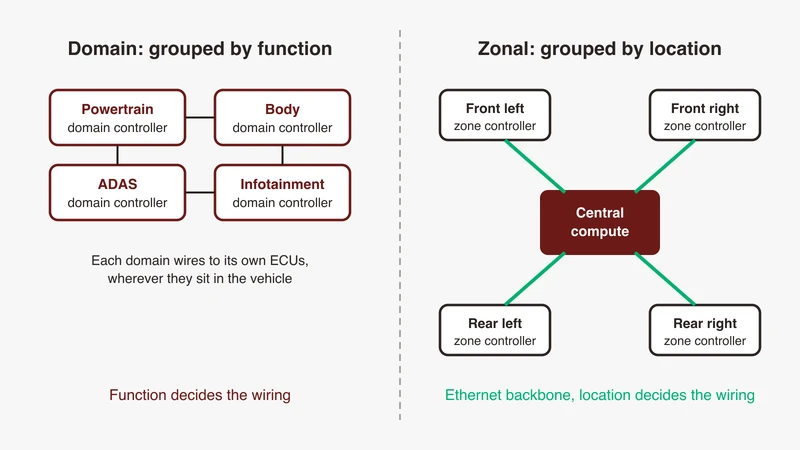
Modern vehicles are transitioning from 100–150 isolated electronic control units to interconnected domain controllers that serve as central hubs. Each domain controller manages an entire vehicle domain, powertrain, driver assistance, body electronics, or infotainment, enabling real-time data exchange, function coordination, and intelligent decision-making.
The Software-Centric Shift
This architectural evolution is driving several fundamental changes:
- Centralized compute stacks within new E/E architectures
- High-performance compute (HPC) chips: multicore Arm Cortex-A/R processors replacing simple microcontrollers
- Modular System-on-Chips (SoCs) for flexible, tailored domain solutions
- Software-defined functionality where features are delivered and updated via OTA
Impact on Indian Engineering Teams
For India’s automotive engineering community, domain controllers mean rethinking development workflows at every level, from architecture simulation and multi-core debug to functional safety certification and production programming.
GSAS provides the toolchain for this transition: Arm Compiler 6 and Keil MDK for multi-core development, SEGGER J-Link for SWD/JTAG debug across heterogeneous cores, TESSY for ISO 26262 unit testing, and Perforce for MISRA/AUTOSAR static analysis.
Explore our automotive solutions
See the Original Post on LinkedIn
Also appears in:
Interested in Arm tools?
Talk to our application engineers for personalized tool recommendations.
More from Arm
View all →
Meet the GSAS Team at electronica India 2026, Stall H3.I45
15 Sept · 3 min
Arm's Agentic AI Push: What Indian Embedded Teams Can Actually Use Today
13 Sept · 7 min
Arm User-Based Licensing in CI/CD: armlm, Proxy Activation and What Breaks
28 Jul · 11 min
Two Arm Keil MDK Webinars This Summer: DevOps and Edge AI for Indian Cortex-M Teams
17 Jun · 4 min
Emulating Processor Power for Thermal Testing: Why Constant Power
7 Oct · 7 min
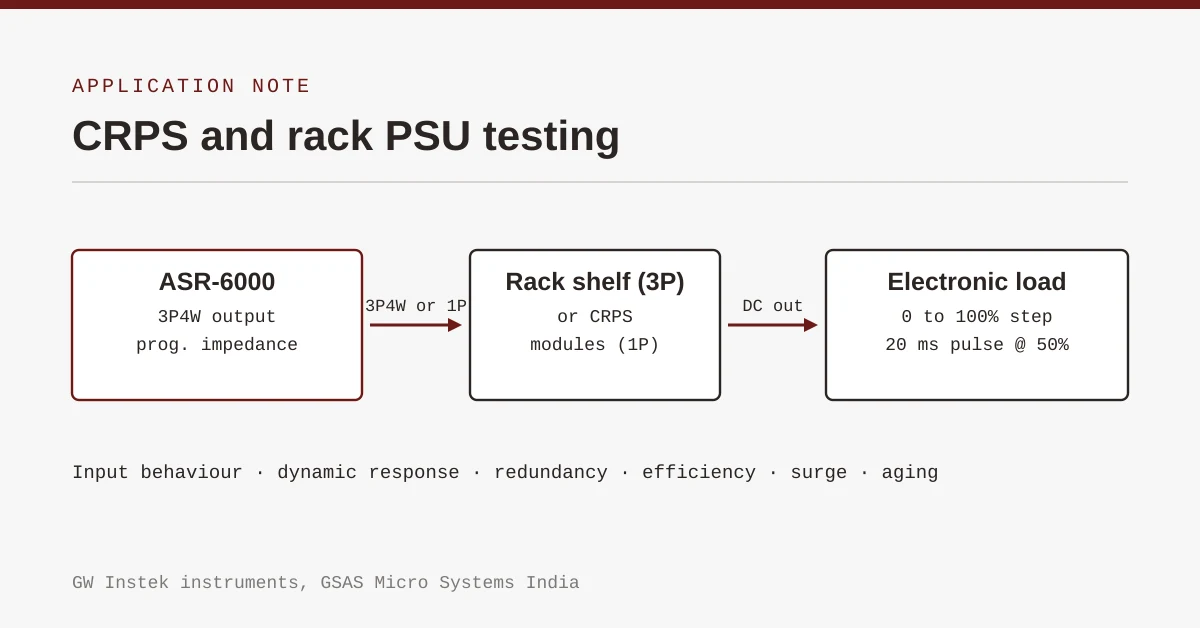
CRPS and Rack Power Supply Testing: The Six Tests That Matter
7 Oct · 7 min