Components Supply Chain Management

Components Supply Chain Management

GSAS Engineering · · 1 min read

Surprises can be fun. Surprise parties, surprise gifts and possibly surprise visits (depending on whom). Supply chain surprises on the other hand are no fun at all; they can derail your budget, deadlines, and build quality.

When electronic components become obsolete, design and production can suffer lengthy delays. With an average of 15 end-of-life notices issued every day, part obsolescence is a challenge that most engineers routinely face. In this webinar, you’ll learn about: - Introduction to IHS MarkitⓇ - Component supply information - Lifecycle status - Locate obsolete components in completed projects - Component replacement

Timing:

Friday, 14th May 2021 | 02:30 PM to 03:30 PM

Register Now!LEARN MORE ABOUT Altium Tools

Also appears in:

Interested in BQR tools?

Talk to our application engineers for personalized tool recommendations.

Stay in the Loop

Get monthly compliance updates, product insights, and engineering best practices delivered to your inbox.

Related Articles

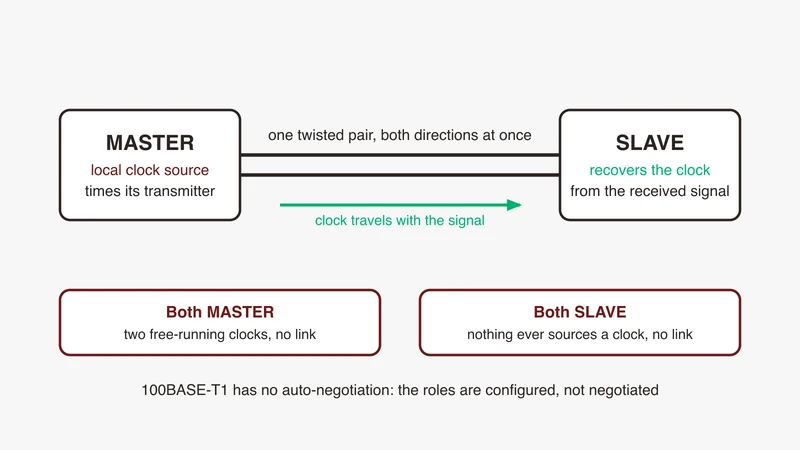
Master and slave roles on a 100BASE-T1 link: the master PHY times its transmitter from a local clock, the slave recovers the clock from the received signal, with the both-master and both-slave misconfigurations that leave the link down, from GSAS Micro Systems India
Automotive Ethernet Automotive & Mobility

100BASE-T1 Link Won't Come Up: A Vendor-Neutral Checklist

A 100BASE-T1 link that will not come up is almost never a mystery, but the answers on the web are written per silicon vendor and do not transfer. This is the ordered bring-up checklist that holds regardless of which PHY, switch or SoC you have: physical layer first, then the PHY over MDIO, then the master and slave pairing, then the causes of a link that comes up and drops. The standards and tooling claims trace to IEEE 802.3 task force records, the Linux ethtool and kernel documentation or published test material. Written by the GSAS Micro Systems engineering team in India.

29 Aug 2026 · 14 min read
Side by side comparison of a 10BASE-T1S multidrop mixing segment, one balanced pair with four nodes on short stubs and a termination at each end, against a point to point star of four separate links into switch ports, from GSAS Micro Systems India
Automotive Ethernet Automotive & Mobility

10BASE-T1S and PLCA: Multidrop Ethernet Explained

10BASE-T1S is the one member of the T1 single-pair Ethernet family that keeps a shared medium, and PLCA is the reconciliation sublayer that stops the nodes on it from colliding. This article covers what IEEE 802.3cg standardises, how the beacon and transmit opportunities schedule a cycle, the node count and segment length figures the OPEN Alliance interoperability test suite works to, and the failure modes that put a segment quietly back into contention while every link still looks up. Written by the GSAS Micro Systems engineering team in India for teams bringing up multidrop segments on the bench.

29 Aug 2026 · 12 min read
Horizontal stacked bar showing where an ADAS test vehicle's bandwidth budget is spent, split into cameras, lidar, radar and bus traffic, with the logger uplink limit drawn as a vertical rule crossing the bar, from GSAS Micro Systems India
Automotive Ethernet Automotive & Mobility

ADAS Sensor Data Logging: Bandwidth Budgets That Add Up

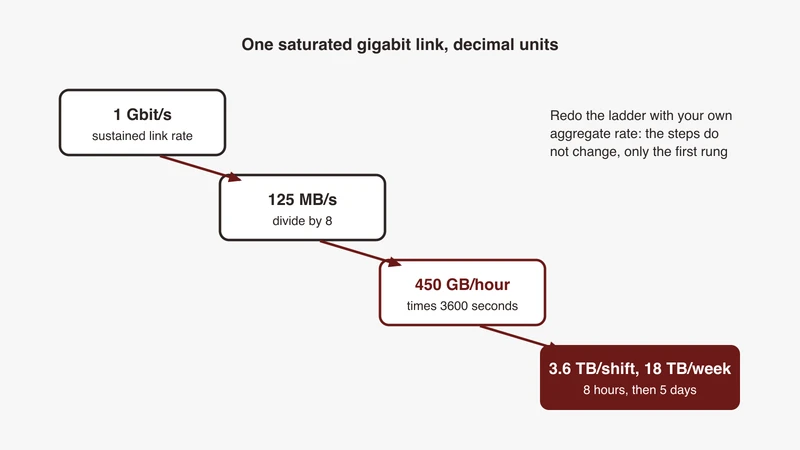
Every page that tells you an ADAS test vehicle produces terabytes a day states the headline and skips the arithmetic, so you cannot redo it for your own sensor set. This article publishes the arithmetic instead: one formula, every table row derived on the page, a worked eight-hour drive that chains those rows into a sustained write rate, a media count and an offload window, and the five places bandwidth budgets go wrong. Written by the GSAS Micro Systems engineering team in India.

29 Aug 2026 · 15 min read