The Maintenance Optimization Problem
Every complex system, a radar subsystem, a fleet of diesel generators, a railway signaling network, an industrial process line, requires a maintenance strategy. The maintenance strategy determines when components are inspected, repaired, or replaced, how many spare parts are stocked, and where repair crews are deployed. Get the strategy wrong, and the consequences are severe: excessive downtime from under-maintenance, or excessive cost from over-maintenance.
Both outcomes are common in Indian defense and industrial operations where maintenance planning still relies on OEM-recommended intervals rather than optimized, data-driven policies.
The fundamental challenge is that maintenance optimization is a multi-variable problem with competing objectives. Increasing inspection frequency reduces the probability of failure-induced downtime but increases scheduled downtime and labor costs. Stocking more spare parts reduces wait time for replacements but ties up capital in inventory.
Assigning dedicated repair crews to critical equipment reduces response time but increases personnel costs. The optimal strategy balances all these variables simultaneously, and it changes as the system ages, as operating conditions shift, and as component reliability data accumulates from field experience.
BQR’s apmOptimizer is purpose-built to solve this problem. It models the asset as a system of interconnected components with failure distributions, maintenance policies, logistics constraints, and cost structures, then uses analytical optimization to find the maintenance and logistics policy that minimizes life cycle cost while maintaining a target availability.
Core Modeling Capabilities
Reliability Block Diagrams and Fault Trees
apmOptimizer builds the system model using Reliability Block Diagrams (RBD) for availability analysis and Fault Tree Analysis (FTA) for safety and risk assessment. The RBD captures the functional dependencies between components, series configurations where any single failure causes system failure, parallel (redundant) configurations where multiple failures are needed, and complex configurations with standby switching, load sharing, or k-out-of-n voting logic.
The fault tree complements the RBD by modeling the logical combinations of events that lead to specific undesired outcomes, a system hazard, a mission abort condition, or a regulatory non-compliance event. Together, the RBD and fault tree provide a complete picture of how component-level failures propagate to system-level consequences.
Markov Modeling for State-Dependent Behavior
For systems with complex state-dependent behavior, standby redundancy with imperfect switching, degraded operating modes, or maintenance-induced failures, apmOptimizer uses Markov modeling. Markov models capture the transitions between discrete system states (operational, degraded, failed, under repair, awaiting spares) with transition rates derived from component failure data and maintenance policies.
This is particularly relevant for Indian defense and aerospace applications where systems operate in multiple mission phases with different reliability requirements and where maintenance can only be performed during specific operational windows.
Life Cycle Cost Analysis
Every maintenance decision has a cost dimension. apmOptimizer’s LCC analysis accounts for acquisition cost, scheduled maintenance cost (labor, materials, planned downtime), corrective maintenance cost (unplanned downtime, emergency labor, expedited spares), inventory holding cost, and disposal cost. The optimization engine finds the maintenance policy that minimizes total LCC over the planning horizon while meeting availability and safety constraints.
Optimization Modules
apmOptimizer includes several specialized optimization modules that address distinct aspects of the maintenance problem:
Level of Repair Analysis (LORA) determines the optimal repair-or-discard decision for each replaceable unit at each echelon of the maintenance organization. For an Indian defense maintenance depot, LORA might recommend that a particular LRU (Line Replaceable Unit) be repaired at the base workshop but that its sub-assemblies be discarded and replaced, based on the relative cost of repair equipment, technician training, and replacement unit procurement.
Spare Parts Inventory Optimization calculates the optimal stock levels for each spare part at each location in the logistics chain. It accounts for demand rates (derived from the failure and maintenance model), lead times, order quantities, and the cost of both overstocking and stockout.
Scheduled Maintenance Optimization determines the optimal interval for each preventive maintenance task, considering the component’s failure distribution, the cost of the maintenance action, and the cost of corrective maintenance if the component fails before the scheduled task.
Predictive Maintenance (PdM) ROI Analysis evaluates whether adding condition monitoring sensors and IIoT connectivity to an asset justifies the investment. It models the expected reduction in unplanned failures and the cost savings from condition-based maintenance against the cost of sensors, data infrastructure, and algorithm development.
Integration With BQR’s Reliability Suite
apmOptimizer shares a common parts database with BQR’s fiXtress and CARE platforms. Component reliability data, failure rates, failure modes, stress derating factors, flows from fiXtress’s design-phase analysis into apmOptimizer’s operational maintenance model. Field failure data collected through BQR’s Field Data Analysis module feeds back into both platforms, creating a closed-loop reliability improvement process.
This integration is valuable for organizations that manage both the design and the sustainment of their systems, common in Indian defense establishments, public sector undertakings, and vertically integrated manufacturers.
Why Buy BQR apmOptimizer From GSAS
GSAS is an authorized engineering partner in India, providing apmOptimizer licenses with INR invoicing, installation support, and application engineering from offices in Bengaluru, Hyderabad, Chennai, Pune, Mumbai, and Delhi NCR. Our reliability engineering team assists with initial system modeling, data migration from spreadsheet-based maintenance plans, and training for reliability and logistics engineers.
Contact sales@gsasindia.com or call +91 80 6590 1783 to schedule a technical evaluation.
Also appears in:
Interested in BQR tools?
Talk to our application engineers for personalized tool recommendations.
More from BQR
View all →
BQR CARE Deep Dive: Unified RAMS Analysis for Safety-Critical Systems
5 Apr · 7 min

fiXtress Deep Dive: PCB Reliability Prediction and Automated Schematic Review
5 Apr · 7 min

Design for Reliability: Catching PCB Failures Before They Happen
5 Apr · 7 min

FMEA and FMECA for Indian Defense Programs: A Practical Guide
5 Apr · 7 min
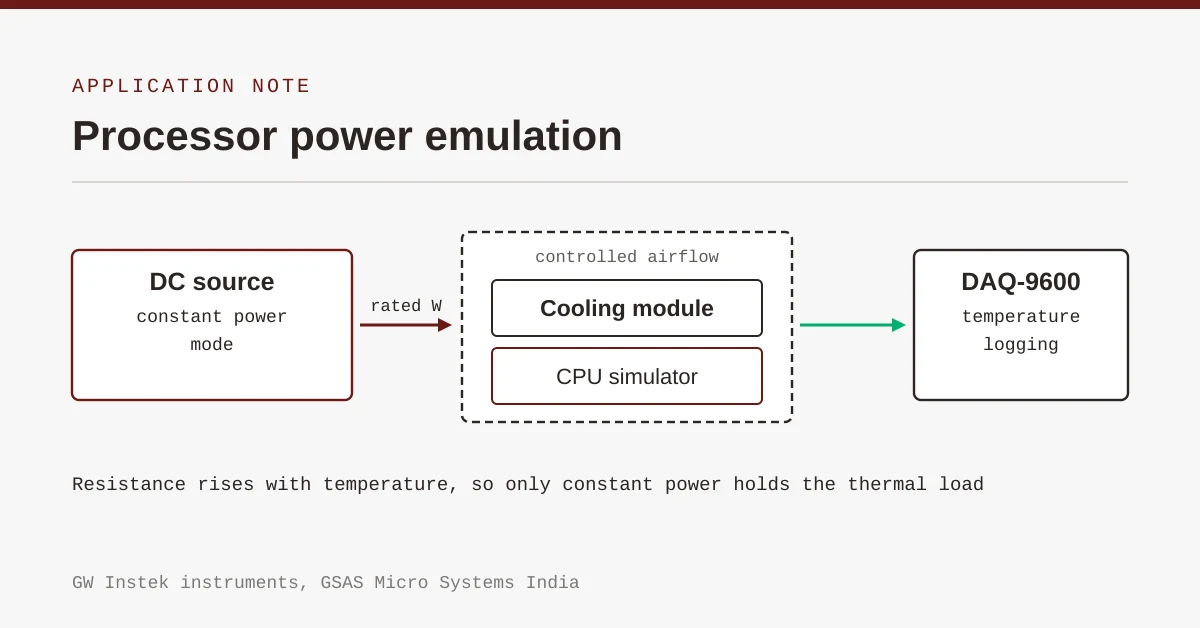
Emulating Processor Power for Thermal Testing: Why Constant Power
7 Oct · 7 min
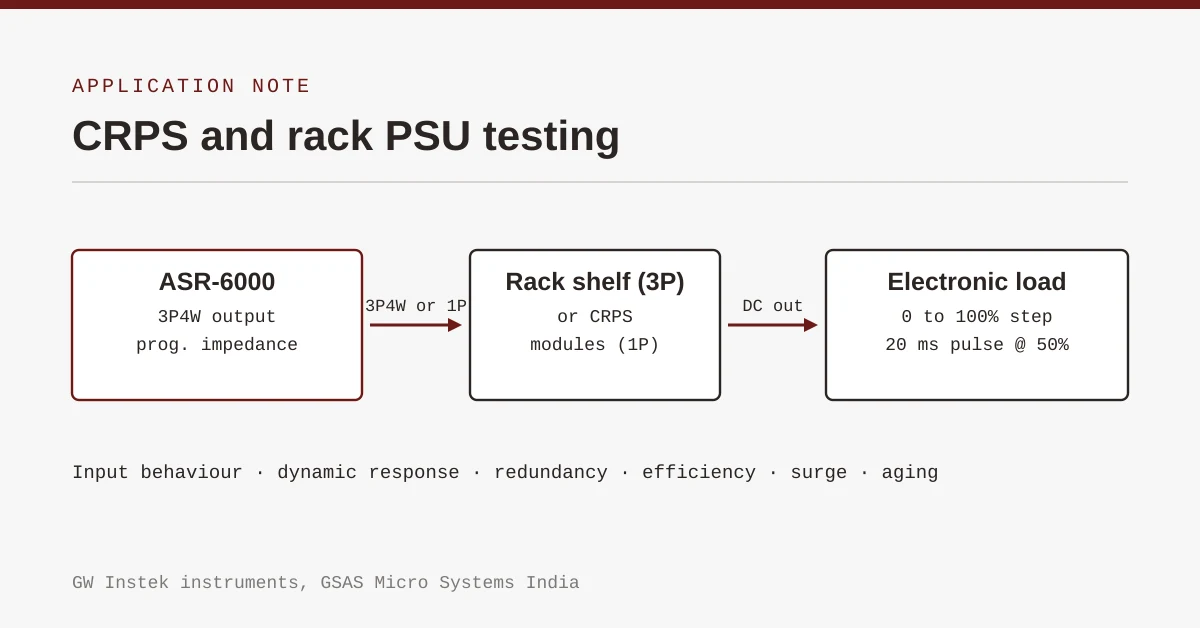
CRPS and Rack Power Supply Testing: The Six Tests That Matter
7 Oct · 7 min