
Solid Sands released SuperTest Van Gogh 6.0 on 23 September 2026, adding more than 1,900 handcrafted tests to its compiler test and validation suite. The headline is C23 and C++23 coverage. The more useful number sits further down the announcement, and it is about compilers you are probably already shipping with.
What is in the release
Per Solid Sands, Van Gogh 6.0 adds:
- 173 tests for C++20 modules, which completes its testing of C++20 language features
- 440 tests for C++23, covering all language features in some 45 standard committee papers, including deducing this, multidimensional subscripts, the
zsize_t suffix, UTF-8 support andif consteval - 480 tests for C23, supporting more than 40 committee papers including
trueandfalse,constexpr,{}initialization and new C23 library features - Extended coverage of the C++
<algorithm>and<functional>headers, and tests for Unicode characters in source files
Existing suites for earlier C and C++ versions continue to be maintained.
The number that should change a conversation
Solid Sands tested three mainstream compiler platforms against its new modules suite:
Each of the three mainstream compiler platforms tested – GCC, Clang and MSVC – currently fails approximately 20% of SuperTest’s 173 tests for C++20 modules.
Read that carefully, and read Solid Sands’ own framing of it, because the framing is the responsible part:
Rather than indicating that these compilers are unsuitable, the results provide developers and compiler teams with objective information about implementation maturity and help identify areas requiring further refinement.
That is not a scandal and Solid Sands does not present it as one. C++20 modules are, as CTO Marcel Beemster puts it, “complex to implement, and comprehensive support across mainstream compilers has taken several years to develop”. Solid Sands calls modules “one of the standard’s most complex additions”. A one-in-five failure rate on a feature of that difficulty, in a standard published at the end of 2020, is roughly what maturity looks like mid-curve.
But it does change a conversation that happens on a lot of Indian programmes. “We are on GCC, so the language features in the standard work” is an assumption, not a finding. For most of C++20 it holds. For modules, on the evidence Solid Sands published, it does not hold completely on any of the three platforms they tested.
Why this matters more in a safety case than in a hobby project
If you are building a web service, a compiler bug in a module boundary shows up as a build error or a test failure and you work around it. If you are building something that goes through ISO 26262, DO-178C or IEC 62304, the compiler is a development tool whose output becomes part of the shipped executable, and the standards require you to have evidence about its behaviour rather than confidence in it.
That is the whole reason SuperTest exists, and it is why the modules result is worth more than its novelty value. Beemster’s second point in the announcement is the practical one:
The important question for compiler users is which new language features they can confidently use while maintaining reliable implementation and portability across platforms.
For an Indian team deciding whether to adopt C++20 modules on a safety-critical programme in 2027, that question now has a published, vendor-neutral place to start instead of a vendor roadmap and a hope.
Two caveats about the coverage claim, stated plainly
First, this is not when C23 and C++23 support arrived. The announcement’s own wording is that 6.0 “introduces 440 tests specifically for C++23 and 480 new tests for C23”, which is a claim about new tests rather than first-time support, and Solid Sands’ user webinar for the preceding release, Aelbert Cuyp 5.2, already carried “SuperTest’s support for C23 and C++23” on its agenda. So read Van Gogh 6.0 as deepening coverage that already existed, not opening it. Note also the asymmetry in what the announcement claims: for C++23 it says SuperTest “now supports all language features” across some 45 committee papers, while for C23 it says only that the coverage “supports more than 40 standard committee papers”, which is not a claim of complete C23.
Second, Solid Sands’ own pages disagree with each other. At the time of writing, the SuperTest product page still lists C90 to C18 and C++03 to C++20, and mentions neither C23, C++23 nor Van Gogh.
We are not going to resolve that for you by picking whichever version suits a sales conversation. The announcement is a primary source and we have reported it; the product page is also a primary source and it has not caught up, apparently for more than one release. If your qualification plan depends on C23 or C++23 coverage, confirm the scope against the release you are actually licensed for, with Solid Sands directly or through us. The difference between “the suite has tests for this” and “my licensed release has tests for this” is exactly the kind of gap that gets discovered during an audit rather than before one.
Where this sits in the verification stack
Compiler qualification is the layer most verification flows assume rather than check. GSAS supports the three tools that cover the stack together:
- Perforce QAC for static analysis of your source
- Razorcat TESSY for dynamic unit and integration testing against requirements
- SuperTest and SuperGuard to qualify the compiler and the standard library that the first two both assume are correct
The first two tell you your code is right. The third tells you the thing that translates and links it is right. On a safety case you need all three, and the modules result in this release is a tidy illustration of why the third is not a formality.
Talk to us
GSAS Micro Systems is the India engineering partner for Solid Sands, covering SuperTest, SuperGuard, the SuperTest Qualification Suite and Plum Hall, with licensing and qualification consulting from Bengaluru, Hyderabad, Chennai, Pune, Mumbai and Delhi NCR.
If you are scoping compiler qualification for an ISO 26262 or DO-178C programme, or you want to know what your licensed SuperTest release actually covers, talk to us.
Source
- Solid Sands B.V., “Solid Sands advances C23 and C++23 compiler verification with SuperTest Van Gogh 6.0”, Amsterdam, 23 September 2026. https://solidsands.com/news/solid-sands-advances-c23-and-c23-compiler-verification-with-supertest-van-gogh-6-0/
- Solid Sands B.V., SuperTest product page (for the published standards list). https://solidsands.com/products/supertest/
- Solid Sands B.V., knowledge library, “SuperTest User Webinar: Highlights of SuperTest Aelbert Cuyp 5.2” (for the 5.x release name and its C23/C++23 agenda item). https://solidsands.com/knowledge/
Also appears in:
Interested in Solid Sands tools?
Talk to our application engineers for personalized tool recommendations.
More from Solid Sands
View all →
Undefined Behaviour in Embedded C and C++
28 Jul · 16 min
GSAS Partners with Solid Sands to Bring Compiler and Library Qualification to India
9 Jun · 5 min
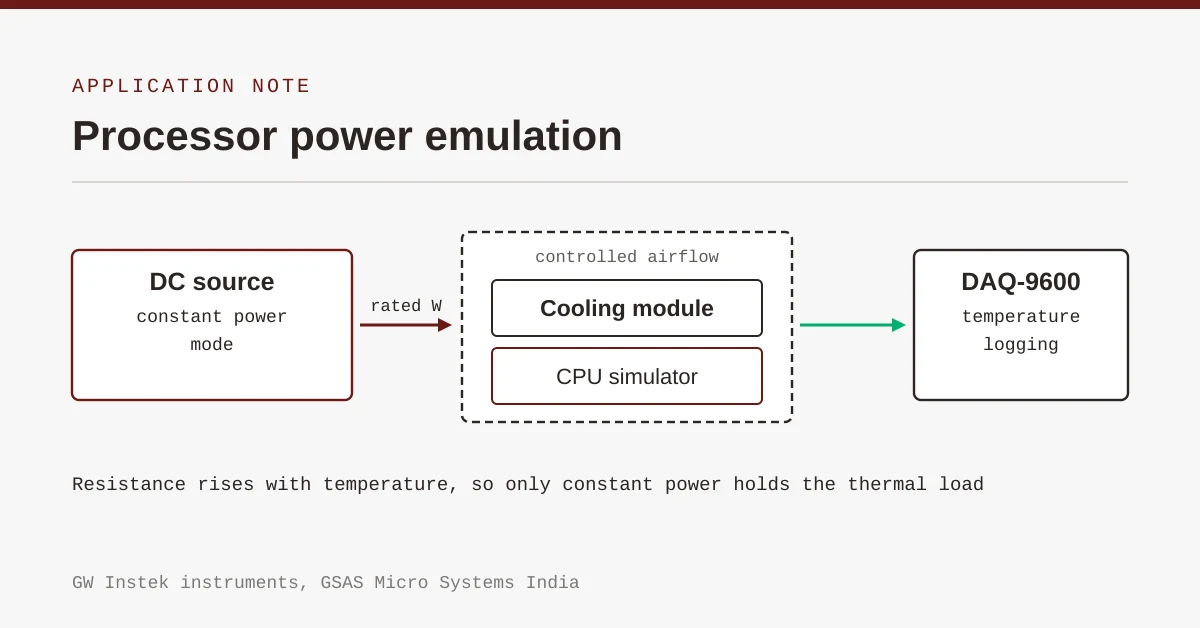
Emulating Processor Power for Thermal Testing: Why Constant Power
7 Oct · 7 min
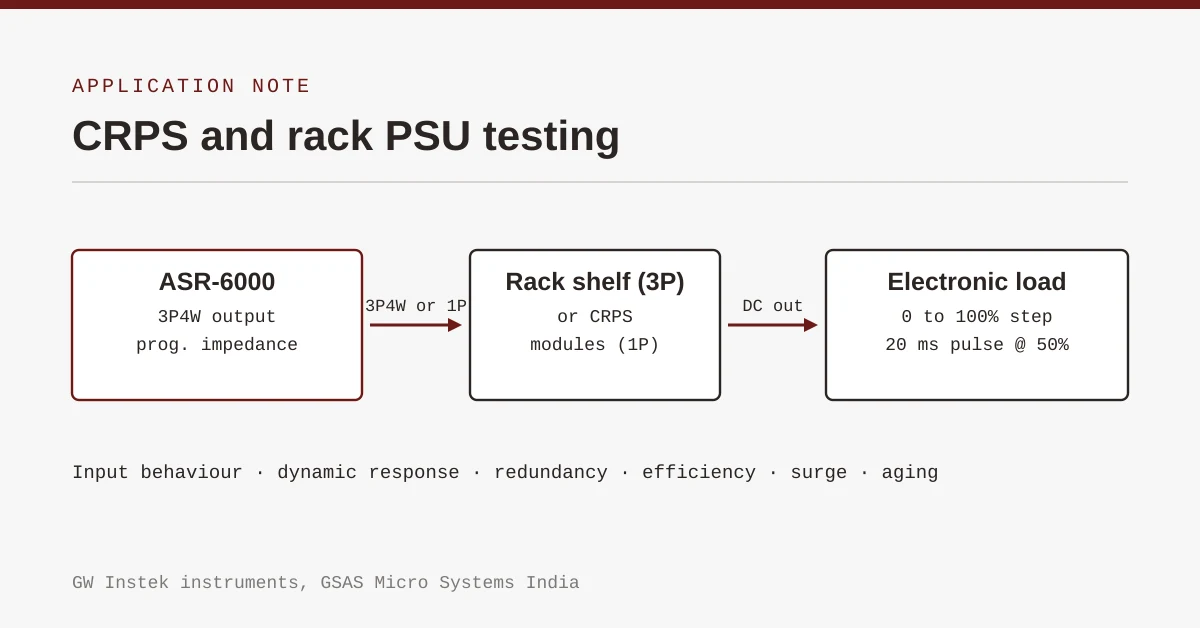
CRPS and Rack Power Supply Testing: The Six Tests That Matter
7 Oct · 7 min
GPU Power Board Testing: DC Input Verification Before Integration
7 Oct · 6 min