We are pleased to announce that GSAS Micro Systems is now the India engineering partner for Solid Sands, the Amsterdam-based company behind SuperTest and SuperGuard, the compiler and standard-library qualification suites used to build trust in the toolchains that produce safety-critical software.
For Indian teams shipping ISO 26262 automotive ECUs, DO-178C avionics, IEC 62304 medical software, and RISC-V silicon, this partnership closes a gap that most verification flows quietly leave open.
The Layer Everyone Assumes, Nobody Proves
Walk through a typical safety-critical verification flow and you will find two well-understood layers. Static analysis checks that the source you write follows the rules. Dynamic testing checks that the source behaves correctly. Both are essential, and GSAS already supplies the tools for both: Perforce QAC for MISRA and AUTOSAR static analysis, and Razorcat TESSY for dynamic unit, module, and integration testing with MC/DC coverage.
But both of those layers rest on an assumption. They assume the compiler faithfully translates your correct source into correct object code, and that the standard-library functions you call, the memcpy, the printf, the math routines, are themselves correct. The compiler and the standard library are development tools, but their output ends up inside the final executable. The functional-safety standards know this, which is why they ask you to qualify that toolchain rather than take it on faith.
That is exactly what Solid Sands does, and what GSAS now brings to India.
SuperTest and SuperGuard
SuperTest is the Compiler Test and Validation Suite. Solid Sands describes it as “the world’s most comprehensive C and C++ compiler test and validation suite”: it combines a huge collection of hand-written tests with a large body of generated tests, running into the millions of test cases. It checks a compiler against the exact version of the ISO language standard a project targets, from C90 through C18 and C++03 through C++20, across GCC, Clang, and proprietary compilers, with reporting that traces tests back to the language specifications. Per Solid Sands, SuperTest has been in continuous development since 1984.

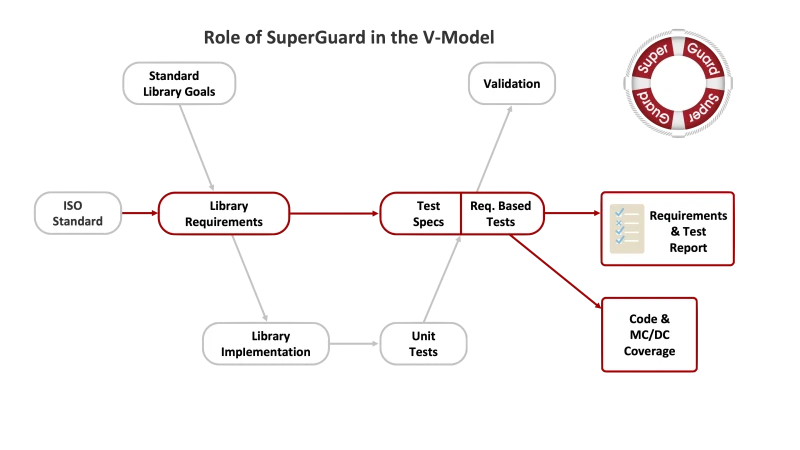
SuperGuard is the Library Safety Qualification Suite. It breaks the ISO C and C++ library specifications down into requirements and tests, and provides high structural code coverage and MC/DC for library implementations out of the box, with full requirements traceability for compliance documentation. Under IEC 62304, standard libraries are treated as Software of Unknown Provenance (SOUP); SuperGuard is how a medical or automotive team produces the evidence to justify them.
Two further tools round out the portfolio: the SuperTest Qualification Suite for packaging compiler tool-confidence evidence under standards like ISO 26262, and the Code Generator Trainer for bootstrapping a new compiler backend, useful for the growing number of Indian teams building around RISC-V and custom instruction sets.
Why It Matters for Indian Engineering Teams
India’s safety-critical software base is expanding fast: ADAS and EV powertrain firmware in automotive, flight and mission software in avionics and defence, infusion and imaging software in medical devices, motion and perception stacks in robotics and industrial automation, and a wave of indigenous RISC-V silicon. These are exactly the markets Solid Sands names for SuperTest. Each brings a functional-safety standard, and each of those standards, as documented on the Solid Sands industry pages, treats the toolchain as something to be verified:
- ISO 26262 deals with confidence in the use of software tools in Part 8, and gives MC/DC its strongest recommendation at ASIL D in Part 6.
- DO-178C and the identical ED-12C, with DO-330 / ED-215 tool qualification, govern airborne software.
- IEC 62304 classifies the standard C/C++ library as SOUP that a manufacturer must assess and justify.
With Solid Sands, an Indian team can now present a single, coherent toolchain-trust story: static analysis, dynamic testing, and compiler and library qualification, sourced and supported locally.
What GSAS Provides
As the India engineering partner for Solid Sands, GSAS Micro Systems provides SuperTest and SuperGuard licensing with INR invoicing, onboarding, and qualification consulting. Our functional-safety engineers in Bengaluru, Hyderabad, Chennai, Pune, Mumbai, and Delhi NCR help teams qualify their C/C++ compiler against the exact ISO standard version their project targets, justify their standard library, and assemble the tool-confidence evidence their safety assessment requires, integrating it with the static analysis and dynamic testing tools they already run.
If your team is building safety-critical software in India and needs to prove that the toolchain underneath it can be trusted, talk to us or request a quote. Explore the full Solid Sands range on the partner page.
Also appears in:
Interested in Solid Sands tools?
Talk to our application engineers for personalized tool recommendations.
More from Solid Sands
View all →
SuperTest Van Gogh 6.0: C23, C++23 and the C++20 Modules Gap
6 Oct · 7 min

Undefined Behaviour in Embedded C and C++
28 Jul · 16 min
Emulating Processor Power for Thermal Testing: Why Constant Power
7 Oct · 7 min
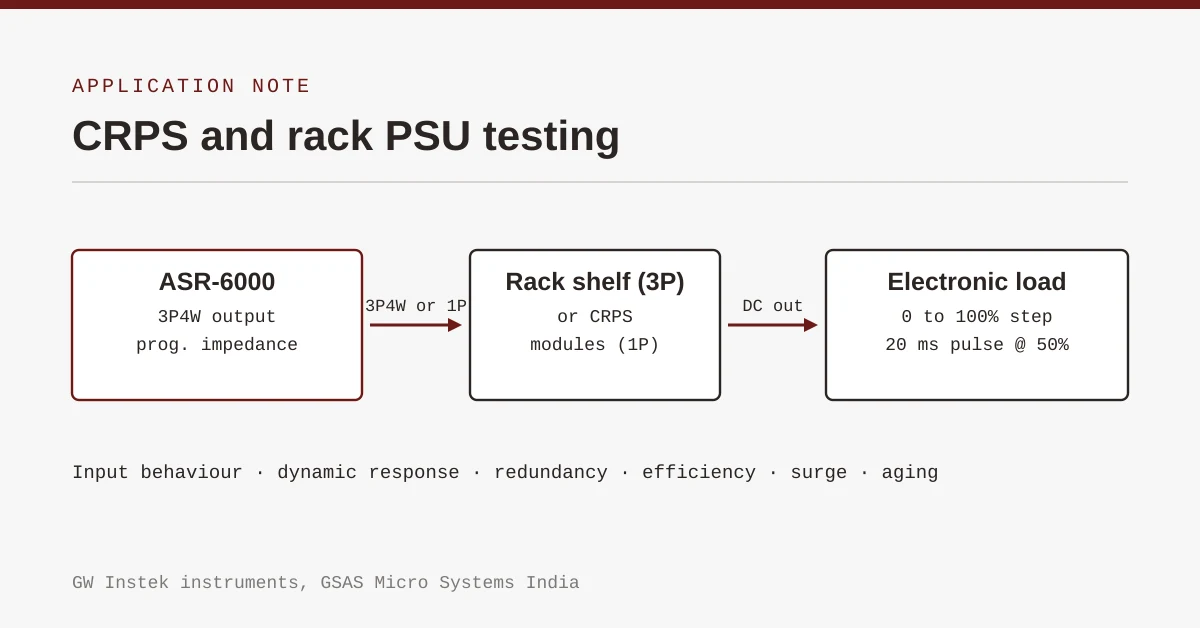
CRPS and Rack Power Supply Testing: The Six Tests That Matter
7 Oct · 7 min
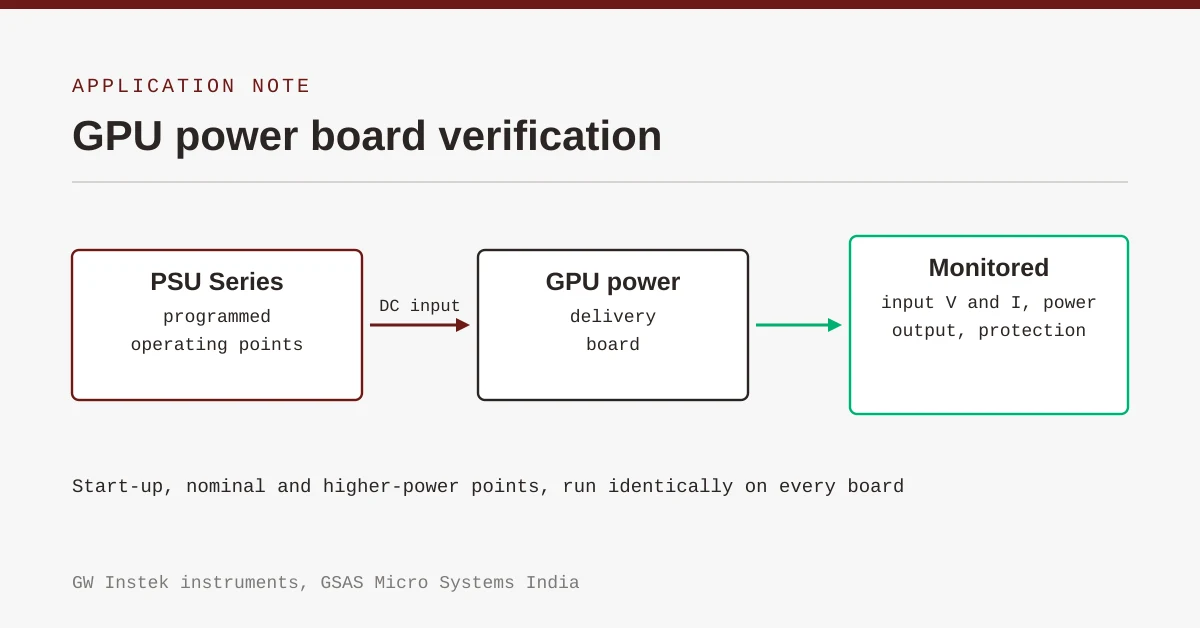
GPU Power Board Testing: DC Input Verification Before Integration
7 Oct · 6 min