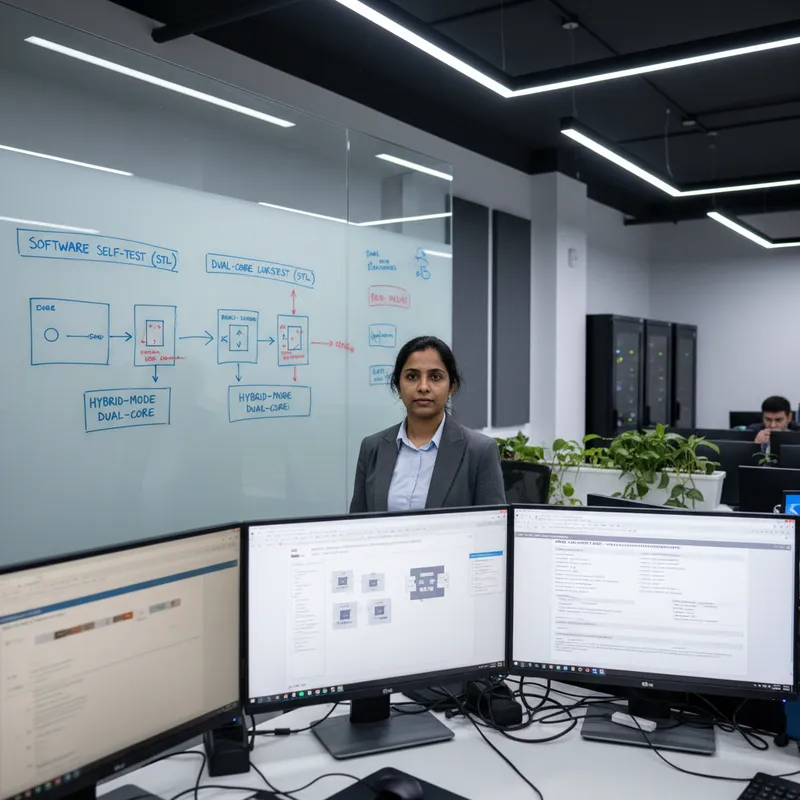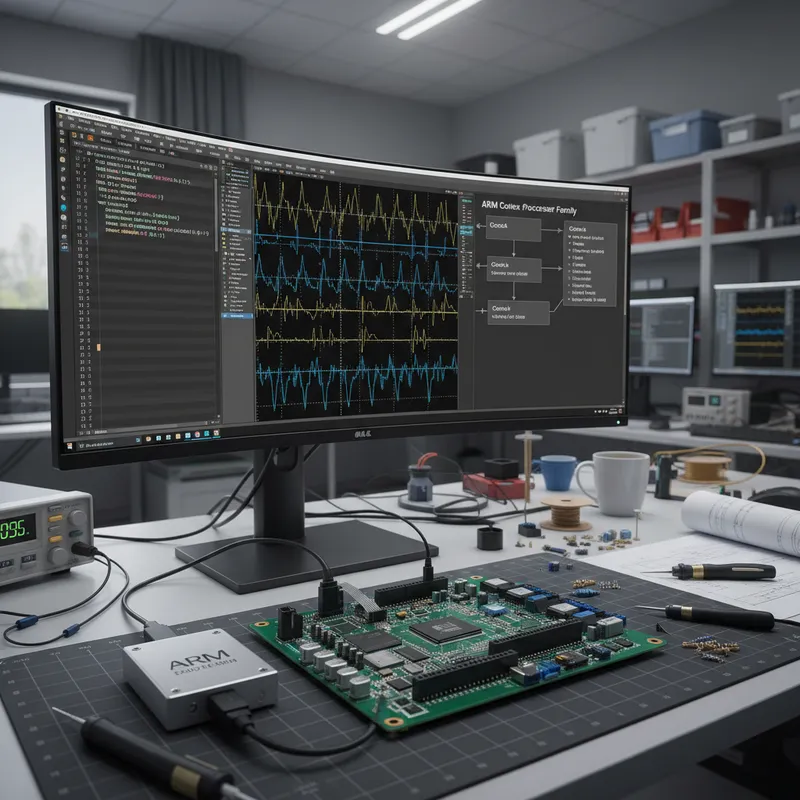
Indian automotive Tier-1s, industrial motion-control houses, medical device teams, and space-grade avionics groups all eventually hit the same question: what runs the hard real-time, safety-integrity core of the system? The answer, across brake-by-wire ECUs, motor inverters, SSD controllers, 5G baseband, and zonal automotive compute, is the Arm Cortex-R family. Cortex-R is Arm’s real-time processor profile, engineered for deterministic latency, hardware lockstep, and ISO 26262 / IEC 61508 safety evidence. If you are building to ASIL B/D or SIL 2/3, Cortex-R silicon is almost certainly inside your system. GSAS is the authorized Arm development tools engineering partner for India, and this deep-dive walks through every current Cortex-R variant, R4, R5, R7, R8, R52, R52+, R82: with a focus on how Indian safety-critical programmes actually pick between them.
What Is the Arm Cortex-R Family?
Arm organises its processor IP into three profiles: Cortex-A for application-class workloads (Linux, Android, rich OS), Cortex-M for microcontroller-class workloads (bare metal, RTOS), and Cortex-R for real-time workloads that need hard deadlines plus microcontroller-like determinism at application-processor-like performance. A Cortex-A55 can boot Linux but cannot guarantee a 10-microsecond interrupt latency under arbitrary load. A Cortex-M7 can guarantee that latency but cannot run multi-hundred-megabyte firmware stacks or hit gigahertz clocks. Cortex-R does both.
Three architectural traits define Cortex-R:
- Memory Protection Unit (MPU), not MMU. Cortex-R (except R82) uses a region-based MPU instead of a page-table MMU. That keeps address translation latency bounded and predictable, at the cost of not being able to run a general-purpose Linux kernel.
- Dual-core lockstep support. Cortex-R cores can be instantiated as two cores running the same instruction stream in parallel, with a hardware comparator flagging any divergence. This is the foundation of ISO 26262 ASIL D evidence in hundreds of production automotive ECUs.
- Tightly Coupled Memories (TCMs). Fast, deterministic on-chip memory inside the CPU latency envelope, so critical ISRs and safety monitors run with predictable cycle counts.
The profile is tuned for one question: can you prove, with hardware evidence, that this core will meet its deadline every time it runs? For Indian teams building brake ECUs, radar sensors, or launch-vehicle flight software, that is the whole job.
The Complete Cortex-R Lineup
Arm has shipped seven core designs in the Cortex-R profile:
| Core | Arm architecture | Max config | Lockstep | Intended workload |
|---|---|---|---|---|
| Cortex-R4 | Armv7-R | Single or dual-core lockstep | Yes | First-generation automotive ECUs, early SSD controllers |
| Cortex-R5 | Armv7-R | Dual-core lockstep, optional VFP | Yes | Automotive brake / ABS / EPS, motor control, SSD controllers, RPU islands |
| Cortex-R7 | Armv7-R | Dual-issue with out-of-order completion | Yes | 4G / 5G baseband modems, high-performance SSD controllers, complex safety domains |
| Cortex-R8 | Armv7-R | Up to 4-core SMP | Yes | LTE-Advanced and 5G baseband, high-bandwidth storage |
| Cortex-R52 | Armv8-R | Multi-core, real-time hypervisor, TrustZone | Yes | Automotive zonal / domain controllers, industrial safety, robotics |
| Cortex-R52+ | Armv8-R | Enhanced R52, improved virtualisation | Yes | Next-gen consolidated automotive ECUs with mixed-criticality workloads |
| Cortex-R82 | Armv8-R 64-bit | 64-bit, Linux-capable, optional MMU | No (different safety model, targets Linux-capable real-time rather than dual-core hardware lockstep) | Next-gen storage controllers, high-bandwidth networking |
Every one of these cores is still relevant today, Cortex-R4 and R5 are in ECUs that will be built for another decade, Cortex-R52 is the forward-looking automotive flagship, and Cortex-R82 is carving out the bleeding edge of storage.
Cortex-R5: The Lockstep Workhorse
The Cortex-R5 is, by volume, the most widely deployed Cortex-R core in Indian automotive and industrial programmes. It is an Armv7-R core with dual-core lockstep, an MPU, optional VFP floating-point, TCM interfaces, and a low-latency interrupt controller. It does not try to be fast in raw benchmark terms, it tries to be predictable, and its numbers under safety analysis are reproducible cycle-for-cycle.
Where you find Cortex-R5 in Indian designs:
- TI Hercules TMS570 / RM48: dual Cortex-R5 in lockstep with CPU self-test and ECC on every memory. Used in brake-by-wire, EPS and airbag ECUs built by Indian Tier-1 programmes.
- TI AM263x / AM263Px: quad and octal Cortex-R5F parts for industrial motor control, EV traction inverters, and servo drives. Indian robotics and machine-tool OEMs use these as the real-time control core with integrated EtherCAT and PROFINET.
- Xilinx / AMD Zynq UltraScale+ MPSOC, pairs a Cortex-A53 cluster with a Cortex-R5F real-time processing unit (RPU), so Linux and functional-safety firmware coexist on one die. The RPU runs the safety monitor, watchdog, and hard-real-time control loop; Cortex-A53 runs the application OS.
- NXP and STMicro safety MCUs using Cortex-R5 cores for chassis domain controllers, BMS, and fuel-cell powertrain controllers.
Cortex-R5 is also quietly dominant in SSD and HDD controller silicon, where deterministic latency under heavy I/O load is a pure win.
Cortex-R7 for Higher-Performance Real-Time
The Arm Cortex-R7 is the higher-performance sibling of Cortex-R5. It is still an Armv7-R core with lockstep support, but Arm built it with dual-issue with out-of-order completion, deeper pipelines, and a more aggressive branch predictor. The result is a real-time core that sustains substantially higher IPC than Cortex-R5 and hits clock rates past 1 GHz on advanced process nodes, without giving up the interrupt latency guarantees that make the profile useful.
Cortex-R7 found its home in three workloads:
- 4G and early 5G baseband modems. Layer-1 PHY processing is a hard-real-time workload, OFDM symbol timing, HARQ retransmissions and scheduler decisions all have microsecond-scale deadlines. Several modem silicon vendors adopted Cortex-R7 as the control-plane core inside the modem subsystem.
- High-performance SSD controllers. As NVMe queue depths and link speeds climbed, SSD vendors needed a real-time core that could sustain millions of IOPS while keeping tail latencies bounded.
- Complex automotive safety domains where a Cortex-R5 pair was not fast enough and the team did not want to move up to Cortex-R52 generation silicon.
For Indian teams, Cortex-R7 most commonly appears as the hidden real-time core inside a cellular modem module in a telematics control unit (TCU), vehicle gateway, or industrial 5G device. If you are recovering an older automotive platform on Cortex-R7 or porting a modem stack forward, the same Arm toolchain, Arm Development Studio plus DSTREAM, is how Indian teams bring that silicon up and certify it.
Cortex-R8: Four-Core SMP for LTE and Storage
The Cortex-R8 is the Armv7-R core Arm designed explicitly for LTE-Advanced and 5G modem subsystems. It extends the Cortex-R7 concept to up to four cores in SMP, giving modem vendors enough control-plane throughput to handle carrier aggregation, multi-antenna scheduling and beam management while preserving the hard-real-time interrupt latency the physical layer demands. Cortex-R8 also ships in high-end storage controllers where I/O bandwidth has outrun what dual-core Cortex-R7 could sustain. Indian systems teams typically encounter it as the hidden engine inside a modem or a data-centre-class SSD controller.
Cortex-R52: The Modern Automotive Flagship
The Arm Cortex-R52 is the first Armv8-R core and the current flagship of the Cortex-R family for automotive. Arm engineered it specifically for zonal and domain controller consolidation: the move, underway across global and Indian automotive programmes, from dozens of small ECUs over CAN to a handful of powerful domain controllers running mixed-criticality workloads on shared silicon.
Cortex-R52 brings three things earlier Cortex-R cores could not:
- Hardware-enforced separation. Cortex-R52 was designed from the first line of RTL for multiple safety-integrity levels (QM, ASIL A, ASIL D) and multiple software stacks (AUTOSAR Classic, AUTOSAR Adaptive, a real-time hypervisor, customer application code) running on the same silicon, with hardware mechanisms that let a real-time hypervisor guarantee freedom from interference between partitions.
- TrustZone for Armv8-R. The first Cortex-R with full TrustZone support, maps cleanly onto automotive secure boot, key storage and ISO 21434 cybersecurity evidence.
- Real-time hypervisor support. Cortex-R52 exposes hypervisor traps and stage-2 memory protection, so commercial real-time hypervisors can host multiple RTOS guests with hardware isolation and bounded context-switch cost.
On the silicon side, Cortex-R52 is the core inside NXP S32R automotive radar and zonal processors, STMicro Stellar, and an increasing number of domain-controller-class SoCs. Indian Tier-1 programmes building next-gen brake, steering, and integrated chassis controllers are building on Cortex-R52 today. Cortex-R52+ (higher performance and improved virtualisation) is the path forward for programmes that need more compute inside the same safety envelope.
Cortex-R82: The First 64-bit Cortex-R
The Cortex-R82 broke a long-standing boundary. Every earlier Cortex-R core was 32-bit. Cortex-R82 is Armv8-R 64-bit: it brings AArch64 to a real-time core, with an optional MMU configuration that lets it run Linux when required while still being capable of deterministic real-time execution. Arm engineered it for two workloads:
- Next-generation storage controllers. As SSDs move to PCIe Gen5 and beyond, and computational storage pushes more work into the drive, storage vendors needed a real-time core with a 64-bit address space and the option to run Linux for features like key-value store offload and file-system acceleration.
- High-bandwidth networking. 400 GbE and beyond pushes the control plane into territory where a 32-bit core runs out of address space and performance.
For Indian teams, Cortex-R82 is mostly future-facing today, the silicon is appearing in next-gen storage controller ICs and high-end network devices. As those parts enter Indian data-centre and telecom deployments, debug and trace for Cortex-R82 becomes an Arm Development Studio + DSTREAM problem exactly like every other Cortex-R core.
Lockstep and ISO 26262 Functional Safety
Every Cortex-R variant above (except Cortex-R82, which targets a different workload) supports dual-core lockstep. This is the single most important feature of the Cortex-R profile for Indian automotive and industrial safety programmes, so it is worth being precise about what it actually means.
Lockstep is a hardware configuration in which two identical CPU cores execute exactly the same instruction stream, cycle-for-cycle, with outputs compared by a dedicated hardware comparator. If the two cores ever disagree, on a memory read, a register write, a branch decision, the comparator raises a fault, typically routed to a safety state machine that places the ECU into a safe state (brake ECU to fail-safe, motor controller opens the output stage, radar sensor marks its data invalid).
Lockstep matters because ISO 26262 ASIL D requires very high diagnostic coverage against random hardware faults (single-event upsets, latch-up, transistor ageing). Rather than cover those faults through elaborate software self-test, dual-core lockstep provides near-complete coverage through a hardware mechanism analysed once at silicon level and reused on every ECU. For an Indian Tier-1 building a brake-by-wire, EPS, airbag or chassis control ECU, choosing Cortex-R5 or Cortex-R52 silicon with documented lockstep in the safety manual shortens the path to ASIL D certification enormously. The same argument applies in IEC 61508 SIL 3 industrial safety programmes: motor drives, safety controllers, fire-and-gas systems, lift controllers, robotic safety monitors. Cortex-R lockstep silicon is the low-friction path to the safety integrity level the programme needs.
Cortex-R vs Cortex-M vs Cortex-A: Picking the Right Profile
The decision tree Indian engineering managers use in practice:
- Need a full Linux user-space, multiple processes, dynamic memory, VFS, network stack, graphics? → Cortex-A (or Cortex-R82 if real-time + Linux on one core is the point).
- Need hard real-time determinism with hardware-enforced safety evidence (ASIL B/D, SIL 2/3)? → Cortex-R.
- MCU-class, bare-metal or RTOS, moderate performance, deeply embedded, cost-sensitive? → Cortex-M.
A more nuanced table for when the first cut is not decisive:
| Need | Cortex-M | Cortex-R | Cortex-A |
|---|---|---|---|
| Deterministic interrupt latency | Yes | Yes | Soft only |
| Dual-core lockstep hardware | Rare (M7/M4 in some parts) | Core design goal | No |
| ISO 26262 ASIL D evidence in silicon | Limited to specific MCUs | Designed for it | Requires software effort |
| Memory model | MPU | MPU (MMU on R82) | MMU |
| Runs full Linux | No | No (except R82) | Yes |
| Clock rate envelope | ~100-600 MHz typical | 500 MHz-1.5 GHz+ | 1-3 GHz+ |
| Typical workload | RTOS, bare metal | Safety ECU, modem, SSD | Rich OS, Android, server |
The important insight: Cortex-R is not “a faster Cortex-M” and it is not “a real-time Cortex-A”. It is its own profile, and the reason to pick it is almost always functional safety evidence backed by hardware lockstep. If your programme does not need that evidence, you are usually better off on Cortex-M (for cost) or Cortex-A (for rich software). If it does, Cortex-R is almost always the right answer, the only question is which variant.
Silicon Vendors with Cortex-R in India
The Cortex-R cores above appear inside commercial silicon from several vendors with active channels into Indian automotive, industrial and storage customers. The table lists the families Indian teams most commonly encounter.
| Silicon family | Vendor | Cortex-R core | Primary workload |
|---|---|---|---|
| Hercules TMS570 / RM48 | Texas Instruments | Dual Cortex-R5 lockstep | Automotive ASIL D, brake, EPS, airbag, BMS |
| AM263x / AM263Px | Texas Instruments | Quad/octal Cortex-R5F | Industrial motor control, EV traction inverter, servo drives |
| S32R series | NXP | Cortex-R52 | Automotive radar, zonal controllers, chassis domain |
| Stellar | STMicroelectronics | Cortex-R52 | Next-generation automotive E/E, consolidated ECUs |
| Zynq UltraScale+ MPSOC | AMD / Xilinx | Cortex-R5F RPU | Safety / real-time island alongside Cortex-A53 application cores |
| AURIX TC4x (paired) | Infineon | TriCore + Cortex-R cores in companion parts | Automotive safety, powertrain (TriCore is the primary core) |
| Storage controller silicon | Multiple | Cortex-R5 / R7 / R8 / R82 | SSD and HDD controllers, NVMe |
A precision note: Infineon AURIX TC4x uses TriCore, not Cortex-R, as the main safety core: but in many automotive ECU designs an AURIX is paired with a companion Cortex-R-based part (for radar, camera pre-processing, or domain control), which is why teams touch both architectures on the same bench. For Indian teams, the common thread is that real-time software on the Cortex-R core is debugged, traced and profiled using Arm Development Studio with a DSTREAM or DSTREAM-ST probe, the reference debug path for Cortex-R across every vendor in the table.
Indian Use Cases for Cortex-R Silicon
Across the Indian engineering landscape, Cortex-R silicon shows up in archetypal programmes:
- Automotive Tier-1 brake-by-wire and EPS ECUs: TI Hercules Cortex-R5 lockstep parts as the safety core; evidence from TI’s safety manual feeds directly into the Tier-1’s ISO 26262 ASIL D case.
- Industrial robotics and machine-tool motion controllers: TI AM263x or Zynq UltraScale+ Cortex-R5F parts for the real-time control loop, industrial Ethernet stack, and functional-safety monitor.
- EV traction inverters and motor drives: Cortex-R5F cores inside AM263Px or equivalent for the motor current loop, BMS safety monitor, and HV interlock watchdog.
- Automotive radar sensors: Cortex-R52 cores inside NXP S32R handle the radar signal-chain control plane and functional-safety wrapper for ADAS L2+ programmes.
- Space and launch-vehicle flight software: rad-hard variants of Cortex-R-class cores where determinism and fault tolerance are non-negotiable.
- SSD and storage controllers: Cortex-R5, R7, R8, and increasingly R82 cores hit the latency and throughput envelope NVMe and computational-storage workloads demand.
In every one of these programmes, the bottleneck is not whether to use Cortex-R, that is already decided. It is how to debug, trace and certify the resulting firmware, which is where the Arm toolchain enters.
Cortex-R Debug, Trace and ISO 26262 Evidence Pipelines
Debugging a Cortex-R design is different from debugging a Cortex-M. You are looking at multiple cores, lockstep comparators, safety state machines, TCM memory regions, an MPU the RTOS reprograms per task, and deadlines in microseconds. The standard path:
- Arm Development Studio: Arm’s flagship IDE and multicore debugger, with first-class Cortex-R (and Cortex-A, Cortex-M, Neoverse) support and integration with the Arm Compiler for Embedded.
- DSTREAM and DSTREAM-ST: Arm’s high-end multi-core debug and trace probes. DSTREAM-ST adds high-bandwidth trace capture, which lets safety teams reconstruct what a Cortex-R core was executing when a fault or timing violation occurred, a capability ISO 26262 timing analysis effectively requires.
- Streamline performance analyser: correlates CPU activity, interrupt latency and cache behaviour against ISO 26262 WCET budgets.
- Fixed Virtual Platforms (FVPs): cycle-accurate Cortex-R models that let safety teams run test suites and collect evidence before silicon is available.
For deeper treatment see Arm Development Studio for Cortex-A, Cortex-R and Neoverse, and for the trace story see DSTREAM-ST / DSTREAM-PT and Corstone.
Further Reading
External (canonical Arm documentation):
- Arm Developer, Cortex-R5 processor page: https://developer.arm.com/Processors/Cortex-R5
- Arm Developer, Cortex-R52 processor page: https://developer.arm.com/Processors/Cortex-R52
- Arm Developer, Cortex-R82 processor page: https://developer.arm.com/Processors/Cortex-R82
GSAS internal deep-dives:
- Arm Cortex processor family, the complete list and the profile decision
- Arm Cortex processor family, complete list and guide
- Arm Cortex-M4 architecture deep-dive for Indian engineers
- Arm Development Studio for Cortex-A, Cortex-R and Neoverse, Indian teams
- Arm DSTREAM-ST, DSTREAM-PT and Corstone reference subsystems, Indian teams
- Arm partner page, licensing, toolchain and support in India
Talk to GSAS About Cortex-R in India
GSAS Micro Systems is Arm’s authorized partner in India for Arm Development Tools. We supply Arm Development Studio, DSTREAM, DSTREAM-ST, DSTREAM-PT, Streamline, Fixed Virtual Platforms, Arm Compiler for Embedded, and the full Arm functional-safety toolchain to Indian automotive Tier-1s, industrial motion-control houses, medical device teams, radar and ADAS programmes, storage controller teams, and aerospace and defence groups. If your team is selecting between Cortex-R5, Cortex-R7, Cortex-R52, or Cortex-R82 silicon for a new ASIL D or SIL 3 programme, or porting an existing Cortex-R5 codebase forward to Cortex-R52 for a zonal-controller consolidation, our field applications engineers in Bengaluru, Chennai, Hyderabad, Delhi NCR, Mumbai, and Pune can help you shortlist silicon, scope the debug and trace bring-up, and put the ISO 26262 evidence pipeline in place.
Also appears in:
Interested in Arm tools?
Talk to our application engineers for personalized tool recommendations.
More from Arm
View all →
Meet the GSAS Team at electronica India 2026, Stall H3.I45
15 Sept · 3 min
Arm's Agentic AI Push: What Indian Embedded Teams Can Actually Use Today
13 Sept · 7 min
Arm User-Based Licensing in CI/CD: armlm, Proxy Activation and What Breaks
28 Jul · 11 min
Two Arm Keil MDK Webinars This Summer: DevOps and Edge AI for Indian Cortex-M Teams
17 Jun · 4 min
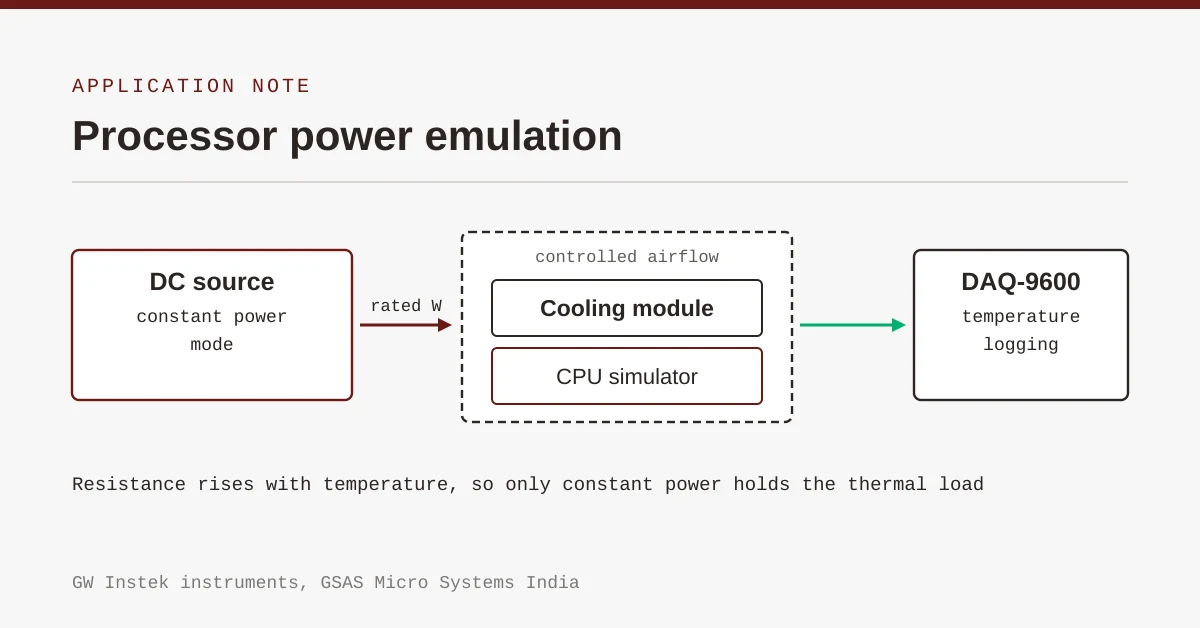
Emulating Processor Power for Thermal Testing: Why Constant Power
7 Oct · 7 min
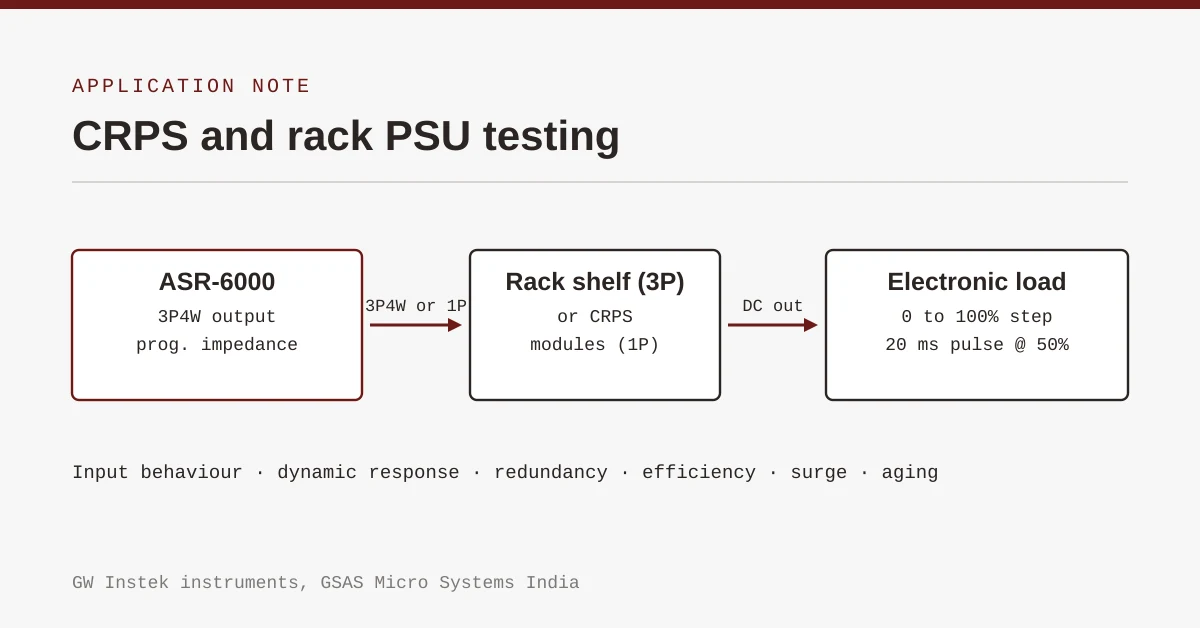
CRPS and Rack Power Supply Testing: The Six Tests That Matter
7 Oct · 7 min