
Embedded Perspectives
Functional Safety
11 articles tagged with Functional Safety.

SuperTest Van Gogh 6.0: C23, C++23 and the C++20 Modules Gap
Solid Sands has released SuperTest Van Gogh 6.0 with more than 1,900 new tests, including 480 for C23 and 440 for C++23. The number worth your attention is a different one: GCC, Clang and MSVC each currently fail about 20% of its 173 C++20 modules tests.
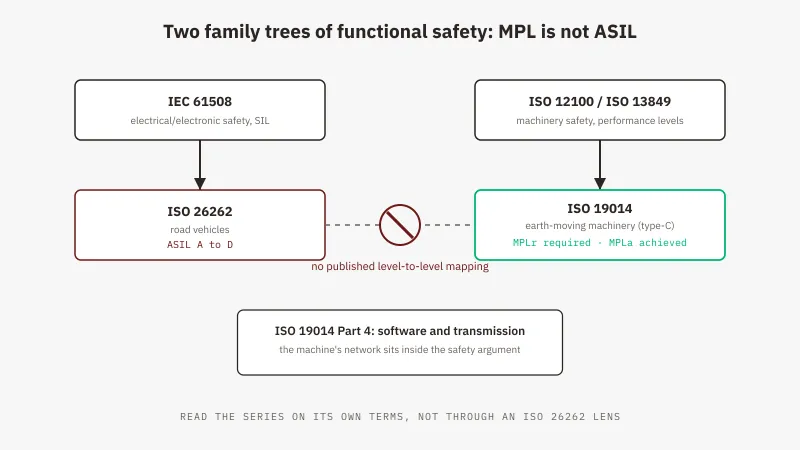
ISO 19014 for ISO 26262 Engineers: MPL Is Not ASIL
India's functional safety talent pool grew up automotive. Earth-moving machinery answers to a different series with a different family tree, and reading one through the lens of the other produces confident, expensive errors.

Undefined Behaviour in Embedded C and C++
Undefined behaviour is not a bug your compiler owes you a warning about. ISO/IEC 9899 defines it as behaviour for which the standard 'imposes no requirements', and it signals it in three different ways with, in the standard's own words, 'no difference in emphasis' between them. Which is why code carrying undefined behaviour can pass every test on your bench and still change the day you upgrade the toolchain.

GSAS Partners with Solid Sands to Bring Compiler and Library Qualification to India
GSAS Micro Systems is now the India engineering partner for Solid Sands, makers of SuperTest and SuperGuard. The partnership brings compiler and standard-library qualification to Indian automotive, avionics, medical, and semiconductor teams, the toolchain-trust layer their safety standards require.
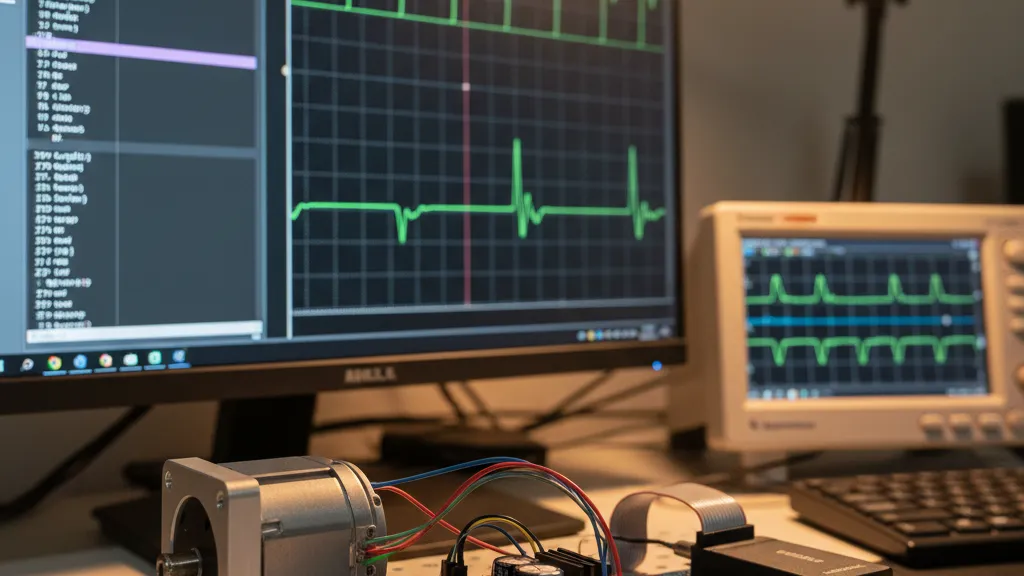
SEGGER Monitor Mode Debugging: When Halting the CPU Breaks the Motor
Setting a breakpoint on a motor-control or DC-DC firmware target halts the PWM and lets the motor freewheel, or worse. SEGGER's Monitor Mode debugging keeps the time-critical interrupts running while the rest of the code halts. Here's how it works on Cortex-M, when to reach for it, and how Indian power-electronics teams use it.
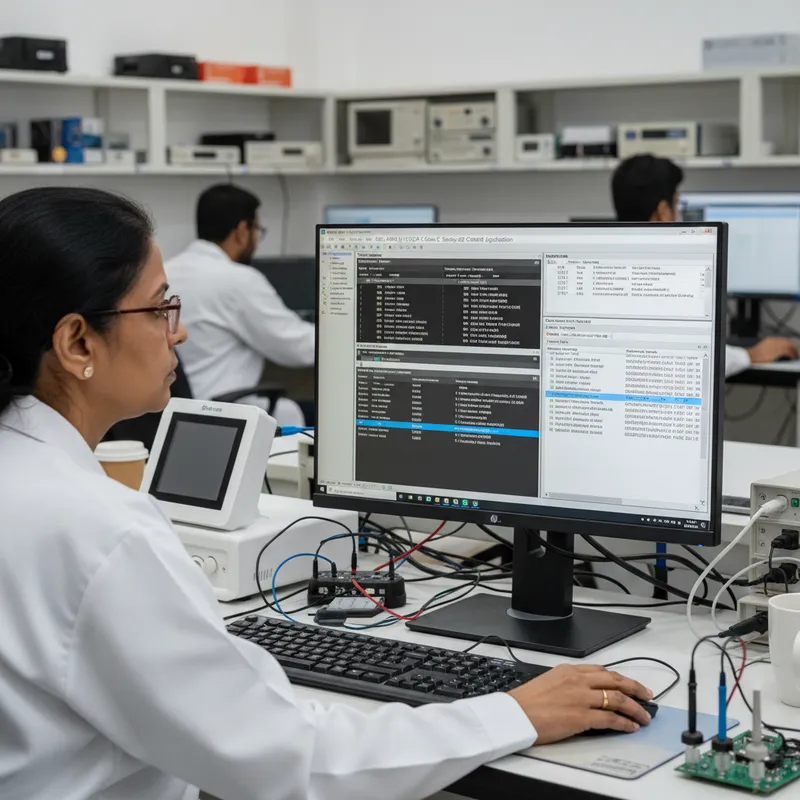
Arm FuSa RTS in Production: MPU Isolation, Thread Watchdogs, and Safety Class API for Indian Medical and Industrial Firmware
Beyond the certification dossier: how Arm FuSa RTS actually works in production firmware. MPU-based spatial isolation, thread-watchdog patterns, and the Safety Class API that Indian medical-device, industrial-controls, and railway-signalling teams use to keep ASIL/SIL/Class-C designs running safely.
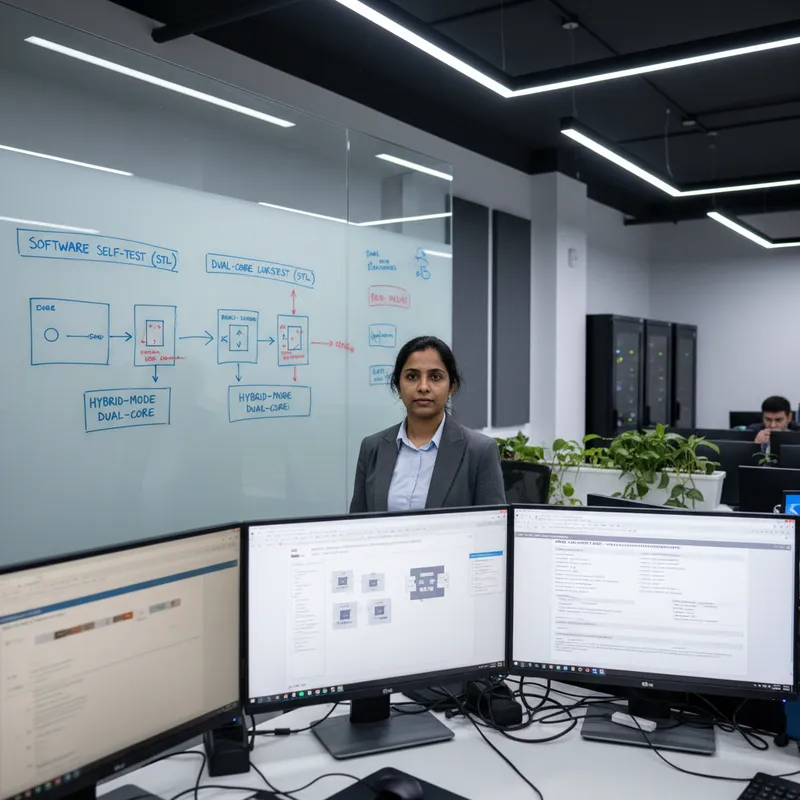
STL vs DCLS vs Split-Lock vs Hybrid Mode: Picking the Right Fault-Detection Strategy for Indian Safety Programmes
Four different fault-detection techniques cover four different parts of the ASIL spectrum on Arm safety silicon, Software Test Library, Dual-Core Lock-Step, Split-Lock (Cortex-R52), and Hybrid Mode (next-generation automotive Cortex-A AE). The decision framework GSAS gives Indian Tier-1 / Tier-2 automotive teams, anchored on Arm's published functional-safety solutions.

Planning the AC6.16 LTS → AC6.22 LTS Migration for Indian FuSa Programs
Arm Compiler 6.16 LTS Term licenses are reaching end-of-life. AC6.22 LTS is the FuSa successor with new core support and the Certified C Library now bundled. This is the migration playbook GSAS gives Indian automotive, railway, and industrial teams in Bengaluru, Hyderabad, Chennai, and Pune.

Arm Cortex-R Real-Time Processors: R5, R7, R52 for Indian Safety Critical
A deep-dive on the Arm Cortex-R family, R4, R5, R7, R8, R52, R52+, R82, for Indian automotive, industrial, and safety-critical teams. Lockstep, ISO 26262, silicon vendors, and the Cortex-R vs Cortex-M vs Cortex-A decision.
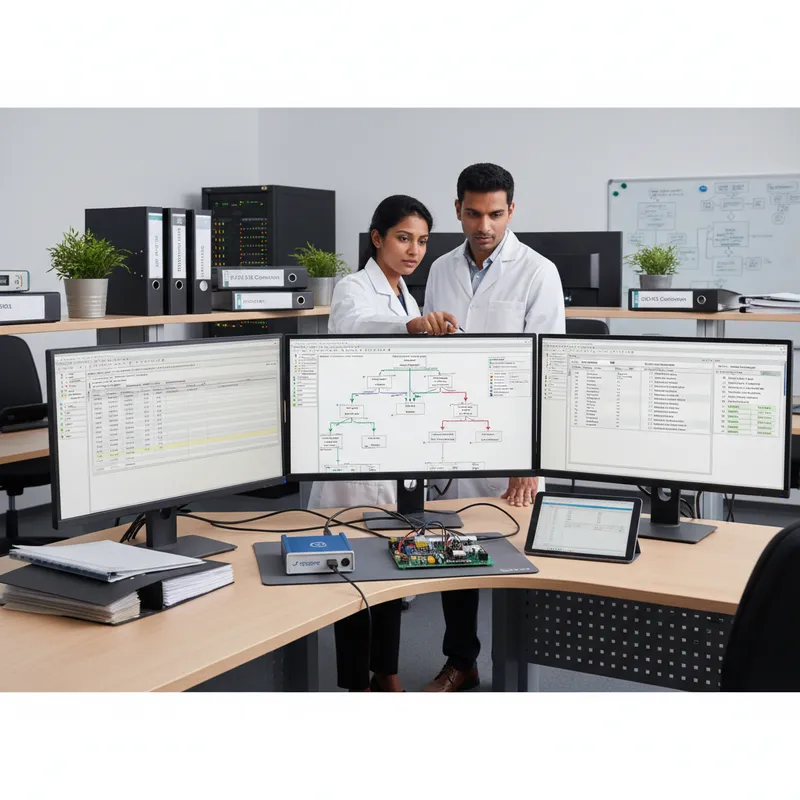
SEGGER J-Trace PRO: ISO 26262 and DO-178C Trace Evidence for Indian Safety-Critical Teams
Indian automotive, medical, aerospace, and defence teams need non-intrusive instruction trace for coverage evidence, crash forensics, and interrupt profiling. Here's why J-Trace PRO is the pragmatic answer.
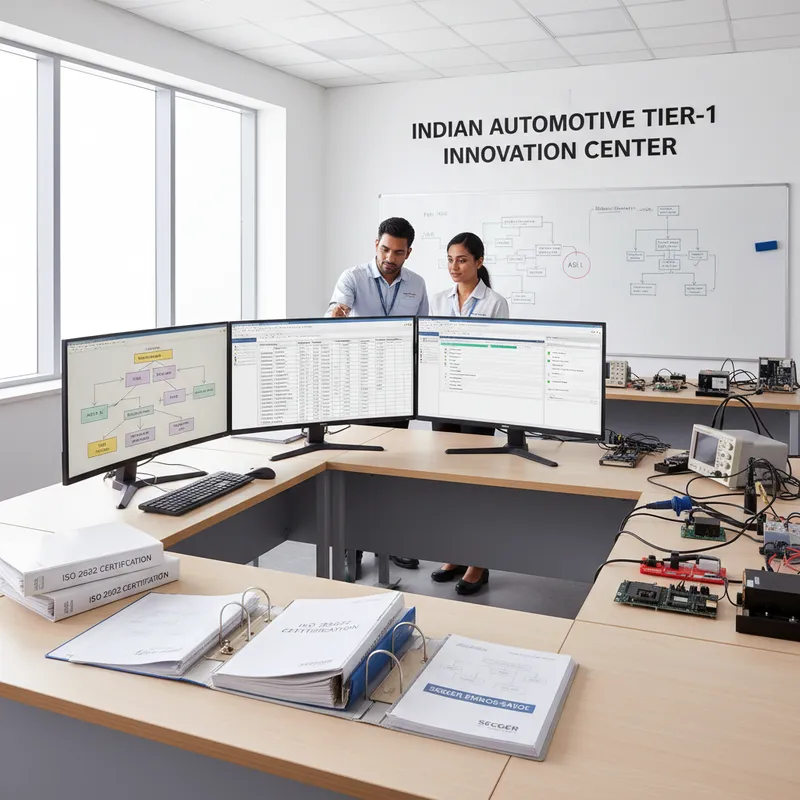
SEGGER embOS-Safe for Indian Automotive Tier-1 Teams: The Cheapest Credible Path to ISO 26262 ASIL D
Indian automotive Tier-1 suppliers building ASIL D components for domestic OEMs need a functional-safety-certified RTOS. SEGGER embOS-Safe is IEC 61508 SIL 3, ISO 26262 ASIL D, IEC 62304 Class C, and EN 50128 certified, and is materially cheaper than the alternatives. Here's the procurement and integration case.
Questions about Functional Safety?
Our application engineers help teams evaluate tools, plan validation, and scope pilots across India.