Why Safety Testing Matters
Every electrical product sold in India must comply with safety standards, BIS (Bureau of Indian Standards) for domestic sale, CE marking for European export, UL for North American markets. At the core of these standards is dielectric withstand testing (commonly called hipot testing): applying a high voltage between live conductors and accessible metal parts to verify that the insulation will not break down under fault conditions.
A product that passes hipot testing demonstrates that its insulation can withstand voltage stress beyond normal operating conditions, providing the margin of safety that prevents electric shock in the field.
The GPT Family
GW Instek’s GPT series spans five product lines, each optimized for different test scenarios:
GPT-9500 Series: Multi-Channel Production Hipot
The GPT-9500 combines AC withstanding voltage, DC withstanding voltage, and insulation resistance testing in a single 3-in-1 instrument with a built-in 8-channel scanner. The scanner eliminates external switching matrices when testing multi-terminal products, transformers, motors, multi-output power supplies, reducing test cycle time and operator intervention.
- 150 VA AC capacity
- 3-in-1 testing: AC hipot, DC hipot, insulation resistance
- Built-in 8-channel scanner
- ARC detection for insulation breakdown screening
- Open/Short Check (OSC) for test lead verification
GPT-9600 Series: Withstand and Insulation Resistance
The GPT-9600 provides AC/DC withstand voltage and insulation resistance testing in a streamlined form factor. It is suited for production lines where multi-channel scanning is not required but reliable hipot and IR testing is essential.
GPT-9800 Series: Safety Tester
The GPT-9800/9900 series is a general-purpose safety tester supporting AC/DC hipot, insulation resistance, and ground bond testing. The ground bond test verifies the integrity of the protective earth connection, a critical safety requirement for Class I (grounded) appliances and equipment.
GPT-12000 Series: 200 VA Production Safety Tester
The GPT-12000 steps up to 200 VA AC capacity, providing more power for testing products with higher capacitive loads, such as motor windings, large transformers, and equipment with EMI filter capacitors that present a capacitive load to the hipot tester.
GPT-15000: 500 VA Safety Analyzer
The GPT-15000 is the flagship of the GPT family: a 500 VA electrical safety analyzer that combines AC/DC dielectric withstand, insulation resistance, and ground bond testing in a single instrument. It is the first GW Instek safety tester compliant with IEC 61010-2-034.
- 500 VA AC capacity for high-capacitance DUTs
- 7-inch color display with graphical waveform view
- AC/DC hipot + IR + ground bond in one instrument
- IEC 61010-2-034 compliance
- Evidence trails for UL, CE, and BIS certification documentation
Choosing the Right GPT Model
The selection depends on the DUT and production environment:
| Requirement | Recommended Model |
|---|---|
| Multi-terminal products (transformers, motors) | GPT-9500 (8-ch scanner) |
| Basic hipot + IR on production line | GPT-9600 |
| Hipot + ground bond for Class I appliances | GPT-9800/9900 |
| High-capacitance DUTs (motors, EMI filters) | GPT-12000 (200 VA) |
| Full safety analysis with documentation | GPT-15000 (500 VA) |
Indian Manufacturing Context
India’s electronics and electrical equipment manufacturing sector, spanning consumer appliances, industrial switchgear, transformers, UPS systems, LED drivers, and EV chargers, requires safety testing at every production stage. BIS certification (IS 616 for household appliances, IS 302 for particular requirements, IS 13252 for IT equipment) mandates dielectric withstand testing as part of the type test and routine test requirements.
For manufacturers in Bengaluru, Pune, Chennai, Hyderabad, Mumbai, and Delhi NCR, having a reliable hipot tester on the production line is not optional, it is a regulatory requirement.
The GPT series provides a range of options from the GPT-9600 for basic compliance to the GPT-15000 for full safety analysis with documentation trails that auditors and certification bodies require.
Availability Through GSAS
GSAS Micro Systems provides the complete GPT safety tester range in India as an authorized GW Instek partner. Services include test station configuration, scanner setup for multi-terminal DUTs, calibration coordination, and integration with production line automation.
Also appears in:
Interested in GW Instek tools?
Talk to our application engineers for personalized tool recommendations.
More from GW Instek
View all →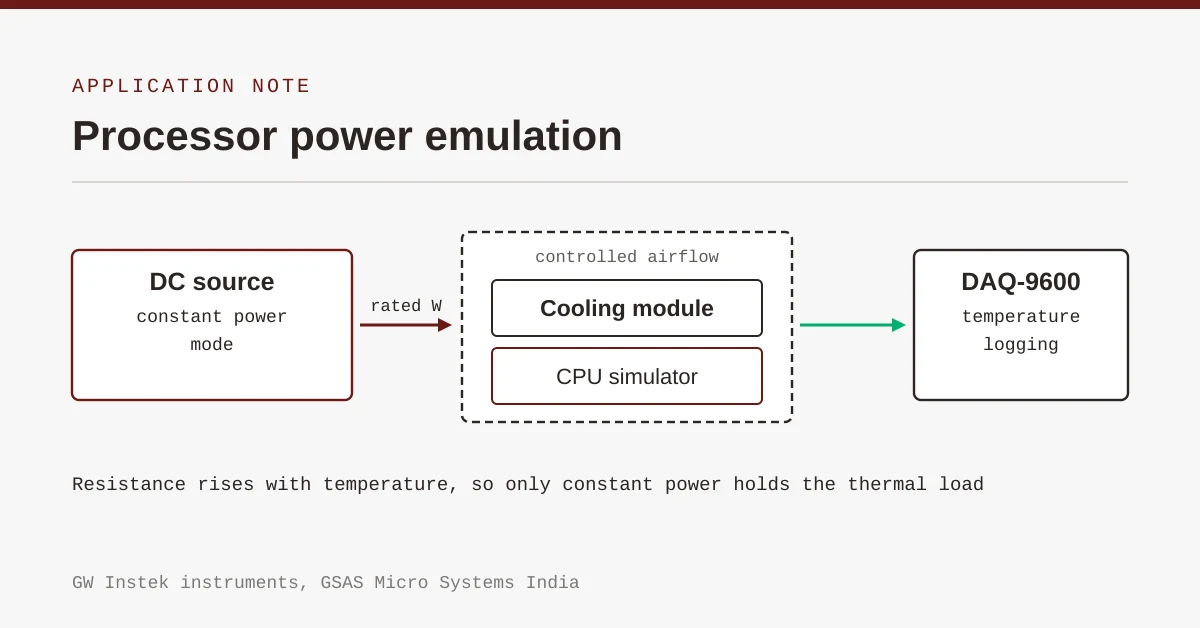
Emulating Processor Power for Thermal Testing: Why Constant Power
7 Oct · 7 min
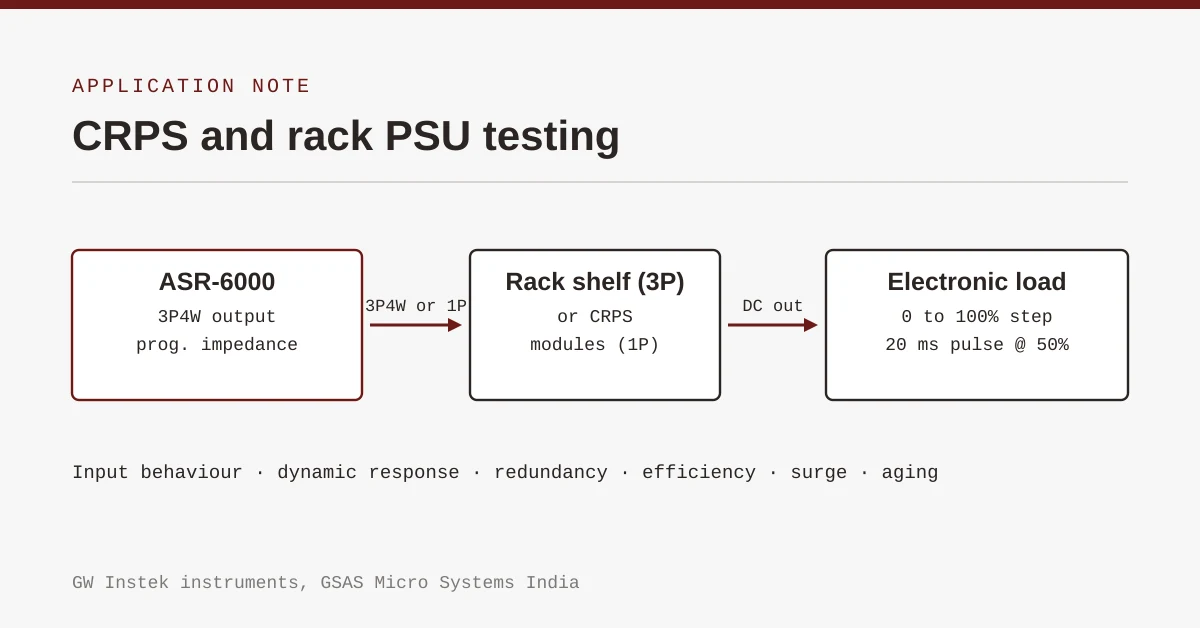
CRPS and Rack Power Supply Testing: The Six Tests That Matter
7 Oct · 7 min
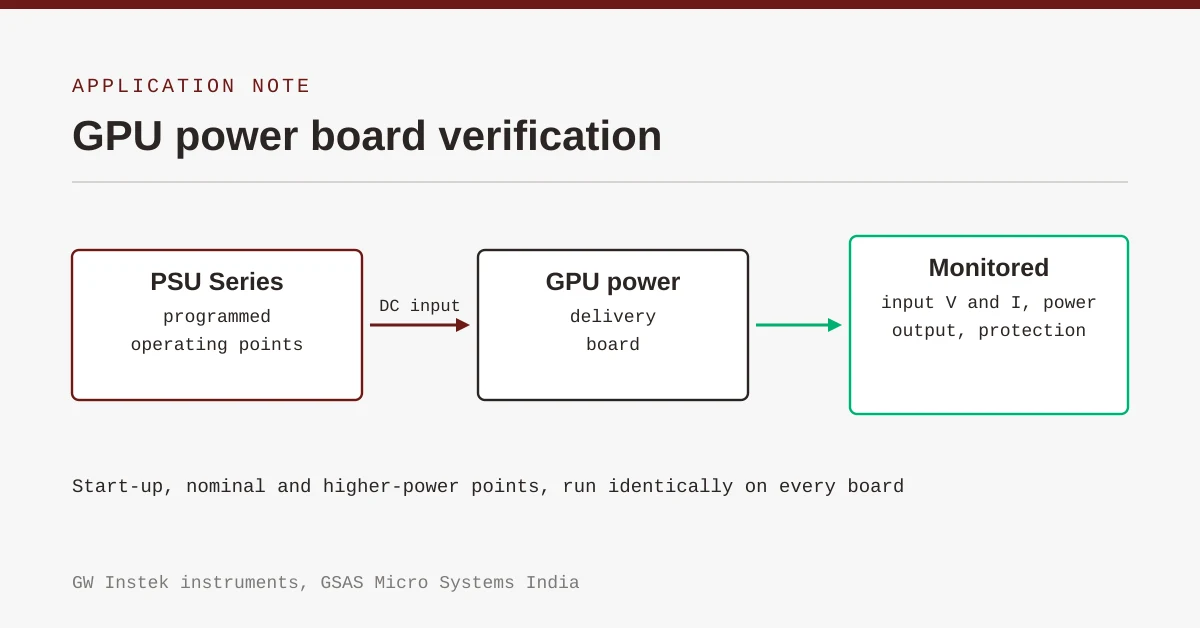
GPU Power Board Testing: DC Input Verification Before Integration
7 Oct · 6 min
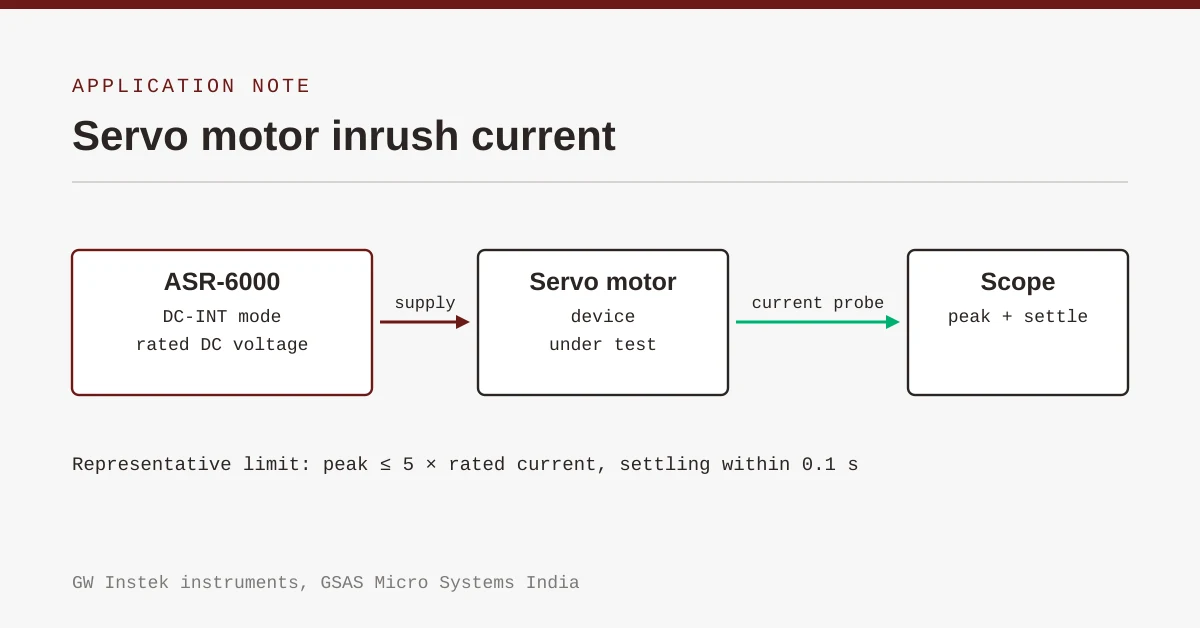
Servo Motor Inrush Current Testing: Method, Limits and Bench
7 Oct · 6 min

SuperTest Van Gogh 6.0: C23, C++23 and the C++20 Modules Gap
6 Oct · 7 min
AI Inside the Engineering Process: What Is Worth Automating, and What Still Needs an Engineer
21 Sept · 11 min