India’s electric vehicle market is not a future possibility, it is a present reality. Electric two-wheelers are approaching double-digit market share in monthly sales. Multiple Indian OEMs have announced electric passenger vehicle platforms.
Electric bus deployment is accelerating in major cities. The development timelines for these vehicles are compressed, Indian OEMs are attempting to bring EVs to market in 24-36 months, compared to the 48-60 month timelines typical of ICE vehicle programmes.
This compression is possible only with simulation-first engineering, where critical design decisions are validated virtually before physical prototypes are built. The alternative, a prototype-test-fix cycle, takes too long and costs too much when the battery pack alone represents a significant fraction of the vehicle’s bill of materials.
NVH: The Defining Challenge
The most immediate simulation challenge in EV development is noise, vibration, and harshness (NVH). In an ICE vehicle, combustion noise masks many structural vibrations. Remove the combustion engine, and every structural resonance, gear whine from the reduction drive, inverter switching harmonic, and road-induced vibration becomes audible.
Indian EV teams in Pune and Chennai report that NVH refinement is consuming more development time and budget than initially planned. The simulation response requires:
- MSC Nastran SOL 103 and SOL 111 for body-in-white modal analysis and frequency response, identifying structural resonances that amplify noise transmission
- Actran for acoustic simulation, predicting interior cabin sound pressure levels from structural vibration, accounting for trim, seals, and acoustic treatments
- Adams for driveline NVH, modelling gear mesh excitation, bearing forces, and torsional vibration in the electric drive unit
The Nastran-Actran-Adams coupled workflow provides the multi-domain simulation capability required for EV NVH development.
Battery Pack Structural Safety
The battery pack is the heaviest single component in an EV, positioned low in the vehicle for centre-of-gravity benefit. Structural integrity under crash, road debris impact, and thermal runaway containment is a safety-critical design requirement.
MSC Nastran SOL 700 (explicit dynamics) handles crash-induced battery pack loading, predicting cell deformation, housing integrity, and intrusion resistance. Marc handles the thermal-structural coupling during thermal runaway events, modelling the cell-level thermal reaction and its structural consequences on the pack housing and cooling system.
For Indian OEMs pursuing EV homologation under AIS-038 and AIS-156, simulation of battery pack structural integrity under specified test conditions is part of the development workflow.
Vehicle Dynamics with Heavy Battery Packs
EV architectures place heavy battery packs (200-600 kg) low in the vehicle structure. This changes the dynamics fundamentally:
- Lower centre of gravity improves roll stability but shifts the handling balance
- Higher vehicle mass increases braking distances and suspension loads
- Instant torque delivery creates longitudinal dynamics challenges, traction control, torque vectoring
- Battery mass distribution influences ride quality and suspension tuning
Adams vehicle dynamics simulation enables Indian EV teams to evaluate suspension geometry, spring-damper tuning, and anti-roll bar sizing for the specific mass distribution of their EV architecture, before building suspension prototypes.
Thermal Management
EV thermal management is a systems engineering challenge: battery pack cooling, motor cooling, power electronics cooling, and cabin HVAC compete for the same thermal budget. Simulation of the coupled thermal system, heat generation in cells and motors, coolant flow distribution, heat exchanger performance, and transient thermal behaviour during fast charging, requires multiphysics capability.
The Cadence simulation portfolio addresses this through Marc’s coupled thermo-mechanical analysis (for battery pack thermal-structural behaviour) and integration with CFD solvers for coolant flow simulation.
Lightweight Structures and Materials
EV range is directly affected by vehicle mass. Lightweighting through advanced materials, aluminium castings, short-fibre reinforced plastics, carbon fibre composites, requires simulation of both the manufacturing process and the structural performance.
Digimat links injection moulding simulation to structural FEA, predicting the as-manufactured strength of reinforced plastic components. MSC Nastran SOL 200 topology optimisation generates weight-optimised structural concepts from design space and loading constraints.
Why Buy from GSAS
GSAS provides the complete Cadence simulation portfolio for Indian EV development teams, MSC Nastran, Adams, Actran, Marc, Digimat, and Simufact, through the MSC One token pool with INR invoicing. Our application engineers support EV-specific workflows: NVH simulation setup, battery pack structural analysis, vehicle dynamics modelling, and manufacturing simulation.
Engineering teams in Bengaluru, Hyderabad, Chennai, Pune, Mumbai, Delhi NCR, and Visakhapatnam can contact GSAS for EV simulation toolchain evaluation and deployment.
Also appears in:
Interested in Cadence tools?
Talk to our application engineers for personalized tool recommendations.
More from Cadence
View all →
MSC Software Is Now Part of Cadence: What the Hexagon Acquisition Means for Indian Simulation Teams
28 May · 6 min

Adams Multibody Dynamics: The Standard for Vehicle Dynamics Simulation in India
5 Apr · 6 min

MSC Nastran: Six Decades of Structural FEA and Why It Still Matters in India
4 Apr · 6 min
Actran Acoustic Simulation: Solving the EV NVH Challenge in India
3 Apr · 6 min
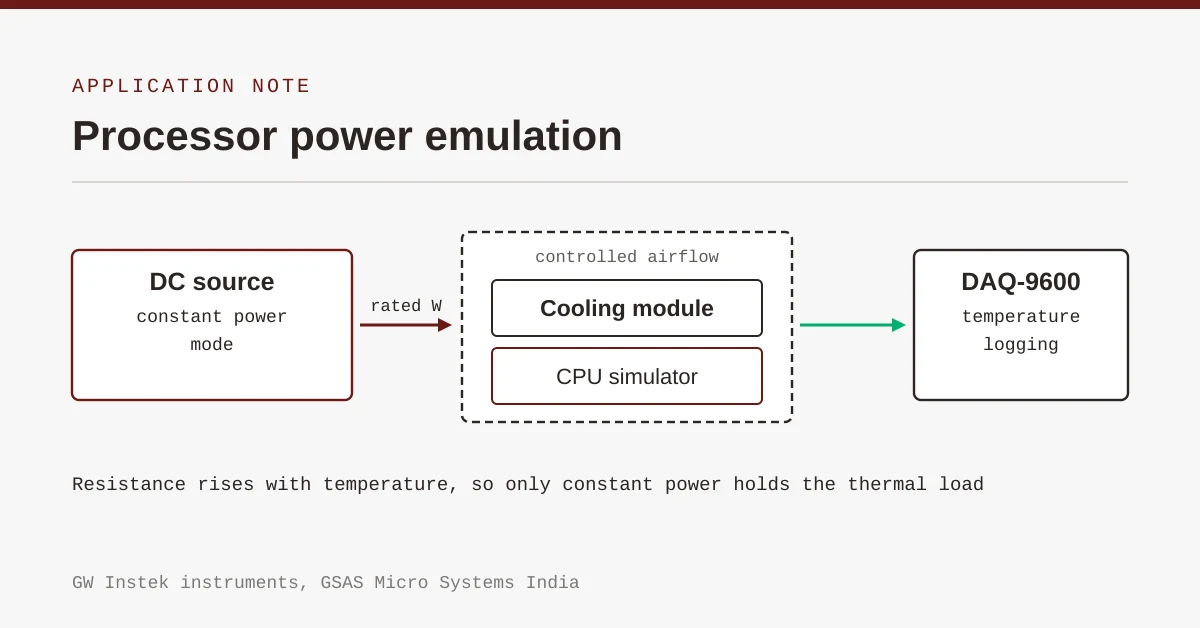
Emulating Processor Power for Thermal Testing: Why Constant Power
7 Oct · 7 min
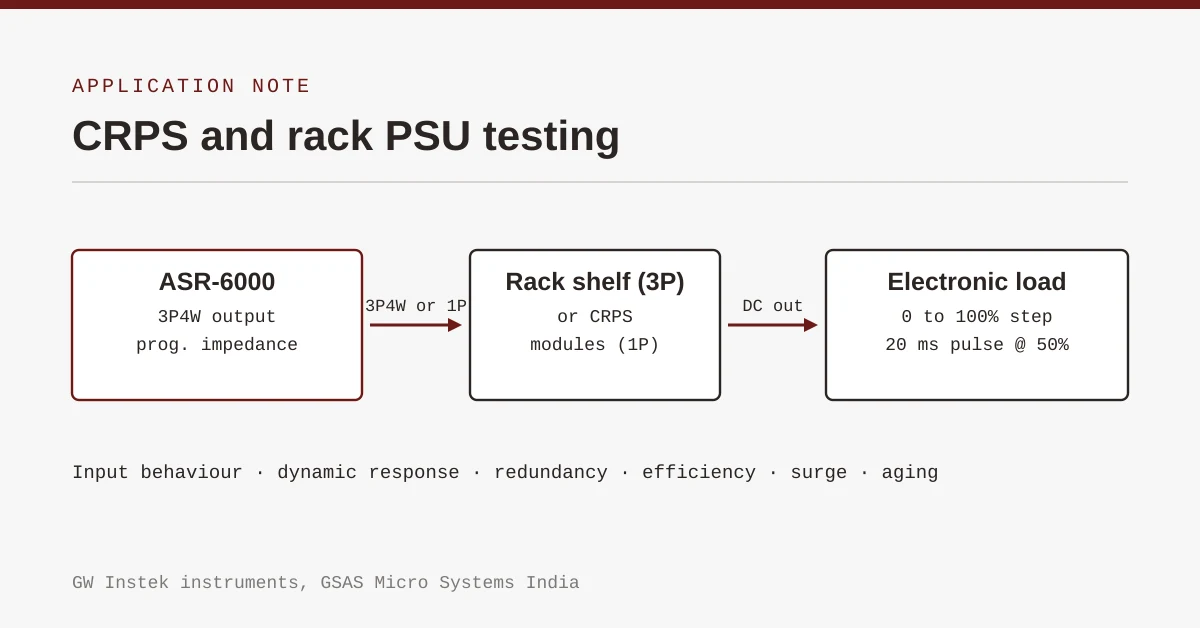
CRPS and Rack Power Supply Testing: The Six Tests That Matter
7 Oct · 7 min