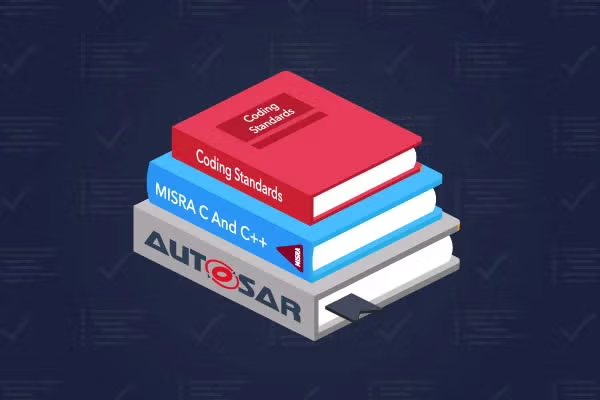
MISRA C:2023 represents the most significant update to the MISRA C coding standard since the 2012 edition, consolidating the base standard with Amendments 2, 3, and 4 into a single unified document. For embedded development teams maintaining safety-critical codebases, understanding the key changes and planning a structured migration is essential, particularly as certification bodies and OEM customers increasingly reference the 2023 edition in their requirements.
The updated standard introduces new rules addressing security concerns, aligns with modern C language features through C11 and C18 support, and refines the decidability classification system that determines which rules can be fully checked by static analysis tools. Several rules have been reclassified between Mandatory, Required, and Advisory categories, and new guidance on rule deviation procedures provides clearer direction for teams that need to document justified exceptions.
Migration from MISRA C:2012 to 2023 can be accelerated by leveraging static analysis tools that support both editions simultaneously, allowing teams to compare compliance status and identify new violations introduced by rule changes. Perforce QAC and Klocwork both provide comprehensive MISRA C:2023 checkers that can be integrated into existing CI/CD pipelines, enabling incremental migration without disrupting ongoing development.
Key changes from MISRA C:2012 to MISRA C:2023
The MISRA C:2023 product page describes the standard as a single consolidated document that supersedes MISRA C:2012 plus its three Technical Corrigenda and Amendments 1-4. In practical terms, three categories of change matter most for migrating teams:
- Rule additions from Amendments 2-4: primarily security-oriented guidance derived from the C Secure Coding Rules in ISO/IEC TS 17961, plus expanded coverage of the C11/C18 language additions (atomics, threads, generic selections, alignment specifiers).
- Decidability reclassifications: several guidelines previously marked Undecidable now have Decidable formulations, which means static analyzers can give a definitive verdict rather than a “possible violation” warning.
- Category movements: a number of guidelines have shifted between Advisory, Required, and Mandatory categories. Teams cannot assume a previously-clean Required baseline will remain clean against the 2023 set.
Tooling migration path
Both Perforce checkers ship with first-party MISRA C:2023 rule packs. For Perforce QAC, the migration is a Compliance Module switch in the project configuration, selecting the MISRA C:2023 module activates the new rule mapping while leaving your existing RCMA (Rule Configuration and Message Action) file structure intact (see perforce.com/products/helix-qac). For Klocwork, the equivalent step is enabling the MISRA C 2023 taxonomy in your kwcheck or Klocwork Server project profile (see perforce.com/products/klocwork). In both tools, existing deviation records and suppression comments carry forward by rule ID, but any deviation tied to a guideline whose category has changed must be re-justified against the new classification.
Common compliance gaps surfaced by C:2023
Teams running a C:2023 baseline against a previously-clean C:2012 codebase typically see new findings cluster in a handful of areas:
- Guidelines in the Pointer Type Conversions group, where stricter handling of object pointers and integer-to-pointer casts is now enforceable.
- Essential Type Model rules covering implicit conversions involving the C11 atomic and
_Booltypes. - Concurrency guidelines introduced for
<threads.h>and<stdatomic.h>usage, which had no analogue in the 2012 base set. - Standard library rules covering Annex K bounds-checking interfaces and the secure-coding-derived guidance on
errno,setjmp/longjmp, and signal handlers. - Identifier and scope rules tightened around inline functions and translation-unit-local linkage.
Walking each cluster top-down, fixing the highest-severity Mandatory and Required findings first, then re-baselining Advisory results, keeps the migration tractable inside a normal sprint cadence rather than requiring a dedicated compliance freeze.
Also appears in:
Interested in Perforce tools?
Talk to our application engineers for personalized tool recommendations.
More from Perforce
View all →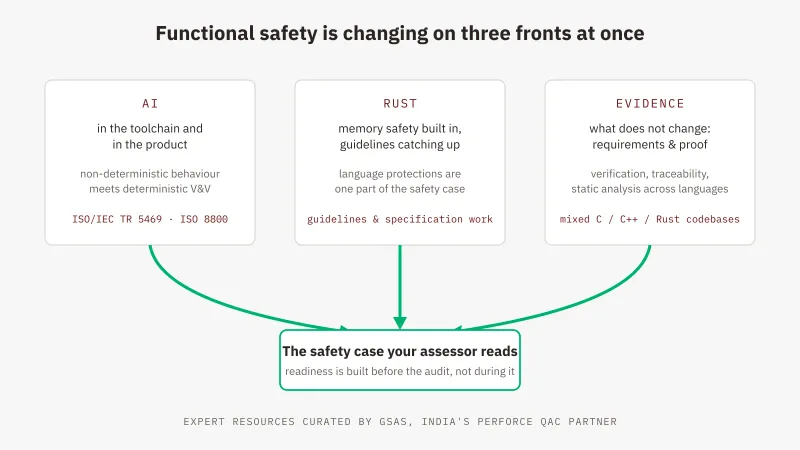
AI, Rust and the New Functional Safety Standards
2 Sept · 9 min
The Complete AUTOSAR Verification Chain: AUTOSAR C++14 Static Analysis with Perforce QAC, SWC and RTE Testing with TESSY 6
31 Jul · 9 min
DevSecOps Tools and Practices for Embedded Teams in India
18 Jul · 8 min
Static Analysis for Medical Device Software: IEC 62304 and FDA Compliance in India
18 Jul · 9 min
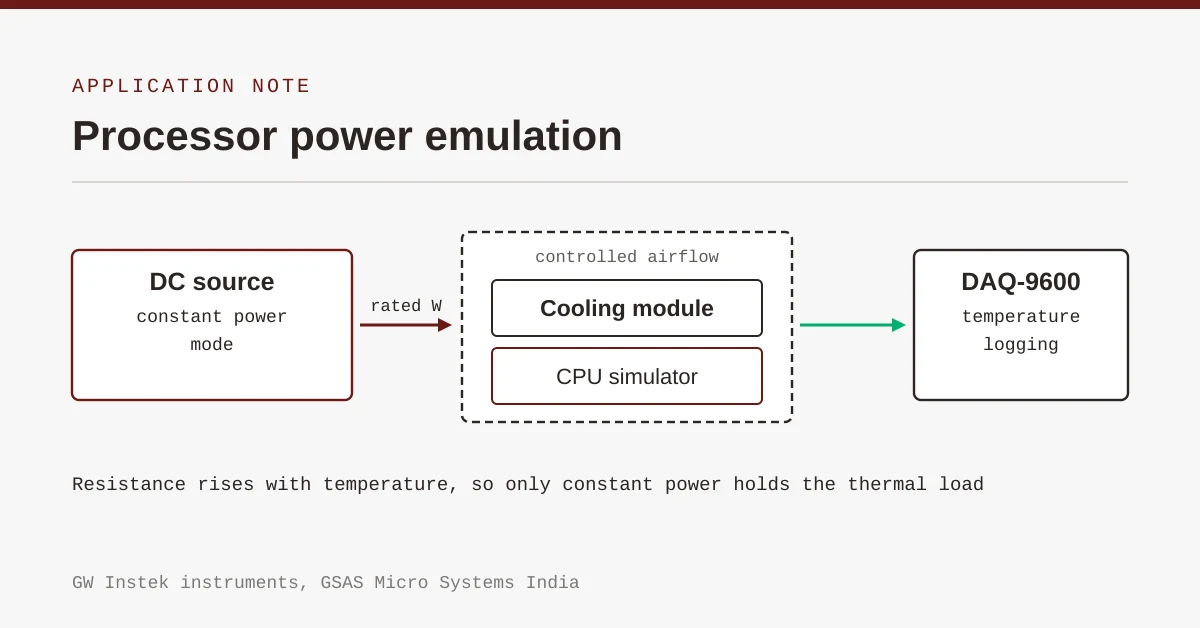
Emulating Processor Power for Thermal Testing: Why Constant Power
7 Oct · 7 min
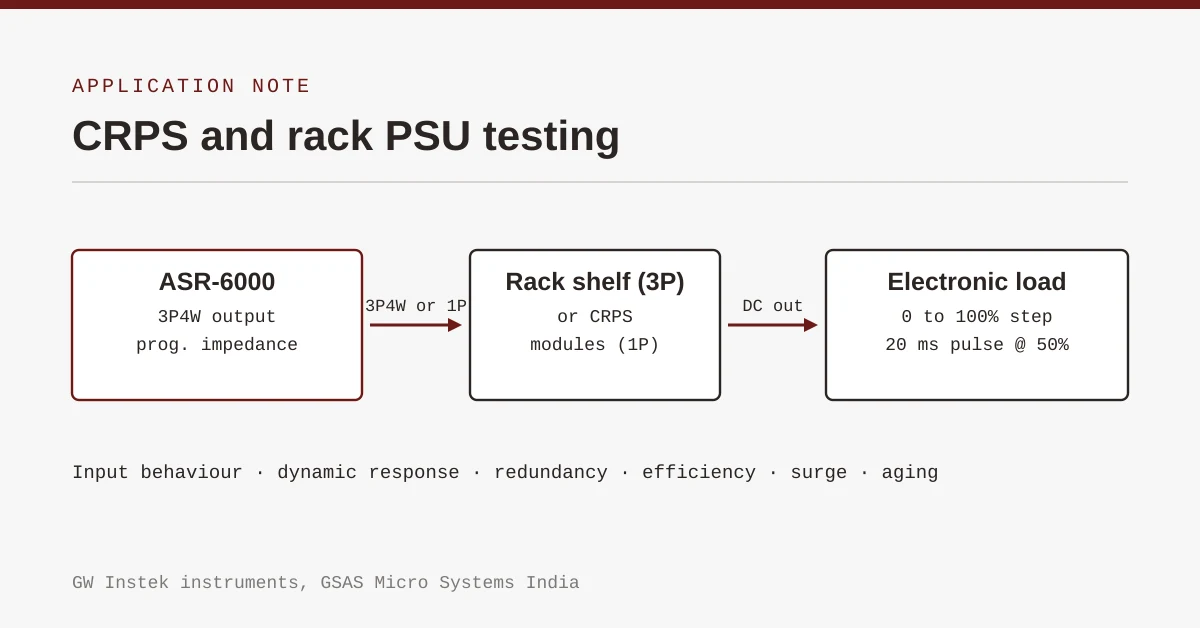
CRPS and Rack Power Supply Testing: The Six Tests That Matter
7 Oct · 7 min