
The Evolving Production Programming Landscape
Production IC programming, the process of loading firmware into microcontrollers, flash memory, and SoCs during electronics manufacturing, is undergoing significant change in India. Driven by the automotive electronics boom, IoT proliferation, cybersecurity regulations, and Industry 4.0 adoption, the requirements for production programming hardware and processes are becoming more demanding.
Indian electronics manufacturers, from automotive tier-1 suppliers in Pune and Chennai to EMS providers in Bengaluru and Noida: must adapt their programming infrastructure to meet these evolving requirements or risk falling behind their competitors and losing OEM qualifications.
Trend 1: Automotive Ethernet Replaces CAN for Programming
For two decades, automotive ECU production programming has relied on CAN-based protocols (UDS over CAN) for firmware flashing. The programming tool sends firmware data to the ECU through the same CAN bus that the ECU uses for vehicle communication. This approach works well for small firmware images (kilobytes to low megabytes) on traditional MCU-based ECUs.
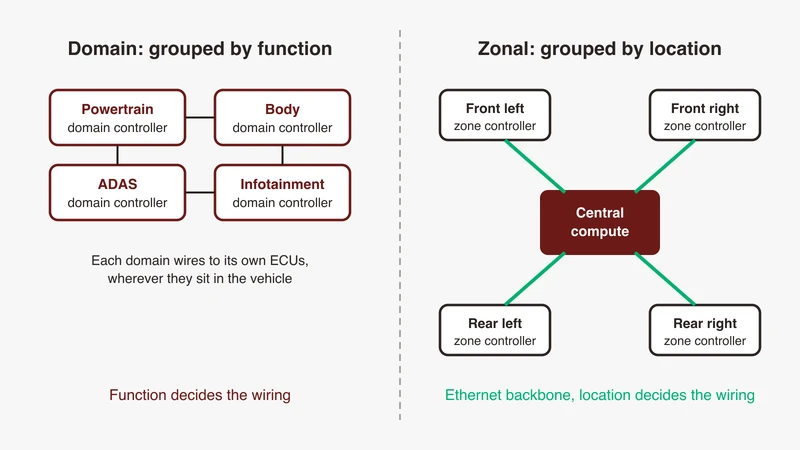
Next-generation automotive architectures change this equation. ADAS domain controllers, central compute platforms, and infotainment head units use automotive Ethernet as their primary communication interface, and their firmware images range from hundreds of megabytes to several gigabytes. Programming these ECUs over CAN would take hours, unacceptable for production line cycle times.
Automotive Ethernet-based programming (DoIP, Diagnostics over IP) delivers the bandwidth needed. The ProMik XDM-ETH provides four automotive Ethernet channels (100/1000BASE-T1) at 100 MB/sec per channel, enabling gigabyte-scale firmware programming in minutes rather than hours.
For Indian tier-1 suppliers manufacturing next-generation ECUs for export markets, the transition to Ethernet-based programming is not a future consideration, it is a current production requirement.
Trend 2: Cybersecurity Provisioning Becomes Mandatory
UNECE R155/R156 regulations mandate cybersecurity management systems for vehicles. At the production line, this translates into secure boot provisioning and HSM key injection during firmware programming. Every ECU must receive unique cryptographic keys, have its secure boot chain configured, and have the complete provisioning process traced and logged.
This requirement is new to many Indian manufacturers. Traditional production programmers do not support HSM key injection or secure boot provisioning. Meeting R155/R156 requirements demands programming tools with dedicated security capabilities, such as the XDM-ETH’s integrated HSM key injection and secure boot provisioning features.
The trend extends beyond automotive. IoT devices shipped to markets with cybersecurity regulations (EU Cyber Resilience Act) increasingly require similar device-level security provisioning during manufacturing.
Trend 3: Offline-to-Inline Migration
Indian electronics manufacturing has historically favoured offline programming, programming devices before SMT assembly or at standalone programming stations separate from the production line. This approach was adequate for lower volumes and simpler products.
As production volumes grow and quality requirements tighten (particularly for automotive with IATF 16949 traceability), the limitations of offline programming become acute:
- Offline programming stations create throughput bottlenecks when they cannot keep pace with SMT line speed
- Manual transfer of boards between the line and programming station introduces handling damage risk
- Traceability gaps between the SMT line’s MES and the offline programming station’s logging system
- Work-in-progress inventory accumulates between the line and the programming station
The shift to inline programming, integrating the programmer directly into the SMT line via SMEMA conveyor, eliminates these problems. ProMik’s XTL-i (fully automated) and XTL-s (compact) inline systems represent this transition.
For Indian EMS providers competing for automotive contracts, inline programming with MES integration is increasingly a prerequisite for OEM qualification, not a competitive differentiator.
Trend 4: Industry 4.0 and MES Integration
India’s manufacturing sector is adopting Industry 4.0 principles, connected machines, real-time production monitoring, data-driven quality management, and predictive maintenance. Production programming stations are part of this digital factory fabric.
Modern production programmers integrate with Manufacturing Execution Systems via OPC-UA, REST API, and proprietary MES protocols. This integration enables:
- Real-time programming status visible on factory dashboards
- Automatic production stops when yield drops below threshold
- Complete digital traceability from board arrival through programming to final test
- Production planning data feeding back into ERP systems
The XTL-i supports OPC-UA, REST API, and OPCON/ITAC for MES integration. The XTL-s provides OPC-UA and REST API. Even the manual XTL-m captures traceability data through FlashTask Pro.
For Indian factories pursuing Industry 4.0 readiness, whether for internal efficiency or for OEM customer audits, programming station MES integration is a necessary component.
Trend 5: Firmware Image Size Growth
Firmware image sizes are growing rapidly across all electronics segments:
- Automotive MCUs: traditional 256 KB images growing to 2-16 MB as AUTOSAR stacks, diagnostic layers, and cybersecurity middleware add complexity
- ADAS domain controllers: 500 MB to 4+ GB for sensor fusion, perception, and decision-making software
- IoT devices: cellular modem firmware, RTOS, application software, and certificate bundles pushing images from kilobytes to tens of megabytes
- 5G infrastructure: baseband and application processor firmware exceeding hundreds of megabytes
Larger firmware images demand faster programming throughput to maintain acceptable cycle times. The XDM-ETH’s onboard SATA3 SSD addresses this by storing images locally at 600 MB/sec read speed, eliminating network bottlenecks. The XDM-USB’s USB 3.0 SuperSpeed delivers up to 300 MB/sec for lab and medium-volume applications.
Trend 6: Multi-Protocol Flexibility
The diversity of programmable devices in a single product is increasing. A modern automotive ECU board might contain a Cortex-M7 main MCU (programmed via SWD), a safety MCU (programmed via JTAG), an external SPI flash (programmed via SPI), a secure element (programmed via I2C), and a Qualcomm application processor (programmed via Sahara/Firehose).
Production programmers that support only one protocol require multiple tools on the production line. Multi-protocol programmers like the MSP2100Net (JTAG, SWD, SPI, UART, I2C, CAN) and XDM-USB (JTAG, SWD, SPI, Qualcomm Sahara/Firehose) consolidate multi-device programming into a single tool, reducing equipment cost and simplifying the production flow.
Implications for Indian Manufacturers
These trends point in a consistent direction: production programming is becoming more complex, more integrated, and more security-critical. Manufacturers who invest in modern programming infrastructure now, automotive Ethernet capability, cybersecurity provisioning, inline integration, MES connectivity, will be positioned to win OEM contracts and production orders. Those who delay will face costly catch-up investments under time pressure.
Why Buy from GSAS
GSAS Micro Systems is the authorised ProMik engineering partner in India, providing production programming systems that address all six trends. Engineering teams in Bengaluru, Hyderabad, Chennai, Pune, Mumbai, Delhi NCR, and Visakhapatnam help manufacturers plan and implement programming infrastructure for current and future production requirements.
Explore the ProMik product range or contact us for production programming strategy consultation.
Also appears in:
Interested in ProMik tools?
Talk to our application engineers for personalized tool recommendations.
More from ProMik
View all →
Automotive ECU Programming and Traceability: Meeting IATF 16949 with ProMik
5 Apr · 7 min

Scaling Electronics Manufacturing in India: Programming Infrastructure for Growth
5 Apr · 7 min
FlashTask Pro: Production Programming Project Management with ProMik
5 Apr · 7 min
Gang Programmer vs Inline ISP: Choosing the Right Production Programming Approach
5 Apr · 7 min
Emulating Processor Power for Thermal Testing: Why Constant Power
7 Oct · 7 min
CRPS and Rack Power Supply Testing: The Six Tests That Matter
7 Oct · 7 min