TESSY vs Parasoft C/C++test: Embedded Unit Testing for Safety-Critical Projects
Indian automotive and aerospace teams evaluating unit testing tools for ISO 26262 or DO-178C projects frequently compare Razorcat TESSY with Parasoft C/C++test. Both tools automate unit testing of C and C++ code, both support coverage measurement, and both offer CI/CD integration. The differences lie in their architectural focus: TESSY was designed from the ground up for embedded targets and safety certification workflows, while C/C++test began as a broader code quality platform that expanded into safety-critical testing.
This comparison covers the dimensions that matter most for embedded teams in India working on safety-critical firmware.
MC/DC Coverage and Structural Metrics
TESSY measures statement, branch, decision, MC/DC (Modified Condition/Decision Coverage), and MCC (Multiple Condition Coverage) coverage. MC/DC measurement is built into the core workflow, coverage results are displayed graphically with green/red highlighting and exported as HTML or PDF reports suitable for safety case inclusion. TESSY’s coverage instrumentation works with the project’s actual cross-compiler (Arm Compiler 6, IAR, TASKING, HighTec, GCC), so coverage is measured on the same code that ships to production.
Parasoft C/C++test supports statement, branch, MC/DC, and function coverage. Coverage measurement is available through its test execution framework, with results viewable in the Parasoft IDE plugin or exported via reports. C/C++test’s strength is its combined static + dynamic analysis workflow, MISRA checking and unit testing run within the same tool.
Both tools satisfy ISO 26262 Part 6 coverage requirements. TESSY’s additional MCC metric provides finer-grained insight into complex boolean expressions, which some safety assessors find useful as supplementary evidence for ASIL D functions.
Test Case Design: Classification Tree Method vs Auto-Generation
This is where the tools diverge most significantly.
TESSY includes the Classification Tree Editor (CTE), a graphical tool for systematic test design based on equivalence partitioning and boundary value analysis. Engineers define input classifications visually, map combinations in a combination table, and TESSY generates the corresponding test vectors. The CTE produces an auditable record of why each test case exists, not just what it tests. ISO 26262 Part 6 recommends systematic routes to deriving test cases and strengthens that recommendation as the ASIL rises, and the CTE produces exactly that evidence natively.
Parasoft C/C++test generates test stubs and frameworks automatically and supports manual test case creation. Auto-generated tests ramp up coverage quickly but produce tests optimized for metric achievement rather than systematic fault detection. Teams typically supplement auto-generated tests with manually designed boundary cases.
For safety certification, the classification tree approach provides stronger audit evidence because the test design rationale is explicitly documented and traceable.
AUTOSAR SWC Testing
TESSY tests AUTOSAR Software Components (SWCs) by generating stubs for the RTE (Runtime Environment) interfaces. Engineers test the SWC logic in isolation from the BSW stack, with TESSY handling Rte_Read, Rte_Write, and server call stubs automatically. This approach works with any AUTOSAR configuration tool (Elektrobit tresos, Vector DaVinci, ETAS ISOLAR) because TESSY operates at the C source level, not the AUTOSAR toolchain level.
Parasoft C/C++test also supports AUTOSAR SWC testing through its stub generation framework. C/C++test additionally integrates with Parasoft’s broader enterprise quality platform, which can provide project-level dashboards across static analysis, unit testing, and runtime analysis.
For Indian Tier-1 teams using Elektrobit tresos on AURIX platforms, a common configuration for automotive ECU development in Pune and Bengaluru: TESSY’s vendor-neutral approach avoids coupling the testing tool to the AUTOSAR middleware vendor.
On-Target Testing
TESSY supports on-target test execution through debug probes, including SEGGER J-Link and JTAG/SWD interfaces. Tests compile against the project’s cross-compiler and execute on the actual microcontroller, so coverage reflects real target behavior including compiler optimizations, memory layout, and register-level interactions.
Parasoft C/C++test primarily executes tests on the host (x86 simulation), with target execution available through additional configuration. Host-based testing is faster for development-time iteration, but safety assessors may require evidence that tests ran on the target or that host-target equivalence has been demonstrated.
For teams targeting Infineon AURIX TC3xx or Arm Cortex-M devices, common in Indian automotive development, TESSY’s direct target support means coverage results come from the production hardware, strengthening the safety argument.
CI/CD Integration
Both tools support CI/CD pipeline integration. TESSY provides command-line batch execution compatible with Jenkins, GitLab CI, Azure DevOps, and GitHub Actions. Parasoft C/C++test integrates through its command-line interface and Jenkins plugin, with additional reporting through the Parasoft DTP (Development Testing Platform) server.
Parasoft’s DTP provides centralized dashboards for tracking quality metrics across teams, useful for organizations running C/C++test on multiple projects. TESSY’s approach is leaner, generating reports that integrate into existing CI dashboards without requiring a separate analytics server.
ISO 26262 Tool Qualification
Both tools provide Tool Qualification Support Packages. TESSY’s qualification package is specific to embedded dynamic testing and has been used in numerous ISO 26262 and IEC 61508 certification projects. Parasoft provides qualification documentation covering both its static analysis and dynamic testing capabilities.
The qualification effort is comparable. Neither TESSY nor C/C++test “is” a TCL2 or TCL3 tool: under ISO 26262 Part 8, tool confidence level follows from the tool functionalities you actually use inside your own development process, not from the product, and no vendor can quote you a TCL without reference to that process. What both vendors’ qualification packages give you is an input, generic analyses and validation evidence, that supports the TCL argument your safety case has to make; the classification itself, and the responsibility for using either tool in a suitable way, remains yours.
Why Buy from GSAS
GSAS Micro Systems is the authorized Razorcat partner, providing TESSY licensing with INR invoicing, evaluation support, onboarding training, and CI/CD integration consulting. Our functional safety engineers in Bengaluru, Hyderabad, Chennai, Pune, Mumbai, and Delhi NCR help automotive, aerospace, and industrial teams evaluate TESSY against their specific project requirements, compiler, target hardware, AUTOSAR stack, and safety standard. If you are comparing unit testing tools, GSAS can arrange a proof-of-concept on your actual codebase so you can see real results before making a procurement decision.
Also appears in:
Interested in Razorcat tools?
Talk to our application engineers for personalized tool recommendations.
More from Razorcat
View all →
Test Case Design with the Classification Tree Method: Deriving Unit Tests You Can Defend in an Audit
1 Aug · 10 min
Fault Injection and Robustness Testing for Embedded Software: What ISO 26262, IEC 61508 and DO-178C Actually Ask For
1 Aug · 11 min
How to Evaluate a Unit Testing Tool for Embedded Software: A Buyer's Framework for Indian Teams
1 Aug · 10 min
Is 100% Code Coverage Enough? Statement, Branch, MC/DC and MCC, and What Each One Proves
1 Aug · 9 min
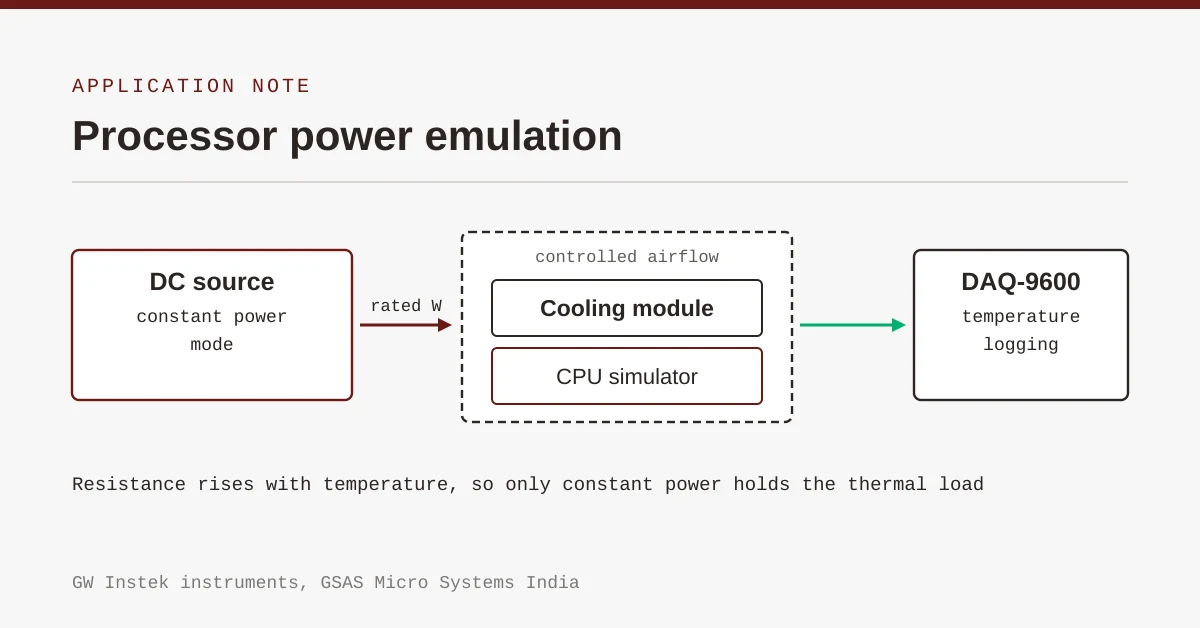
Emulating Processor Power for Thermal Testing: Why Constant Power
7 Oct · 7 min
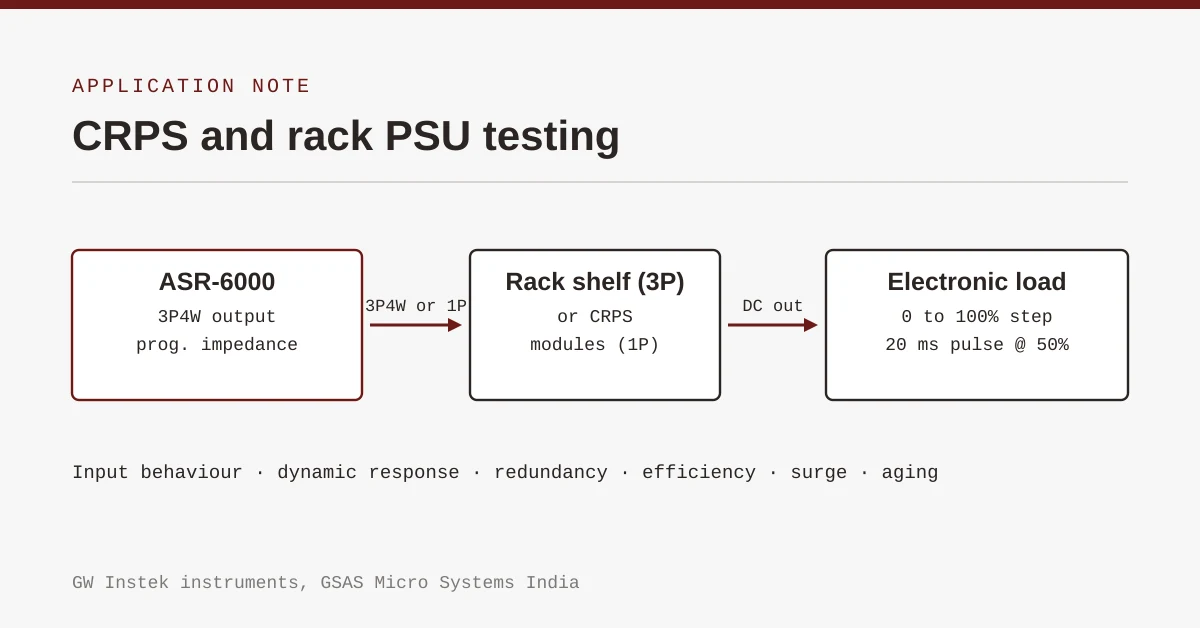
CRPS and Rack Power Supply Testing: The Six Tests That Matter
7 Oct · 7 min