
Webinar
CMSIS Unlocked: Building Smarter and Portable Embedded Systems with Microchip
This event has already taken place. Registration is closed, and any registration links below are kept for reference only. See upcoming GSAS events.
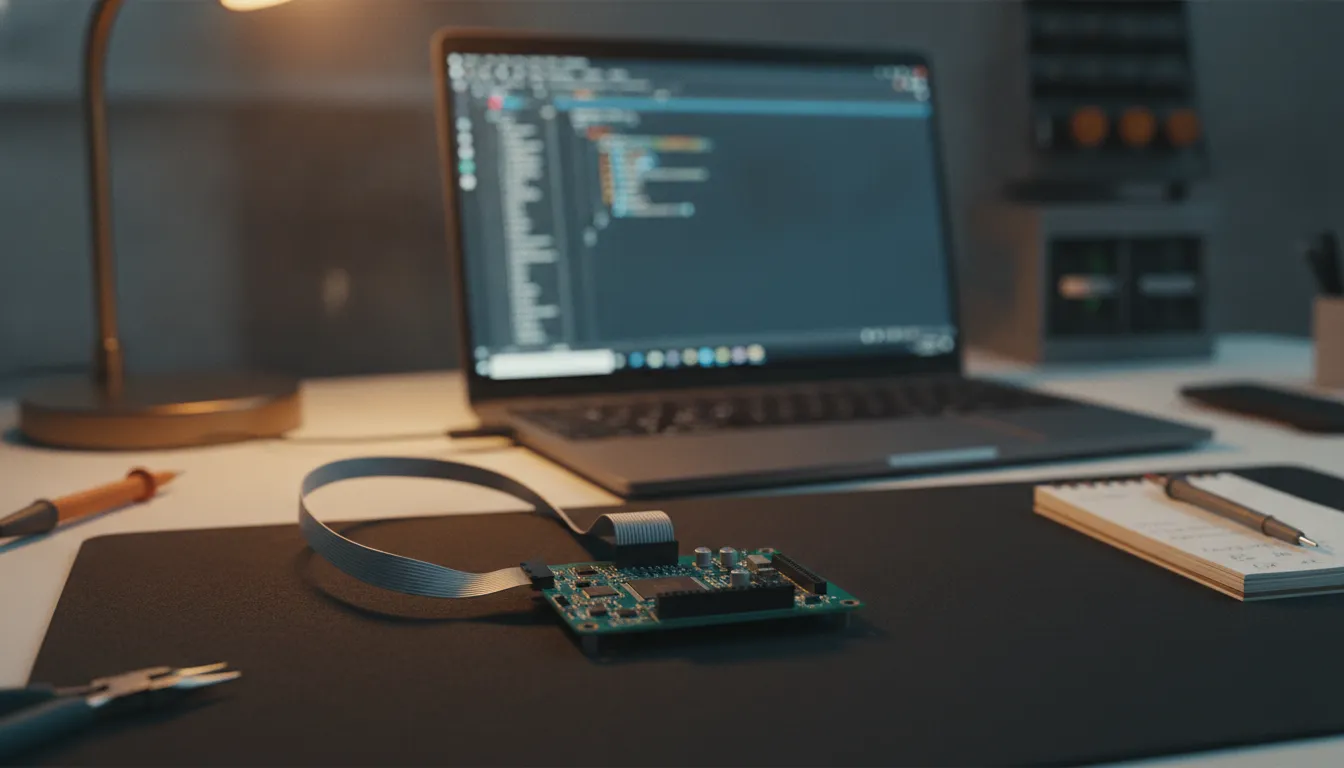
GSAS Micro Systems is highlighting CMSIS Unlocked: Building Smarter and Portable Embedded Systems with Microchip, a hands on workshop hosted by Arm on Tuesday 28 July 2026, running 30 minutes plus Q&A.
In Arm’s own description, the session shows “how CMSIS helps simplify embedded software reuse and accelerate development on Arm-based microcontrollers.” Using Arm Keil Studio, the workshop builds key parts of an application for the Microchip PIC32CM-PL10 Curiosity Nano board with Microchip CMSIS drivers and PLIBs.
Christopher Seidl framed the audience for it directly when announcing the session: “If you’re developing on Microchip Cortex-M devices and want to reduce vendor lock-in while improving software reuse across projects, this session is for you.”
What the workshop covers
Arm lists four learning outcomes for the session:
- Understand the main CMSIS components and the Arm and Microchip contributions to them
- Navigate CMSIS documentation, APIs and GitHub examples
- Use CMSIS Solution examples, templates and the CMSIS Solution GUI
- Explore MPLAB extensions and the CMSIS-Driver DVRT pack for runtime analysis
Speakers
The session is presented jointly, one speaker from each side of the CMSIS contribution the workshop describes.
Christopher Seidl, Arm. Product management for embedded tools at Arm in Munich, working across Arm Keil MDK and CMSIS, and a contributor to the CMSIS repository itself. He is a regular presenter on modern embedded development flows at embedded world and the Embedded Online Conference.
Glen Nilsen, Microchip Technology. Works on Microchip’s embedded development tooling, including MPLAB Harmony and the MPLAB extensions for VS Code across the PIC32 and SAM families, which is the Microchip half of the toolchain this workshop builds on.
Session time
| Region | Time |
|---|---|
| US Pacific | Tuesday 28 July 2026, 08:00 PDT |
| UK | Tuesday 28 July 2026, 16:00 BST |
| Central Europe | Tuesday 28 July 2026, 17:00 CEST |
| India | Tuesday 28 July 2026, 20:30 IST |
The India time is converted from the three timezones Arm publishes, all of which resolve to 15:00 UTC. Registration is on the Arm Developer session page.
Why CMSIS portability matters for Indian Cortex-M teams
The practical problem CMSIS addresses is silicon lock in. A driver layer written directly against one vendor’s peripheral library has to be rewritten when the design moves to a different Cortex-M part, and in Indian product engineering that move happens often: a cost re engineering cycle, a second source requirement, or a shift from a prototype part to a production part with different peripherals.
CMSIS gives that code a common shape. The CMSIS-Driver interfaces, the pack format, and the CMSIS Solution structure let a team keep application logic stable while the device layer underneath changes. For teams in Bengaluru, Hyderabad, Chennai, Pune, Mumbai and Delhi NCR running multi vendor Cortex-M portfolios, that is the difference between porting a product and rewriting it.
The CMSIS-Driver DVRT pack covered in the session is worth attention on its own. Runtime analysis of driver behaviour is the part of bring up that usually gets done with print statements and a logic analyser, and having it packaged against the CMSIS driver interface makes it repeatable across devices.
Where this fits in the Arm toolchain
This session sits alongside the toolchain Indian Cortex-M teams already run:
- Arm Keil MDK for the compiler, middleware and debug workflow
- Arm Development Studio where a project needs the wider Arm debug and trace stack
- SEGGER J-Link probes for on target debug across Cortex-M devices
If your team is standardising a CMSIS based driver layer across more than one silicon vendor, or evaluating how far the CMSIS Solution structure can carry an existing codebase, talk to GSAS and we can work through it against your actual device mix.
View the session on Arm Developer →
Event title, date, timings, duration, format, learning outcomes and the featured hardware and tooling are sourced from Arm’s official event page linked above. The registration URL was confirmed by the GSAS team. The quoted line about reducing vendor lock in comes from Christopher Seidl’s own public announcement of the session. Role descriptions are summarised from each speaker’s public professional profile, and no specific job title is asserted beyond what those profiles support. Arm also points readers to the Microchip MASTERs 2026 Class for hands on training. GSAS Micro Systems is Arm’s engineering partner in India and is not the organiser of this workshop. Microchip is not a GSAS partner line; the Microchip hardware is named because Arm’s session is built around it.
More events
Other GSAS Events
Tradeshow
GSAS at embedded world India 2026, Stand C15
Tuesday, 17 November 2026
Webinar
Siemens EDA: Turning Shift-Left from Slogan to Reality
Tuesday, 10 November 2026
Webinar
Siemens EDA: Debug Constraints Live in Questa One Sim
Thursday, 29 October 2026
Webinar
Siemens EDA: What's New in Xpedition 2610
Thursday, 29 October 2026