
 Binho
Binho Atira Board Bring-up Tool
Debug & Protocol AnalysisBoard bring-up tool that powers the target from 1.2 V to 5.0 V with live voltage, current and power readout, level shifting, a dual-port UART bridge and flash programming. Buy in India from GSAS, an authorized Binho partner.
Target Power
Programmable 1.2 V to 5.0 V supply, software power-cycling on command
Power Monitoring
Real-time voltage, current and power on the target supply
Level Shifting
Bidirectional, 1.2 V to 5.0 V on every line
UART Bridge
Up to 2 Mbaud, optional RTS/CTS; two virtual COM ports (drive + read-only tap)
Flash Programming
On-chip flash over SWD/JTAG; external SPI flash and EEPROM via a 24 MHz SPI controller
Target Interface
SWD and JTAG for Arm Cortex-M, SWO trace and RTT, CMSIS-DAP v2
Host Connection
USB Type-C, USB 2.0 Full-Speed, bus-powered, driverless on Windows, macOS and Linux
Software
Mission Control, CosmicSDK (Python, C/C#/C++, Java), pyOCD, OpenOCD
Overview
About Binho Atira Board Bring-up Tool
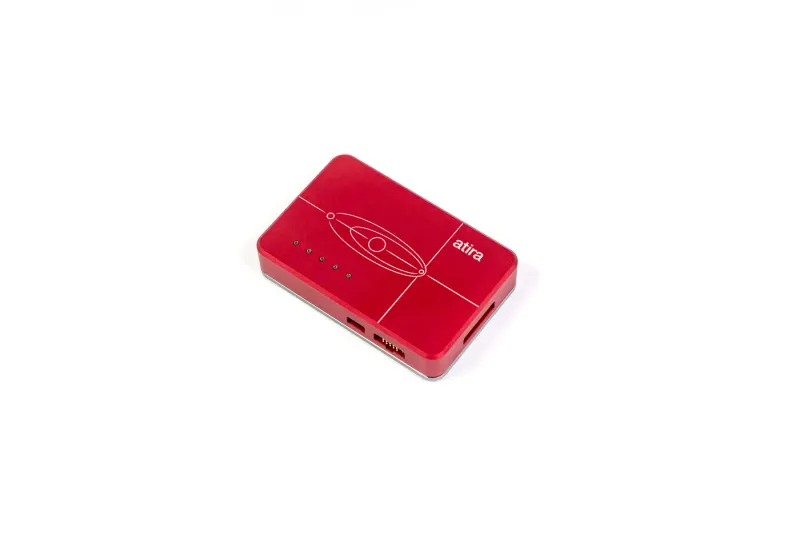
The Binho Atira is a USB board bring-up tool. Binho introduced it on 5 November 2026 as an all-in-one development tool that “puts the target embedded system under software control”, and the description fits the bring-up bench well: one device supplies and measures target power, matches logic levels, bridges the serial console and programs the board’s memories, and every one of those functions can be driven from software. Binho lists it under SKU BIN109.
Target power you can script
The Atira’s downstream supply is programmable from 1.2 V to 5.0 V. It feeds the target directly and power-cycles it on command, so a bring-up script or a CI job can reset the hardware without reaching for a cable. While the board runs, the Atira streams live voltage, current and power on that supply, to show what the firmware draws. Binho describes the rail as able to source or reference downstream voltage across the same 1.2 V to 5.0 V range.
Level shifting and an observable serial console
Bidirectional level shifting from 1.2 V to 5.0 V runs on every line and is referenced to the rail, so a low-voltage part wires straight to the Atira with nothing extra on the bench. The serial side is a full-duplex USB-UART bridge (CDC-ACM) at up to 2 Mbaud, with optional RTS/CTS flow control. The Atira enumerates as two virtual COM ports: one drives the target’s UART, the other is a read-only tap that mirrors the traffic. Binho positions that tap for logging and diagnostics.
Flash programming and target access
For getting a first image onto a new board, the Atira programs on-chip flash over SWD and JTAG and reaches external SPI flash and EEPROM through a 24 MHz SPI controller with configurable SPI mode and clock rate, covering read, write, verify and erase. Binho also lists arbitrary SPI transfers to any device. The target interface supports SWD and JTAG for Arm Cortex-M, with SWO trace and Real-Time Transfer (RTT), and is built on CMSIS-DAP v2, so Binho states it works with pyOCD, OpenOCD and CMSIS-DAP-aware IDEs.
Software and automation
Binho supports the Atira in its Mission Control GUI and in its CosmicSDK for Python, C/C#/C++ and Java, on Windows, macOS and Linux. The USB Type-C connection is USB 2.0 Full-Speed, bus-powered and driverless on all three operating systems. Binho describes “a scriptable, open interface” for AI coding agents, covering firmware flashing, serial traffic and voltage and power monitoring. The hardware is a CNC-machined aluminum enclosure with five RGB status LEDs and two M3 mounting holes, and Binho states that firmware updates load over USB. Binho lists firmware development, rapid prototyping, USB to UART bridging, automated hardware and firmware testing, flash and EEPROM programming, and production programming as target use-cases.
Why GSAS for Binho Atira in India
GSAS is a value added distributor/reseller for these products. We have a dedicated FAE team ready to help you with custom built solutions matching your needs. As an authorized Binho partner, GSAS supports Atira evaluation and bring-up workflows, from scripted power-cycling and current profiling to UART console logging and flash programming in production fixtures, with application engineers in Bengaluru, Hyderabad, Chennai, Pune, Mumbai and Delhi NCR. Contact GSAS from Bengaluru to Delhi NCR for evaluation and technical guidance on the Binho Atira.
Blog
Binho Insights
I3C FAQ for Firmware Teams: What the Bus Is, What Changes, and What You Need on the Bench
MIPI Alliance describes I3C as the successor to I2C, with legacy compatibility so that I3C and I2C devices can coexist on the same bus, a two-wire interface that supports in-band interrupts to reduce pin count, plus multi-controller support and dynamic addressing. This FAQ answers the questions firmware teams actually ask before adopting it.
Running the Binho Supernova as an I3C Target: Emulating a Device Against Your Own Controller
Binho specifies the Supernova's I3C role as Controller or Target, which means the same adapter can stand in as the device under test rather than only driving one. That second direction is how a team validates its own I3C controller, its ENTDAA implementation and its interrupt handling, before the target silicon exists.
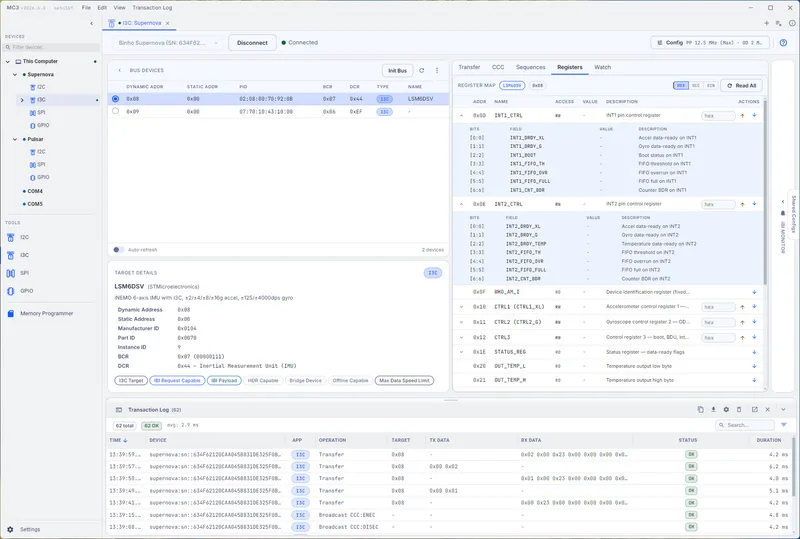
Binho Mission Control 3 (Public Preview): Point-and-Click I2C, SPI, I3C, and GPIO
Binho Mission Control 3 is in Public Preview: a ground-up rebuild that drives I2C, SPI, I3C, and GPIO from one workbench in a browser tab or native app, with a visual memory programmer, free for existing Supernova and Pulsar customers. Available in India from GSAS.
Related products
More from Binho
All Binho products →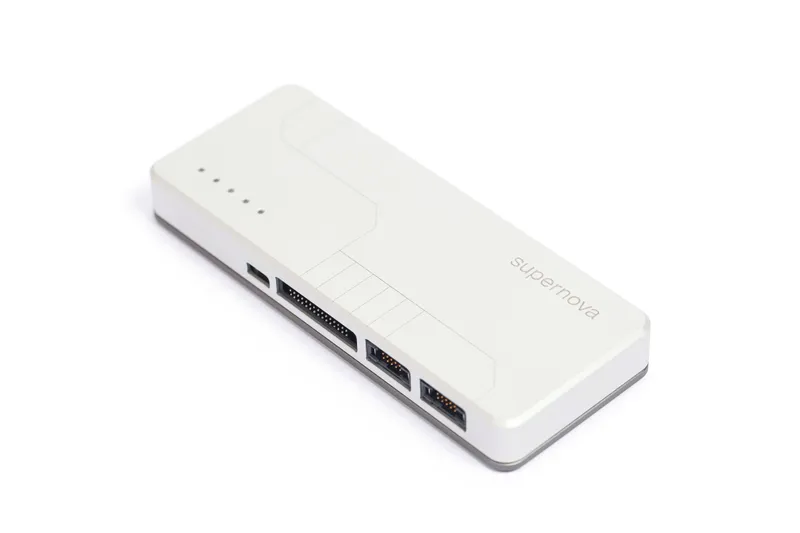
Binho Supernova I3C Exerciser
MIPI I3C host adapter and exerciser that Binho specifies as Controller or Target at 12.5 MHz, with SDR and HDR-DDR, plus I2C, SPI, UART and GPIO. Buy in India from GSAS, authorized Binho engineering partner.
View Binho Supernova I3C Exerciser →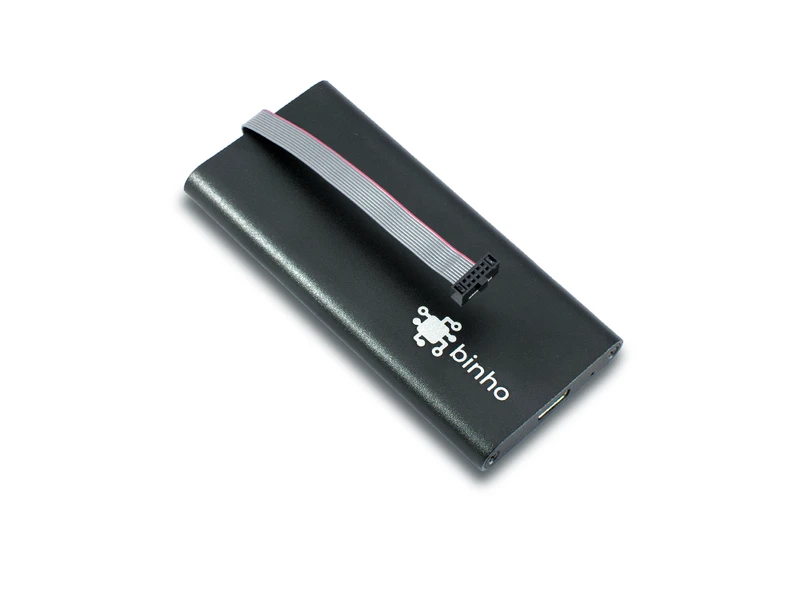
Binho Nova Multi-Protocol USB Host Adapter
Multi-protocol USB host adapter with I2C to 3.4 MHz, SPI to 12 MHz, UART to 1 Mbps and 1-Wire, powered from USB at 3.3 V logic. Buy in India from GSAS, authorized Binho engineering partner.
View Binho Nova Multi-Protocol USB Host Adapter →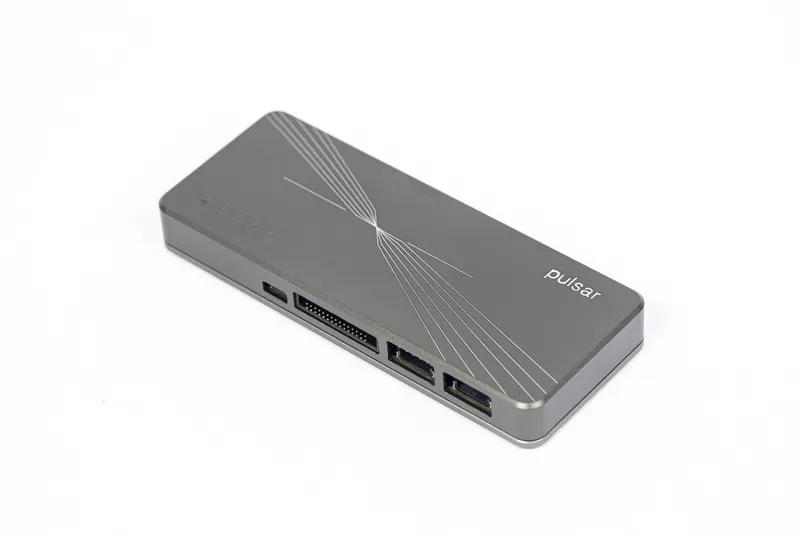
Binho Pulsar USB Host Adapter
USB host adapter with a 50 MHz SPI controller, 1 MHz I2C, UART, RS-485 and 6 GPIO in a machined-aluminum enclosure, with programmable 1.2 V to 3.3 V downstream power. Available in India from GSAS.
View Binho Pulsar USB Host Adapter →Available across India
FAQ
Common questions about Binho Atira Board Bring-up Tool
What is the Binho Atira used for?
Can the Atira power-cycle my board from a script?
How does the Atira's dual-port serial console work?
Which memories can the Atira program?
How do I buy the Binho Atira in India?
Interested in Binho Atira Board Bring-up Tool?
Get pricing, an evaluation unit, or a technical consultation from our application engineers.