
 Siemens EDA
 Fuse EDA AI System
AI & AutomationGenerative and agentic AI system for semiconductor and PCB design across the Siemens EDA toolchain. Available in India from GSAS with hands-on application engineering and local support.
AI Types
Generative and agentic
Data Foundation
Multimodal EDA data lake with RAG
Tool Coverage
Calibre, Questa One, Tessent, Xpedition, HyperLynx, Solido, Veloce, Catapult, Aprisa, Innovator3D IC
Deployment
On-premises or cloud, air-gapped supported
Orchestration
Fuse EDA AI Agent, MCP, Agent Skills
Availability
Contact GSAS for current availability
Overview
About Fuse EDA AI System
Fuse EDA AI is Siemens EDA’s comprehensive AI system, described by Siemens as a “comprehensive generative and agentic AI system for semiconductor and PCB design, offering enterprise-grade security, unparalleled custom capabilities and seamless integration across Siemens EDA portfolio”. Unlike general-purpose AI tools that lack domain expertise, Fuse uses a centralized multimodal EDA data lake with a family of specialized parsers that ingest and vectorize EDA formats, and an advanced retrieval-augmented generation (RAG) framework that answers queries about Siemens EDA tools, syntax, and workflows against that data rather than against the open internet.
Cross-tool integration gives one AI assistant across the design flow. Per Siemens’ March 2026 announcement, Fuse Agent supports architectural exploration, design planning and RTL coding with Catapult; digital verification through the Questa One Agentic Toolkit; place-and-route, timing closure and power optimization with Aprisa; custom design and verification with Solido; hardware-assisted verification with Veloce; physical verification sign-off by automating DRC violation analysis with Calibre; power and ground load optimization in Innovator3D IC; layout and signal integrity analysis in Xpedition and HyperLynx; and design-for-test workflows through Tessent.
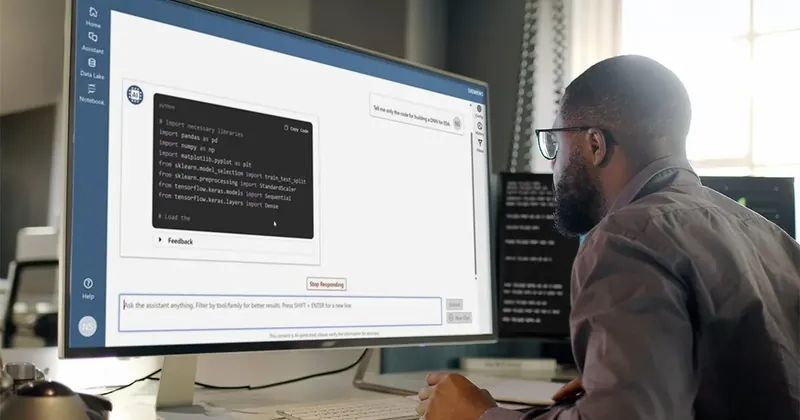
Natural language process execution lets engineers describe what they want in plain English, and Fuse generates the scripts, configurations, and workflows to make it happen. This goes beyond simple code generation, agentic capabilities allow AI agents to call tools, execute multi-step workflows, and automate complex tasks that previously required deep scripting expertise.
Secure and deployment-ready: Siemens offers advanced custom access mapping and controls for secure RAG, with both on-premises and cloud deployment options and no requirement for third-party computing resources. For Indian defence, aerospace, and strategic-electronics programmes where design data cannot leave the facility, that deployment flexibility determines whether an evaluation is possible at all.
Siemens’ approach to AI emphasizes verifiability, trusted, repeatable results that engineers can validate rather than black-box outputs. New engineers ramp up faster with AI-assisted tool guidance, asking questions in natural language and getting contextual tool help. Experienced engineers spend less time on scripting, documentation lookup, and tool configuration. Contact GSAS for current availability and evaluation access as part of the Siemens Xcelerator portfolio.
Fuse EDA AI Agent
On March 16, 2026, Siemens announced the Fuse EDA AI Agent, which builds on the Fuse EDA AI system and, in Siemens’ words, “autonomously orchestrates multi-agent workflows across Siemens’ complete electronic design automation (EDA) portfolio, from design conception through manufacturing sign-off”.
For digital verification specifically, Siemens states that Fuse Agent “assists with testbench generation, debugging and more through integration with the newly launched Questa One Agentic Toolkit”, the five-agent verification toolkit Siemens announced on February 27, 2026.
Siemens describes four capability pillars for Fuse EDA AI Agent:
- Domain-specific expertise: orchestrates multi-tool and multi-agent EDA workflows while preventing errors through built-in validation and domain-specific guardrails. Agent Skills provide executable playbooks that designers can customize.
- Scalable AgentOps and MCP architecture: dynamic tool discovery and orchestration across MCP-connected EDA tools, hierarchical planning with a supervisor agent and worker agents, and autonomous recovery loops.
- Enterprise infrastructure: optimizes resource allocation across existing scheduling frameworks and HPC clusters, with centralized data handling inside air-gapped compute environments.
- Embedded security and governance: native role-based access controls, audit trails, and human checkpoints.
Siemens publishes a three-pillar figure set for its EDA AI strategy, which we attribute to Siemens rather than assert independently: faster engines “delivering speed improvements of up to 1000x”, smarter execution “delivering productivity gains of 10-50x”, and trusted outcomes where “every agent decision is validated against proven engineering tools”. For Questa specifically, Siemens publishes a 3x reduction in verification coverage closure time and a 10x reduction in the verification of design changes.
Key Features
- Generative AI for EDA: Generate scripts, configurations, designs, and tool automations using natural language. Accelerate design cycles with AI-assisted creation.
- Agentic Automation: AI agents that can call tools, execute workflows, and automate complex multi-step tasks across the Siemens EDA toolchain.
- Multi-Modal Data Lake: Trained on Siemens EDA manuals, documentation, and domain knowledge. Understands EDA terminology, not just general language.
- Advanced RAG: Retrieval-augmented generation with advanced LLMs ensures accurate, verifiable responses grounded in official documentation.
- Cross-Tool Integration: Works across Calibre, Questa, Tessent, Xpedition, Solido, Veloce, Catapult, Aprisa, and the full Siemens EDA portfolio. One AI for the entire design flow.
- Accelerated Learning: New engineers ramp up faster with AI-assisted tool guidance. Ask questions in natural language, get contextual tool help.
- Verifiable AI: Siemens approach to AI emphasizes verifiability, trusted, repeatable results that engineers can validate.
- Productivity Boost: Reduce time spent on scripting, documentation lookup, and tool configuration. Focus on design, not tool mechanics.
Platform Capabilities
| Capability | Detail |
|---|---|
| AI Type | Generative and agentic AI system |
| Data Foundation | Multi-modal data lake (manuals, docs, examples) |
| LLM Integration | Advanced LLMs with RAG architecture |
| Tool Coverage | Calibre, Questa, Tessent, Xpedition, Solido, Veloce, Catapult, Aprisa |
| Capabilities | Script generation, Q&A, automation, configuration |
| Availability | Contact GSAS for current availability |
| Deployment | On-premises or cloud, no third-party compute required; air-gapped environments supported |
| Governance | Role-based access controls, audit trails, human checkpoints |
Target Applications
- Script and Automation Generation: Generate Calibre rule decks, Questa scripts, and Xpedition automation code from natural language descriptions.
- Design Assistance: Ask Fuse about tool workflows, configuration options, and design methodologies. Get accurate answers grounded in official docs.
- Engineer Onboarding: Accelerate new team member ramp-up. Fuse answers tool questions instantly instead of waiting for mentors or searching manuals.
- Workflow Optimization: AI agents analyze your design flow and suggest optimizations, automation opportunities, and best practice improvements.
Why GSAS for Fuse EDA AI
GSAS is your connection to Siemens EDA’s AI-powered future. As an authorized Siemens EDA partner, we help Indian engineering teams evaluate Fuse EDA AI, identify high-impact use cases within your existing design flow, and plan for adoption. Contact GSAS for current availability and evaluation access, integration strategies, and how generative AI can transform productivity in your EDA workflows.
Buy Fuse EDA AI in India: GSAS India-Wide Support
GSAS provides Fuse EDA AI evaluation and integration support with INR invoicing across India:
- Bengaluru: Semiconductor design centres and IT companies adopting AI-driven EDA workflows
- Hyderabad: Defence and telecom R&D teams exploring AI-assisted design
- Chennai: Automotive electronics teams integrating AI into PCB design flows
- Pune: Automotive R&D and industrial IoT teams evaluating AI productivity tools
- Mumbai: Enterprise design teams seeking AI-driven workflow automation
- Delhi NCR: Defence and telecom engineering groups
- Coimbatore: Industrial electronics teams adopting modern design methodologies
- Visakhapatnam: Naval and defence electronics R&D
- Vadodara: Power electronics and industrial automation teams
- Kolkata: Eastern India engineering and IT teams
Contact sales@gsasindia.com or call +91 80 6590 1783 for evaluation access.
Blog
Siemens EDA Insights

India's EDA Moment: Why Design Tool Demand Is Growing, and the Engineering Careers It Creates
Electronic design automation is one of the few engineering markets where the global numbers and India's industrial policy are pointing the same direction at the same time. Here is what the published data actually says, which engineering roles the growth creates, and where GSAS Micro Systems fits as an authorized Siemens EDA engineering partner.

AI and Complexity Are Redrawing EDA: Siemens on the Trillion-Transistor Era
Siemens argues that chip complexity has outgrown siloed design and that the lines between chip, package and board can no longer be drawn. GSAS summarises the Industry Forward podcast episode and sets out what it changes for design teams in India: verify across the chip-to-board boundary before layout, not after the prototype.
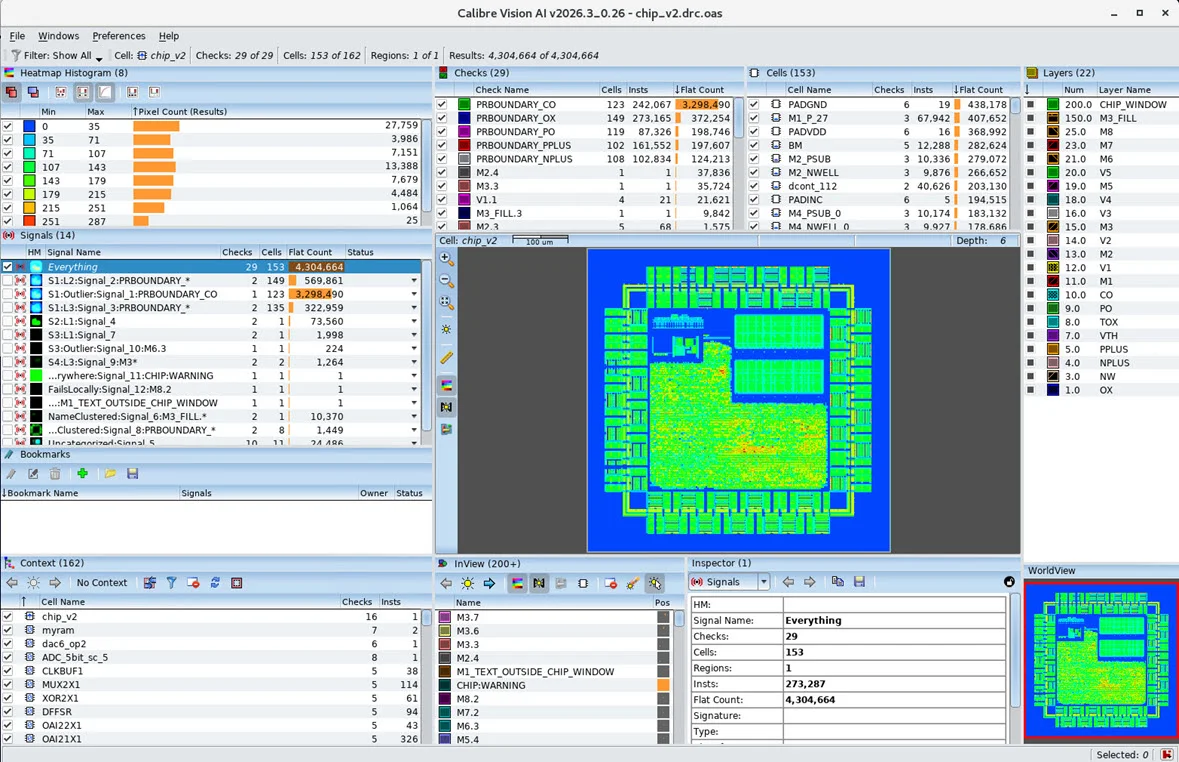
Calibre Vision AI: Bringing Order to DRC Debug at Advanced Nodes
Siemens EDA's Calibre Vision AI turns full-chip DRC debug from an unmanaged flood of violations into a tracked, filtered, hand-off-able workflow. What Signal status tracking, global filters and shareable workspaces mean for Indian SoC teams.
Interested in Fuse EDA AI System?
Get pricing, an evaluation unit, or a technical consultation from our application engineers.