
 Total Phase
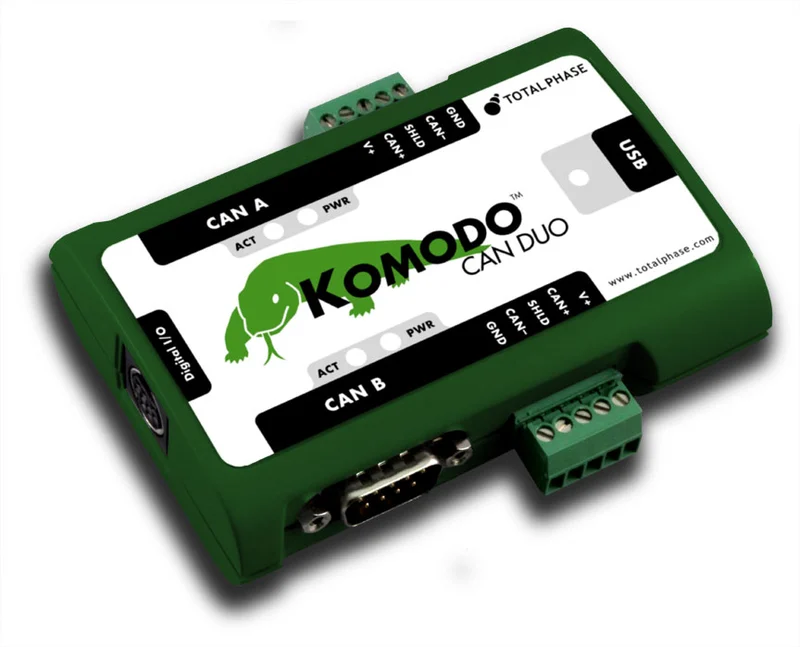
 Komodo CAN Duo Interface
CAN InterfacesDual-channel galvanically isolated USB-to-CAN adapter with active/passive modes and extended temperature range. India pricing and local support from GSAS.
CAN Channels
2 independent, isolated
CAN Speed
Up to 1 Mbps
GPIO
8 configurable pins
Temperature
-40C to 85C
APIs
C, C++, Python, .NET, LabVIEW
Overview
About Komodo CAN Duo Interface
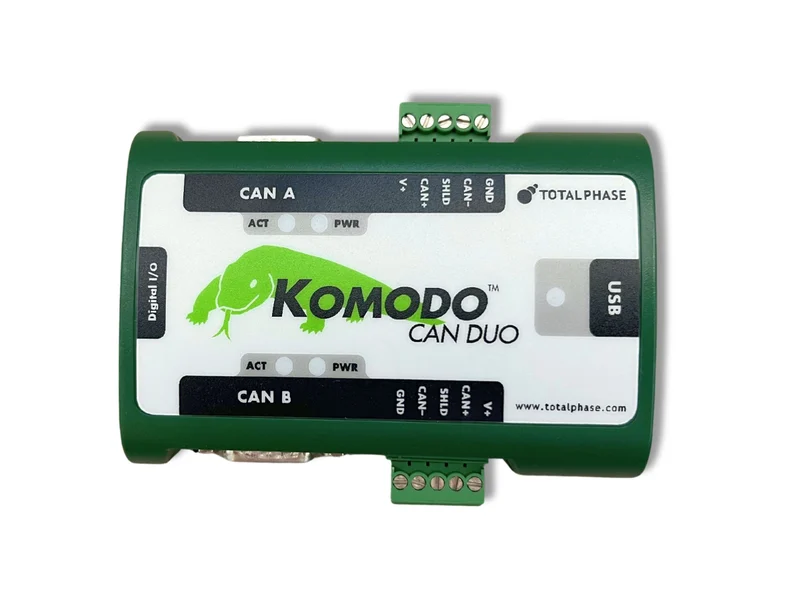
The Komodo CAN Duo Interface is a high-performance USB-to-CAN adapter with two independent CAN channels for simultaneous monitoring and active transmission. Each channel operates independently as an active node (transmit + receive with bus arbitration) or passive monitor (listen-only, non-intrusive), enabling scenarios like monitoring two CAN buses simultaneously or injecting test messages on one channel while recording responses on the other. Real-time monitoring, active transmission, and protocol analysis are all supported through a single compact instrument.
CAN Features
| Feature | Specification |
|---|---|
| CAN Channels | 2 independent |
| CAN Speed | Up to 1 Mbps per channel |
| Modes | Active (TX + RX) or Passive (listen-only) |
| Isolation | Galvanic, per channel |
| Error Detection | Bus-off, arbitration loss, bit/stuff/form errors |
| GPIO | 8 configurable pins |
| Temperature Range | -40C to +85C |
| APIs | C, C++, Python, .NET, LabVIEW |
| Form Factor | Compact, USB bus-powered |
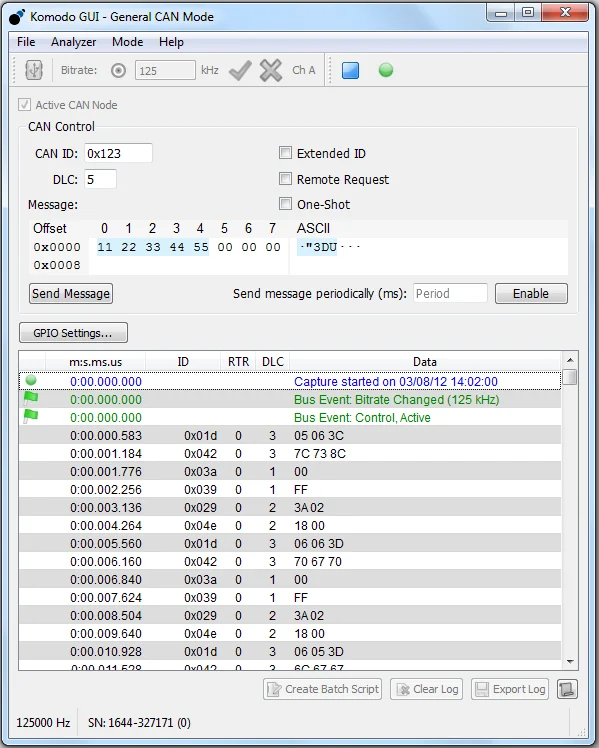
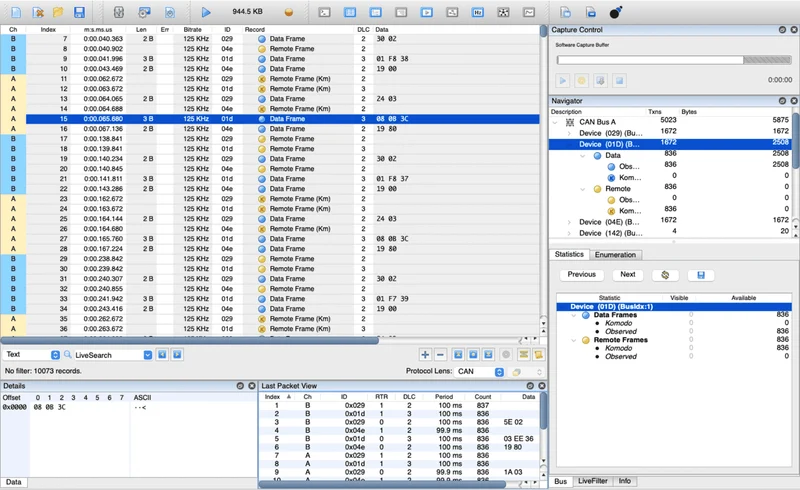
Galvanic isolation on each channel prevents ground loops and protects the host PC in automotive environments, while an extended operating temperature range of -40C to 85C rates the Komodo for automotive and industrial deployment beyond lab benches. Eight configurable GPIO pins provide synchronization with external test equipment, and comprehensive error frame detection logs bus-off events, arbitration losses, and bit/stuff/form errors for bus health analysis. Cross-platform APIs in Python, C, and more enable scripted automation for development, testing, and production validation.
Automotive and Industrial Use Cases
- ECU development and validation: Monitor CAN traffic between ECUs during development, inject diagnostic requests (UDS/KWP2000), and verify response timing and content against specifications.
- Gateway testing: Use both channels to simultaneously monitor traffic on two CAN buses bridged by a gateway ECU, verifying message routing, filtering, and translation.
- CANopen and DeviceNet debugging: Decode industrial CAN protocol stacks in real time, identifying node guard failures, PDO timing issues, and SDO transfer errors.
- End-of-line production testing: Script automated CAN message sequences to verify ECU functionality before shipping, with pass/fail logging and serial number traceability.
- Bus health analysis: Monitor error frame rates, bus load percentages, and arbitration behavior over extended periods to identify intermittent wiring issues or EMC-related communication failures.
Watch the Komodo CAN Duo Interface introduction
The Komodo’s dual-channel architecture with per-channel isolation is particularly valuable in Indian automotive manufacturing, where multi-bus ECU designs are standard in commercial vehicle, two-wheeler, and passenger car platforms. GSAS Micro Systems provides the Komodo CAN Duo with applications engineering support for CAN bus integration into automated test setups and production line fixtures.
Blog
Total Phase Insights
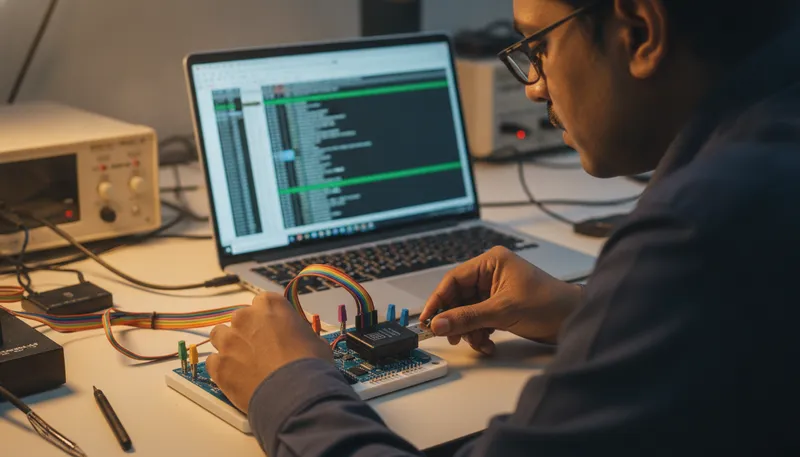
Aardvark vs Cheetah vs Promira: Total Phase Host Adapter Guide (India)
Aardvark, Cheetah, or Promira: which Total Phase USB host adapter fits your I2C, SPI, or eSPI workflow. A decision guide for Indian embedded teams, plus a short note on which Beagle analyzer to pair with it.
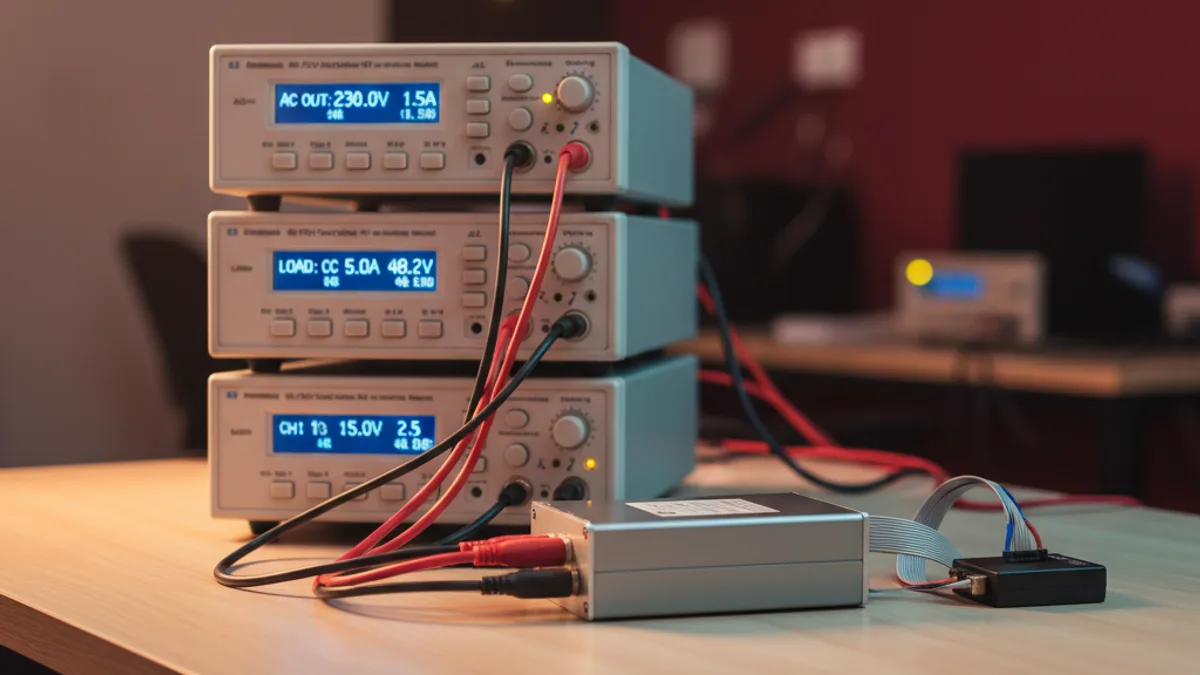
Automated EV Charger Test Bench in India: GW Instek AC Source, DC Load and Battery Emulator
A walkthrough of an automated test bench that validates a CAN-controlled EV scooter charger across the full Indian grid envelope. GW Instek's APS-7200 AC source, PEL-3111AH DC load and GPP-7250 battery emulator combine with a Total Phase Komodo CAN Duo BMS emulator for unattended, repeatable charger validation, designed, integrated and scripted in India by GSAS.
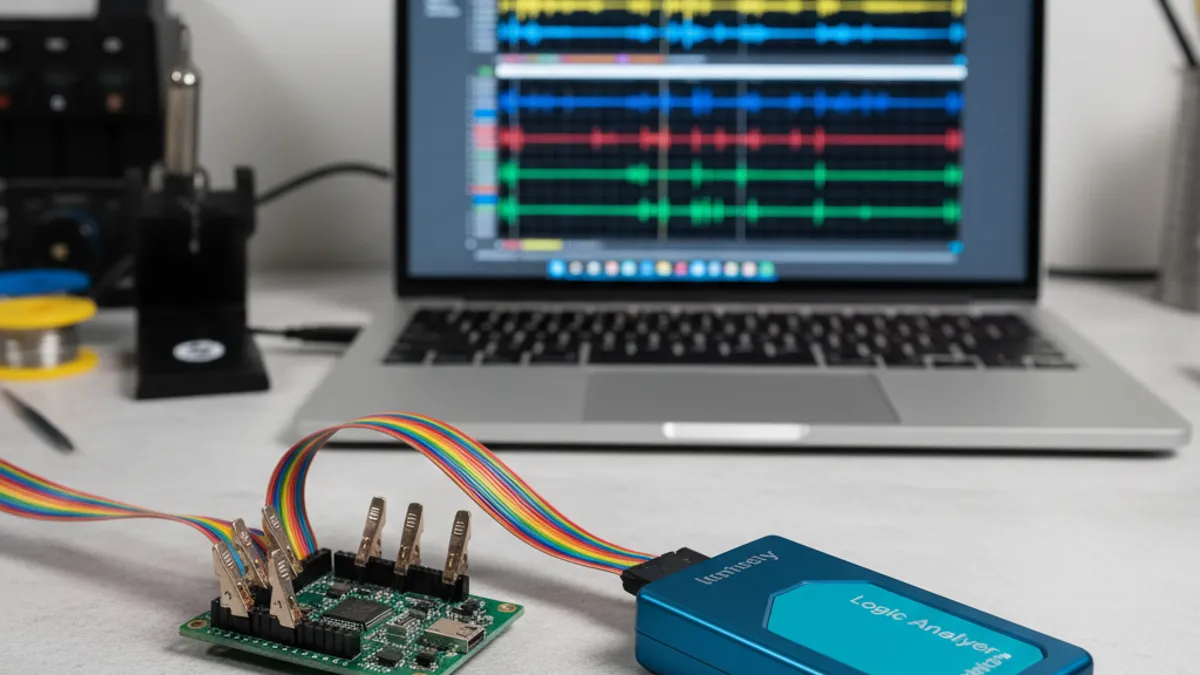
Best Logic Analyzer in India (2026): A Vendor-Neutral Buying Guide for Embedded Teams
Channels, sample rate, protocol decode, and streaming vs buffer, a vendor-neutral buying framework for choosing a USB logic analyzer or protocol analyzer in India, funnelling to the SKUs that actually fit your bus.
Related products
More from Total Phase
All Total Phase products →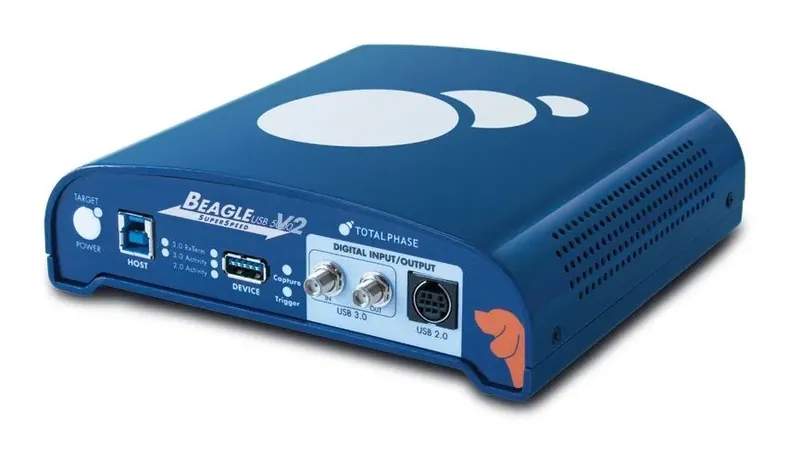
Beagle USB 5000 v2 SuperSpeed Protocol Analyzer
USB 3.0 SuperSpeed and USB 2.0 dual-bus analyzer with 4 GB buffer, 2 ns timing, and multi-analyzer sync. India pricing and local support from GSAS.
View Beagle USB 5000 v2 SuperSpeed Protocol Analyzer →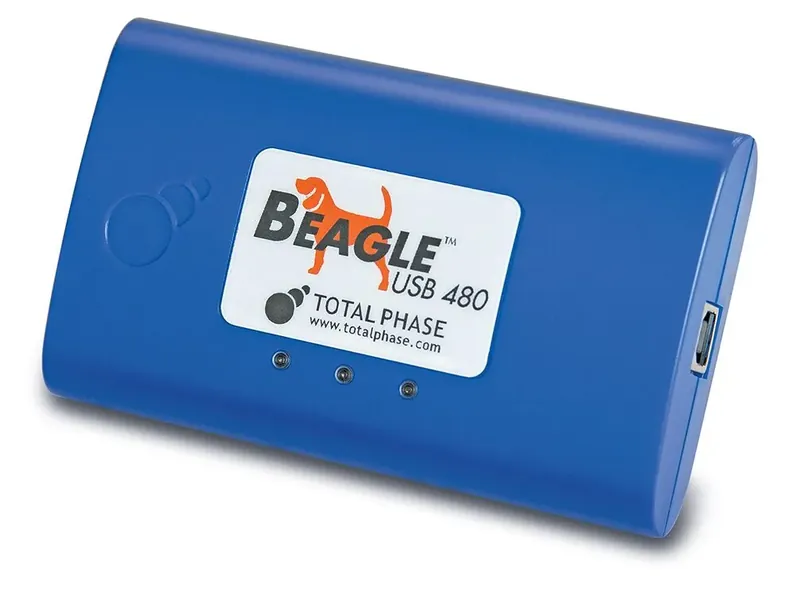
Beagle USB 480 Protocol Analyzer
Non-intrusive USB 2.0 High-Speed bus monitor with real-time class-level decoding and 64 MB on-board buffer. Available in India from GSAS with hands-on application engineering and local support.
View Beagle USB 480 Protocol Analyzer →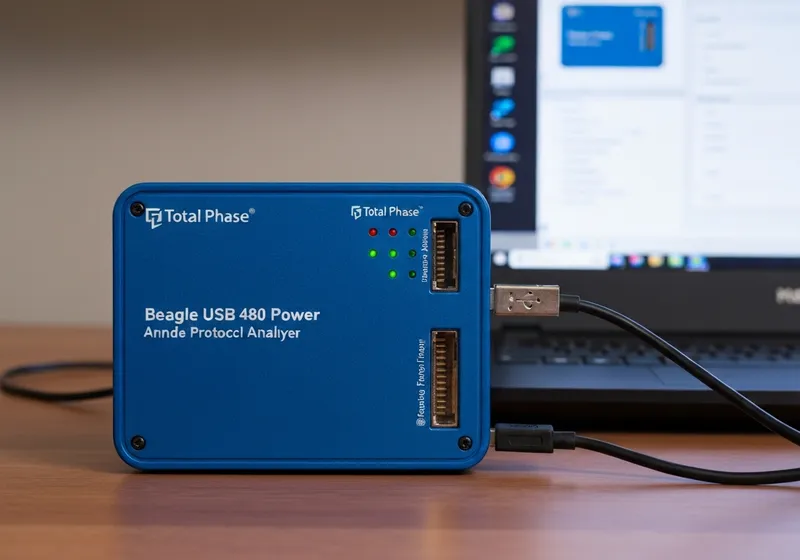
Beagle USB 480 Power Protocol Analyzer
Total Phase Beagle USB 480 Power, a non-intrusive USB 2.0 protocol analyzer (Low/Full/High Speed, up to 480 Mbps) that graphs VBus current and voltage in real time and correlates power with USB traffic, with 16.67 ns timing resolution. Available in India from GSAS Micro Systems with application engineering, demonstrations and GST-compliant quotations.
View Beagle USB 480 Power Protocol Analyzer →FAQ
Common questions about Komodo CAN Duo Interface
What is the Komodo CAN Duo price in India?
Can the Komodo CAN Duo monitor two CAN buses at once?
Is the Komodo CAN Duo rated for automotive temperature ranges?
What CAN errors does the Komodo CAN Duo detect?
Interested in Komodo CAN Duo Interface?
Get pricing, an evaluation unit, or a technical consultation from our application engineers.