# From PADS to Xpedition Standard: What Changes and What Stays the Same
PADS has been a workhorse of the Indian PCB design community for over two decades. From compact IoT boards designed in Bengaluru to industrial control systems laid out in Pune, the PADS ecosystem has enabled thousands of Indian engineering teams to bring products to market reliably and efficiently. The tool’s approachable learning curve, capable routing engine, and straightforward licensing made it the natural choice for small-to-midsize design teams across the country.
But the electronics landscape in India has shifted dramatically. Boards that once carried a single microcontroller and a handful of passives now integrate high-speed DDR5 interfaces, multi-gigabit SerDes links, and power management ICs with hundreds of pins. Indian OEMs are designing products that compete globally, and the design tools need to keep pace.
Siemens EDA’s Xpedition Standard represents the modernisation path for PADS users, and understanding exactly what changes and what stays the same is critical before making the move.
The Installed Base Reality
India has one of the largest PADS user communities in the Asia-Pacific region. Companies ranging from defence electronics firms to consumer electronics startups rely on PADS Pro and PADS Standard for their daily design work. Many of these organisations have accumulated years of library data, design templates, constraint sets, and scripted workflows built around the PADS environment.
The question these teams face is not whether to modernise, it is how to modernise without disrupting production schedules, losing institutional knowledge, or retraining entire engineering departments from scratch. This is where the PADS-to-Xpedition transition story becomes genuinely interesting, because Siemens EDA has deliberately preserved far more than most users expect.
What Changes: The Modern Experience
Redesigned User Experience
The most immediately visible change is the user interface. Xpedition Standard features a ground-up redesign of the interaction model. The ribbon-based interface, context-sensitive panels, and modernised dialogue boxes represent a significant departure from the classic PADS look and feel. Engineers accustomed to the PADS menu hierarchy will need time to build new muscle memory.
However, the redesign is not change for its own sake. The new UX reduces the number of clicks required for common operations, surfaces relevant options contextually rather than burying them in nested menus, and provides real-time visual feedback during constraint-driven operations. Indian design teams who have evaluated the interface consistently report that productivity improves within two to three weeks of daily use.
Cloud Collaboration
Xpedition Standard introduces cloud-based collaboration capabilities that simply did not exist in the PADS world. For Indian engineering teams distributed across multiple cities, a common pattern where schematic capture might happen in Noida, layout in Bengaluru, and design review in Hyderabad, cloud collaboration eliminates the file-copying, version-confusion, and email-attachment workflows that plague multi-site teams.
Design data can be shared, reviewed, and commented on through browser-based interfaces, meaning mechanical engineers, signal integrity specialists, and project managers can participate in design reviews without installing the full layout tool.
AI Command Prediction
Xpedition Standard incorporates AI-driven command prediction that learns from your usage patterns. The system observes which operations you typically perform in sequence and begins suggesting the next likely command. For repetitive operations, placement sequences, constraint assignments, output generation, this feature measurably reduces interaction time.
Indian designers working on families of products with similar board architectures find this particularly valuable, as the AI adapts to the specific workflow patterns of each user.
Named-User Licensing
Perhaps the most significant operational change is the licensing model. PADS traditionally used FlexLM-based node-locked or floating licenses. Xpedition Standard moves to named-user licensing, which eliminates the need for license servers, dongle management, and the IT overhead associated with FlexLM administration.
For Indian organisations that have struggled with license server reliability, particularly those with engineering teams working across unreliable network connections or from home offices, named-user licensing removes a persistent operational headache.
What Stays: The Engine Underneath
The Xpedition Engine
Here is what most PADS users do not initially realise: PADS Pro was already running on the Xpedition engine. The routing algorithms, the DRC engine, the constraint management system, and the output generation pipeline in Xpedition Standard are the same proven technology that PADS Pro users have been relying on.
This is not a migration to an unfamiliar technology, it is a migration to a modern interface built on top of the same foundational technology.
Data Format Compatibility
Xpedition Standard reads PADS data. Your existing designs, libraries, padstacks, and technology files carry forward. This is not a “re-enter everything from scratch” migration. The data format continuity means that your institutional design knowledge, the libraries refined over years, the constraint templates proven in production, the technology files tuned for your preferred fabricators, all transfer to the new environment.
Constraint Methodology
The constraint-driven design methodology that PADS Pro users rely on, net classes, differential pair rules, clearance matrices, high-speed constraints, carries forward into Xpedition Standard. The same constraint philosophy applies, the same rule definitions work, and the same DRC engine validates compliance.
For Indian defence and aerospace companies where constraint sets represent years of qualification testing and manufacturing validation, this continuity is not a convenience, it is a requirement.
The Qualification Checklist: Verify Before You Migrate
Not every PADS workflow translates identically, and responsible migration planning requires verification of critical features before committing. Indian engineering teams should systematically validate the following areas.
Scripting and Automation. If your team has invested in PADS automation scripts, batch output generation, automated DRC runs, library management utilities, verify that equivalent scripting capabilities exist in Xpedition Standard. The scripting API has evolved, and while most operations are supported, the specific function calls will differ. Analogue and Mixed-Signal Design. Teams designing analogue or mixed-signal boards should verify that their specific AMS workflow requirements are met. Constraint management for analogue sections, guard ring support, and analogue-specific DRC rules should be tested with representative designs. RF Design. If your team designs RF boards with PADS, verify that RF-specific features, RF-aware routing, waveguide structures, controlled impedance for RF traces, meet your requirements in Xpedition Standard. RF design has specific tool requirements that warrant dedicated evaluation. Third-Party Integrations. Verify that any third-party tools integrated into your PADS workflow, simulation tools, mechanical CAD links, PLM connectors, have equivalent integration paths with Xpedition Standard.
The Transition Path: Evaluation Without Risk
Siemens EDA has structured the transition to minimise risk for existing PADS customers. During your PADS renewal period, you can receive complimentary Xpedition Standard seats for evaluation. This means your production PADS environment continues operating unchanged while your team evaluates Xpedition Standard in parallel.
This parallel operation model is particularly valuable for Indian engineering teams with active production schedules. There is no forced cutover date, no production disruption, and no pressure to abandon a working environment before the new one is fully validated.
Token-Based Add-Ons: Preserving Capability Access
PADS Pro users who relied on advanced capabilities, HyperLynx integration, advanced constraint management, specific output formats, can access equivalent capabilities in Xpedition Standard through token-based add-ons. The token system provides flexible access to advanced features without requiring permanent license upgrades.
This model is particularly relevant for Indian design teams that need advanced capabilities intermittently. A team that runs signal integrity analysis on one out of every five designs can access HyperLynx capabilities through tokens when needed, rather than maintaining a permanent SI license that sits idle most of the time.
GSAS Support for Indian Teams
GSAS Micro Systems has supported PADS users across India for years, and the transition to Xpedition Standard is a process we have refined through multiple customer engagements. Our approach includes several elements that Indian teams consistently find valuable.
On-Site Training. Our engineers conduct training at your facility, using your actual designs and workflows rather than generic tutorial examples. Training with real designs means your team is productive in the new environment from day one, not after weeks of adapting generic training to their specific needs. Workflow Mapping. Before migration, we document your current PADS workflows, from schematic capture through output generation, and map each step to the equivalent Xpedition Standard process. This workflow map becomes the team’s reference guide during the transition period. Parallel Operation Support. During the evaluation period, GSAS provides support for both environments simultaneously. Questions about PADS workflows and Xpedition Standard procedures are handled by the same support team, ensuring continuity. Library Migration Assistance. For teams with large, mature PADS libraries, GSAS provides migration assistance to ensure that library data transfers cleanly and that the migrated libraries meet Xpedition Standard best practices.
With offices in Bengaluru, Pune, and Delhi NCR, GSAS engineers are accessible for on-site support across India’s major engineering hubs, ensuring that the transition from PADS to Xpedition Standard is smooth, well-supported, and aligned with your production schedule.
Moving Forward
The PADS-to-Xpedition Standard transition is not about abandoning a tool that has served you well. It is about carrying your design expertise, your library investments, and your proven methodologies forward into a modern environment that can handle the complexity of current and future designs. The same engine runs underneath.
The same data carries forward. What changes is the experience of using the tool, and for teams designing increasingly complex boards, that experience improvement translates directly to productivity.
Ready to evaluate Xpedition Standard alongside your current PADS environment? Contact GSAS Micro Systems for a PADS upgrade assessment. Our team will review your current workflows, identify migration considerations specific to your designs, and set up a parallel evaluation so your team can experience the transition firsthand, with zero disruption to production. GSAS Micro Systems: an authorised Siemens EDA partner. Bengaluru | Pune | Noida gsasindia.com | info@gsasindia.com
Also appears in:
Interested in Siemens EDA tools?
Talk to our application engineers for personalized tool recommendations.
More from Siemens EDA
View all →
India's EDA Moment: Why Design Tool Demand Is Growing, and the Engineering Careers It Creates
21 Sept · 9 min

AI and Complexity Are Redrawing EDA: Siemens on the Trillion-Transistor Era
13 Sept · 6 min
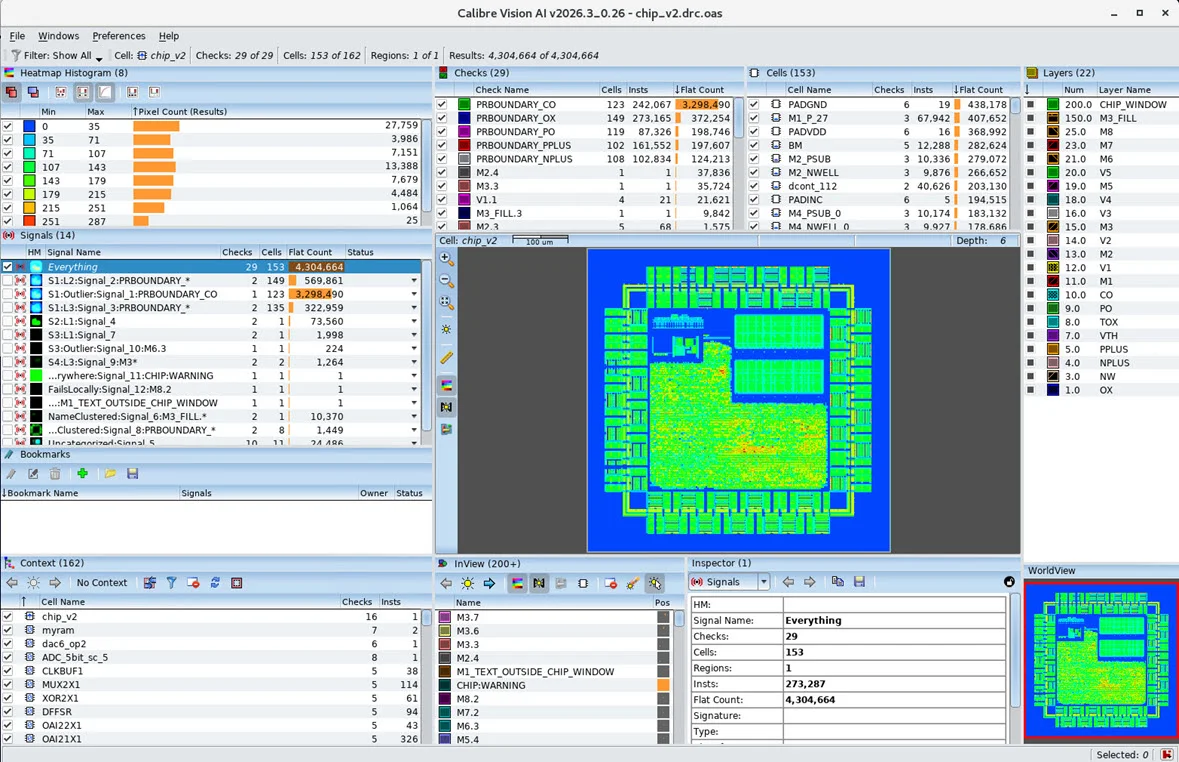
Calibre Vision AI: Bringing Order to DRC Debug at Advanced Nodes
24 Aug · 4 min
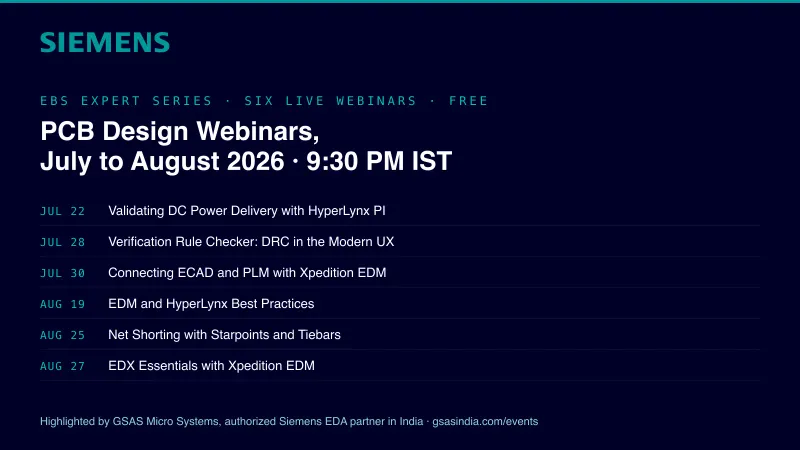
Siemens EDA EBS Expert Series: 6 Free PCB Design Webinars (Jul-Aug 2026)
20 Jul · 8 min
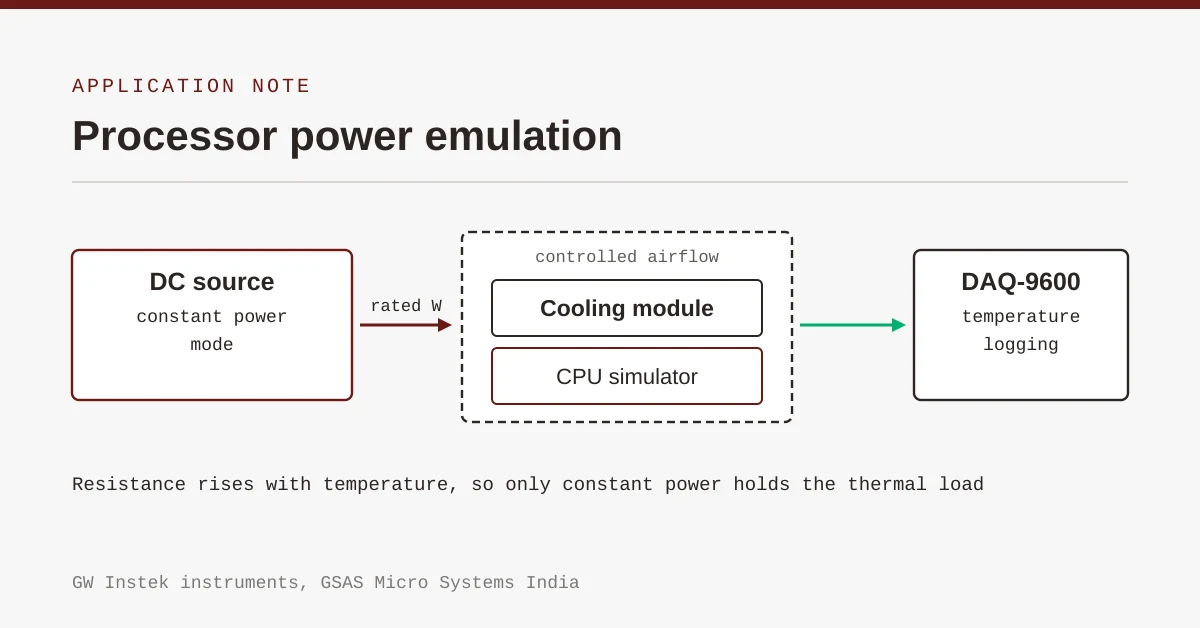
Emulating Processor Power for Thermal Testing: Why Constant Power
7 Oct · 7 min
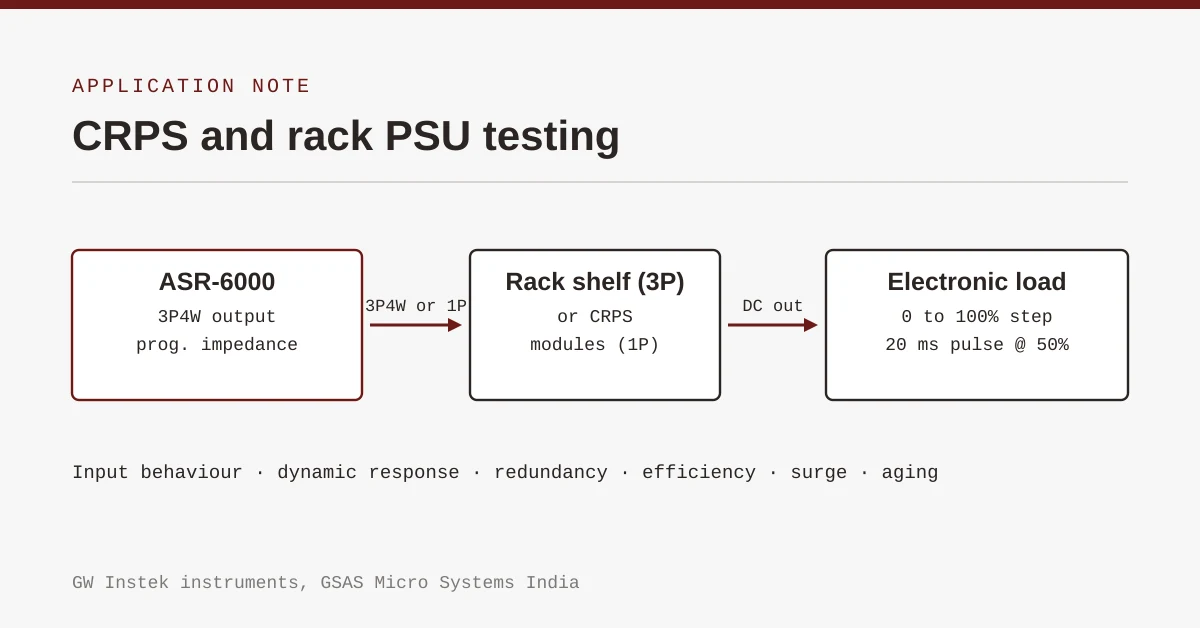
CRPS and Rack Power Supply Testing: The Six Tests That Matter
7 Oct · 7 min