The Pre-Compliance Imperative
EMC compliance testing at an accredited lab in India, NABL-accredited facilities in Bengaluru, Chennai, Hyderabad, Pune, and Delhi NCR: typically costs Rs 2–5 lakh per test campaign, with 3–6 week lead times for booking slots. When a product fails and requires re-design and re-test, the cost and schedule impact doubles.
Pre-compliance testing, measuring your product’s electromagnetic emissions in your own lab before formal testing, is not a luxury. It is a risk reduction strategy that catches problems early, when design changes are inexpensive and fast.
GW Instek spectrum analyzers provide the measurement capability needed for pre-compliance conducted and radiated emissions testing at a price point accessible to Indian product development teams.
Equipment for Pre-Compliance
Spectrum Analyzer
GW Instek’s GSP-9300 and GSP-730 series spectrum analyzers cover the frequency ranges relevant to EMC testing:
- Frequency range: 9 kHz to 3 GHz (sufficient for most conducted and radiated emissions standards)
- Resolution bandwidth (RBW): Adjustable down to narrow values suitable for resolving individual emission peaks
- Detectors: Peak, quasi-peak, and average, essential for comparing against CISPR limit lines that specify different detector types
- Pre-amplifier: Built-in or optional, for improving sensitivity on radiated emissions measurements
LISN for Conducted Emissions
A Line Impedance Stabilization Network (LISN) is required for conducted emissions testing. The LISN provides a standardized 50 ohm impedance at the measurement point and isolates the measurement from ambient mains noise. Standard specifications: 50 ohm / 50 uH per CISPR 16-1-2.
Connect the LISN’s RF output to the spectrum analyzer input via a 50 ohm coaxial cable.
Antennas for Radiated Emissions
For radiated emissions pre-compliance, antennas are needed:
- Biconical antenna: 30 MHz – 200 MHz
- Log-periodic antenna: 200 MHz – 1 GHz
- Horn antenna: 1 GHz – 3 GHz (for standards requiring higher frequency measurement)
Each antenna has a frequency-dependent antenna factor that converts the received voltage to field strength (V/m or dBuV/m). The spectrum analyzer reading plus the antenna factor minus cable loss equals the field strength.
Near-Field Probes
For diagnostic work (identifying the source of emissions on the PCB), near-field probe sets, H-field loops and E-field probes, provide close-range measurement that pinpoints the radiating structure. GW Instek and third-party suppliers offer near-field probe sets compatible with any spectrum analyzer.
Conducted Emissions Measurement
Setup
- Place the DUT and LISN on a ground plane (copper or aluminium sheet, minimum 0.5 m beyond the DUT edges)
- Connect the LISN between the AC mains and the DUT
- Connect the LISN RF output to the spectrum analyzer
- Position the DUT 40 cm from the ground plane edge (per CISPR 16 guidelines)
- Operate the DUT in its noisiest operating mode (typically full load)
Measurement
- Set the spectrum analyzer frequency range: 150 kHz to 30 MHz
- Set RBW appropriate for the standard (typically 9 kHz for CISPR quasi-peak)
- First scan: Use peak detector for a fast overview
- Identify frequencies where peaks approach or exceed the limit
- Second scan: Use quasi-peak detector at those specific frequencies for accurate comparison against CISPR limits
Interpretation
The spectrum analyzer displays emission level (in dBuV) versus frequency. Compare peaks against the applicable limit line:
- CISPR 32 Class B (residential environment): Typical limits are 66 dBuV (quasi-peak) at 150 kHz, decreasing to 56 dBuV at 500 kHz, and 56 dBuV from 5 to 30 MHz
- CISPR 32 Class A (industrial environment): Limits are approximately 10 dB higher
For pre-compliance, allow 6–10 dB margin to account for measurement uncertainty in a non-shielded environment.
Radiated Emissions Measurement
Open Area Test Site (OATS) Alternative
Formal radiated emissions testing requires an Open Area Test Site (OATS) or a shielded anechoic chamber. For pre-compliance, a shielded room or even a large indoor space (away from external RF sources) provides useful, if imprecise, measurements.
Setup
- Place the DUT on a non-conductive table at 80 cm height
- Position the receiving antenna at 3 m distance (for pre-compliance; formal testing uses 3 m or 10 m)
- Connect the antenna to the spectrum analyzer
- Scan 30 MHz to 1 GHz (minimum range for most standards)
Measurement
- Use peak detector for initial scan
- Identify emission peaks
- Calculate field strength: Field strength (dBuV/m) = Spectrum analyzer reading (dBuV) + Antenna factor (dB/m) - Cable loss (dB)
- Compare against applicable limit line
Diagnostic Follow-Up
When pre-compliance testing identifies excessive emissions:
- Use near-field probes to scan the PCB surface and identify the radiating structure
- Correlate the emission frequency with known clock frequencies, switching frequencies, and harmonic frequencies on the board
- Apply mitigation: shielding, filtering, layout changes, component substitution
- Re-measure to verify improvement
Why GW Instek for EMC Pre-Compliance
GW Instek spectrum analyzers provide the frequency range, detector types (peak, quasi-peak, average), and resolution bandwidth needed for standards-referenced pre-compliance testing. Combined with a LISN and antenna set, a complete pre-compliance station can be assembled for a fraction of the cost of a dedicated EMC receiver.
The GW Instek platform supports SCPI remote control for automated scans and data export for documentation and regulatory submissions.
Why Buy GW Instek from GSAS
GSAS Micro Systems is an authorized GW Instek partner, providing spectrum analyzers, EMC accessories, and pre-compliance setup guidance.
- Pre-compliance station configuration: spectrum analyzer, LISN, antenna, and probe selection
- Demo and evaluation at offices in Bengaluru, Hyderabad, Chennai, Pune, Mumbai, and Delhi NCR
- INR invoicing with GST-compliant documentation
- Calibration coordination through NABL-traceable service
Also appears in:
Interested in GW Instek tools?
Talk to our application engineers for personalized tool recommendations.
More from GW Instek
View all →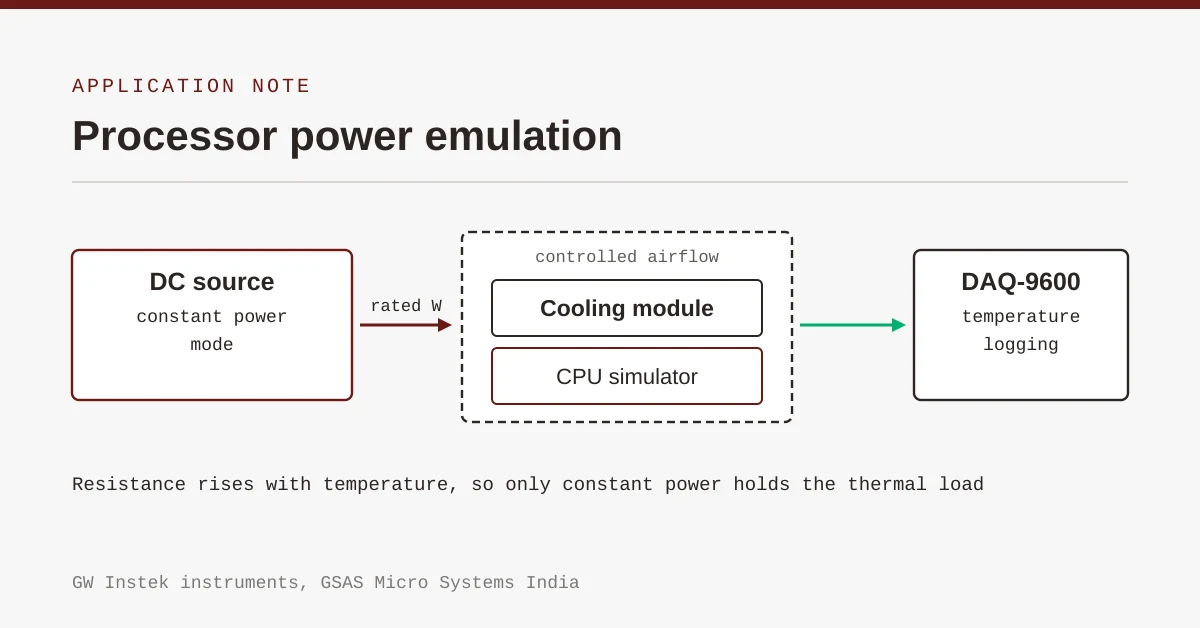
Emulating Processor Power for Thermal Testing: Why Constant Power
7 Oct · 7 min
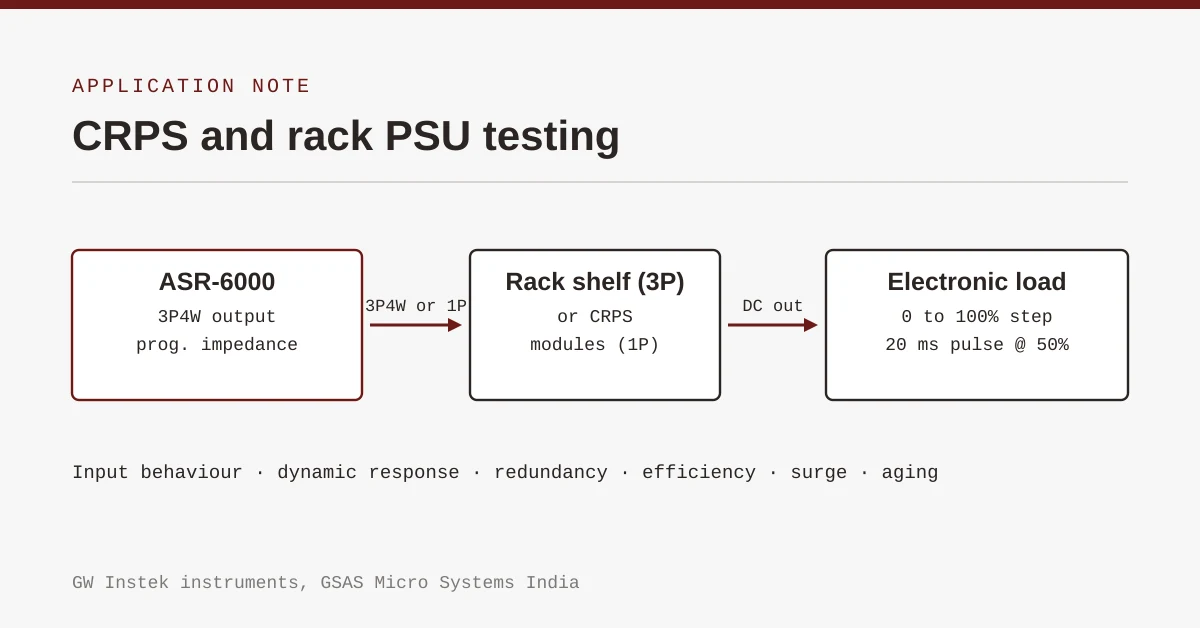
CRPS and Rack Power Supply Testing: The Six Tests That Matter
7 Oct · 7 min
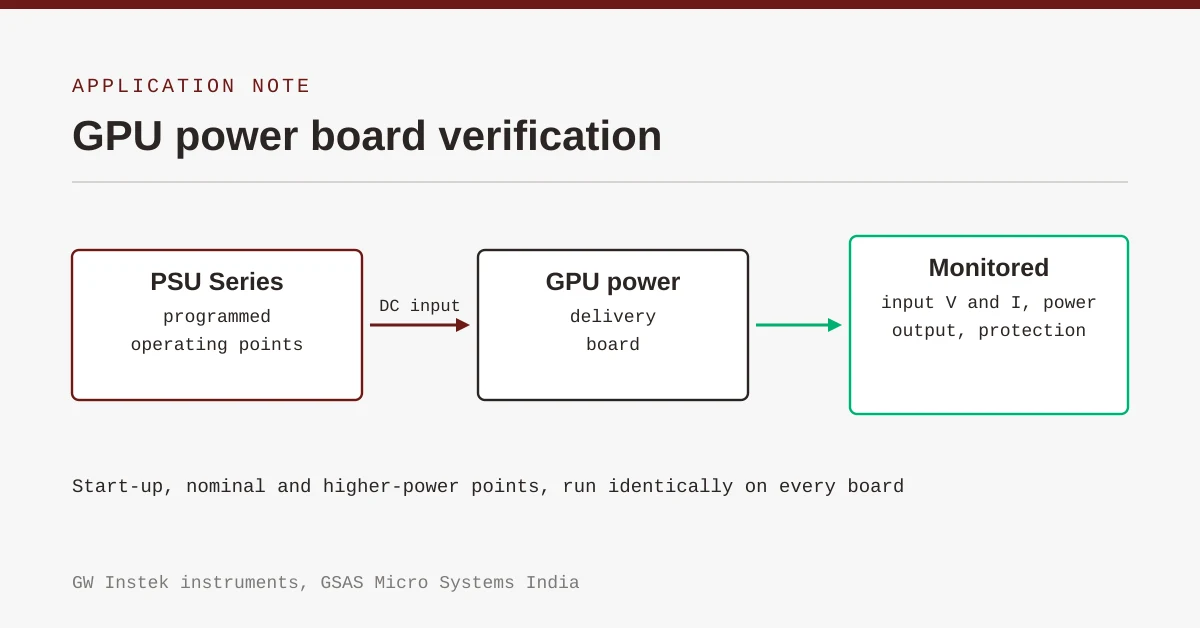
GPU Power Board Testing: DC Input Verification Before Integration
7 Oct · 6 min
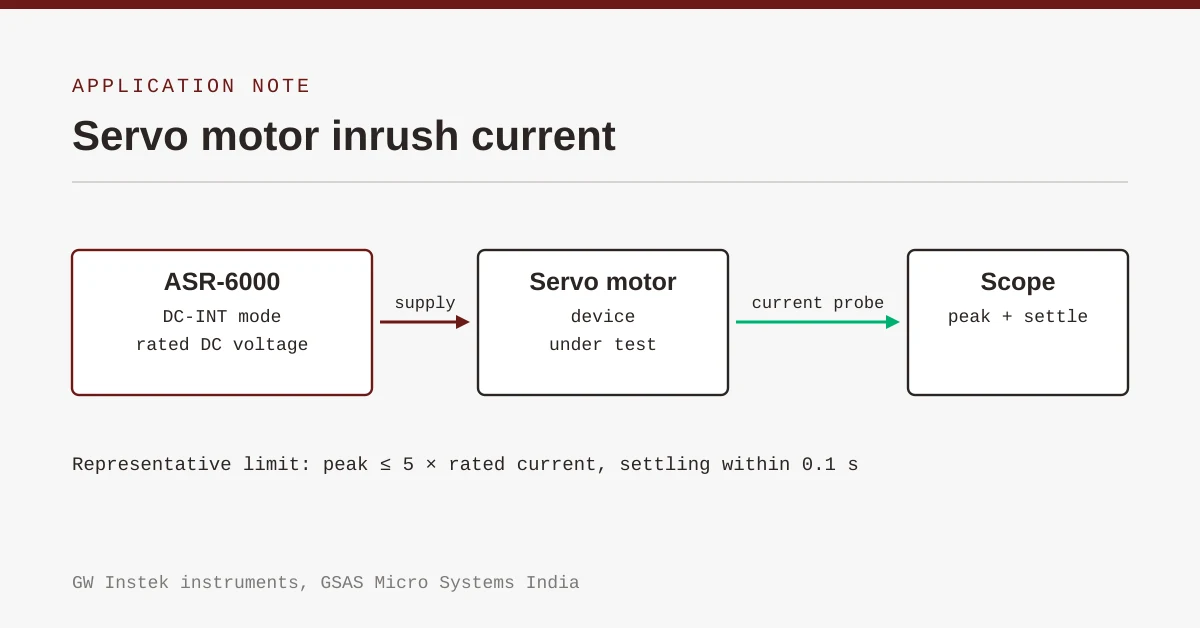
Servo Motor Inrush Current Testing: Method, Limits and Bench
7 Oct · 6 min

SuperTest Van Gogh 6.0: C23, C++23 and the C++20 Modules Gap
6 Oct · 7 min
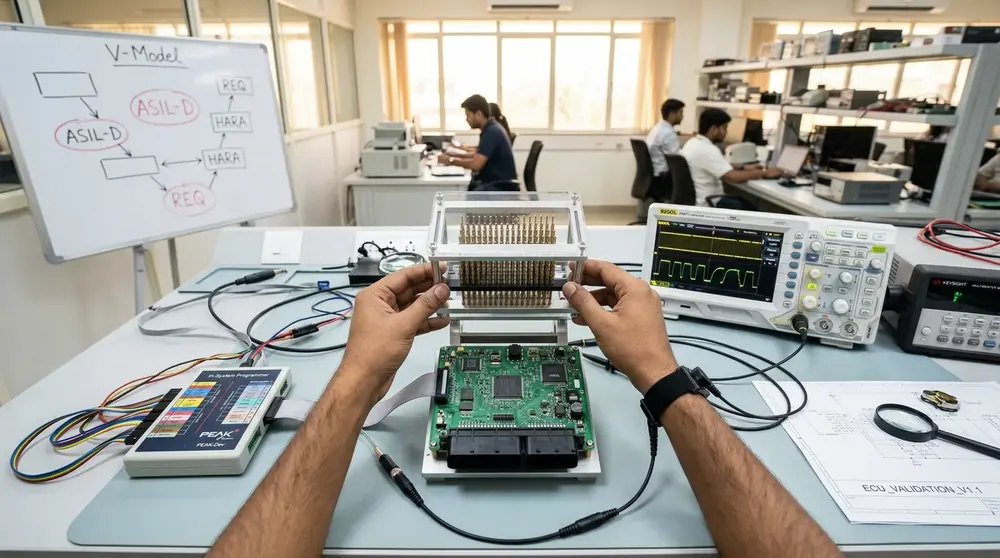
AI Inside the Engineering Process: What Is Worth Automating, and What Still Needs an Engineer
21 Sept · 11 min