
Production programming at scale demands more than raw speed. It demands process control, traceability, security, and integration with the systems that govern a manufacturing line. ProMik’s FlashTask Pro is built to meet exactly these requirements, a professional manufacturing software platform designed for high-volume production environments.
Standard API with an Operator-Friendly GUI
FlashTask Pro provides a standard API paired with an operator-friendly graphical interface. This separation matters. Production operators interact with a clean GUI that minimizes error potential, while integration engineers work through the API layer to connect FlashTask Pro with broader manufacturing infrastructure.
The software comprises two core components: the Job Editor and the FT GUI. The Job Editor is where process engineers define and configure flash jobs, specifying target devices, data files, verification parameters, and security settings. The FT GUI is the operator-facing interface used on the production floor, designed for clarity and minimal training overhead.
Flash Process Control via Job Files
At the heart of FlashTask Pro is the concept of the job file. Every flash process is defined, versioned, and controlled through job files. This approach enforces repeatability: the same job file produces the same result on every unit, every time. Process engineers configure the job once; operators execute it without needing to understand the underlying flash sequences.
This architecture also simplifies audit trails. When a production issue arises, the job file provides a complete record of what was programmed, with which parameters, and under which configuration.
Optimized High-Speed Flash Algorithms
FlashTask Pro uses optimized high-speed flash algorithms tailored to the target device. These algorithms are not generic routines, they are tuned for specific flash memory architectures to maximize throughput without compromising data integrity.
The ProMik Flash bootloader enables high-speed data transfer via USB, BroadR-Reach, and CAN-FD interfaces. This is particularly relevant for automotive production lines where different ECU variants may present different physical interfaces. A single FlashTask Pro installation can handle all of them.
MES Integration and Remote Control
Modern manufacturing lines do not operate as isolated stations. FlashTask Pro includes MES (Manufacturing Execution System) interfaces that connect the programming station to the factory’s production management layer. This means flash operations are tracked, scheduled, and reported within the same system that manages the entire production workflow.
For inline manufacturing, FlashTask Pro provides remote control interfaces for inline handling systems. Robotic handlers, conveyor systems, and automated test equipment can trigger and monitor flash operations programmatically, no manual intervention required.
Enhanced Traceability and Diagnostics
Every flash operation executed through FlashTask Pro generates traceability data. This includes device identifiers, programming timestamps, verification results, and any anomalies detected during the process. For industries where traceability is a regulatory requirement, automotive, aerospace, medical devices, this capability is not optional. FlashTask Pro treats it as a core function.
The diagnostics layer goes beyond simple pass/fail reporting. When a flash operation encounters an issue, the software provides detailed diagnostic information that helps production engineers identify root causes without pulling the unit off the line for bench analysis.
Cybersecurity at Device and System Level
FlashTask Pro implements cybersecurity at both the device level and the system level. At the device level, this means secure handling of firmware images, encrypted data transfer, and protection against unauthorized code injection. At the system level, it means controlled access to job files, encrypted communication between FlashTask Pro and the MES layer, and audit logging of all configuration changes.
For automotive OEMs and Tier-1 suppliers working under ISO 21434 requirements, this dual-layer security architecture addresses production cybersecurity obligations directly within the programming workflow.
Relevance for Indian Manufacturing
India’s automotive and electronics manufacturing sectors are scaling rapidly, and with that scale comes the need for production tooling that matches global standards. FlashTask Pro provides the kind of process control, traceability, and security infrastructure that global OEMs expect from their Indian manufacturing partners.
GSAS Micro Systems provides ProMik’s FlashTask Pro with local technical support and application engineering across India. Engineering teams in Bengaluru, Hyderabad, Chennai, Pune, Mumbai, and Delhi NCR can access evaluation units, training, and integration support directly from GSAS.
Also appears in:
Interested in ProMik tools?
Talk to our application engineers for personalized tool recommendations.
More from ProMik
View all →
Automotive ECU Programming and Traceability: Meeting IATF 16949 with ProMik
5 Apr · 7 min

Scaling Electronics Manufacturing in India: Programming Infrastructure for Growth
5 Apr · 7 min

FlashTask Pro: Production Programming Project Management with ProMik
5 Apr · 7 min
Gang Programmer vs Inline ISP: Choosing the Right Production Programming Approach
5 Apr · 7 min
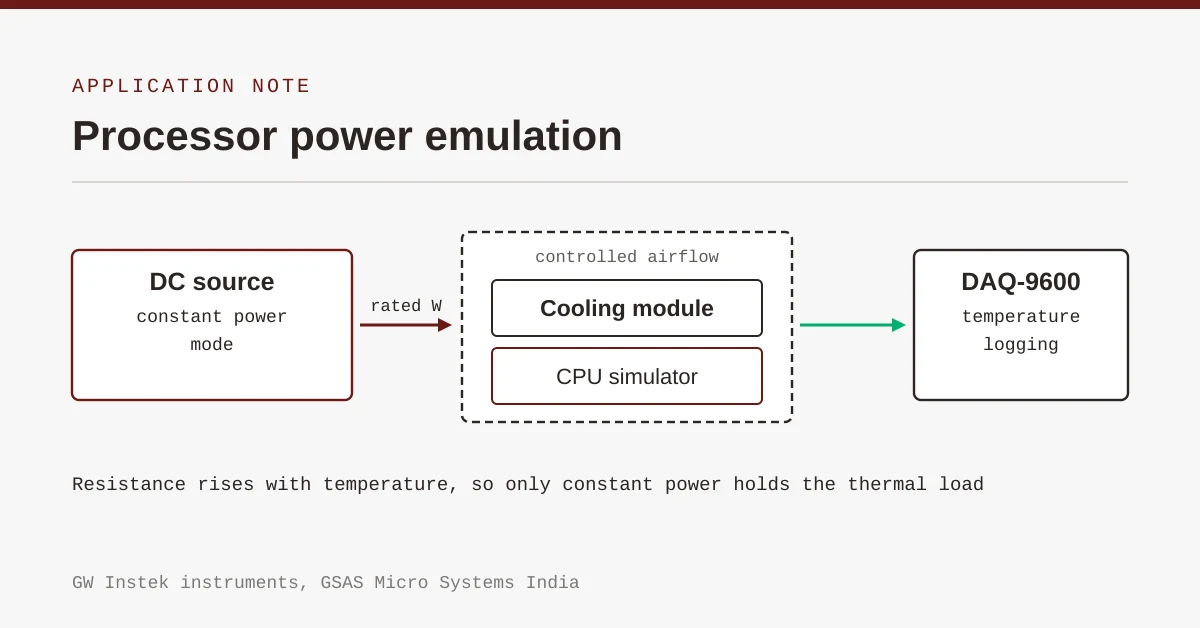
Emulating Processor Power for Thermal Testing: Why Constant Power
7 Oct · 7 min
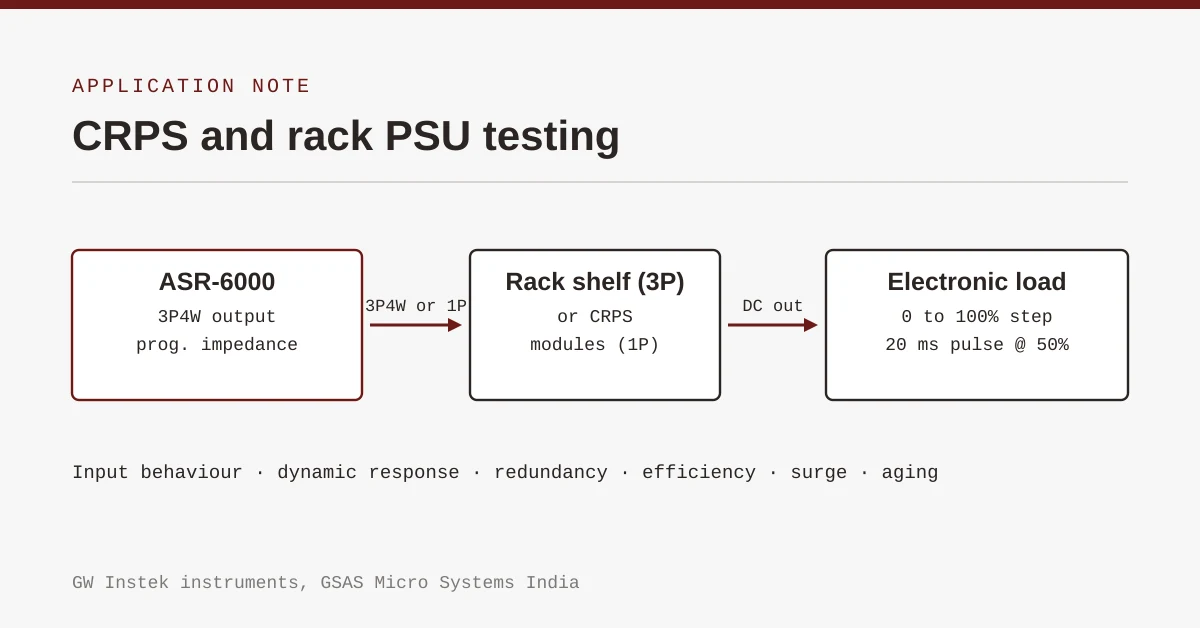
CRPS and Rack Power Supply Testing: The Six Tests That Matter
7 Oct · 7 min