TESSY vs VectorCAST: Choosing the Right Embedded Unit Testing Tool
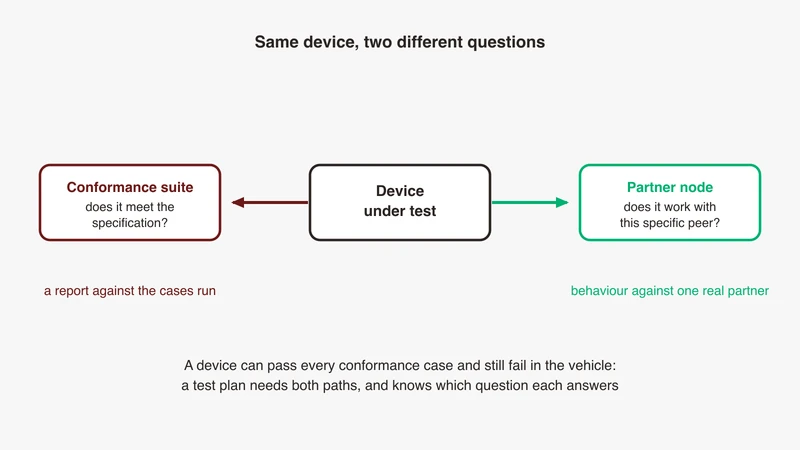
Indian automotive and safety-critical development teams evaluating embedded unit testing tools typically narrow their shortlist to two products: Razorcat TESSY and Vector VectorCAST. Both automate unit and integration testing for embedded C and C++. Both support MC/DC coverage measurement. Razorcat states that TESSY is qualified for safety-related software development according to IEC 61508, IEC 62304, ISO 26262 and EN 50128. DO-178C is a separate regime: qualifying a verification tool for it is the applicant’s own activity under DO-330.
The differences are in the details, and those details determine which tool fits your project’s architecture, toolchain, safety target, and development workflow. This article compares the two tools across the dimensions that matter most for Indian embedded teams.
Coverage Metrics
Both TESSY and VectorCAST support the coverage metrics required by safety standards: statement coverage, branch coverage, decision coverage, and MC/DC (Modified Condition/Decision Coverage).
TESSY additionally supports MCC (Multiple Condition Coverage) coverage, which provides a finer-grained view of condition interactions. MCC is not explicitly required by any current safety standard, but some assessors and safety managers use it as supplementary evidence for complex boolean expressions.
VectorCAST supports function coverage and call coverage in addition to the standard metrics, which can be useful for integration-level test adequacy assessment.
In practice, both tools satisfy the coverage measurement requirements of ISO 26262 ASIL A through D. The choice here is unlikely to be a differentiator for most teams.
Test Case Design
TESSY provides a Classification Tree Editor (CTE), a graphical tool for systematic test design based on equivalence class partitioning and boundary value analysis. Engineers define input classifications visually, and TESSY generates test vectors. This structured approach satisfies ISO 26262 Part 6 recommendations for systematic test case design at ASIL C and D, and it produces an auditable record of the test design rationale.
VectorCAST provides automated test case generation using a basis path algorithm that generates tests to achieve a target coverage level. This is faster for initial coverage ramp-up but produces tests that are optimized for coverage metrics rather than for systematic fault detection. VectorCAST also supports manual test case creation through its test editor.
The distinction matters for safety-critical projects. Assessors increasingly want to see not just that coverage was achieved, but that the test design was systematic. TESSY’s CTE provides this traceability natively. With VectorCAST, teams typically supplement auto-generated tests with manually designed cases to satisfy the systematic design requirement.
AUTOSAR and Embedded Toolchain Support
Both tools support the major embedded compilers: GCC, IAR, Keil/Arm Compiler, Green Hills, HighTec, TASKING, and Wind River. Both can execute tests on the host (simulation) or on the target hardware.
VectorCAST has deep integration with the Vector ecosystem, CANoe, CANape, vTESTstudio, and AUTOSAR adaptive/classic stacks. For teams that are already invested in Vector’s toolchain for communication testing and AUTOSAR configuration, VectorCAST provides a cohesive workflow where unit tests feed into system-level test campaigns.
TESSY is toolchain-agnostic. It integrates with any compiler and any build system via its project configuration interface. For teams using non-Vector AUTOSAR stacks (Elektrobit tresos, ETAS ISOLAR) or bare-metal/RTOS architectures without AUTOSAR, TESSY avoids tying the unit testing tool to a specific middleware vendor.
For Indian teams working on AURIX-based projects with Elektrobit tresos (common in automotive Tier-1 suppliers serving European OEMs), TESSY’s vendor-neutral approach is often a better architectural fit.
CI/CD Integration
Both tools support command-line batch execution for CI/CD integration.
TESSY provides a command-line interface that runs test suites, generates coverage reports, and returns exit codes suitable for Jenkins, GitLab CI, Azure DevOps, and GitHub Actions quality gates. Reports are generated in HTML and PDF formats.
VectorCAST offers similar CI/CD capabilities through its VectorCAST/CI module, with Jenkins and Azure DevOps plugins. VectorCAST also provides a web-based dashboard for tracking coverage trends across projects and teams.
Both approaches work. VectorCAST’s dashboard provides more out-of-the-box visualization for management reporting. TESSY’s approach is leaner and integrates into existing CI dashboards (SonarQube, custom Grafana) without adding another web application to maintain.
Requirements Traceability
TESSY imports and exports requirements in ReqIF format, the OMG standard used by IBM DOORS, Polarion, codebeamer, and Siemens Teamcenter. Bidirectional traceability from requirements to test cases is built into the workflow.
VectorCAST supports requirements import from CSV, IBM DOORS, and other ALM tools. Traceability matrices can be generated showing requirements-to-test-case mappings.
For teams using IBM DOORS or Polarion (common in Indian automotive Tier-1 suppliers), both tools provide adequate traceability. TESSY’s native ReqIF support is an advantage for teams that want a standard interchange format rather than tool-specific connectors.
Safety Qualification
Both tools ship tool qualification support material. Neither is, or can be, “a TCL3 tool”: under ISO 26262 Part 8 the tool confidence level follows from the tool functionality you actually use inside your own development process, not from the product, so no vendor can assign one to you. The same holds for a DO-178C tool qualification level, which is the applicant’s own activity under DO-330. What both vendors supply is the validation material a project safety manager executes to make that argument in the context of a specific project.
The qualification effort is comparable for both tools. Neither has a significant advantage here.
Licensing and Cost
VectorCAST uses a per-seat licensing model with separate modules for unit testing, integration testing, and CI/CD. The total cost for a team of 10 engineers with full CI/CD integration and all coverage metrics is substantial.
TESSY uses a more consolidated licensing approach. While specific pricing varies by configuration, Indian teams have generally found TESSY to offer a lower total cost of ownership for equivalent functionality, particularly when CI/CD batch execution and MC/DC coverage are required.
Why Buy from GSAS
GSAS Micro Systems is the authorized Razorcat engineering partner for India, the UAE and Sri Lanka, providing TESSY licensing with INR invoicing, evaluation support, onboarding training, and CI/CD integration consulting. Our engineers in Bengaluru, Hyderabad, Chennai, Pune, Mumbai, and Delhi NCR have helped automotive, aerospace, and industrial teams evaluate TESSY against their specific requirements, compiler support, target hardware, AUTOSAR stack, ALM integration, and safety standard targets. If you are evaluating unit testing tools for a safety-critical project, GSAS can arrange a proof-of-concept on your actual codebase so you can compare results directly.
Also appears in:
Interested in Razorcat tools?
Talk to our application engineers for personalized tool recommendations.
More from Razorcat
View all →
Test Case Design with the Classification Tree Method: Deriving Unit Tests You Can Defend in an Audit
1 Aug · 10 min
Fault Injection and Robustness Testing for Embedded Software: What ISO 26262, IEC 61508 and DO-178C Actually Ask For
1 Aug · 11 min
How to Evaluate a Unit Testing Tool for Embedded Software: A Buyer's Framework for Indian Teams
1 Aug · 10 min
Is 100% Code Coverage Enough? Statement, Branch, MC/DC and MCC, and What Each One Proves
1 Aug · 9 min
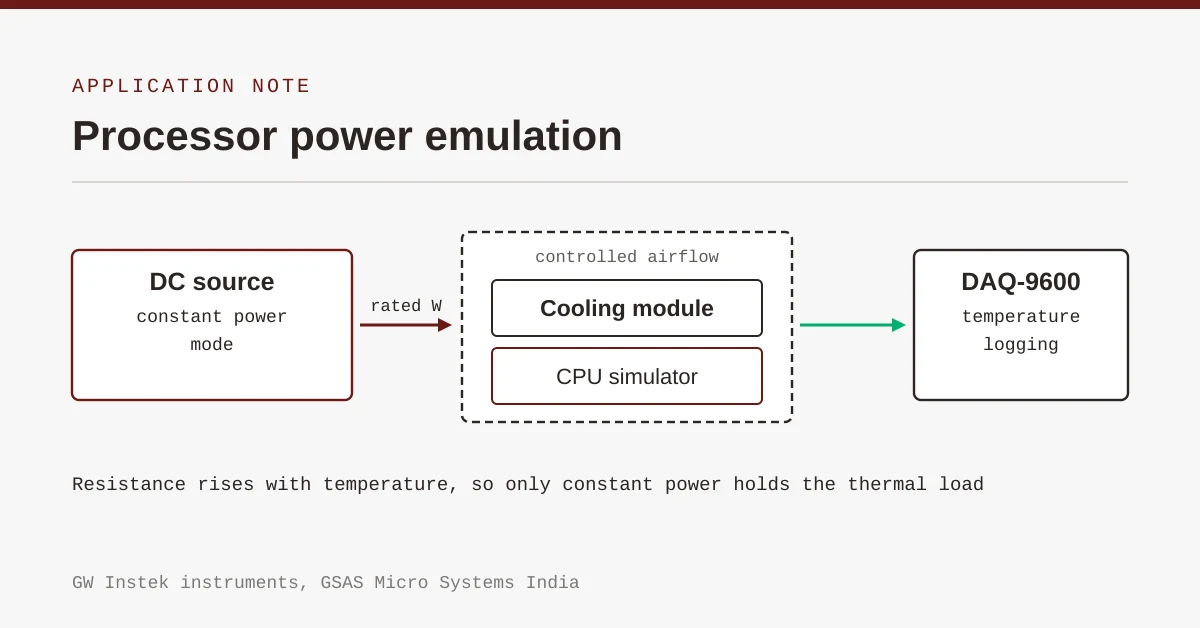
Emulating Processor Power for Thermal Testing: Why Constant Power
7 Oct · 7 min
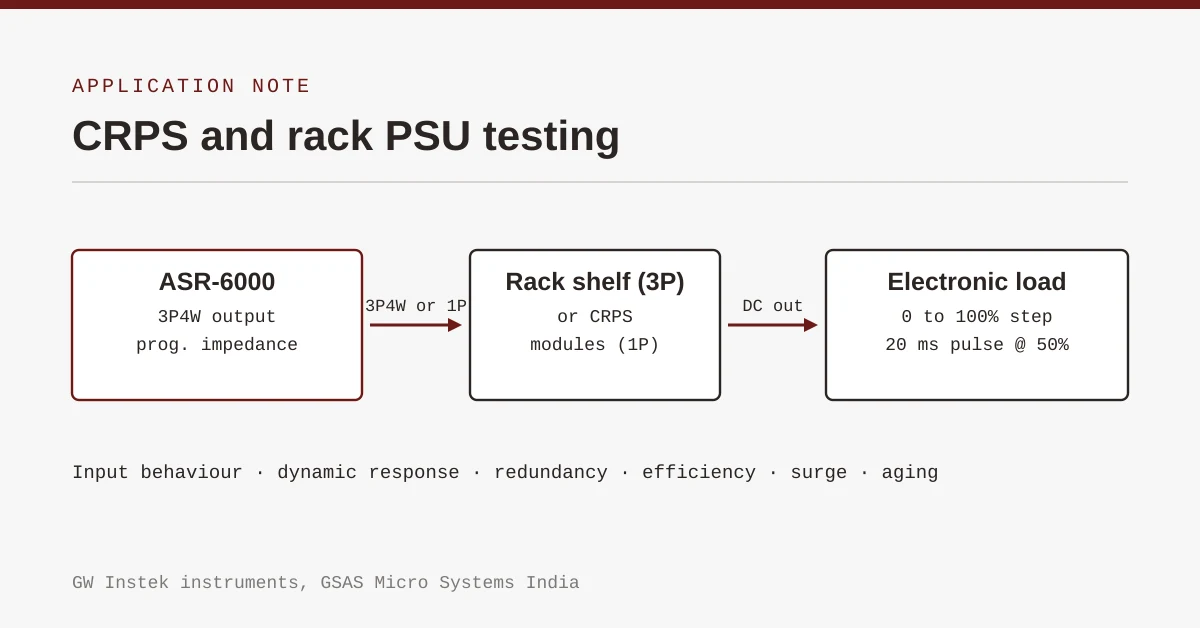
CRPS and Rack Power Supply Testing: The Six Tests That Matter
7 Oct · 7 min