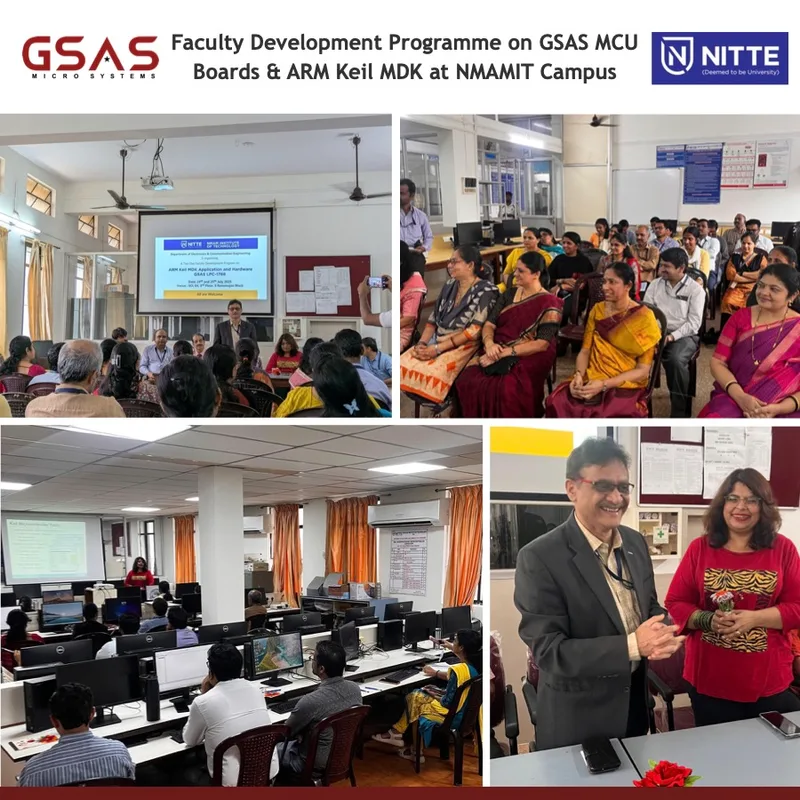
GSAS Micro Systems conducted a practical Faculty Development Program at NMAM Institute of Technology (NMAMIT), Nitte: focusing on Arm Keil MDK and hands-on embedded systems education using industry-standard tools.
Workshop Details
Faculty members worked with GSAS’s LPC1768 development platforms, configuring, programming, and debugging on real hardware using the same Arm Keil MDK toolchain used in industry. The workshop covered:
- Arm Cortex-M architecture fundamentals
- Keil MDK project setup and configuration
- On-chip debugging with SEGGER J-Link
- Peripheral programming and RTOS basics
Why Faculty Enablement Matters
Hands-on faculty enablement is foundational to building India’s embedded systems ecosystem. When professors teach with the same tools that industry uses, graduates enter the workforce ready to contribute from day one.
Partner with GSAS for Academic Programs
GSAS regularly conducts faculty development workshops and student training sessions at engineering colleges across India. If your institution wants to strengthen its embedded systems curriculum with industry-standard tools, reach out to us.
Contact: arm@gsasmspl.com
Learn about our training programs
What the LPC1768 platform teaches
The GSAS LPC 2929 / LPC 1768 boards used in the workshop are built around NXP Cortex-M3 microcontrollers, the part still found in a wide cross-section of automotive ECUs, industrial controllers, and consumer-IoT designs in production today. Over the workshop, faculty members worked through the Cortex-M architectural fundamentals (registers, exception model, NVIC priority handling, SysTick), the Keil MDK toolchain (project setup, Pack Manager, scatter file basics, build configuration), and the on-chip debug workflow with SEGGER J-Link (breakpoints, watchpoints, RTT for real-time logging). For deeper coverage of any of these topics, the Arm Cortex-M Programming Guide on developer.arm.com is the canonical reference.
Why hands-on faculty enablement matters for Indian engineering education
Most Indian engineering colleges teach embedded systems with simulators or older 8-bit boards because Cortex-M development kits are out of budget for a 60-student lab. The result is a graduate who has heard of “Keil” but has never run a real debug session, and who needs three to six months of on-the-job ramp-up before they can contribute on a production firmware project. Faculty workshops like the NMAMIT session shift that timeline left: when professors run real Cortex-M projects in their lab, they update the curriculum, set the same projects for student capstones, and graduate teams who have already debugged their own code on real silicon. That maps directly to how Indian Tier-1 ECU teams, semiconductor design centres, and IoT startups hire, and it is why GSAS continues to underwrite faculty enablement programs at engineering colleges across Karnataka, Tamil Nadu, Maharashtra, and beyond.
See the Original Post on LinkedIn
Also appears in:
Interested in Arm tools?
Talk to our application engineers for personalized tool recommendations.
More from Arm
View all →
Meet the GSAS Team at electronica India 2026, Stall H3.I45
15 Sept · 3 min
Arm's Agentic AI Push: What Indian Embedded Teams Can Actually Use Today
13 Sept · 7 min
Arm User-Based Licensing in CI/CD: armlm, Proxy Activation and What Breaks
28 Jul · 11 min
Two Arm Keil MDK Webinars This Summer: DevOps and Edge AI for Indian Cortex-M Teams
17 Jun · 4 min
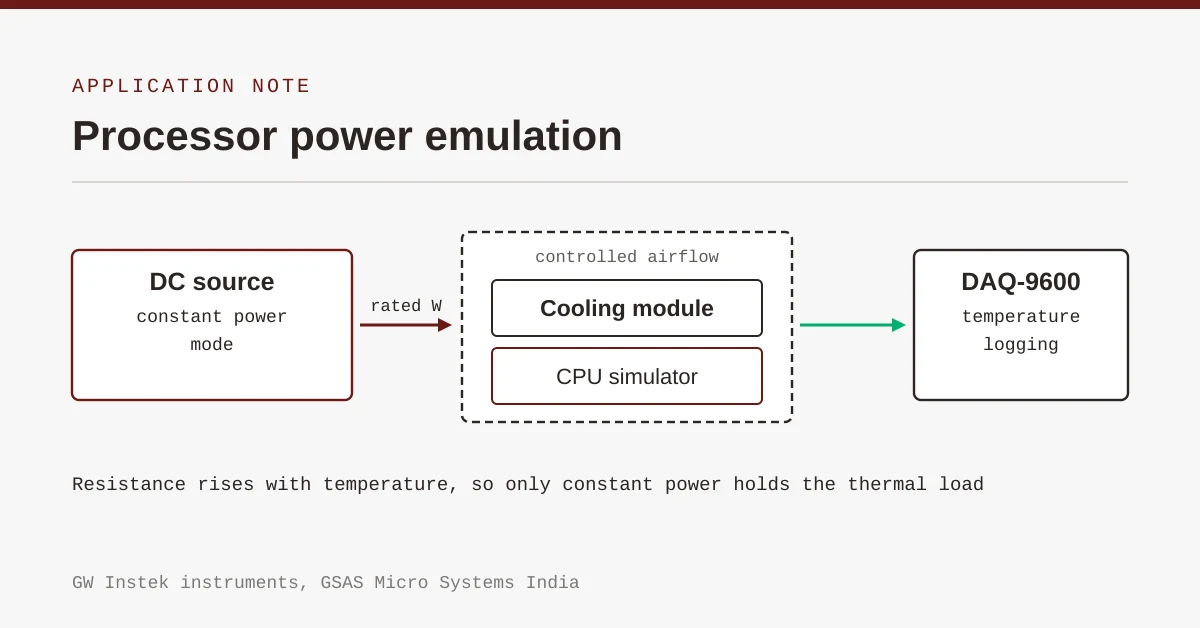
Emulating Processor Power for Thermal Testing: Why Constant Power
7 Oct · 7 min
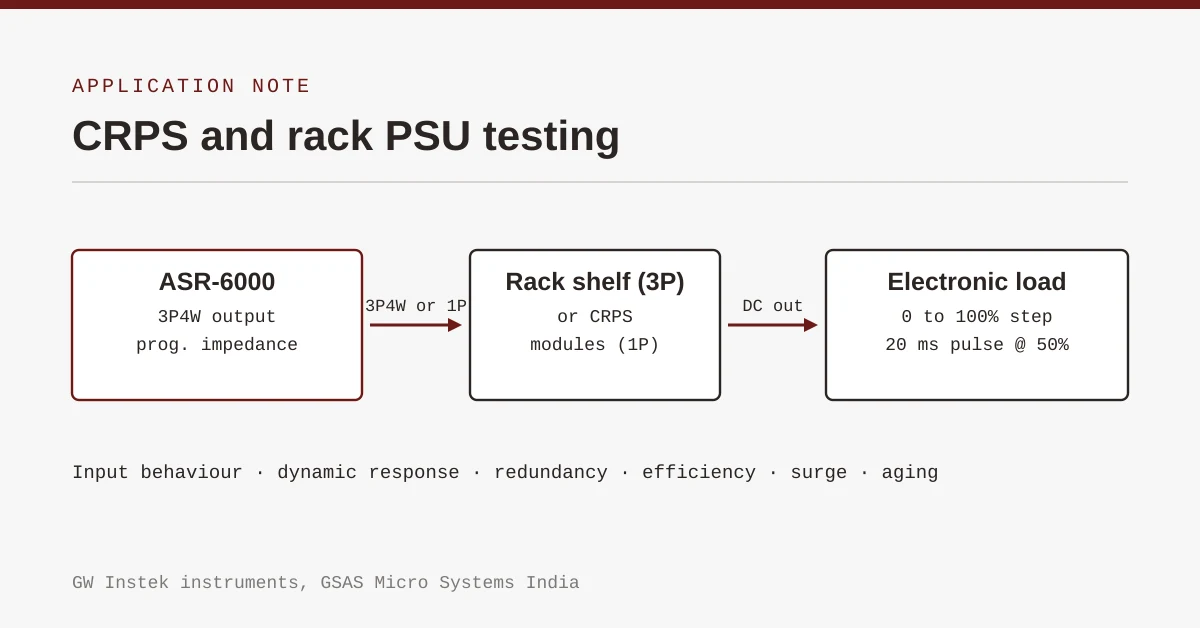
CRPS and Rack Power Supply Testing: The Six Tests That Matter
7 Oct · 7 min