Why CAN-FD Matters for Modern Vehicles
Classic CAN (Controller Area Network) has been the backbone of automotive communication since the 1990s, but its 1 Mbps ceiling is no longer sufficient. Modern vehicle architectures, ADAS sensor fusion, battery management systems, domain controllers, generate data volumes that exceed classic CAN’s capacity. CAN-FD (Flexible Data-rate) raises the data phase to 5 Mbps and expands payload size from 8 to 64 bytes per frame, providing the bandwidth headroom that next-generation ECU development demands.
For engineering teams working on ADAS, EV powertrain, or zonal architecture projects, capturing CAN-FD traffic at full bus speed without frame drops is essential. The AutoPi CAN-FD Pro is built specifically for this requirement.
Hardware Specifications
The CAN-FD Pro shares the same Broadcom BCM2711 Cortex-A72 quad-core processor as the TMU CM4 but ships with 4 GB LPDDR4 and 32 GB eMMC as standard, four times the RAM and four times the storage of the base TMU CM4. This additional headroom supports high-throughput CAN-FD logging workloads where data arrives at 3,000+ frames per second across two independent CAN-FD channels.
| Feature | Specification |
|---|---|
| CAN-FD | 2x channels, up to 5 Mbps |
| CAN 2.0 | Backward compatible, up to 1 Mbps |
| Capture Rate | 3,000+ frames/sec |
| Processor | BCM2711 Cortex-A72 quad-core @ 1.5 GHz |
| Memory | 4 GB LPDDR4 |
| Storage | 32 GB eMMC |
| Cellular | 4G LTE Cat 4 |
| GNSS | GPS/GLONASS/BeiDou/Galileo/QZSS |
| Security | NXP SE051 secure element |
| IMU | 3-axis accelerometer + 3-axis gyroscope |
| Power | 12.5–35 V DC |
NXP SE051 Secure Element
The CAN-FD Pro includes an NXP SE051 secure element, a hardware security module that provides tamper-resistant key storage, certificate management, and cryptographic operations. For automotive OEMs and tier-1 suppliers working with sensitive vehicle data, the secure element ensures that encryption keys and device certificates never exist in software-accessible memory.
This hardware security is relevant for Indian OEMs building connected vehicle platforms where data in transit between the vehicle and cloud must be encrypted end-to-end, and where device identity must be cryptographically verifiable. The SE051 supports ECC, RSA, and AES operations with key sizes up to 4096 bits.
DBC File Support for Proprietary CAN Signals
One of the CAN-FD Pro’s most practical features for automotive engineers is native DBC file support. DBC (Database CAN) files describe the mapping between raw CAN frame IDs, byte positions, and engineering-unit signals. Every OEM and tier-1 supplier uses proprietary DBC files to define their CAN communication matrices.
The CAN-FD Pro imports DBC files directly, enabling on-device signal decoding. Instead of logging raw hexadecimal CAN frames and post-processing them on a workstation, the device decodes signals in real time, engine speed in RPM, battery voltage in volts, wheel speed in km/h, and logs or transmits decoded engineering values. This reduces both storage requirements and post-processing effort.
Edge Computing for Automotive R&D
The Docker runtime on the CAN-FD Pro supports containerised edge workloads identical to those on the TMU CM4. For automotive R&D specifically, common edge computing patterns include:
- Conditional logging: capture high-resolution CAN-FD data only during specific driving events (hard braking, high lateral acceleration, DTC triggers), reducing storage consumption during normal driving
- Signal filtering: log only specific CAN IDs or signals relevant to the current test programme, discarding irrelevant traffic at the source
- Real-time anomaly detection: compare live CAN signal values against expected ranges and flag deviations for immediate review
- GPS-correlated data: merge CAN-FD signals with timestamped GPS coordinates for route-correlated analysis of vehicle behaviour
Applications for Indian Automotive Teams
- ADAS development: capture radar, camera, and lidar CAN-FD traffic during highway and city test drives across Indian road conditions
- EV powertrain validation: log BMS cell voltages, inverter commands, and motor controller telemetry during thermal testing in Indian climate conditions
- Durability testing: long-duration field data acquisition on Indian roads for suspension, chassis, and drivetrain validation
- Homologation support: capture vehicle data during AIS-type approval testing to supplement dynamometer and track data
CAN-FD Pro vs TMU CM4: When to Choose Which
Both devices share the same Linux platform, Docker runtime, and AutoPi Cloud integration. The choice depends on the application:
- CAN-FD Pro: choose when you need CAN-FD (5 Mbps) capture, higher RAM/storage baseline, or hardware security via the NXP SE051
- TMU CM4: choose for standard CAN (1 Mbps) applications, fleet management, OBD-II diagnostics, and use cases where the HAT expansion header is needed for custom peripherals
For fleet management with standard OBD-II parameter extraction, the TMU CM4 is the right fit. For R&D data acquisition involving CAN-FD buses on next-generation vehicle architectures, the CAN-FD Pro is purpose-built.
Why Buy AutoPi from GSAS
GSAS Micro Systems provides the AutoPi CAN-FD Pro with local stock, INR invoicing, CAN bus integration support, and DBC file configuration assistance. Automotive engineering teams in Bengaluru, Hyderabad, Chennai, Pune, Mumbai, Delhi NCR, and Visakhapatnam can request evaluation units for vehicle data acquisition projects.
Browse the full AutoPi product range or contact GSAS for technical consultation.
Also appears in:
Interested in AutoPi tools?
Talk to our application engineers for personalized tool recommendations.
More from AutoPi
View all →
Automotive IoT Gateways: Why Indian OEMs Are Moving to Open Platforms
5 Apr · 7 min

Driver Behaviour Scoring for Fleet Safety: Using AutoPi Telematics in India
5 Apr · 7 min

Geofencing and Route Compliance for Indian Fleets: AutoPi Telematics
5 Apr · 6 min

AutoPi Mini: Plug-and-Play Fleet Telematics for Indian Fleets
5 Apr · 6 min
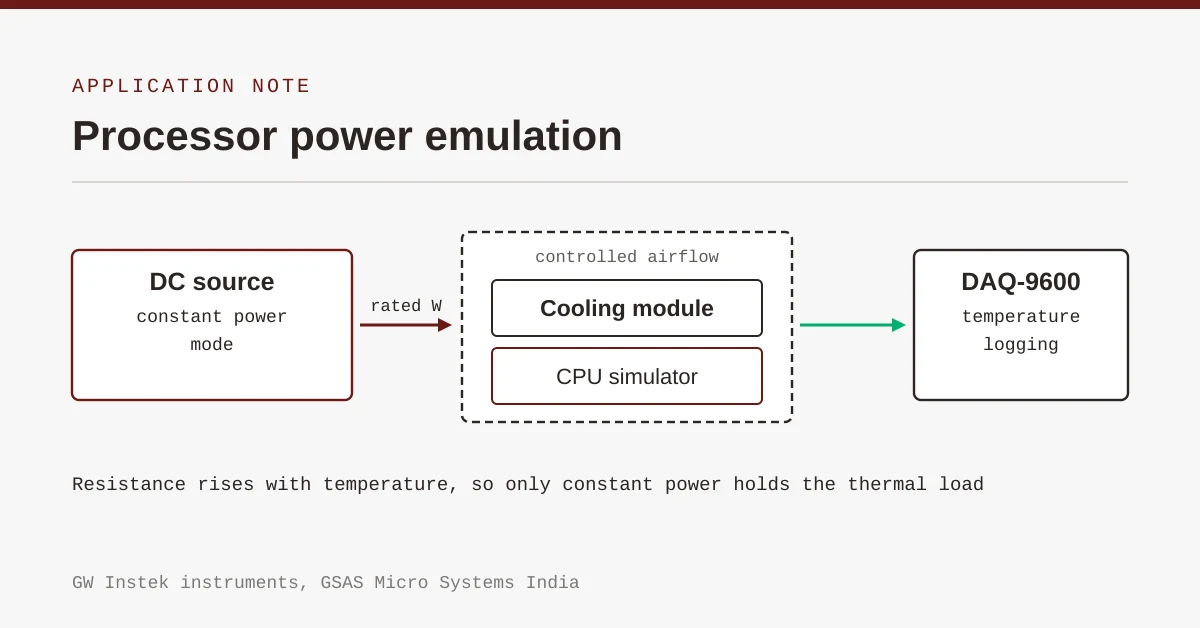
Emulating Processor Power for Thermal Testing: Why Constant Power
7 Oct · 7 min
CRPS and Rack Power Supply Testing: The Six Tests That Matter
7 Oct · 7 min