
Fleet Telematics Without the Complexity
Not every fleet telematics deployment requires a programmable Linux gateway with Docker containers and raw CAN frame access. Many Indian fleet operators need a simple, reliable device that plugs into the OBD-II port, connects to cellular, and starts transmitting vehicle location, trip data, and diagnostic parameters, with zero configuration and zero monthly subscription fees.
The AutoPi Mini is built for exactly this use case. Smaller than a deck of cards (67.2 x 49.6 x 25 mm, 63 grams), the Mini plugs directly into any vehicle’s OBD-II port, powers on automatically, establishes a 4G LTE Cat 1 connection via its built-in SIM (covering 188 countries), and begins transmitting data to the AutoPi Cloud platform at no recurring cost.
What the Mini Captures
Despite its compact size, the AutoPi Mini extracts a comprehensive set of vehicle parameters:
- OBD-II diagnostics: engine RPM, vehicle speed, coolant temperature, intake air temperature, fuel system status, engine load, and all standard OBD-II PIDs
- Legacy protocols: CAN, ISO 9141-2, ISO 14230-4 KWP, and K-Line support for compatibility with older vehicles
- GPS tracking: real-time location with internal antenna, trip history, and geofencing
- Accelerometer data: 3-axis accelerometer for harsh braking, rapid acceleration, and cornering detection
- EV parameters: battery state-of-charge (SoC), state-of-health (SoH), cell voltages, HV battery temperature, charging session data
The 4 samples/sec sampling rate with millisecond timestamps is sufficient for fleet management and driver behaviour analysis. For higher-resolution data acquisition (100 samples/sec, raw CAN frames), the TMU CM4 or CAN-FD Pro are the appropriate choices.
EV Fleet Monitoring
The AutoPi Mini is particularly capable for electric vehicle fleet management, a growing segment in India as logistics companies, ride-sharing platforms, and last-mile delivery services electrify their fleets. The Mini tracks EV-specific parameters including battery SoC, minimum and maximum cell voltages, available power and energy, HV battery temperature, and charging patterns.
For fleet operators managing mixed ICE and EV fleets, the Mini provides a single device and single dashboard that covers both vehicle types. EV-specific insights, charge scheduling optimisation, battery degradation tracking, range estimation accuracy, sit alongside traditional fleet metrics like trip distance, idle time, and driver scoring.
AutoPi Cloud: Zero Subscription
The AutoPi Cloud platform is included at no monthly subscription cost. Fleet managers access:
- Live tracking: real-time vehicle positions on a map with speed, heading, and status indicators
- Trip history: automatic trip detection with start/end locations, distance, duration, and idle time
- Geofencing: configurable geographic zones with entry/exit alerts
- Vehicle health: DTC (Diagnostic Trouble Code) monitoring with check-engine light alerts
- Driver scoring: behaviour analysis based on acceleration, braking, cornering, and speed patterns
- REST API: programmatic access for integration with existing fleet management or ERP systems
Deployment Considerations for India
The AutoPi Mini’s built-in SIM with roaming across 188 countries simplifies deployment logistics. For Indian fleets operating across multiple states and cellular networks, the embedded connectivity eliminates the need to source, provision, and manage separate SIM cards.
Operating temperature range of -40 to +85 degrees Celsius covers the full spectrum of Indian climate conditions, from Ladakh winters to Rajasthan summers. The 170 mAh backup battery maintains GPS tracking briefly after vehicle power is cut, useful for theft detection and unauthorised movement alerts.
For fleets where vehicles cross into Nepal, Bangladesh, Sri Lanka, or Myanmar, the multi-country SIM coverage means the same device continues operating without reconfiguration. Long-haul transport fleets moving goods across South Asian borders benefit from cross-border tracking.
When to Choose the Mini vs TMU CM4
| Requirement | AutoPi Mini | TMU CM4 |
|---|---|---|
| OBD-II parameter extraction | Yes | Yes |
| Raw CAN frame access | No | Yes (SocketCAN) |
| CAN-FD support | No | Yes (dual channels) |
| Edge computing (Docker) | No | Yes |
| Custom sensor integration | No | Yes (HAT header) |
| Cellular | 4G LTE Cat 1 | 4G LTE Cat 4 |
| Sampling rate | 4/sec | 100/sec |
| Form factor | Compact dongle | OBD-II dongle (larger) |
Choose the Mini for straightforward fleet management, tracking, diagnostics, driver behaviour, EV monitoring, where simplicity and zero configuration are priorities. Choose the TMU CM4 when you need raw CAN access, edge computing, custom sensor integration, or high-resolution data capture.
Why Buy AutoPi Mini from GSAS
GSAS Micro Systems provides the AutoPi Mini with local stock availability, INR invoicing, fleet deployment planning, and AutoPi Cloud onboarding support. Fleet operators in Bengaluru, Hyderabad, Chennai, Pune, Mumbai, Delhi NCR, and Visakhapatnam can request evaluation units for pilot deployments.
Visit the AutoPi Mini product page or contact us for volume pricing and fleet deployment consultation.
Also appears in:
Interested in AutoPi tools?
Talk to our application engineers for personalized tool recommendations.
More from AutoPi
View all →
Automotive IoT Gateways: Why Indian OEMs Are Moving to Open Platforms
5 Apr · 7 min

AutoPi CAN-FD Pro: High-Speed CAN-FD Data Logging for ADAS and EV Development
5 Apr · 7 min

Driver Behaviour Scoring for Fleet Safety: Using AutoPi Telematics in India
5 Apr · 7 min

Geofencing and Route Compliance for Indian Fleets: AutoPi Telematics
5 Apr · 6 min
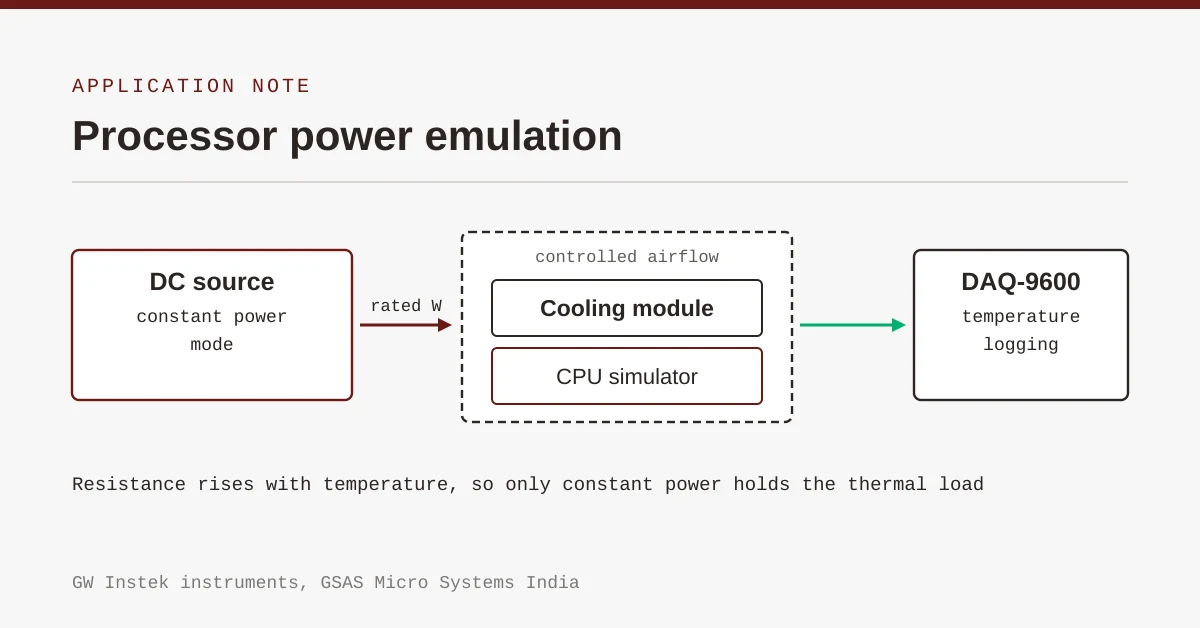
Emulating Processor Power for Thermal Testing: Why Constant Power
7 Oct · 7 min
CRPS and Rack Power Supply Testing: The Six Tests That Matter
7 Oct · 7 min