The Shift from Board-Swap to Board-Repair
For decades, the dominant approach to failed electronics in India was board-swap: remove the faulty board, install a replacement, and either scrap the old board or return it to the OEM. This approach works when replacement boards are cheap and readily available. But several converging trends are making board-level repair, diagnosing and fixing the specific fault on the board itself, increasingly attractive.
Why Board Replacement Is Getting Harder
Component Shortages and Lead Times
The global semiconductor supply chain has experienced sustained disruption. While acute shortages have eased since their peak, lead times for many components, microcontrollers, power management ICs, specialized connectors, remain extended. When a replacement board requires a component with a 26-week lead time, the board-swap strategy breaks down. Repairing the existing board with available components becomes the faster path to restoring equipment to service.
Rising Board Costs
PCB assembly costs have increased due to higher component prices, increased material costs (copper, FR-4 laminates), and tighter quality requirements. A replacement automotive ECU board that cost Rs 8,000 five years ago may now cost Rs 15,000–25,000. At these prices, a 30-minute repair costing Rs 2,000–5,000 in labour and parts delivers meaningful savings.
End-of-Life and Obsolescence
Industrial equipment, defence systems, railway signalling, and medical devices operate for 15–25 years. The boards inside them often outlive the availability of replacement assemblies. When the OEM discontinues a board and no aftermarket alternative exists, repair is the only option.
Environmental and Policy Pressure
India’s E-Waste Management Rules and the growing emphasis on circular economy principles in government procurement (especially GeM and defence procurement) are creating policy incentives for repair over replacement. Board-level repair extends equipment life and reduces electronic waste.
The Diagnostic Investment Gap
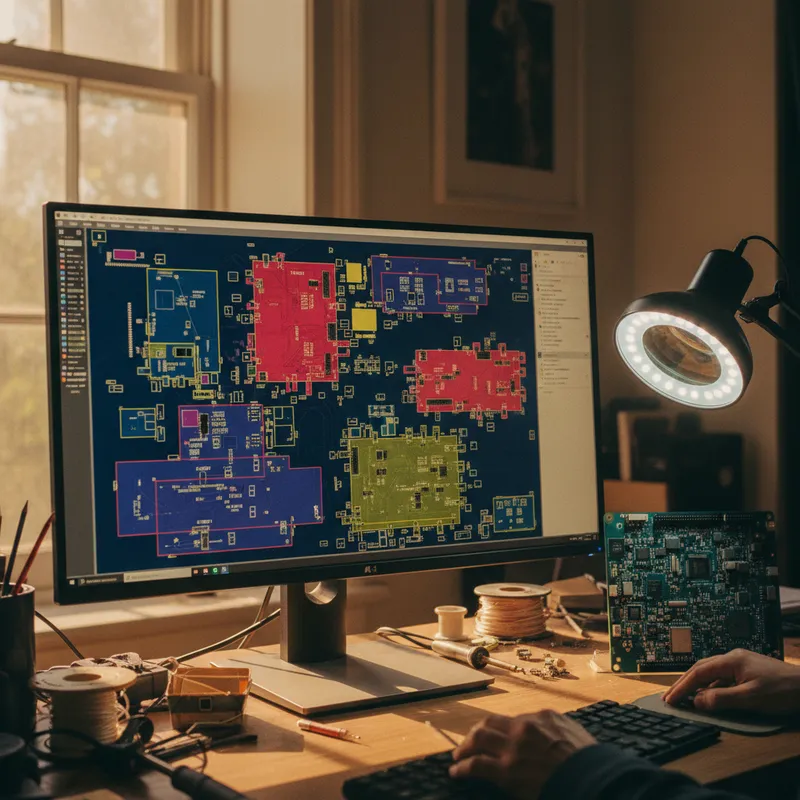
Despite these pressures, many Indian repair workshops still rely on basic tools, multimeters, oscilloscopes, and technician experience. This approach works for simple faults (blown fuses, visibly damaged components, cold solder joints) but struggles with complex failures on multi-layer boards where the fault is not visible or obvious.
The gap is diagnostic: the workshop can perform the physical repair (soldering, component replacement) but cannot efficiently identify what to repair.
This is where purpose-built diagnostic equipment changes the economics.
VI Curve Tracing: The Diagnostic Enabler
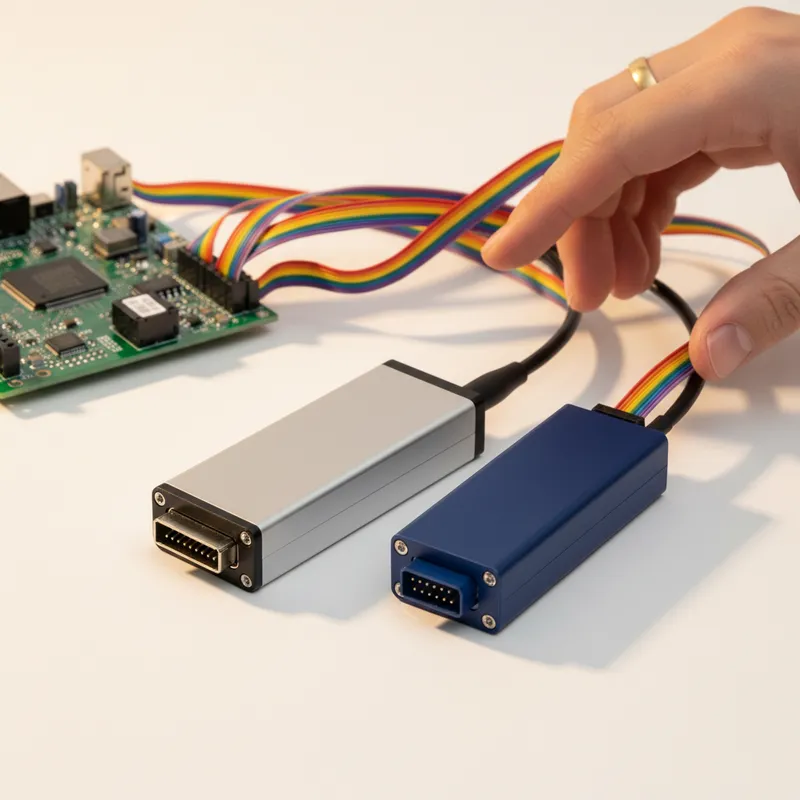
VI curve tracers like the FADOS 9F1 and FADOS 7F1 from ProT Ar-Ge fill this diagnostic gap. By comparing the electrical signatures of a faulty board against a known-good reference, the technician identifies the failed component or area without requiring schematics, powered testing, or deep circuit knowledge.
The Economic Calculation
Consider a repair workshop handling 20 boards per week:
Without diagnostic equipment:
- Average diagnosis time: 2–4 hours per board (probing, testing, guessing)
- Boards that cannot be diagnosed and are scrapped: 30–40%
- Revenue per successful repair: Rs 3,000–10,000
- Lost revenue from undiagnosed boards: significant
With a FADOS 9F1:
- Average diagnosis time: 15–45 minutes per board
- Boards that cannot be diagnosed: 5–10% (some boards have failures beyond VI curve detection)
- Revenue per successful repair: Rs 3,000–10,000 (unchanged, the repair value has not changed, but more boards are repairable)
- Equipment investment: recovered through increased throughput and reduced scrap
The payback period depends on board volume and repair value, but for workshops handling automotive, industrial, or defence electronics, the investment typically recovers within the first year.
Scaling with FADOS MUX
For workshops or depot-level repair facilities handling higher volumes, incoming inspection of refurbished boards, batch testing of repaired assemblies, the FADOS MUX multiplexer adds automated 100-Channel testing. This transforms the economics further by reducing per-board test time and removing operator skill as a throughput constraint.
Industry Sectors Driving Demand in India
Automotive
India’s automotive sector, centred in Pune, Chennai, Bengaluru, and the Delhi NCR corridor, generates substantial board repair demand. ECUs, body control modules, instrument clusters, and infotainment units all contain PCBs that fail in the field. Authorized service centres and independent workshops both need diagnostic capability.
Defence and Aerospace
Defence electronics repair depots require the ability to maintain boards for systems that will remain in service for decades. VI curve tracing is well-suited to this environment because it does not require OEM schematics or design data, a golden reference board is sufficient.
Industrial Automation
Manufacturing facilities across India use PLCs, VFDs, industrial PCs, and custom control boards. When these fail, production downtime costs far exceed the repair cost. Fast diagnostics reduce downtime.
Medical Electronics
Medical device repair in India is growing as hospitals and clinics seek alternatives to expensive OEM service contracts. Diagnostic imaging boards, patient monitor circuits, and infusion pump controllers are all candidates for board-level repair.
Why Buy FADOS from GSAS
GSAS Micro Systems is an authorized ProT Ar-Ge partner and ODM assembler. We supply FADOS diagnostic equipment to repair workshops, EMS facilities, and maintenance depots across India.
Offices in Bengaluru, Hyderabad, Chennai, Pune, Mumbai, Delhi NCR, and Visakhapatnam: with demo units available for evaluation.
- INR invoicing with GST-compliant documentation
- On-site training and application support
- Local service and calibration
Also appears in:
Interested in ProT Ar-Ge tools?
Talk to our application engineers for personalized tool recommendations.
More from ProT Ar-Ge
View all →
FADOS Test Reports and GSAS Agent: Turning Board Test Results into an Auditable Record
4 Aug · 8 min
FADOS Circuit Board Tester: Complete Guide for Indian Repair Teams
16 Apr · 13 min
FADOS XI Frequency Scanning and VI Curve Tracing for PCB Diagnostics
16 Apr · 11 min
FADOS XI Non-Contact Short Circuit Detection: Find PCB Shorts in Seconds
16 Apr · 9 min
Emulating Processor Power for Thermal Testing: Why Constant Power
7 Oct · 7 min
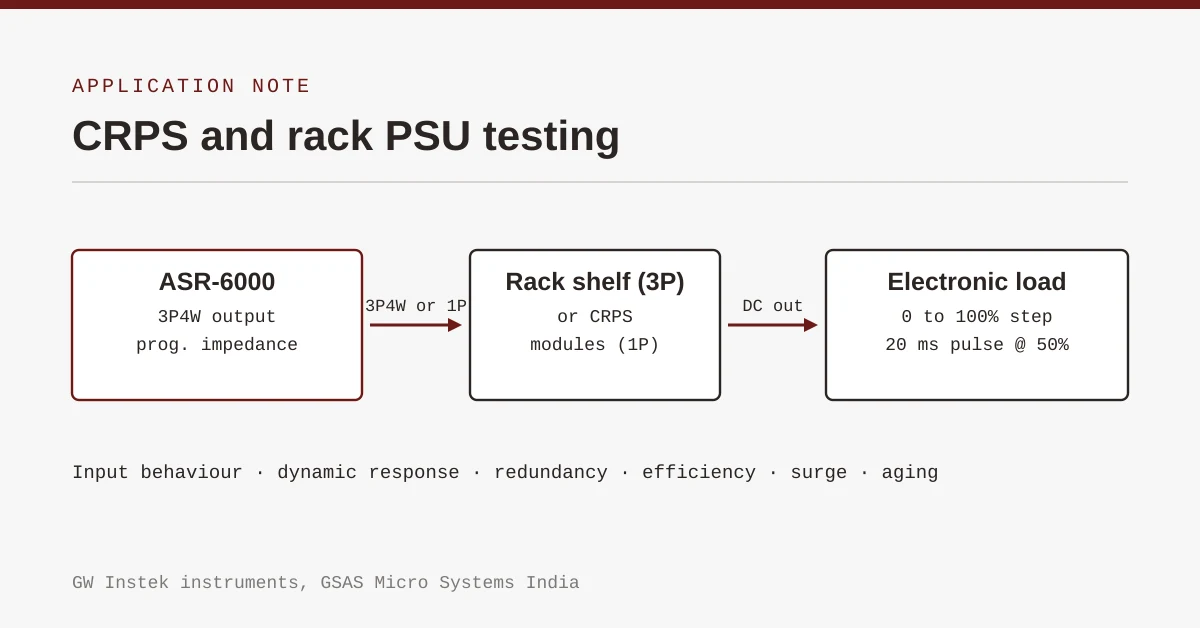
CRPS and Rack Power Supply Testing: The Six Tests That Matter
7 Oct · 7 min