The RISC-V instruction set architecture has moved from academic curiosity to industry reality. India, in particular, has embraced RISC-V through government initiatives, academic research programmes, and a growing ecosystem of startups and established companies developing RISC-V processors and IP. For engineers who want to understand RISC-V at the hardware level, not just write software for a RISC-V chip, but actually implement and modify a RISC-V processor, an FPGA development board is the essential tool.
The Digilent Arty A7, built around the AMD/Xilinx Artix-7 FPGA, has become one of the standard platforms for RISC-V soft processor development. Its combination of sufficient FPGA resources (33,280 or 101,440 logic cells), 256 MB DDR3L memory, Ethernet, and an accessible price point makes it the natural choice for RISC-V experimentation.
What Is a Soft Processor?
A soft processor is a processor implemented in the programmable logic fabric of an FPGA, rather than fabricated as a dedicated silicon chip. The processor’s logic, instruction fetch, decode, execute, memory access, writeback, is described in HDL (VHDL or Verilog) and synthesised onto the FPGA’s lookup tables, flip-flops, and block RAMs.
The advantage is flexibility: you can modify the processor architecture, add custom instructions, change the pipeline depth, add or remove peripherals, and experiment with microarchitectural trade-offs, all by changing HDL code and re-synthesising. This is impossible with a fixed silicon processor.
The trade-off is performance: a soft processor on an FPGA runs at 50-100 MHz (limited by FPGA routing delays), compared to hundreds of MHz or GHz for dedicated silicon. But for learning, prototyping, and architectural exploration, performance is secondary to flexibility.
RISC-V Soft Processor Options for the Arty A7
MicroBlaze V (AMD/Xilinx)
AMD/Xilinx’s MicroBlaze V is the official vendor-supported RISC-V soft processor for Xilinx FPGAs. It replaces the earlier MicroBlaze (which used a proprietary ISA) with a RISC-V-compatible implementation. MicroBlaze V integrates with the Vivado/Vitis design flow, with automated peripheral generation, interrupt controller configuration, and software development tools.
Pros: Full vendor support, integrated with Vivado/Vitis, includes peripheral IP library (UART, SPI, I2C, GPIO, timer, interrupt controller), documented tutorials and reference designs for the Arty A7.
Cons: Proprietary implementation (not open-source), requires Vitis IDE for software development, vendor lock-in to AMD/Xilinx toolchain.
VexRiscv
VexRiscv is an open-source RISC-V soft processor written in SpinalHDL (which generates Verilog for synthesis). It is highly configurable, pipeline stages, instruction set extensions (M, C, F), cache sizes, and peripheral interfaces are all configurable parameters. VexRiscv is widely used in the open-source FPGA community and runs well on the Arty A7.
Pros: Open-source, highly configurable, supports RV32IM[A][F][D][C] configurations, community-maintained, runs Linux (RV32IMA + MMU configuration).
Cons: Requires SpinalHDL knowledge for deep customisation, less polished tooling compared to MicroBlaze V, community support rather than vendor support.
NEORV32
NEORV32 is an open-source RISC-V soft processor written in plain VHDL, no special HDL generators required. It implements the RV32I base ISA with optional M, C, U, and Zicsr extensions. NEORV32 is designed for simplicity and portability, making it an excellent choice for engineers learning both RISC-V and VHDL simultaneously.
Pros: Pure VHDL (no special tools needed), well-documented, includes bootloader and software framework, small resource footprint, portable across FPGA vendors.
Cons: Less configurable than VexRiscv, single-issue in-order pipeline only, smaller community.
Practical Considerations for Indian Engineers
Start with MicroBlaze V if you want the fastest path from zero to running software on RISC-V. The Vivado/Vitis integration means you can have a RISC-V system with UART, GPIO, and a simple C programme running in an afternoon. This is the right choice for engineers whose primary interest is RISC-V software development and application prototyping.
Start with NEORV32 if you want to understand the processor at the RTL level. The pure VHDL implementation is readable and well-commented. You can trace instruction execution through the pipeline, modify the decoder, and add custom instructions with direct access to the source code. This is the right choice for computer architecture courses and engineers building processor design skills.
Start with VexRiscv if you want a high-performance soft processor that can run Linux on the FPGA. The RV32IMA + MMU configuration on the Arty A7 100T boots Linux, enabling a complete software development environment on the FPGA. This is the right choice for systems engineers evaluating RISC-V for embedded Linux applications.
The Arty A7 Hardware for RISC-V Development
The Arty A7’s hardware maps well to soft processor requirements:
- 256 MB DDR3L provides the main memory for programme and data storage, essential for any non-trivial software execution and mandatory for Linux boot
- 16 MB Quad-SPI flash stores the FPGA bitstream and can store the processor’s boot code
- Ethernet enables network communication, remote debugging, file transfer, and networked applications
- USB-UART provides the serial console for bootloader interaction and programme output
- Pmod connectors attach peripheral hardware, the soft processor’s I/O subsystem connects to Pmod modules through the FPGA fabric
The 35T variant supports simple soft processor implementations (MicroBlaze V, NEORV32). The 100T variant is recommended for VexRiscv Linux configurations and multi-processor experiments.
Why Buy from GSAS
GSAS is an authorized partner in India, providing the Arty A7 (35T and 100T), Pmod modules, and the full Digilent portfolio with INR invoicing and local support. We serve engineers, researchers, and educational institutions across Bengaluru, Hyderabad, Chennai, Pune, Mumbai, Delhi NCR, and Visakhapatnam.
Also appears in:
Interested in Digilent tools?
Talk to our application engineers for personalized tool recommendations.
More from Digilent
View all →
Real-World SDR Applications: 5G Research, Satellites, IoT and ADS-B
28 Aug · 6 min
What Is Software Defined Radio (SDR)? A Practical Explainer for Indian Engineering Teams
19 Aug · 9 min
ZedBoard FPGA-in-the-Loop: HDL Verifier vs HDL Coder
5 Aug · 9 min
AI Data Centers in India: Test, Measurement & Memory Boom
4 Jun · 14 min
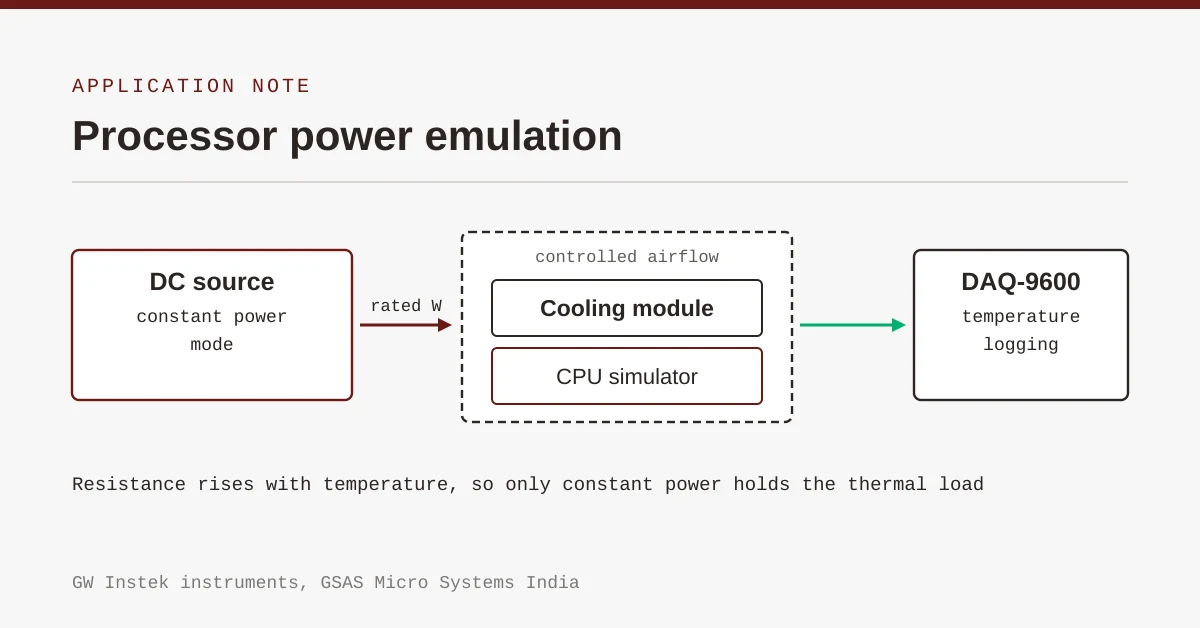
Emulating Processor Power for Thermal Testing: Why Constant Power
7 Oct · 7 min
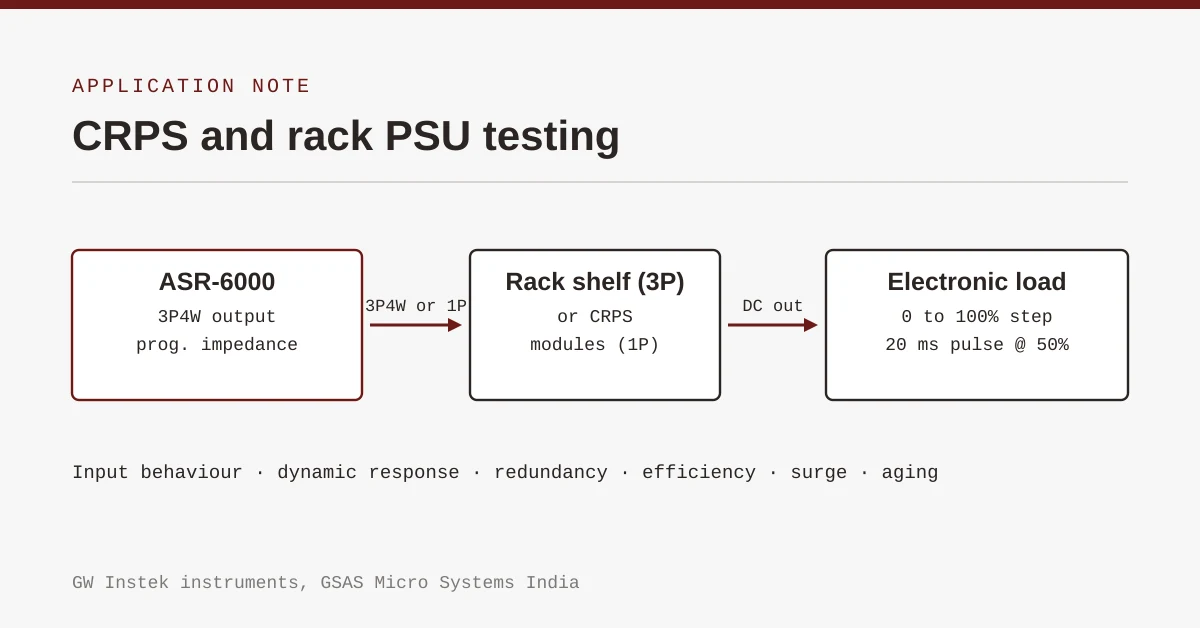
CRPS and Rack Power Supply Testing: The Six Tests That Matter
7 Oct · 7 min