The Promise and the Problem
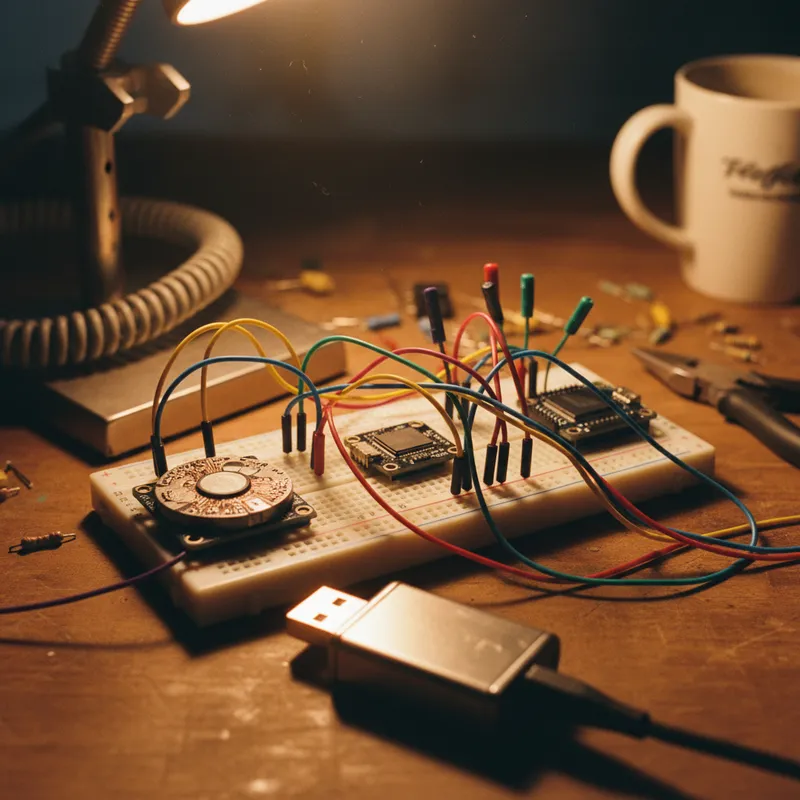
Energy harvesting, converting ambient energy (light, heat, vibration, RF) into usable electrical power, offers the possibility of IoT devices that never need battery replacement. An indoor solar cell powering a BLE temperature sensor. A thermoelectric generator on a hot pipe powering a vibration monitor.
A piezoelectric harvester on a bridge girder powering a structural health sensor. The deployment scenarios are compelling, particularly in India where large-scale IoT deployments in agriculture, infrastructure, and smart cities face the practical challenge of replacing batteries in millions of devices.
But energy harvesting introduces a fundamental design challenge that battery-powered devices do not have: the power source is intermittent, variable, and often tiny. A small indoor solar cell might harvest 10 to 50 microwatts under office lighting. A thermoelectric generator on a pipe with a 20 degree C temperature differential might produce 100 to 500 microwatts.
These are enough to power an ultra-low-power IoT device, but only if the device’s power consumption is precisely characterized and the energy budget is carefully managed.
The Energy Balance Equation
A self-sustaining energy-harvesting device must satisfy a simple inequality over its operating cycle:
Harvested energy >= consumed energy + storage losses
If this inequality holds over the worst-case operating cycle (the cloudiest day for solar, the coldest ambient for thermal, the lowest vibration for piezoelectric), the device will operate indefinitely. If it does not hold, the device will eventually exhaust its energy storage and stop functioning.
Validating this inequality requires measuring both sides of the equation with sufficient precision. The harvested energy varies by orders of magnitude between best-case and worst-case conditions. The consumed energy varies with the device’s duty cycle, sensor activity, and radio transmission schedule. Both must be measured under realistic conditions.
Measurement Architecture
Measuring Consumed Energy
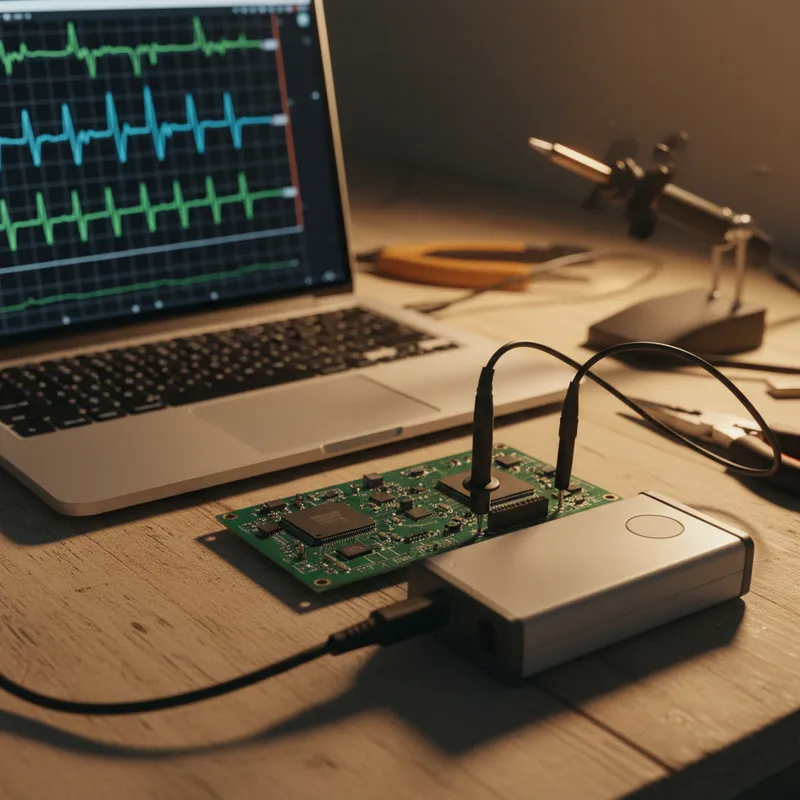
The Joulescope JS220 measures the device’s power consumption by inserting in series between the energy storage element (supercapacitor or rechargeable battery) and the device. The measurement captures the current drawn from storage during every operating state, sleep, sensor read, processing, transmission, with 0.5 nA resolution and 2 Msps sample rate.
The Joulescope’s energy integration feature computes the total energy consumed over any time window. For energy harvesting validation, integrate over a complete diurnal cycle (24 hours for solar-harvesting devices) or a complete operational cycle (the interval between the lowest and highest harvesting conditions).
Measuring Harvested Energy
The harvested energy can be measured using a second Joulescope (or a precision current measurement) in series between the harvester output and the power management IC input. Alternatively, if the power management IC provides a charge status output, the harvested energy can be inferred from the storage voltage trajectory, the rate at which the supercapacitor or battery voltage increases when the device is in sleep mode and the harvester is active.
The Joulescope’s simultaneous voltage measurement on its current measurement path provides the storage voltage data needed for this inference. A rising storage voltage during sleep indicates net positive energy (harvesting exceeds consumption). A falling voltage indicates net negative energy. The voltage slope, combined with the known storage capacitance, gives the net power flow.
Long-Duration Monitoring
Energy harvesting validation requires long-duration measurements, 24 hours minimum for solar, potentially weeks for seasonal variation assessment. The Joulescope’s unlimited capture duration and lossless JLS file format support these extended measurements. The Python API enables automated logging to time-series databases for trend analysis across days and weeks.
Design Methodology for Energy-Neutral Operation
Step 1: Characterize the Harvester
Measure the harvester’s output power under the range of conditions it will encounter in deployment. For indoor solar, measure under different lighting levels (100 lux office, 300 lux bright office, 50 lux corridor, 10 lux nighttime). For thermal, measure at different temperature differentials. For vibration, measure at different vibration amplitudes and frequencies.
The result is a power curve: harvested power as a function of the environmental variable. Identify the minimum harvested power, this is the design constraint that the device’s power consumption must fit within.
Step 2: Set the Power Budget
The device’s average power consumption must be less than the minimum harvested power, with margin for storage losses (supercapacitor leakage, charge/discharge efficiency). A reasonable design rule is:
Average device power <= 0.5 x minimum harvested power
The 50% margin accounts for storage losses, harvester degradation over time, and measurement uncertainty. For a solar cell harvesting 20 uW under worst-case indoor lighting, the device’s average power budget is 10 uW, corresponding to an average current of approximately 3.3 uA at 3.0 V.
Step 3: Design the Duty Cycle
With the power budget established, design the device’s duty cycle to meet the budget. The Joulescope measurement of sleep current and energy-per-event from the device’s power profiling provides the inputs:
Average power = (sleep current x voltage) + (energy per event x events per hour / 3600)
Adjust the event frequency (sensor read interval, transmission interval) until the average power fits within the budget.
Step 4: Validate With Energy Balance Test
Deploy the complete system, harvester, power management IC, storage element, and device, and monitor with the Joulescope for at least one complete worst-case cycle. Verify that the storage voltage remains stable or increasing over the entire cycle.
For Indian deployments where solar harvesting is common, validate during the monsoon season when indoor lighting levels are lowest and cloudy days are most frequent. A device that is energy-neutral during the monsoon will be more than energy-neutral during the rest of the year.
Storage Element Sizing
The storage element (supercapacitor or rechargeable battery) must hold enough energy to sustain the device through the longest period without harvesting. For solar-powered indoor devices, this is the overnight period (8 to 14 hours depending on the location and season).
Required storage energy = average power x maximum dark period
For 10 uW average power over 14 hours: 0.504 J. A 0.1 F supercapacitor charged from 3.3 V to 2.1 V stores 0.5 x 0.1 x (3.3^2 - 2.1^2) = 0.324 J, insufficient. A 0.22 F supercapacitor stores 0.713 J, sufficient with margin.
The Joulescope’s voltage measurement tracks the storage voltage through the dark period, confirming that it remains above the device’s minimum operating voltage.
Why Buy Joulescope From GSAS
GSAS provides Joulescope instruments with INR invoicing and support from offices in Bengaluru, Hyderabad, Chennai, Pune, Mumbai, and Delhi NCR. We support IoT product teams designing energy-harvesting devices with measurement methodology and instrument selection guidance.
Contact sales@gsasindia.com or call +91 80 6590 1783.
Also appears in:
Interested in Joulescope tools?
Talk to our application engineers for personalized tool recommendations.
More from Joulescope
View all →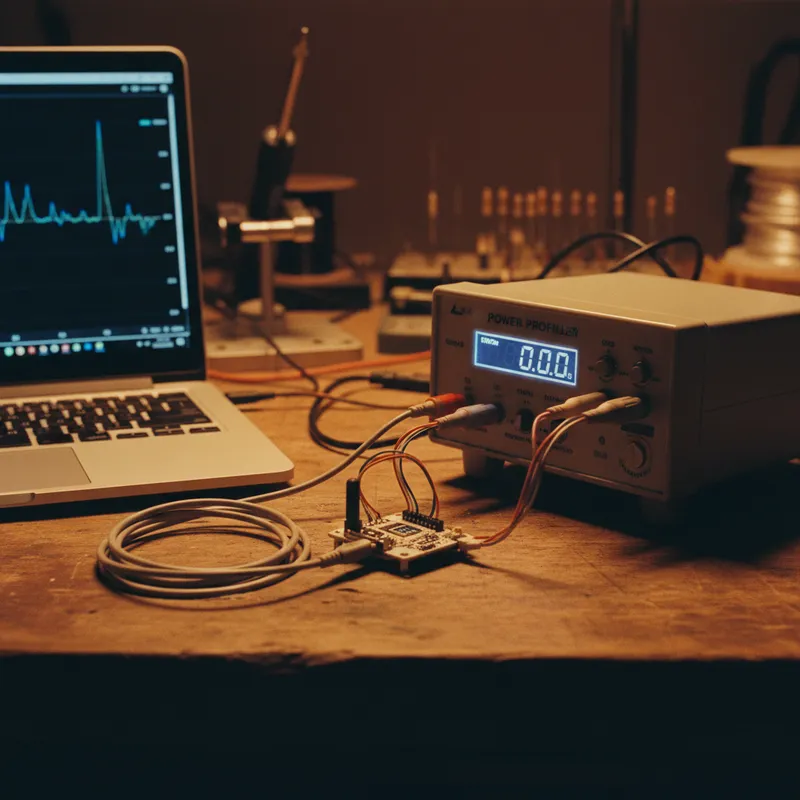
Battery Discharge Profiling for Coin Cell Devices: From CR2032 to 10-Year Life
5 Apr · 7 min
BLE Power Profiling: Measuring Bluetooth Low Energy Current With Joulescope
5 Apr · 7 min

IoT Battery Life Testing: A Practical Methodology for Indian Product Teams
5 Apr · 7 min
IoT Power Consumption Trends: Why Indian Product Teams Need Better Measurement
5 Apr · 7 min
Emulating Processor Power for Thermal Testing: Why Constant Power
7 Oct · 7 min
CRPS and Rack Power Supply Testing: The Six Tests That Matter
7 Oct · 7 min