What Is Functional Safety?
Functional safety is the automatic protection layer that prevents physical injury or health damage caused by malfunctioning electronic systems. It is NOT general cybersecurity, it specifically addresses the question: “If this software fails, will someone get hurt?”
For any electronic control unit that influences vehicle dynamics, braking, steering, battery management, or rider assistance, functional safety certification is mandatory for export to EU and US markets. Indian OEMs and Tier-1 suppliers building for global customers face this requirement head-on.
The Standards Landscape
The functional safety ecosystem spans multiple industry-specific standards, all derived from IEC 61508:
| Standard | Industry | Safety Levels | Key Requirement |
|---|---|---|---|
| ISO 26262 | Automotive | ASIL A–D | Hazard analysis, FMEA, MC/DC coverage |
| IEC 61508 | Industrial | SIL 1–4 | Safety integrity lifecycle |
| IEC 62304 | Medical devices | Class A–C | Software lifecycle processes |
| EN 50128 / EN 50716 | Railway | SIL 0–4 | Software for railway control |
| DO-178C | Aerospace | DAL A–E | Design assurance levels |
Each standard defines which tools must be qualified, what coding standards must be enforced (MISRA C, AUTOSAR C++14), and what traceability evidence assessors require.
Why This Matters for India Now
India’s automotive and two-wheeler electronics ecosystem is at an inflection point:
- Two-wheeler OEMs (Hero, Bajaj, TVS, Honda) are integrating ADAS features, forward collision warning, blind spot detection, and lane change assist, that fall under ISO 26262 ASIL B and above
- Tier-1 suppliers (Minda and other major Indian and global Tier-1s) are increasingly required by European OEM customers to demonstrate ISO 26262 compliance, 52% of automotive teams now comply due to customer mandates (Perforce 2026 Report)
- EV battery management systems for two-wheelers and commercial vehicles require functional safety assessment for cell balancing, thermal management, and charge control algorithms
- Medical device exporters in Bangalore and Hyderabad must demonstrate IEC 62304 compliance for software in cardiac monitors, infusion pumps, and diagnostic equipment
The cost of non-compliance is not just a failed audit, it is exclusion from global markets.
The GSAS Functional Safety Toolchain
Building safety-certified software requires tools that are themselves qualified for use in safety-critical development. GSAS provides a complete, certified toolchain from four partner OEMs:
Static Analysis and Compliance: Perforce
Perforce QAC is the reference implementation for MISRA C/C++ compliance checking, TÜV SÜD certified for ISO 26262 (Perforce states up to ASIL D), IEC 61508 (up to SIL 4), EN 50716 and IEC 62304 (up to Class C), with a separate DO-330 Tool Qualification Pack for DO-178C projects. Klocwork extends coverage to multi-language SAST with AI-assisted remediation and TÜV SÜD certification for ASIL D.
Certified Compiler and Runtime: Arm
Arm Compiler for Embedded FuSa and Arm FuSa RTS provide a TUV SUD-qualified compiler and C runtime library for Arm Cortex-M and Cortex-R, the architectures powering the majority of automotive and industrial MCUs in India. Per Arm’s published AC6 FuSa product page, qualified releases are certified to ISO 26262 ASIL D (Automotive), IEC 61508 SIL 3 (Industrial), railway software at SIL 4, and IEC 62304 Class C (Medical). Arm names the specific railway standard revision on the certificate issued for each qualified release, so talk to GSAS for the railway certification scope that applies to the release you plan to certify against. DO-178C (aerospace) is not in Arm’s current qualification scope for AC6 FuSa.
Safety-Qualified RTOS: Segger
Segger embOS provides a deterministic RTOS with safety qualifications, sub-microsecond interrupt latency, and zero-interrupt-latency architecture. Combined with SystemView for runtime analysis and J-Link for debug, Segger completes the runtime layer of the safety stack.
Unit Testing and Verification: Razorcat
TESSY delivers automated unit and integration testing with MC/DC coverage analysis, the coverage metric required by ISO 26262 ASIL D. TÜV SÜD-qualified, with classification tree method for systematic test case generation.
From Tools to Certification
Having the right tools is necessary but not sufficient. GSAS provides the engineering services that bridge the gap between tool deployment and successful assessment:
- MISRA and SAST workshops delivered across India’s automotive belt (Pune, Chennai, Bengaluru, NCR)
- Tool qualification documentation: TÜV SÜD kit deployment and assessor-ready evidence packages
- CI/CD pipeline integration: automated static analysis, unit testing, and coverage reporting in Jenkins, GitLab CI, and Azure DevOps
- MISRA baseline establishment: initial scan, violation triage, suppression workflow, and deviation documentation
Whether your team is preparing for its first ISO 26262 assessment or scaling functional safety processes across multiple ECU programs, GSAS provides the local expertise and certified toolchain to get there.
Also appears in:
Interested in Perforce tools?
Talk to our application engineers for personalized tool recommendations.
More from Perforce
View all →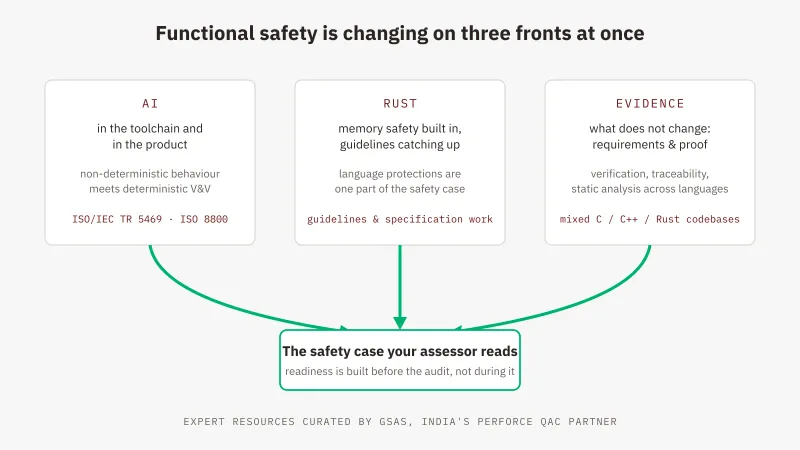
AI, Rust and the New Functional Safety Standards
2 Sept · 9 min

The Complete AUTOSAR Verification Chain: AUTOSAR C++14 Static Analysis with Perforce QAC, SWC and RTE Testing with TESSY 6
31 Jul · 9 min
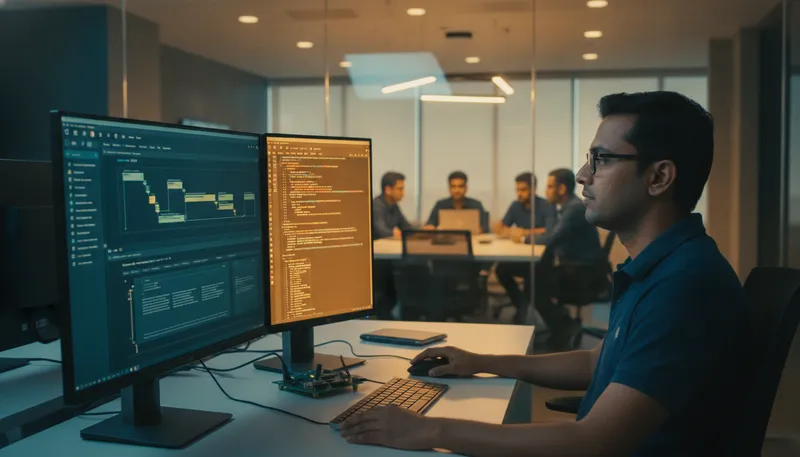
DevSecOps Tools and Practices for Embedded Teams in India
18 Jul · 8 min
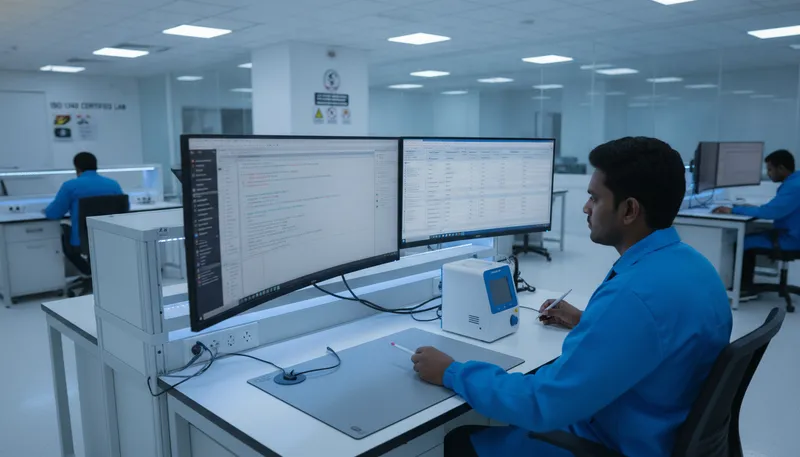
Static Analysis for Medical Device Software: IEC 62304 and FDA Compliance in India
18 Jul · 9 min
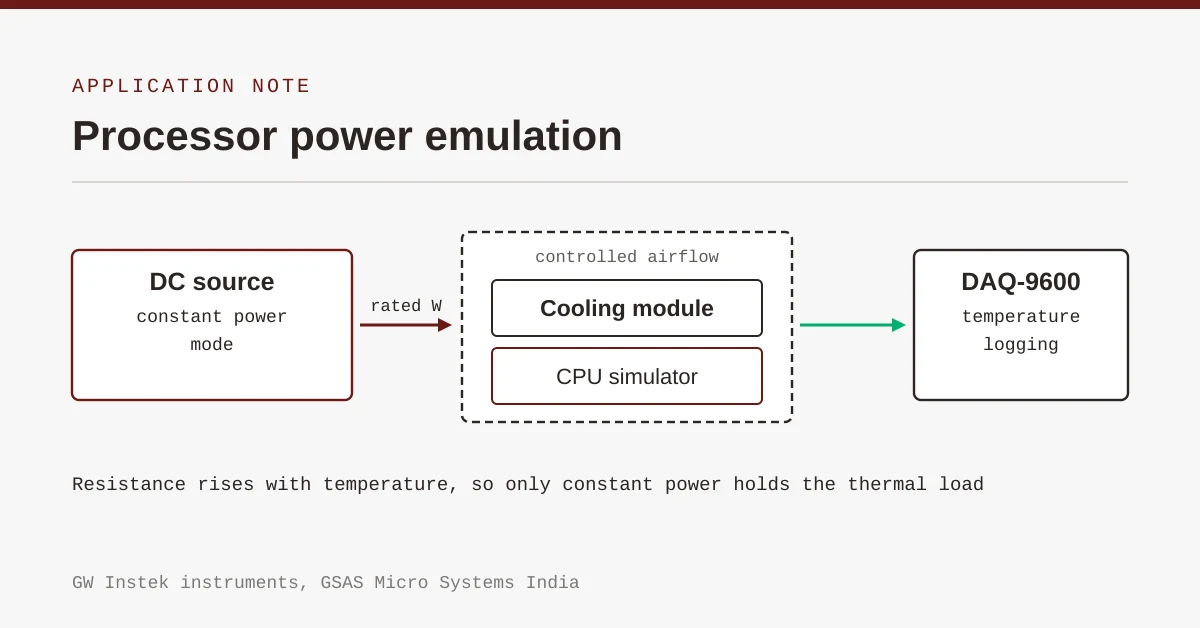
Emulating Processor Power for Thermal Testing: Why Constant Power
7 Oct · 7 min
CRPS and Rack Power Supply Testing: The Six Tests That Matter
7 Oct · 7 min