
Cable harness testing is a non-negotiable step in automotive, aerospace, and industrial manufacturing. Every harness that leaves the production floor must be verified for continuity, correct wiring, insulation integrity, and dielectric withstand voltage. The Microtest 4-Wire Cable Harness Tester performs all of these tests in a single automated station, and the 4-wire (Kelvin) measurement method is what separates it from simpler testers.
The Problem with 2-Wire Resistance Measurement
Standard 2-wire resistance measurement sends current through the same wires that measure voltage. The test leads, contact resistance at the fixture pins, and the probe-to-terminal interface all add to the measured resistance. For a cable conductor with 50 milliohms of actual resistance, the 2-wire measurement might read 200 milliohms because the test fixture contributes 150 milliohms of lead and contact resistance.
This is fine for pass/fail continuity checking, if the conductor is open, the reading is infinite regardless of fixture resistance. But it cannot detect marginal crimps, cold solder joints, or high-resistance connections that are the leading cause of field failures in cable harnesses. A crimp that adds 20 milliohms of resistance (enough to cause heating and eventual failure in a high-current automotive circuit) is invisible in a 2-wire measurement where the fixture contributes 150 milliohms of noise.
How 4-Wire Kelvin Measurement Works
The Microtest 4-Wire Harness Tester uses the Kelvin (4-wire) technique: one pair of wires carries the test current through the conductor, and a separate pair of wires measures the voltage drop across the conductor. Because the voltage sensing pair carries virtually no current, the fixture lead resistance and contact resistance do not affect the measurement. The result is a true reading of the conductor resistance, milliohm accuracy that reveals marginal crimps, degraded solder joints, and resistive contamination at connector terminals.
| Measurement Method | Lead Resistance Error | Detects Marginal Crimps | Resolution |
|---|---|---|---|
| 2-Wire | Included in measurement | No | Ohms |
| 4-Wire Kelvin | Eliminated | Yes | Milliohms |
For automotive harness manufacturers in Pune and Chennai, this resolution difference determines whether a marginal crimp ships to the vehicle assembly line or gets caught at the harness factory. A high-resistance crimp on a power circuit, headlight feed, starter motor cable, sensor power, causes voltage drop under load, intermittent operation, and ultimately connector burnout. Detecting it at the harness tester costs nothing compared to detecting it after vehicle assembly or, worse, in the field.
Multi-Parameter Test Sequences
The Microtest 4-wire tester performs a complete test sequence on each harness:
-
Continuity (4-wire): measures resistance of every conductor path, comparing against programmed limits. Detects open circuits, high-resistance connections, and marginal crimps.
-
Wiring correctness: verifies the harness net list against a reference. Detects miswires (conductor A connected to the wrong pin), shorts (unintended connections between conductors), and missing connections.
-
Insulation resistance (IR): applies DC voltage between conductors and between conductors and shield/chassis, measuring leakage current. Detects insulation damage, contamination, and moisture ingress.
-
Hipot withstand (AC/DC): applies high voltage (per IEC/UL requirements) to verify dielectric strength between conductors and between conductors and chassis. Detects insulation defects that pass IR testing but fail under elevated voltage stress.
-
Diode detection: verifies polarity and forward voltage of in-line diodes and suppression components within the harness.
The entire sequence executes automatically after the operator connects the harness to the test fixture. Pass/fail results drive sorting signals to reject bins or green-light the harness for shipment.
Production Integration
The Microtest 4-wire tester is designed for production environments:
Barcode-triggered test selection. The operator scans the harness part number barcode, and the tester automatically loads the correct test program, limits, net list, and test sequence, for that specific harness variant. This enables mixed-model production where different harness types run on the same test station without manual program selection.
Handler interface. Digital I/O signals communicate with automated handling systems for line integration, production counting, and reject sorting.
SPC logging. Statistical process control data, resistance trends, insulation resistance trends, and failure mode distribution, is logged for quality management. Trend analysis detects process drift (crimping force degradation, insulation stripping damage, connector insertion depth variation) before it causes line stoppages from elevated reject rates.
Multi-point configurations. Test fixtures with 100+ contact points accommodate complex harnesses with multiple connectors. Programmable scan matrices route the test signals to every conductor combination without manual re-connection.
Applications in Indian Manufacturing
Cable harness manufacturing is a major industrial segment in India, serving automotive OEMs, aerospace programmes, industrial equipment builders, and telecom infrastructure projects.
Automotive: Wiring harnesses for passenger vehicles, commercial vehicles, and two-wheelers. Manufacturers in Pune, Chennai, and Delhi NCR supply harnesses to vehicle assembly plants where incoming quality requirements demand 100% tested harnesses with documented test data.
Aerospace: Wire assemblies for aircraft, defence systems, and space programmes. Testing requirements include tighter resistance limits, higher hipot voltages, and full traceability of test results to individual serial numbers.
Industrial: Control panel wiring, machine tool cable assemblies, and power distribution harnesses. Manufacturers across Bengaluru, Hyderabad, and Mumbai supply harnesses for industrial automation, energy, and infrastructure projects.
Why Buy from GSAS
GSAS Micro Systems is an authorised Microtest partner in India, providing the 4-Wire Harness Tester, 2-Wire Tester, and complete cable test solutions with INR invoicing. Our team supports fixture design consultation, test sequence programming, and handler interface configuration for Indian harness manufacturers. Teams across Bengaluru, Hyderabad, Chennai, Pune, Mumbai, and Delhi NCR can access local demo units and application engineering. Contact GSAS to schedule a demo or discuss your harness testing requirements.
Also appears in:
Interested in Microtest tools?
Talk to our application engineers for personalized tool recommendations.
More from Microtest
View all →
Power Measurement for Server PSUs: Microtest 7140 Power Analyzer
7 Apr · 5 min

Wireless Charger QC Testing with the Microtest 9901
7 Apr · 5 min

Motor Stator Testing in EV Manufacturing: Microtest MT-6910 Series
7 Apr · 5 min
PCB Incoming Inspection with Multichannel LCR Testing
6 Apr · 5 min
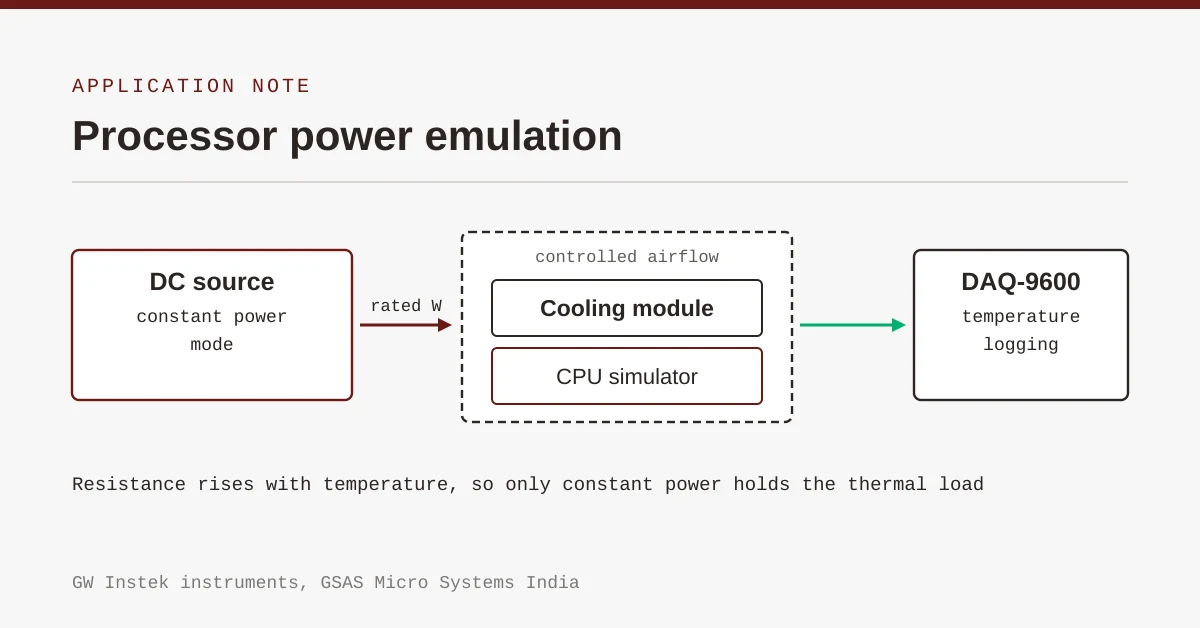
Emulating Processor Power for Thermal Testing: Why Constant Power
7 Oct · 7 min
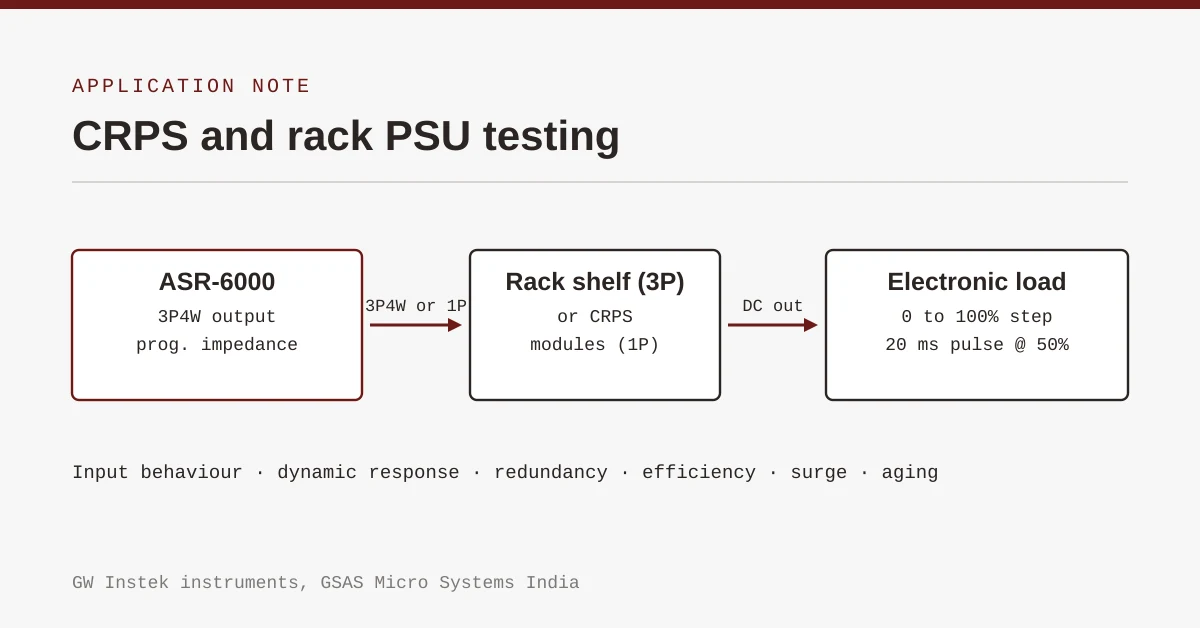
CRPS and Rack Power Supply Testing: The Six Tests That Matter
7 Oct · 7 min