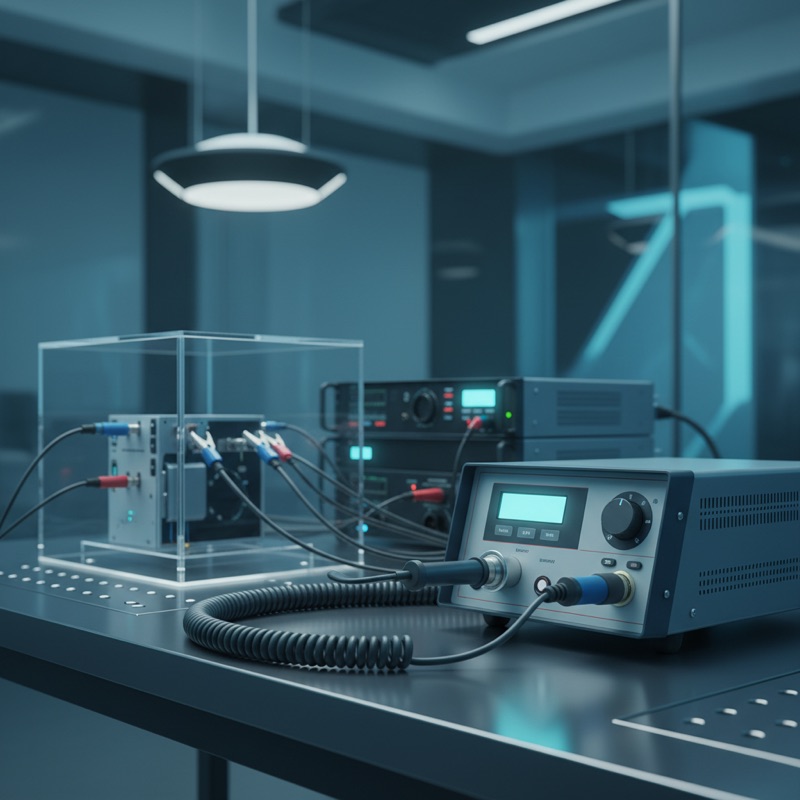
Every electrical product that leaves a factory must demonstrate dielectric integrity. Hipot testing, applying a voltage stress significantly above the operating voltage and verifying that no breakdown occurs, is the standard method for this verification. It is required by IEC, UL, EN, and BIS safety standards across product categories from consumer electronics to industrial equipment to electric vehicle components.
For Indian manufacturers serving domestic and export markets, hipot testing is not optional. It is the test that separates a product that can be shipped from one that cannot.
The Microtest Hipot Platform
Microtest’s hipot tester lineup addresses two tiers of testing complexity:
7630 single-channel hipot tester. The entry point for bench-top safety testing. AC withstand from 10 V to 5 kV, DC withstand from 10 V to 6 kV, and insulation resistance measurement from 1 Mohm to 12 Gohm. A programmable voltage ramp provides controlled application that avoids false failures from inrush transients.
7631-8-channel hipot tester. Adds internal scanner-based channel switching for multi-winding and multi-terminal DUTs. The same AC 5 kV, DC 6 kV, and IR 12 Gohm specifications as the 7630, but with 8 channels that can route test voltage to different DUT terminals in a programmable sequence. This eliminates manual reconnection between tests on transformers, motors, and multi-output power supplies.
Scaling to Production: Multi-Channel Expansion
For high-volume production lines, 8 channels may not suffice. The 7631 platform supports expansion via the 7508 (8-channel) and 7516 (16-channel) scanner modules. This enables fully automated safety testing of complex assemblies, automotive wire harnesses, multi-winding transformers, motor stators, in a single test cycle.
Each channel is independently routable, so the system can test every insulation barrier in a complex product without operator intervention: primary-to-secondary, primary-to-ground, secondary-to-secondary, winding-to-frame, and every other combination.
Test Capabilities
| Test | Specification | Application |
|---|---|---|
| AC withstand | Up to 5 kV | Dielectric strength per IEC/UL |
| DC withstand | Up to 6 kV | Components sensitive to AC stress |
| Insulation resistance | Up to 12 Gohm | Insulation quality verification |
| Arcing detection | Built-in | Identifies partial discharge events |
Arcing detection identifies partial discharge and intermittent breakdown events that a simple pass/fail leakage threshold would miss. These arcing events indicate insulation weaknesses that may pass the voltage test today but fail in the field under thermal cycling, humidity, or mechanical stress.
Application Areas
Capacitors. End-of-line voltage withstand and insulation resistance testing for film, ceramic, and electrolytic capacitors.
Inductors and transformers. Primary-to-secondary insulation, interwinding insulation, and winding-to-core hipot testing. Multi-channel capability handles complex winding structures without manual reconnection.
Motors. Winding-to-frame and phase-to-phase insulation testing for BLDC, induction, and universal motors.
NEV high-voltage harnesses. Electric vehicle battery and drivetrain harnesses carry hundreds of volts and require rigorous insulation verification at every connection point. The scanner-module expandability of the 7631 system handles the high pin counts in EV harness assemblies.
PCBs. Board-level isolation testing between high-voltage and low-voltage domains, particularly in power supplies and motor controllers.
Production Integration
Barcode scanner support enables automatic test recipe selection, scan the DUT barcode, and the system loads the correct test sequence, voltage levels, and pass/fail limits. This eliminates operator programming errors and ensures every unit is tested to the correct specification.
Handler interface output provides automated pass/fail signalling to sorting mechanisms, conveyor systems, and manufacturing execution systems.
Availability in India
GSAS is an authorized engineering partner in India, providing the 7630, 7631 hipot testers with local installation, training, calibration, and ongoing support. Our team serves manufacturers across Bengaluru, Hyderabad, Chennai, Pune, Mumbai, Delhi NCR, and Visakhapatnam.
Also appears in:
Interested in Microtest tools?
Talk to our application engineers for personalized tool recommendations.
More from Microtest
View all →
Power Measurement for Server PSUs: Microtest 7140 Power Analyzer
7 Apr · 5 min

Wireless Charger QC Testing with the Microtest 9901
7 Apr · 5 min

Motor Stator Testing in EV Manufacturing: Microtest MT-6910 Series
7 Apr · 5 min
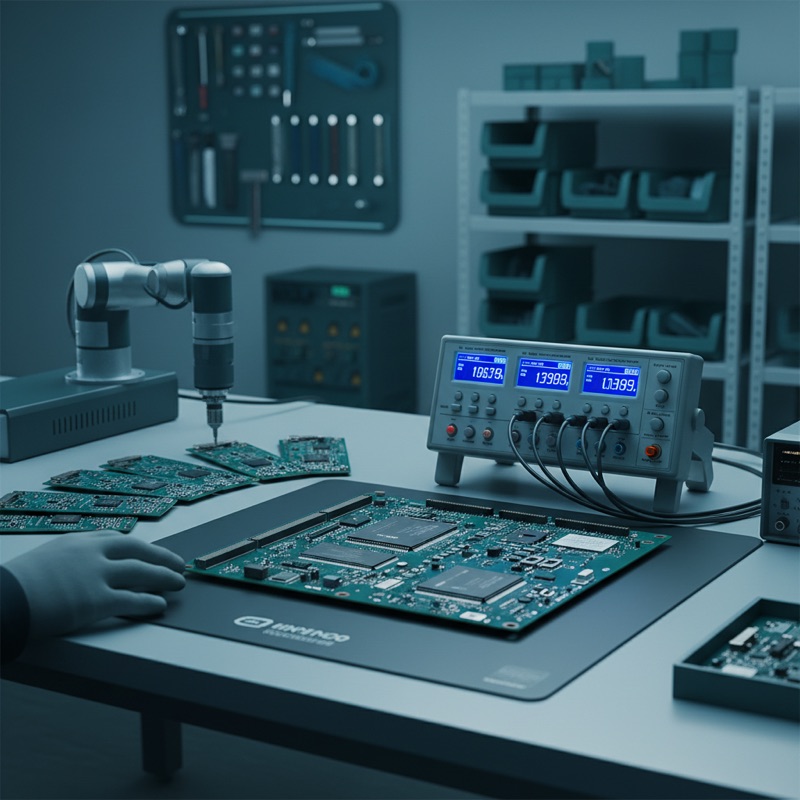
PCB Incoming Inspection with Multichannel LCR Testing
6 Apr · 5 min
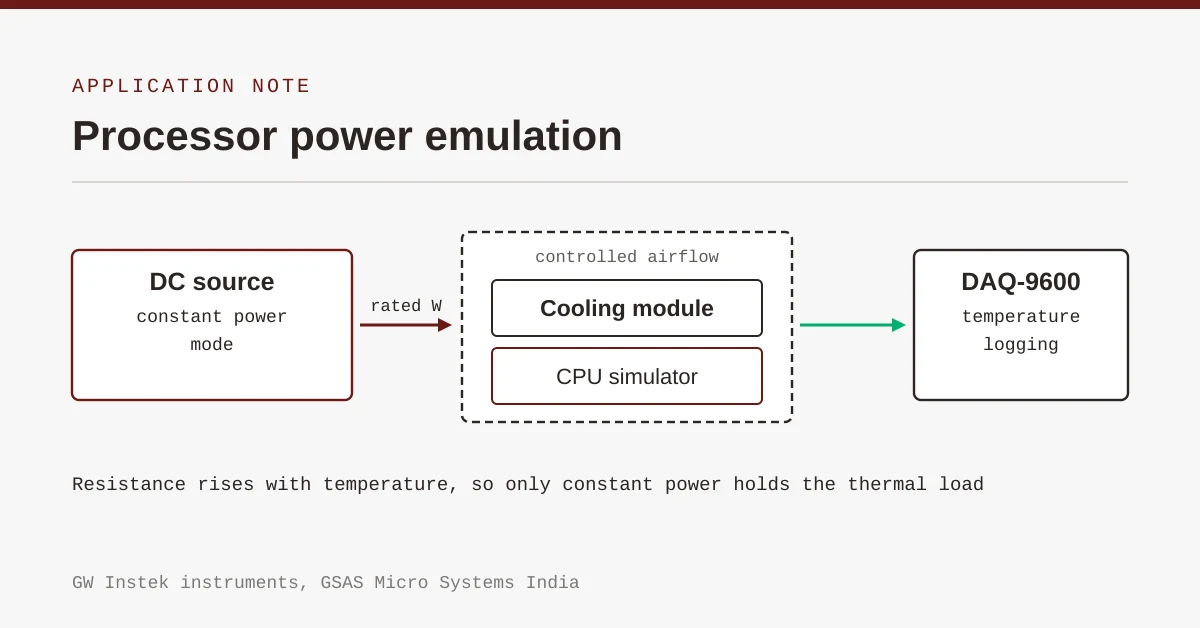
Emulating Processor Power for Thermal Testing: Why Constant Power
7 Oct · 7 min
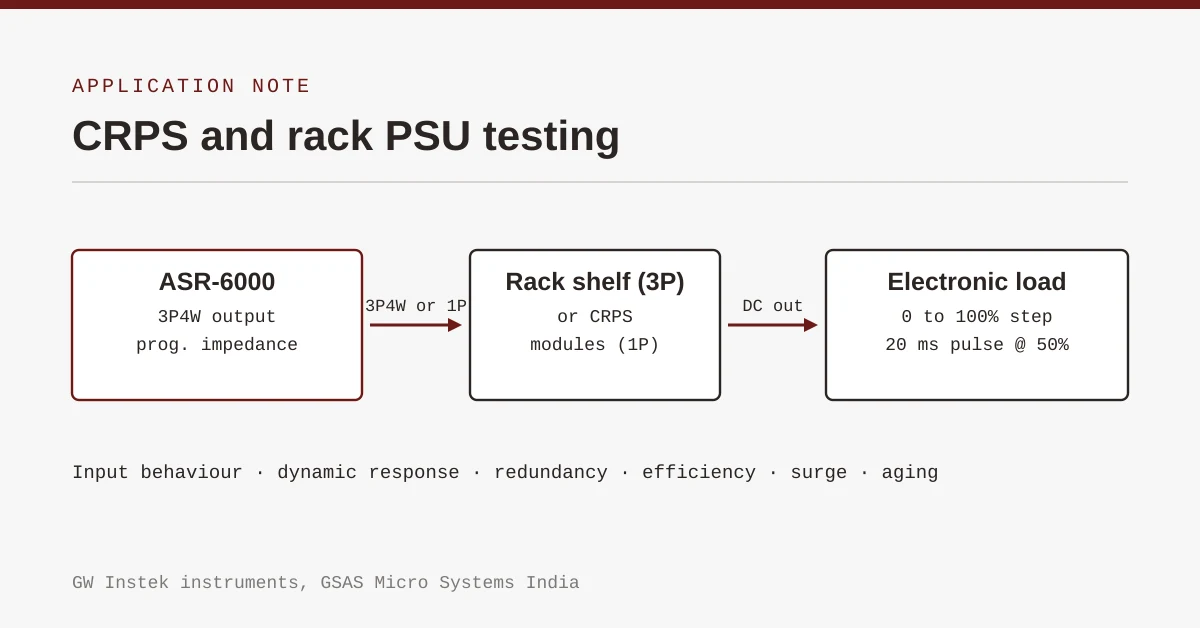
CRPS and Rack Power Supply Testing: The Six Tests That Matter
7 Oct · 7 min