The Digilent Analog Discovery 3 generates a predictable reaction from experienced engineers: “How can a USB device replace a real oscilloscope?” The honest answer is: it does not replace a real oscilloscope for all applications. It replaces it for a substantial subset of daily measurement tasks, and complements it for the rest. Understanding the boundary between these zones is the key to getting value from the Analog Discovery without overextending its capabilities.
Where the Analog Discovery 3 Wins
Cost per engineer. A benchtop oscilloscope with comparable specifications (2-channel, 100 MHz, 14-bit) costs INR 50,000 to 2,00,000 depending on brand and features. The Analog Discovery 3 costs a fraction of that, and includes a waveform generator, logic analyzer, power supply, and protocol analyzer. For organisations equipping multiple engineers, the cost difference is significant.
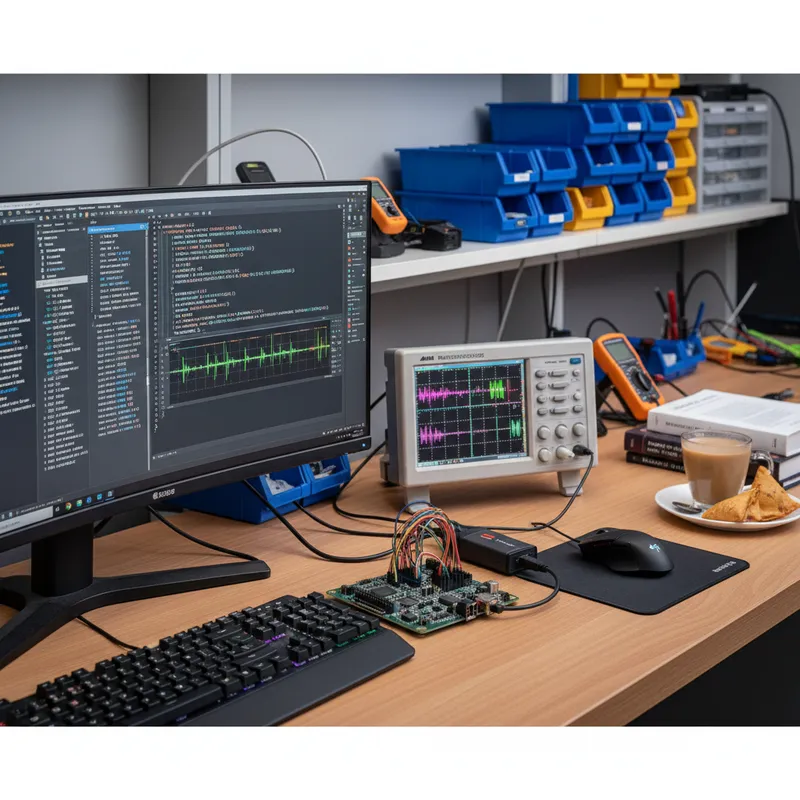
Multi-instrument integration. The Analog Discovery 3 provides oscilloscope, logic analyzer, waveform generator, spectrum analyzer, network analyzer, power supply, voltmeter, and data logger through a single software interface (WaveForms). Benchtop labs require separate instruments for each function, plus the time to connect and configure each one. For mixed-signal debugging, correlating analog and digital signals, the integrated approach is faster and more intuitive.
Portability. The Analog Discovery 3 fits in a pocket. A benchtop oscilloscope weighs 3-10 kg and requires bench space, power, and probes. For field service, remote work, home offices, and travel debugging, the Analog Discovery 3 goes where benchtop instruments cannot.
Scriptability. WaveForms provides a scripting interface (JavaScript, Python) for automated measurement sequences. The Analog Discovery 3 becomes a programmable test instrument, automated frequency sweeps, parametric measurements, data logging, and pass/fail testing. Benchtop instruments offer remote control (SCPI, VISA), but the setup is typically more complex.
14-bit vertical resolution. Many benchtop oscilloscopes in the Analog Discovery’s price range offer 8-bit vertical resolution. The Analog Discovery 3’s 14-bit resolution provides 64 times finer voltage discrimination, critical for measuring small signals riding on large DC offsets, power supply ripple on noisy rails, and sensor signals with low signal-to-noise ratio.
Where Benchtop Oscilloscopes Win
Bandwidth. The Analog Discovery 3’s practical analog bandwidth is approximately 30 MHz. High-speed digital signals (DDR, USB 2.0/3.0, LVDS, Ethernet PHY, HDMI), RF circuits, and switch-mode power converter edge rates require oscilloscopes with 200 MHz to several GHz bandwidth. There is no USB instrument substitute for these measurements.
Input voltage range. The Analog Discovery 3 handles +/- 25V. Power electronics, motor drives, mains-referenced circuits, and high-voltage industrial systems require oscilloscopes with higher voltage handling (often through differential probes rated to hundreds or thousands of volts).
Channel count. Two analog channels and 16 digital channels. Systems with many simultaneous signals, multi-phase power converters, parallel bus interfaces, complex timing relationships between multiple subsystems, require 4-channel or 8-channel oscilloscopes.
Probe ecosystem. Benchtop oscilloscopes support a wide ecosystem of specialised probes, active probes for high-speed signals, differential probes for floating measurements, current probes for power analysis, high-voltage probes for safety-rated measurements. The Analog Discovery uses wire connections and basic probes.
Display and real-time responsiveness. A benchtop oscilloscope’s dedicated display and hardware trigger system provide real-time waveform updates. The Analog Discovery’s display depends on the computer screen and USB transfer latency. For real-time signal monitoring (adjusting a circuit while watching the waveform), the benchtop experience is more responsive.
The Right Approach for Indian Engineering Teams
The most effective instrumentation strategy is not “Analog Discovery or benchtop”, it is “Analog Discovery and benchtop, for the right tasks.”
Equip every engineer’s desk with an Analog Discovery 3. This handles the daily measurement tasks: embedded firmware debugging, bus protocol verification, power supply measurements on low-voltage systems, network analysis for filter characterisation, and general circuit probing.
Maintain shared benchtop instruments for the tasks that exceed the Analog Discovery’s specifications: high-speed signal integrity measurements, power electronics debugging, high-voltage measurements, and multi-channel complex system debugging.
This approach maximises the utilisation of expensive benchtop instruments (used only when their capabilities are genuinely needed) while giving every engineer immediate access to measurement capability at their desk (reducing the queue for shared lab equipment).
For Indian engineering teams in Bengaluru, Pune, Chennai, Hyderabad, Mumbai, and Delhi NCR, this hybrid approach delivers the best combination of measurement capability and cost-effectiveness.
Why Buy from GSAS
GSAS provides the Digilent Analog Discovery 3 and the full Digilent instrument portfolio in India, alongside benchtop instruments from GW Instek and Pico Technology. We help engineering teams assemble the right combination of portable and benchtop instruments for their specific workflows.
Contact us from Bengaluru, Hyderabad, Chennai, Pune, Mumbai, Delhi NCR, or Visakhapatnam.
Explore Analog Discovery 3 → | Explore GW Instek → | Request a Quote
Also appears in:
Interested in Digilent tools?
Talk to our application engineers for personalized tool recommendations.
More from Digilent
View all →
Real-World SDR Applications: 5G Research, Satellites, IoT and ADS-B
28 Aug · 6 min
What Is Software Defined Radio (SDR)? A Practical Explainer for Indian Engineering Teams
19 Aug · 9 min
ZedBoard FPGA-in-the-Loop: HDL Verifier vs HDL Coder
5 Aug · 9 min
AI Data Centers in India: Test, Measurement & Memory Boom
4 Jun · 14 min
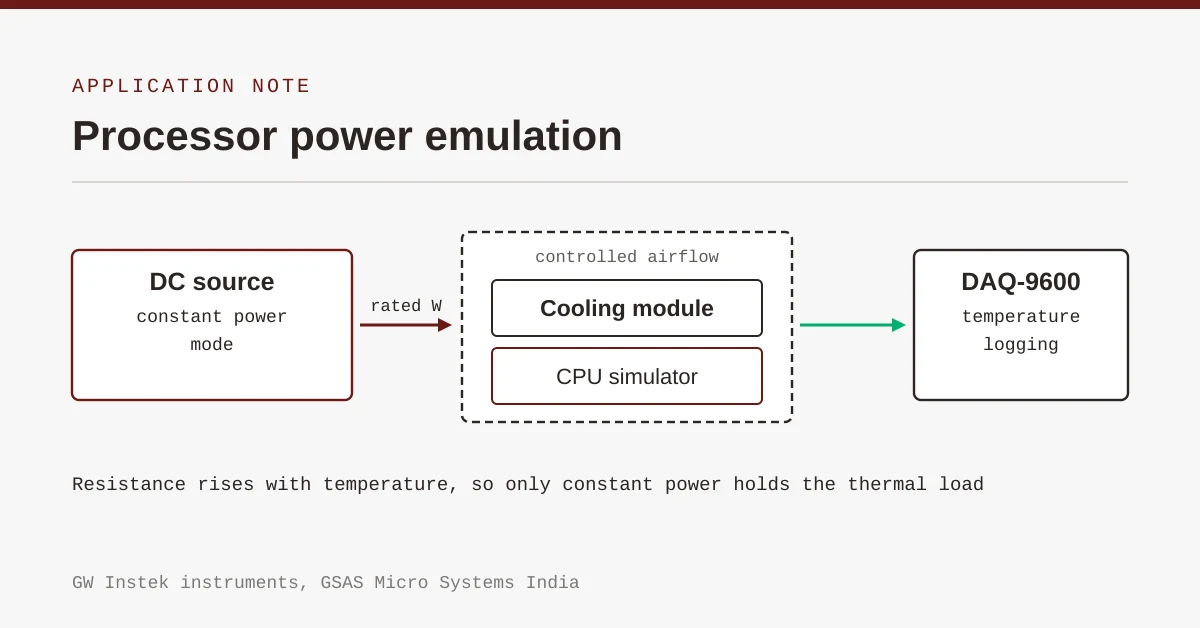
Emulating Processor Power for Thermal Testing: Why Constant Power
7 Oct · 7 min
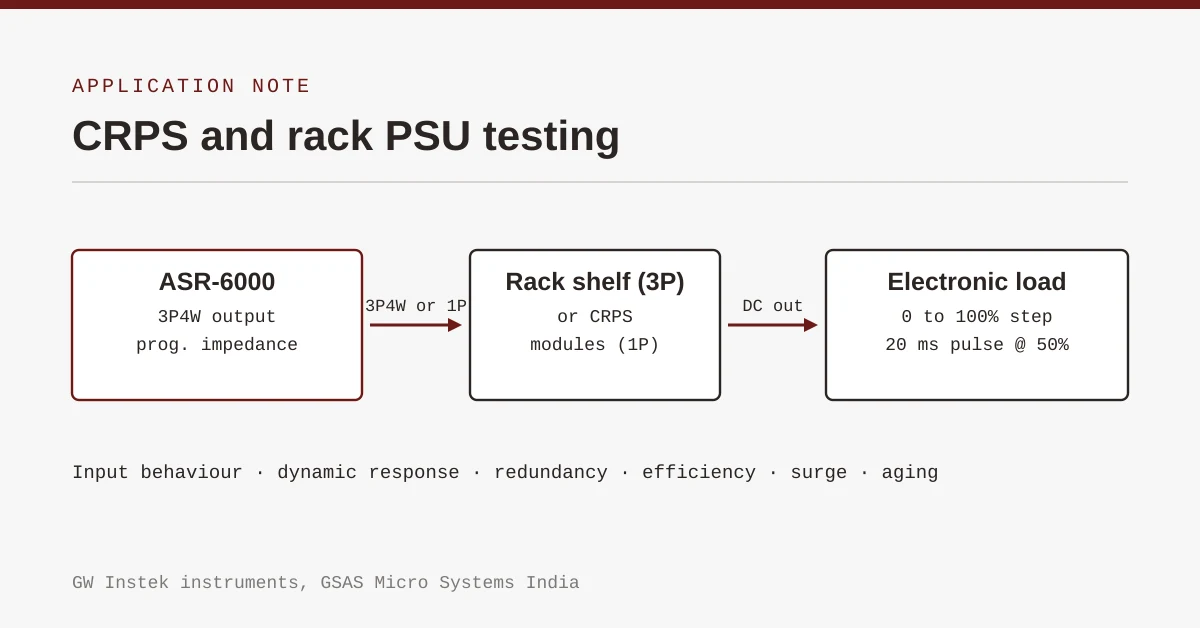
CRPS and Rack Power Supply Testing: The Six Tests That Matter
7 Oct · 7 min