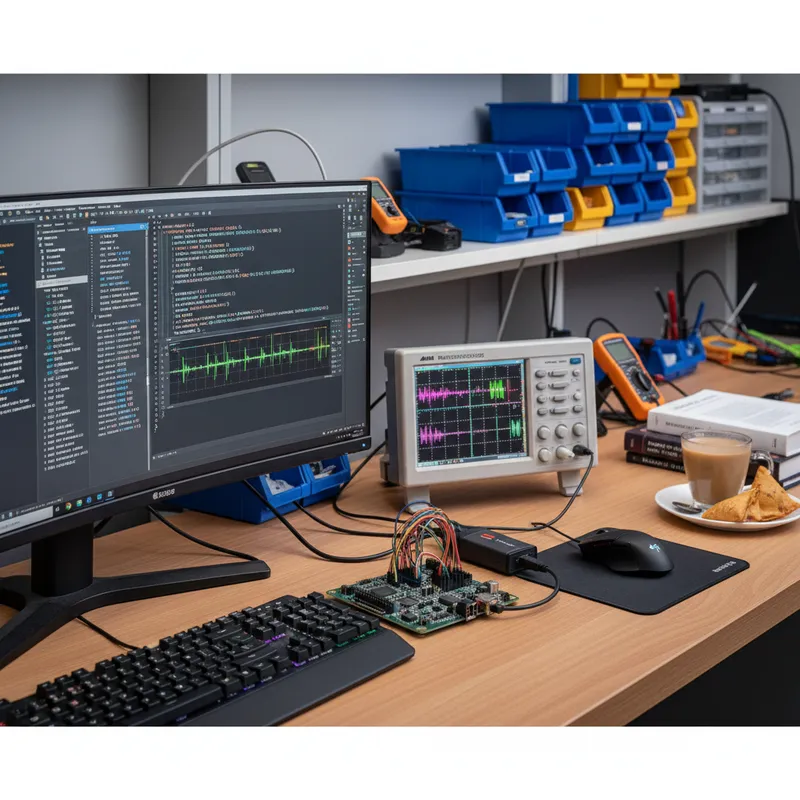

Automotive domain and zone controllers represent a new class of production programming challenge. Flash file sizes reaching 20GB. Multiple heterogeneous processors on a single board. High-speed interfaces that demand throughput measured in hundreds of megabytes per second. ProMik’s MSP2300NET is their latest generation Multi Standard Programmer, built specifically for this scale of production complexity.
Hardware Architecture: Xilinx Zynq UltraScale+ SoC
The MSP2300NET is built on a Xilinx Zynq UltraScale+ SoC: a platform that combines programmable logic with high-performance processing cores. This is not a general-purpose microcontroller pressed into service as a programming tool. The Zynq UltraScale+ provides the compute headroom and I/O flexibility required to handle modern automotive controllers where programming operations involve multiple interfaces, large data volumes, and real-time protocol handling simultaneously.
24 Configurable I/Os for Mixed Target Interfaces
The MSP2300NET provides 24 configurable I/Os for mixed target interfaces. This configurability is the key differentiator for production environments where a single programming station must handle multiple board variants. Rather than dedicating a fixed set of pins to specific protocols, the I/Os can be configured per job file to match the target device’s interface requirements.
This flexibility is particularly valuable for contract manufacturers and Tier-1 suppliers who produce multiple ECU variants on the same production line. The same MSP2300NET hardware handles different products by loading different job configurations, no hardware changes, no fixture swaps for the programmer itself.
Protocol Speeds and Cable Lengths
The MSP2300NET supports the full range of automotive bus interfaces: CAN FD, LIN, FlexRay, and Automotive Ethernet. The supported ISP (In-System Programming) interfaces include JTAG, SWD, QSPI, CSI, Hyper Flash, and USB.
ProMik specifies the following protocol speeds and maximum cable lengths:
| Interface | Speed | Max Cable Length |
|---|---|---|
| JTAG | 50 MHz | 1.5 m |
| SPI | 25 MHz | 1.5 m |
| I2C | 400 kHz | 3 m |
| CAN FD | up to 8 Mbit/s | 10 m |
| Automotive Ethernet | 125 MB/s | 10 m |
| USB 2.0 | 80 MB/s | 5 m |
| USB 3.x | 300 MB/s | 3 m |
These are not theoretical maximums, they reflect ProMik’s IP protected cable technology that maintains signal integrity at these speeds over production-relevant distances. For JTAG at 50 MHz over a 1.5 m cable, for example, no additional hardware is required in the test fixture. The cable technology handles signal conditioning internally.
Domain and Zone Controller Programming
The domain and zone controller use case drives the MSP2300NET’s most demanding specifications. Modern domain controllers can contain flash files up to 20GB: orders of magnitude larger than traditional ECU firmware images. At 20GB, programming time becomes the dominant factor in production cycle time.
The MSP2300NET addresses this with USB3 flashing at up to 300 MB/s. At this transfer rate, even multi-gigabyte firmware images can be loaded within production-acceptable cycle times. The dedicated USB high-speed interface on the MSP2300NET is designed specifically for this use case, providing sustained throughput rather than burst speeds.
Connectivity and Integration
The MSP2300NET includes a host Ethernet uplink for network connectivity to MES systems, job servers, and production management infrastructure. An integrated target power supply delivers up to 13.5V at 3.5A, eliminating the need for external power supplies in many production configurations. The target gets its power directly from the programmer, simplifying the test fixture and reducing station footprint.
All-in-One Production Tool
ProMik positions the MSP2300NET as an all-in-one tool for boundary scan, flashing, functional test, powering, and fieldbus communication. This consolidation matters for production economics. Instead of maintaining separate tools for programming, boundary scan testing, functional verification, and bus communication, a single MSP2300NET station handles all of these functions.
The platform is designed for easy ATE (Automated Test Equipment) integration. Whether the production line uses a custom automation framework or a commercial ATE platform, the MSP2300NET’s remote control interfaces and standard connectivity allow straightforward integration into existing infrastructure.
Implications for Indian Automotive Production
India’s emerging role in domain controller manufacturing, both for domestic EV platforms and for global automotive supply chains, creates a direct need for programming tools that can handle the scale and complexity of these devices. A 20GB flash image is not an edge case in this context; it is the baseline requirement for high-compute vehicle controllers running AUTOSAR Adaptive, Linux, or hypervisor-based software stacks.
GSAS Micro Systems provides ProMik’s MSP2300NET and complete production programming solutions with local technical support across India. Automotive production and engineering teams in Bengaluru, Hyderabad, Chennai, Pune, Mumbai, and Delhi NCR can access hardware evaluation, integration support, and application engineering directly from GSAS.
Also appears in:
Interested in ProMik tools?
Talk to our application engineers for personalized tool recommendations.
More from ProMik
View all →
Automotive ECU Programming and Traceability: Meeting IATF 16949 with ProMik
5 Apr · 7 min

Scaling Electronics Manufacturing in India: Programming Infrastructure for Growth
5 Apr · 7 min

FlashTask Pro: Production Programming Project Management with ProMik
5 Apr · 7 min
Gang Programmer vs Inline ISP: Choosing the Right Production Programming Approach
5 Apr · 7 min
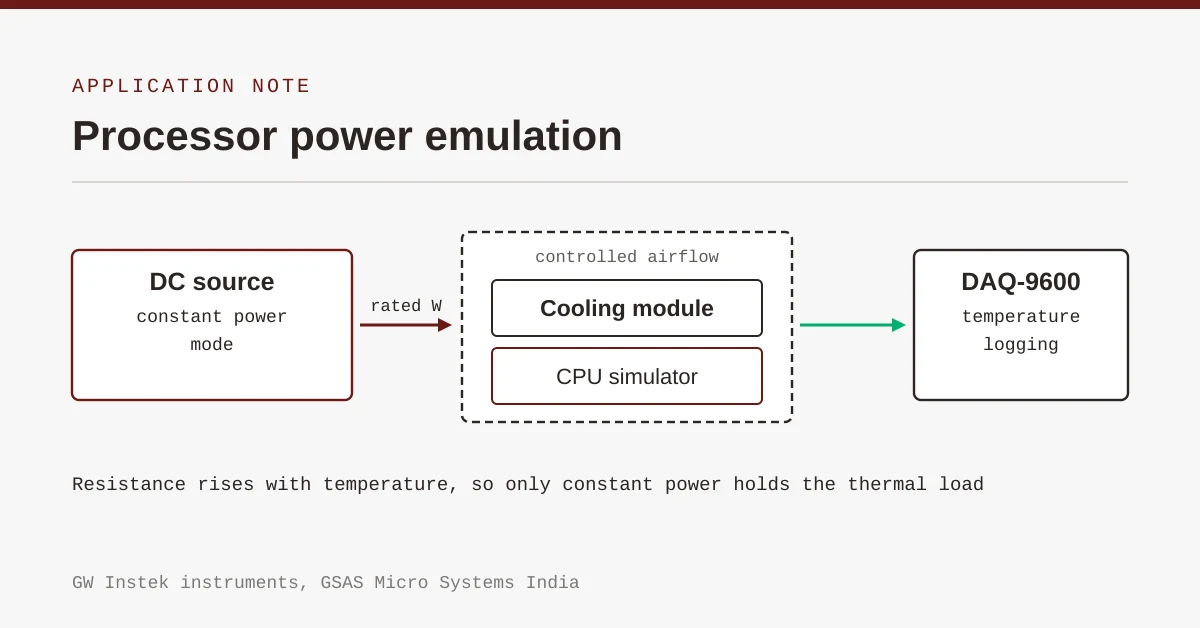
Emulating Processor Power for Thermal Testing: Why Constant Power
7 Oct · 7 min
CRPS and Rack Power Supply Testing: The Six Tests That Matter
7 Oct · 7 min