
Embedded Perspectives
Automotive Ethernet
7 articles tagged with Automotive Ethernet.
How to Choose an Automotive Ethernet Switch for the Lab
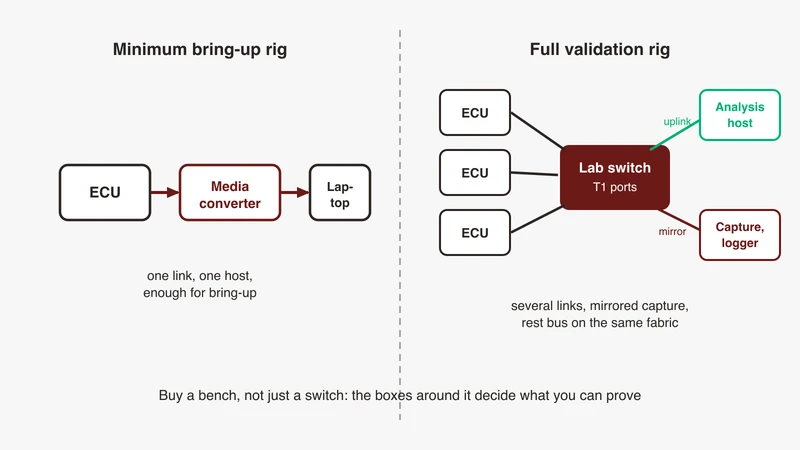
Search for an automotive Ethernet switch and you get silicon selection tables written for the engineer choosing a die for a zonal controller. The person searching from a validation lab wants a boxed switch that reproduces a vehicle network on a bench, and finds nothing addressed to them. This is that guide: how to separate the two products, how to count the ports you actually need, and an eight-row scoring matrix written as questions to put to a supplier rather than specifications we invented. Standards and documentation claims trace to IEEE 802.1 and 802.3, ASAM, AUTOSAR, the IETF and public Linux and Wireshark documentation. Written by the GSAS Micro Systems engineering team in India.
Domain vs Zonal E/E Architectures Explained
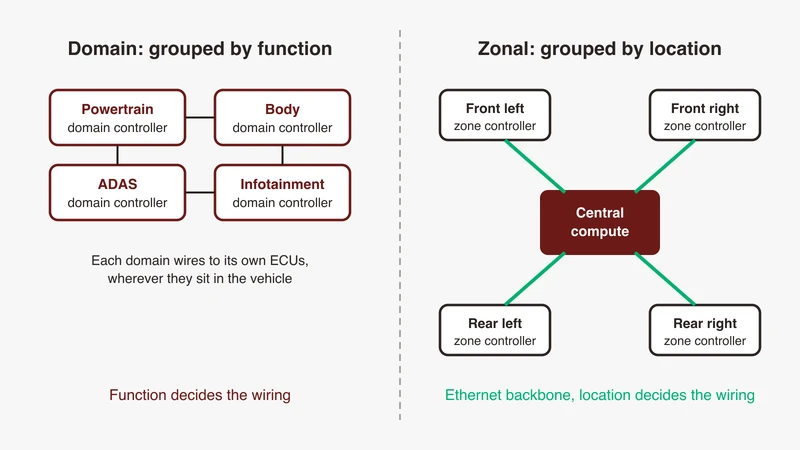
Domain architectures group ECUs by function, zonal architectures group them by where they sit in the vehicle. This guide is the engineer's read on the difference: what physically moves, what the in-vehicle network has to become, and what happens to diagnostics, rest bus simulation and time sync. It also refuses to repeat the harness mass and ECU-count figures that circulate without a public source, and says exactly which claims are citable and which are not. Written by the GSAS Micro Systems engineering team in India.
gPTP Troubleshooting: ptp4l, phc2sys and Sync Failures
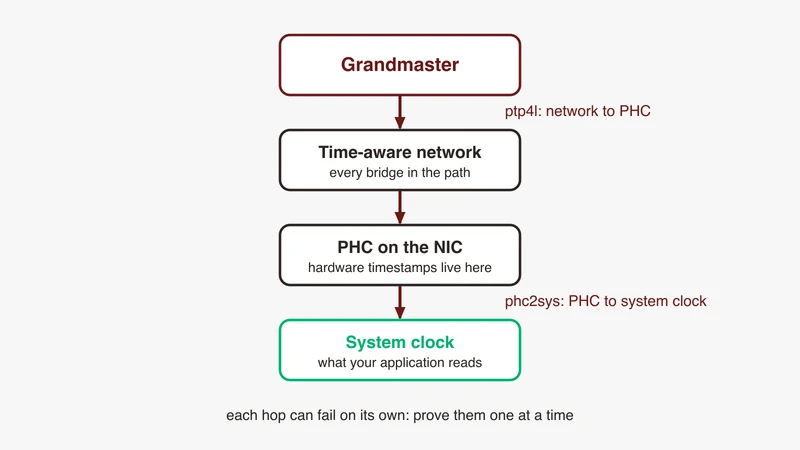
Most gPTP guides on the web are written for data centre PTP over UDP, and they leave out the three things that break an in-vehicle 802.1AS domain on Linux: layer 2 transport with peer delay, the transportSpecific field that phc2sys has to match, and the TAI to UTC offset that nothing sets for you. This is the automotive version, with the linuxptp config lines, the log lines that tell you where you are, and a symptom to cause table. Written by the GSAS Micro Systems engineering team in India.
Validating Time Sync: How to Prove 802.1AS Actually Works
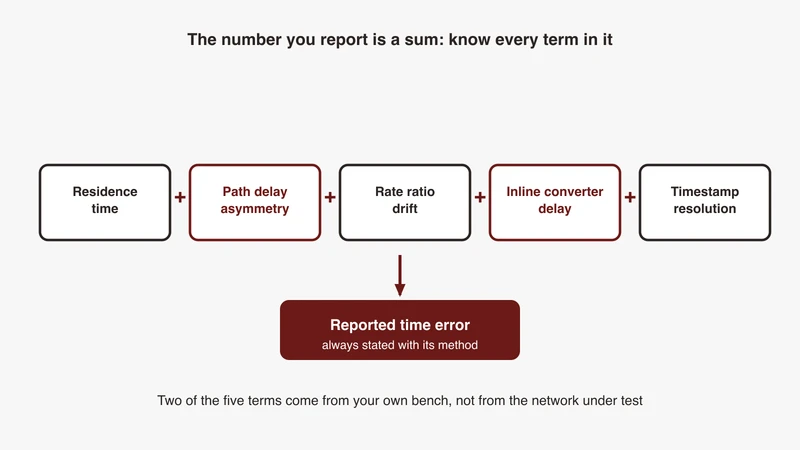
A test report that says gPTP locked proves nothing. Locked is a servo state; what an auditor wants is a bounded time error, measured against a reference, over a stated window, and repeated while the grandmaster disappears and the network is loaded. Avnu published a recovered clock quality methodology that defines exactly those terms and almost nobody translates it into a bench procedure. This article does: what the quantities are, how to measure them at the pin and in software, what the software number cannot see, and how to write the report. Written by the GSAS Micro Systems engineering team in India.
VLANs and QoS in Vehicles: 802.1Q Design Practice
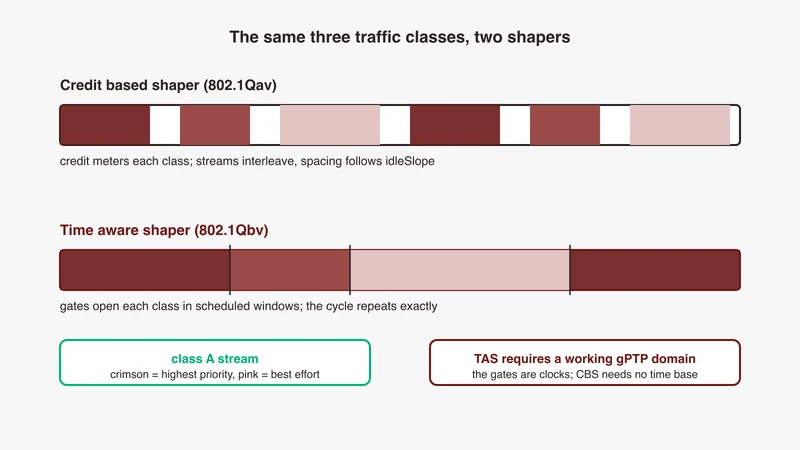
Search for VLAN and QoS design and you get campus networking: trunk ports, voice VLANs and switch configuration guides for a building. None of it answers what a vehicle network architect is deciding, which is how many VLANs, mapped to what, and which shaper sits behind which priority. This article gives the automotive framing: VLAN per domain against VLAN per service class, the priority to traffic class mapping document you owe your programme, an explicit rule for choosing between the credit based and time aware shapers, and the ingress filtering failure that costs a bench a day. Written by the GSAS Micro Systems engineering team in India.
When Qbv Breaks PTP: TSN Scheduling and Time Sync Conflicts
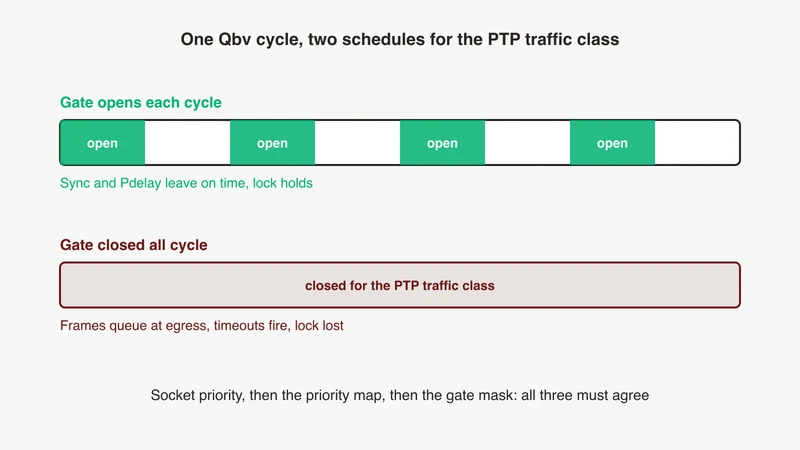
A time aware schedule and a time sync domain fight over the same egress path, and the schedule wins. One mechanism behind ptp4l going quiet the moment a taprio qdisc is installed: socket priority, the priority to traffic class map and the gate mask are three separate mappings that have to agree, and nothing warns you when they do not. Triage order, three distinct fix paths, and what the public reports actually show. Written by the GSAS Micro Systems engineering team in India.
What Is Automotive Ethernet? A Complete Guide for Engineers in India
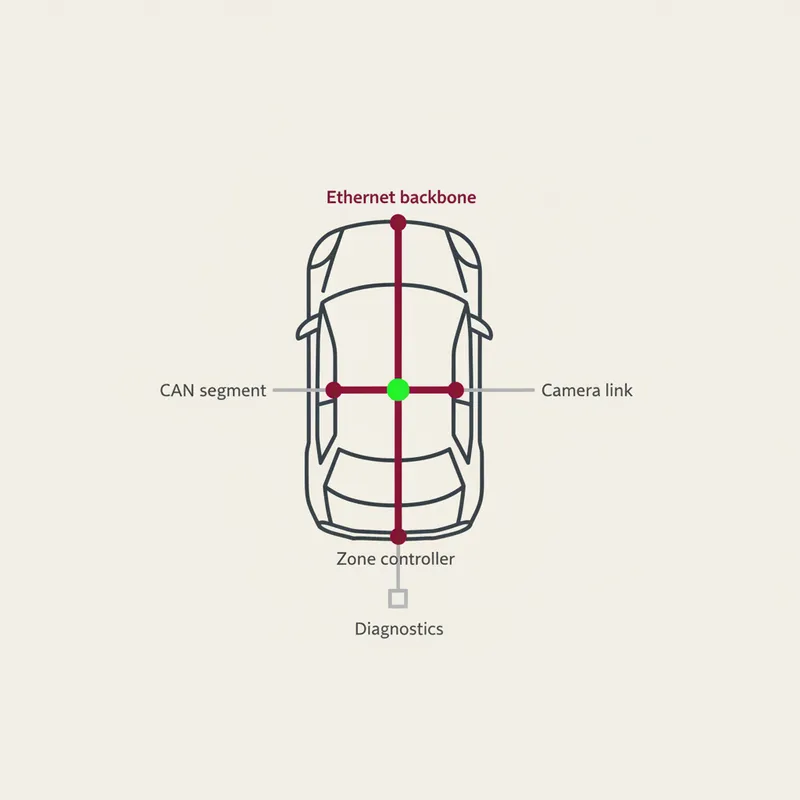
Automotive Ethernet is standard IEEE 802.3 Ethernet carried over a single twisted pair inside a vehicle. This guide from GSAS Micro Systems maps the T1 physical layer family, the protocol stack above it, the OPEN Alliance conformance vocabulary and the bench workflow, written for engineers in India who have been handed a T1 link and told to make it work.
Questions about Automotive Ethernet?
Our application engineers help teams evaluate tools, plan validation, and scope pilots across India.