The Multimeter’s Blind Spot
The benchtop digital multimeter is the most common current measurement instrument in Indian electronics labs. Every engineer has one. It measures DC current, it displays a number, and for many applications, that number is accurate enough. But for measuring the power consumption of a modern embedded device, a BLE sensor, a LoRaWAN node, a battery-powered MCU, the multimeter’s reading is not just imprecise. It is misleading.
The problem is not calibration or instrument quality. The problem is fundamental: a DMM on its DC current range measures the time-averaged current, filtered through the instrument’s bandwidth and display update rate. For a device that draws a constant current, the average is the correct answer.
For a device that cycles between nanoamp sleep and milliamp active states, which describes every battery-powered embedded device, the average is a number that does not correspond to any actual operating state and cannot be used to predict battery life.
Dynamic Range
A typical 6.5-digit benchtop DMM has a lowest DC current range of 10 uA or 100 uA full-scale. On the 100 uA range, the resolution is approximately 1 nA, good enough for nanoamp measurements. But on this range, the maximum measurable current is 100 uA.
When the device transitions from 500 nA sleep to 10 mA radio transmission, the DMM overranges and either displays “OL” (overload) or clips the reading at the range maximum. The radio transmission, which may be the dominant energy consumer, is invisible.
Switching to a higher range (10 mA or 100 mA) captures the transmission current but loses the nanoamp resolution needed to measure sleep current. The sleep current, which may account for 90% of the energy budget, is buried in the noise floor of the higher range.
The Joulescope JS220 eliminates this tradeoff with its 34-bit dynamic range and Enwavify autoranging. It measures from 0.5 nA resolution to +/-10 A peak in a single continuous measurement, switching between optimized shunt resistors in 1 microsecond with no gaps in the data stream. The sleep current and the transmission burst are captured simultaneously with full resolution.
Bandwidth and Sample Rate
A DMM’s DC current measurement updates its display 1 to 10 times per second on most instruments (some premium models reach 50 readings/second in fast mode). Between display updates, the instrument averages the input signal. A BLE advertisement takes 2 milliseconds.
A sensor wake-and-read takes 10 milliseconds. A LoRaWAN transmission takes 50 to 200 milliseconds. At 10 readings per second, the DMM takes one sample every 100 milliseconds. It may catch part of a LoRaWAN transmission but will miss shorter events entirely.
The JS220 samples at 2 million samples per second with 300 kHz analog bandwidth. Every current transient longer than approximately 3 microseconds is captured with full fidelity. This means every ISR wake-up, every ADC conversion, every SPI transaction, every radio preamble and payload is resolved as a distinct event with measured current and duration.
Burden Voltage
A DMM measures current by passing it through an internal shunt resistor and measuring the voltage across the shunt. The voltage dropped across this shunt, the burden voltage, is subtracted from the supply voltage available to the device under test. Premium DMMs specify burden voltage of 200 mV to 1 V depending on the current range. On the low-current ranges (where the shunt resistance is highest), the burden voltage can be several hundred millivolts.
For a device running from a 3.0 V coin cell, a 500 mV burden voltage reduces the supply to 2.5 V. This can push voltage regulators into dropout, change oscillator frequencies, alter radio transmit power (and thus current consumption), and in extreme cases cause brownout resets. The measurement perturbs the device, and the measured current is not the current the device would draw under normal operating conditions.
The JS220 maintains a maximum burden voltage of 20 mV across its entire measurement range. This is low enough that it does not perturb the operation of any embedded device, ensuring that the measured current accurately represents the device’s actual behavior.
What the DMM Reading Actually Means
When a DMM displays “0.15 mA” for an IoT device, what does that number represent? It is the time-averaged current, weighted by the DMM’s analog bandwidth and integration time, across whatever operating states the device cycled through during the measurement period. If the device has a stable, periodic duty cycle, the average current can be mathematically related to battery life, but only if the averaging period includes a statistically representative number of complete duty cycles, and only if the DMM’s input filter does not attenuate the high-current pulses.
In practice, the DMM reading is unreliable for battery life prediction because:
- It underestimates active current: The DMM’s bandwidth filters out fast current transients, reducing the apparent peak current and energy per active event.
- It may overestimate average current: On auto-ranging DMMs, the range switching during sleep-to-active transitions can produce transient readings that bias the average upward.
- It provides no diagnostic information: The single number tells the engineer nothing about which operating state is consuming the most energy or where optimization effort should be directed.
When to Use a DMM vs Joulescope
DMMs remain excellent instruments for:
- Measuring steady-state DC current (constant loads, linear regulators, LED drivers)
- Voltage measurement (the DMM’s high input impedance is ideal for voltage measurement)
- Resistance measurement and continuity testing
- General-purpose lab measurement where microsecond timing is not required
The Joulescope is the right tool when:
- The device has a duty-cycled power profile (sleep/active transitions)
- The current spans more than 3 decades (nanoamps to milliamps, or microamps to amps)
- The active events are shorter than 100 milliseconds
- Energy-per-event analysis is needed for battery life prediction
- Power regression testing is required across firmware versions
- The measurement must not perturb the device’s operating conditions
Making the Transition
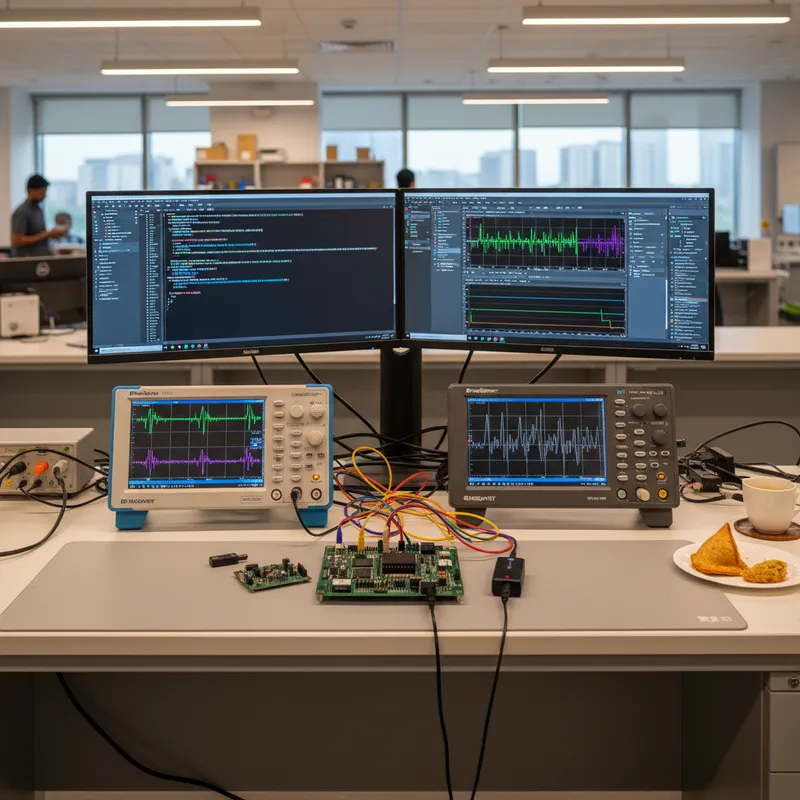
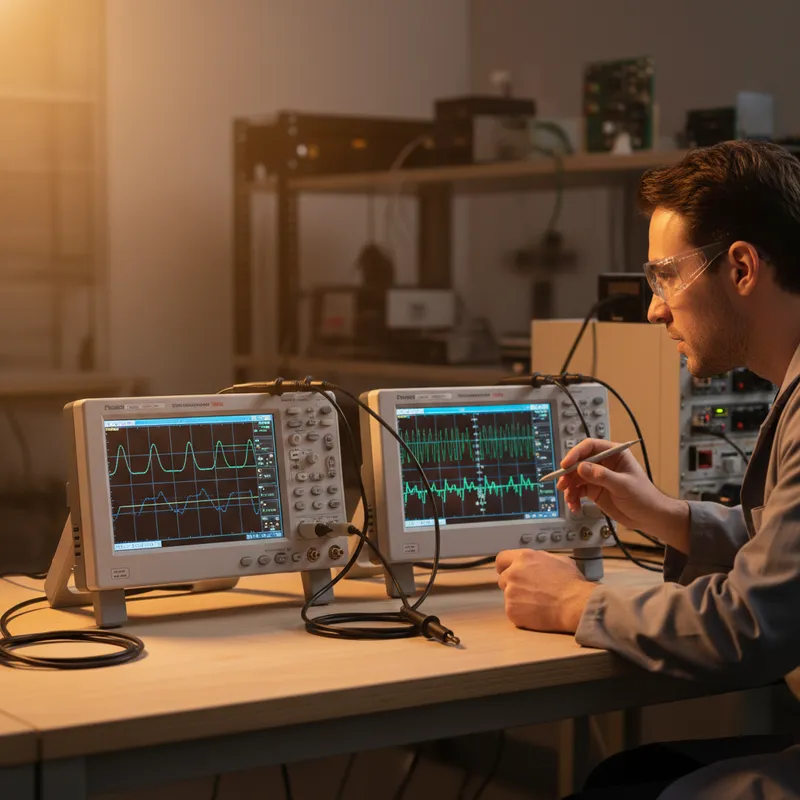
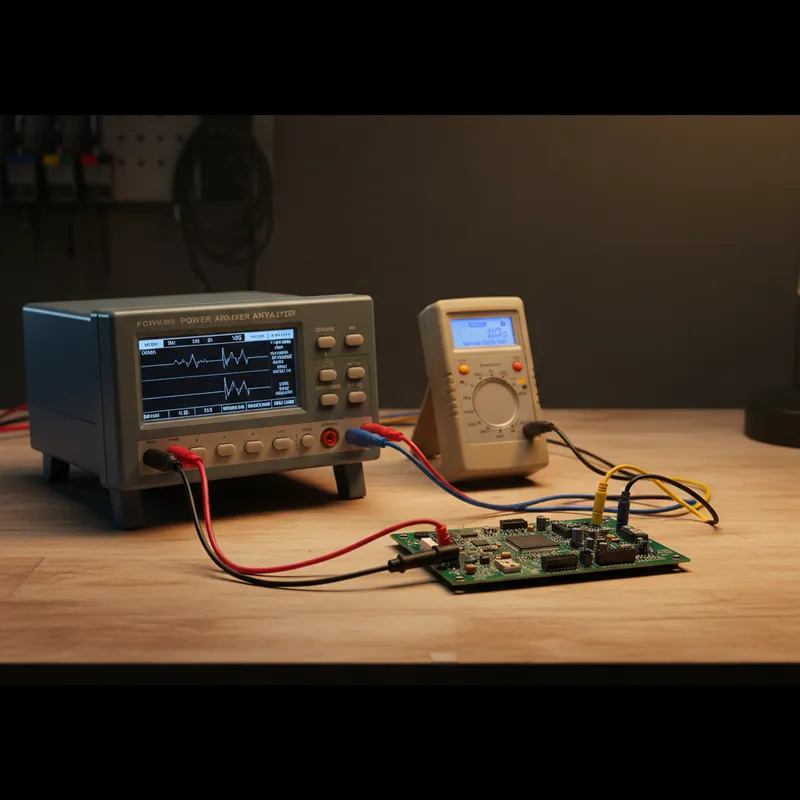
For Indian embedded product companies and IoT startups, adding a Joulescope to the lab alongside existing DMMs and oscilloscopes fills the measurement gap that no other instrument covers. The DMM handles steady-state measurements. The oscilloscope handles signal integrity and timing. The Joulescope handles power profiling, the measurement that determines whether the product’s battery life claim is credible.
Why Buy Joulescope From GSAS
GSAS provides Joulescope instruments with INR invoicing and technical support from offices in Bengaluru, Hyderabad, Chennai, Pune, Mumbai, and Delhi NCR. We offer evaluation units so engineering teams can compare the Joulescope measurement against their existing DMM results on their own devices.
Contact sales@gsasindia.com or call +91 80 6590 1783.
Also appears in:
Interested in Joulescope tools?
Talk to our application engineers for personalized tool recommendations.
More from Joulescope
View all →
Battery Discharge Profiling for Coin Cell Devices: From CR2032 to 10-Year Life
5 Apr · 7 min
BLE Power Profiling: Measuring Bluetooth Low Energy Current With Joulescope
5 Apr · 7 min
Energy Harvesting and Power Measurement: Designing Self-Powered IoT Devices
5 Apr · 7 min

IoT Battery Life Testing: A Practical Methodology for Indian Product Teams
5 Apr · 7 min
Emulating Processor Power for Thermal Testing: Why Constant Power
7 Oct · 7 min
CRPS and Rack Power Supply Testing: The Six Tests That Matter
7 Oct · 7 min