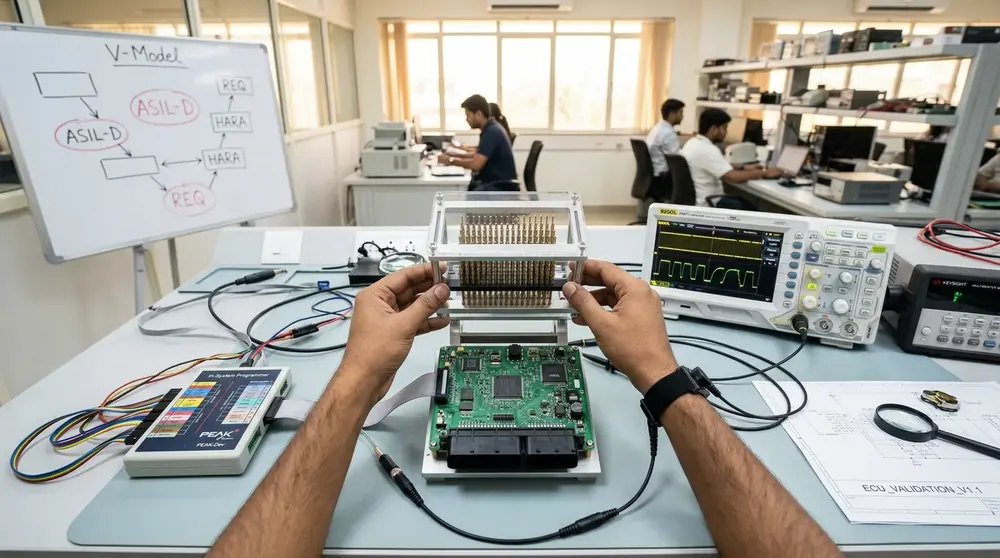
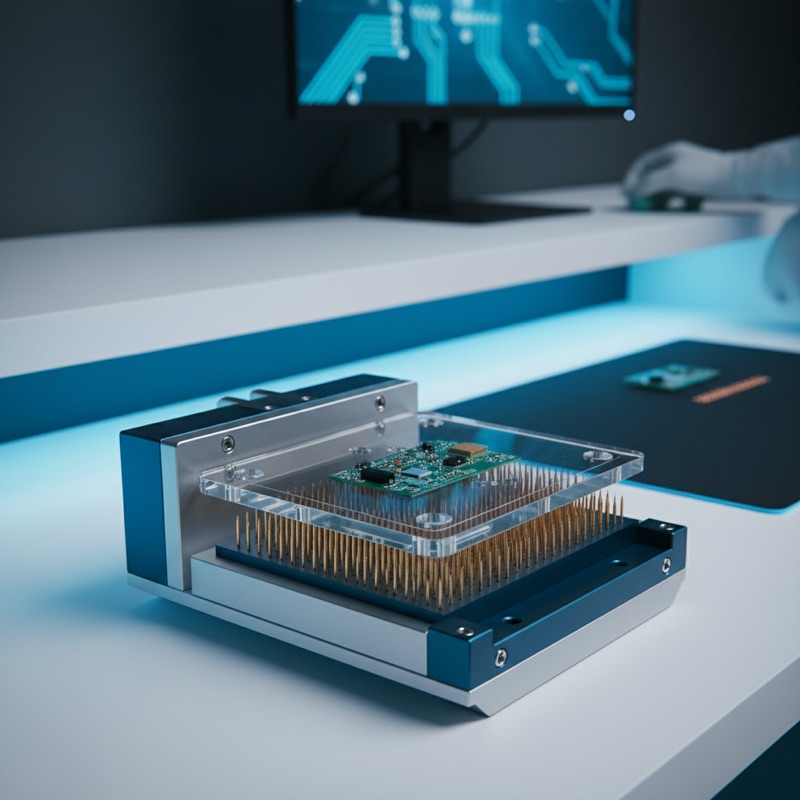
A production programming or test system is only as good as its physical interface to the device under test. The fixture, the mechanical assembly that makes electrical contact with the PCB or module, determines signal integrity, contacting accuracy, and ultimately yield. A poorly designed fixture introduces intermittent failures, slows cycle times, and creates a bottleneck that no amount of software optimization can resolve.
ProMik designs and manufactures fixtures and adapters in-house for all standard test platforms, covering the full spectrum of production contacting requirements. Their portfolio spans adapter solutions, offline fixtures, inline fixtures, third-party tester integration, ICT, flash programming, functional test (FCT), and end-of-line (EOL) applications.
Inline and Offline Coverage
Production environments vary widely. Some lines run high-volume inline processes where fixtures must integrate with conveyor systems and automated handlers. Others rely on offline stations for lower-volume or mixed-product scenarios where operators load boards manually.
ProMik’s fixture portfolio addresses both. For inline applications, fixtures are engineered to integrate directly with production line automation, maintaining the throughput demands of series manufacturing. For offline applications, the same design principles, signal integrity, contacting precision, mechanical robustness, apply to bench-top and standalone test stations.
Fast and Flexible: Plug-and-Play Integration
One of the persistent pain points in production test is changeover time. When a line switches from one product variant to another, the fixture swap can consume valuable production minutes, or hours, if readjustment and recalibration are required.
ProMik addresses this with a design philosophy centred on speed and flexibility. Fixtures are engineered to be changed quickly without tools or readjustment. The plug-and-play integration approach means that swapping a fixture for a different product variant is a matter of minutes, not hours. This is particularly valuable in contract manufacturing environments where the same line handles multiple customer products within a single shift.
Integration of All Common Interfaces
Modern ECUs and PCBs present a diverse set of interfaces: JTAG, SWD, SPI, UART, I2C, CAN, Ethernet, USB, and proprietary debug ports. A production fixture must make reliable contact with all relevant interfaces simultaneously, while maintaining signal integrity at the speeds required for high-throughput programming and test.
ProMik’s fixture designs integrate all common interfaces into a single contacting solution. This eliminates the need for separate fixtures or adapter boards for different programming and test steps. The same fixture that handles flash programming via JTAG can also support functional test via CAN or diagnostic communication via Ethernet, reducing the number of physical handling steps in the production process.
Compatibility with All Major ATE Manufacturers
Production environments rarely standardise on a single equipment vendor. A typical contract manufacturer or Tier-1 supplier operates test platforms from multiple ATE manufacturers alongside ProMik’s own XTL-i, XTL-s, and XTL-m programming systems. ProMik’s fixtures are compatible with all major ATE manufacturers, so organisations can deploy them across heterogeneous production floors without vendor lock-in.
Additionally, ProMik supports integration of additional equipment, auxiliary measurement instruments, power supplies, or communication simulators, into the fixture assembly, creating a consolidated test point that minimises operator handling.
High-Precision Manufacturing
Contacting accuracy is a function of manufacturing precision. ProMik manufactures fixtures using high-precision machinery, ensuring that probe positions, alignment tolerances, and contact forces meet the specifications required for reliable high-speed signal transmission.
This precision has a direct impact on yield and cost efficiency. Optimized contacting accuracy reduces errors caused by misaligned probes or inconsistent contact pressure, the kind of intermittent failures that are notoriously difficult to diagnose and that inflate scrap rates and retest cycles. High signal integrity at the fixture level ensures the highest yield and reliability from the programming and test process.
Fully Tested and Qualified
Every fixture is fully tested and qualified before delivery, providing process validation that the contacting solution meets the electrical and mechanical requirements of the target application. This qualification step, performed before the fixture reaches the production floor, eliminates the debugging phase that often accompanies fixture deployment and accelerates the ramp to stable production.
Average Lead Time: 4 Weeks
ProMik’s in-house design and manufacturing capability delivers an average lead time of 4 weeks from specification to delivery. Because both design engineering and precision manufacturing happen under one roof, iteration cycles are short, and custom requirements can be accommodated without the delays inherent in outsourced fixture fabrication.
Why This Matters for Indian Manufacturing
India’s electronics manufacturing sector is scaling rapidly, and with that growth comes increasing demand for production test solutions that maintain quality at volume. Whether the application is automotive ECU programming, industrial IoT module test, or consumer electronics functional verification, the fixture is the critical mechanical link between the test system and the product.
GSAS Micro Systems is the authorized ProMik engineering partner in India, providing the full range of ProMik programming systems, test solutions, and custom fixture design services. Our engineers in Bengaluru, Hyderabad, Chennai, Pune, Mumbai, Delhi NCR, and Visakhapatnam work directly with production teams to specify, commission, and support ProMik fixture solutions, from initial design consultation through production ramp.
Request a fixture design consultation | Explore ProMik solutions
Also appears in:
Interested in ProMik tools?
Talk to our application engineers for personalized tool recommendations.
More from ProMik
View all →
Automotive ECU Programming and Traceability: Meeting IATF 16949 with ProMik
5 Apr · 7 min

Scaling Electronics Manufacturing in India: Programming Infrastructure for Growth
5 Apr · 7 min
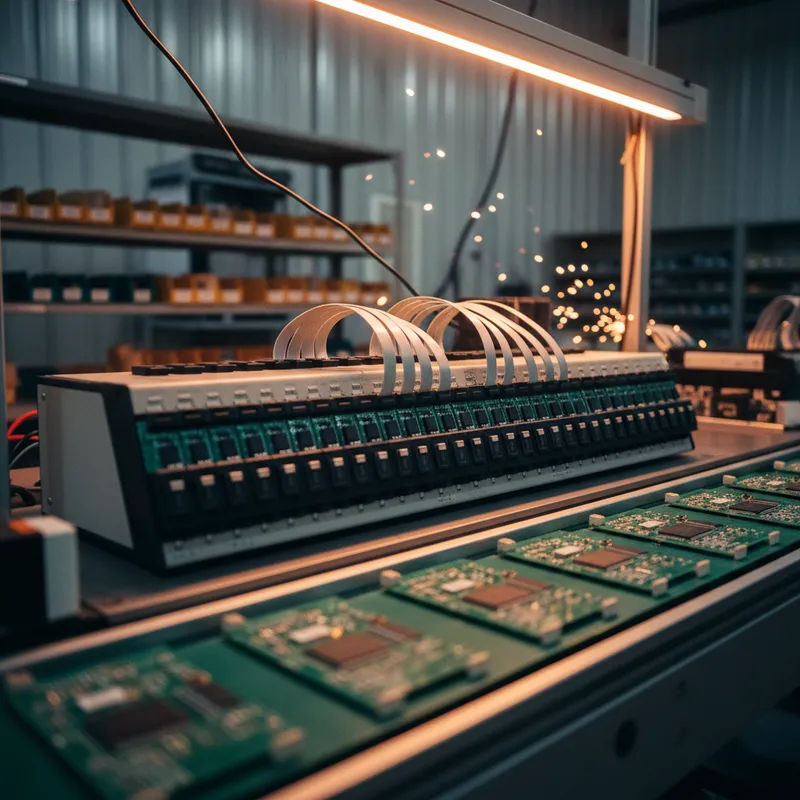
FlashTask Pro: Production Programming Project Management with ProMik
5 Apr · 7 min
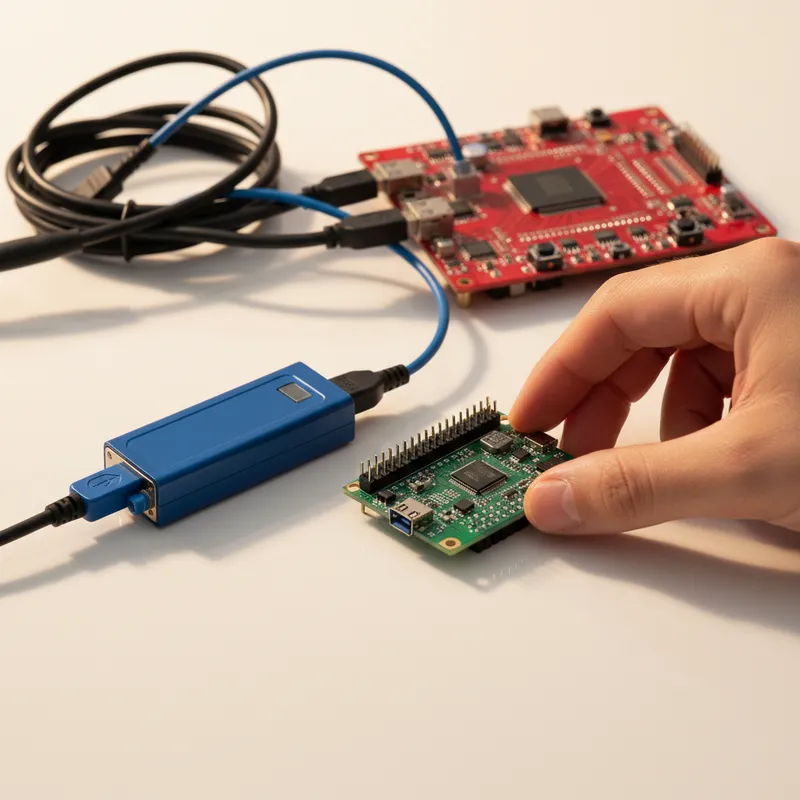
Gang Programmer vs Inline ISP: Choosing the Right Production Programming Approach
5 Apr · 7 min
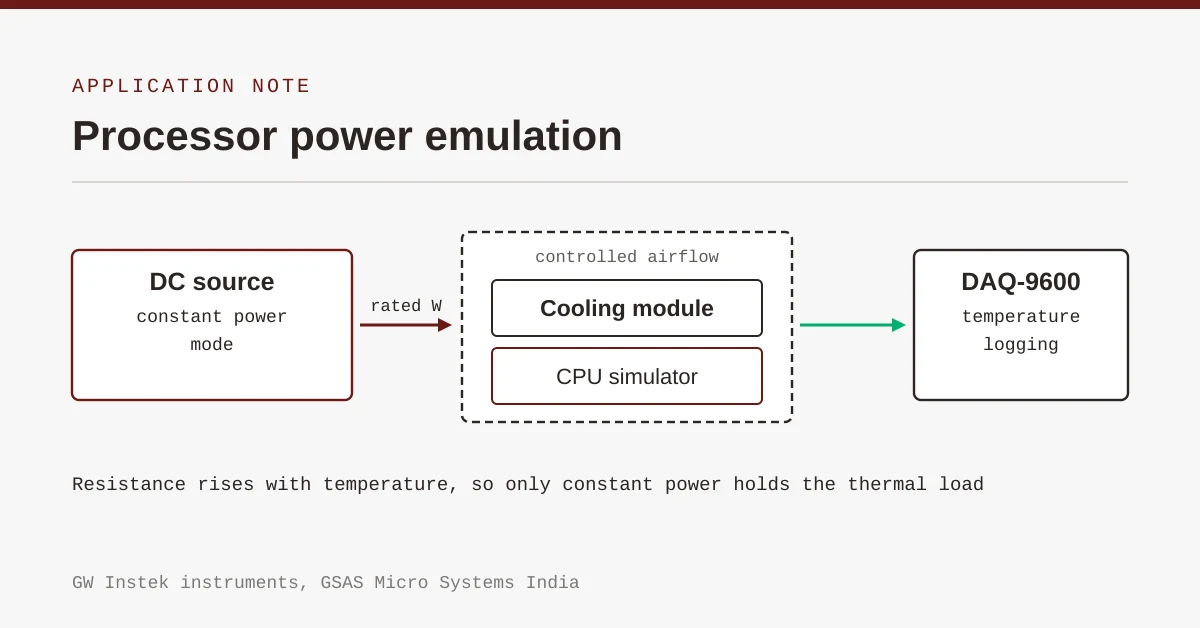
Emulating Processor Power for Thermal Testing: Why Constant Power
7 Oct · 7 min
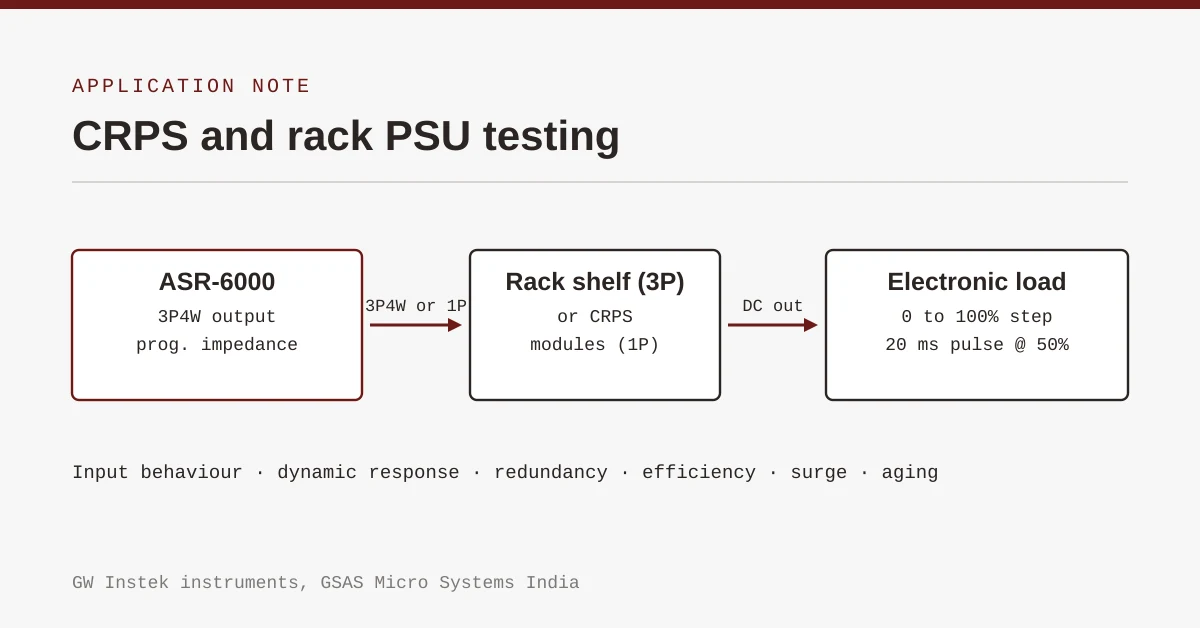
CRPS and Rack Power Supply Testing: The Six Tests That Matter
7 Oct · 7 min