Two Programmers, One Engine
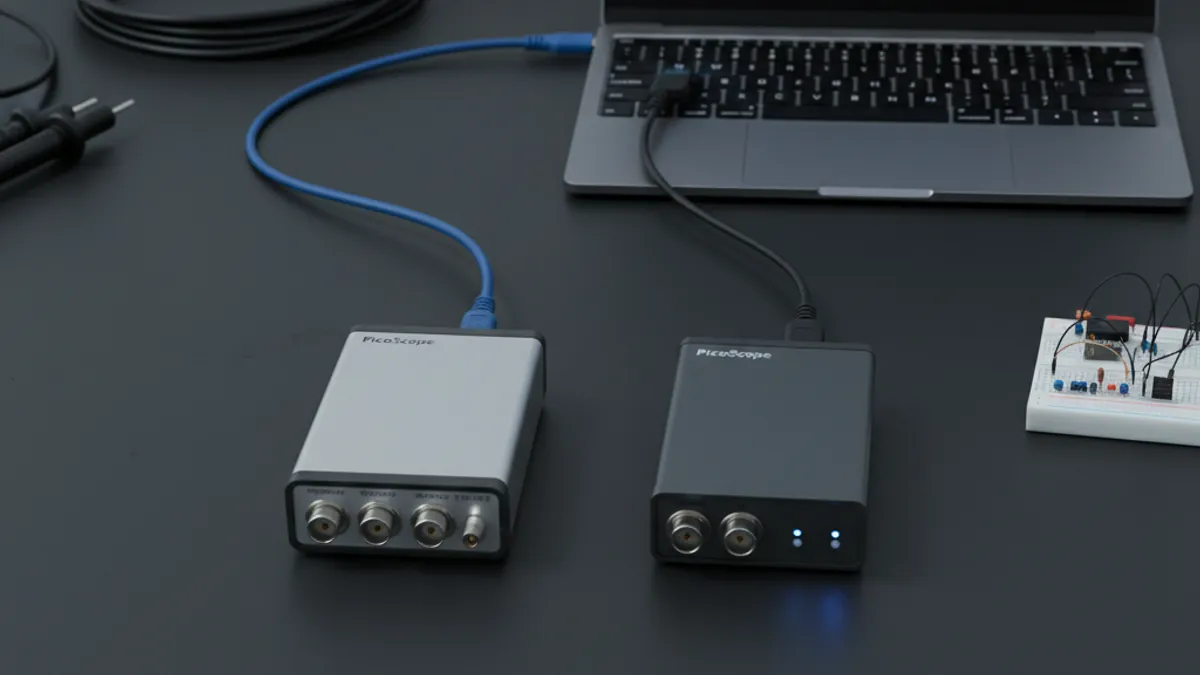
ProMik’s XDM product line includes two variants that share the same Zynq UltraScale+ programming engine and FlashTask Pro software platform but differ in their primary interface and target application. The XDM-USB connects via USB 3.0 for desktop and lab environments. The XDM-ETH connects via automotive Ethernet for production line deployment.
Understanding when to use each, or both, is essential for Indian electronics manufacturers planning their programming infrastructure.
Specification Comparison
| Feature | XDM-USB | XDM-ETH |
|---|---|---|
| Primary Interface | USB 3.0 SuperSpeed | Automotive Ethernet (100/1000BASE-T1) |
| Channels | 4 independent | 4 independent |
| Throughput | Up to 300 MB/sec (USB 3.0) | 100 MB/sec per channel |
| On-Board Storage | No | SATA3 SSD, up to 2 TB |
| Programming Engine | Zynq UltraScale+ | Zynq UltraScale+ |
| Protocols | JTAG, SWD, SPI, Qualcomm Sahara/Firehose | JTAG, SWD, SPI, Automotive Ethernet |
| HSM Key Injection | No | Yes |
| Secure Boot Provisioning | No | Yes |
| UNECE R155/R156 | No | Yes |
| Open Alliance TC8 | No | Yes |
| Ethernet MUX Expansion | No | Yes (up to 16 targets) |
| Form Factor | Compact desktop | 19-inch rack mount |
| Rack Option | ProMik standard rack + PSU 2048 | Native rack mount |
| Software | FlashTask Pro, pOnline Pro | FlashTask Pro, pOnline Pro |
| Project File Compatibility | Shared with XDM-ETH | Shared with XDM-USB |
When to Choose XDM-USB
Development and Engineering Labs
The XDM-USB’s compact desktop form factor and USB 3.0 connectivity make it the natural choice for engineering labs, firmware development benches, and NPI stations. Engineers connect the XDM-USB to their workstation via USB, develop FlashTask programming projects, validate programming sequences, and iterate on firmware builds.
USB 3.0 SuperSpeed delivers up to 300 MB/sec, more than sufficient for rapid programming cycles during development. The compact form factor does not require rack infrastructure, making it suitable for bench-level deployment.
Qualcomm Chipset Programming
The XDM-USB provides native support for Qualcomm Sahara and Firehose protocols with direct QFIL project import, a capability the XDM-ETH does not offer. Indian manufacturers producing 5G infrastructure equipment, IoT gateways, automotive infotainment systems, and edge computing devices using Qualcomm chipsets need the XDM-USB for these programming workflows.
Non-Automotive Applications
For IoT, industrial, telecom, and consumer electronics manufacturing that does not require automotive Ethernet interfaces, the XDM-USB provides production-grade programming over USB 3.0 at lower cost than the XDM-ETH.
Desk-to-Production Portability
The XDM-USB’s primary value proposition is zero re-porting to production. Develop on XDM-USB, validate at the bench, then deploy the identical FlashTask project to XDM-ETH on the production floor. This development-to-production portability eliminates the risk of configuration mismatches.
When to Choose XDM-ETH
Automotive ECU Production
If the target ECU communicates over automotive Ethernet, ADAS domain controllers, zone ECUs, central compute platforms, gateway modules, the XDM-ETH is the required tool. Its 100/1000BASE-T1 channels programme targets through the native automotive Ethernet interface.
Large Firmware Images
The XDM-ETH’s onboard SATA3 SSD (up to 2 TB, 600 MB/sec read) stores firmware images locally. For multi-gigabyte firmware images (ADAS sensor fusion, infotainment OS images, navigation data), the SSD eliminates network streaming latency. The XDM-USB streams images from the host PC, which can be a bottleneck for very large images on busy development workstations.
Cybersecurity Provisioning
For automotive ECUs requiring UNECE R155/R156 compliance, the XDM-ETH provides HSM key injection and secure boot provisioning. The XDM-USB does not support these security provisioning features. Any production line manufacturing cybersecurity-compliant automotive ECUs requires the XDM-ETH.
High-Volume Production Lines
The XDM-ETH’s 19-inch rack mount form factor integrates into production rack infrastructure alongside other factory floor equipment. Multiple XDM-ETH units in a rack provide scalable programming capacity. The optional Ethernet multiplexer expands each XDM-ETH to 16 targets, supporting programming multiple ECUs on a single vehicle.
XTL System Integration
The XDM-ETH is the primary programming engine for ProMik’s inline automation systems. The XTL-i and XTL-s use the XDM-ETH for Ethernet-based inline programming with full SMEMA conveyor integration and MES connectivity.
Using Both: The Recommended Approach
For Indian automotive suppliers, the recommended approach is deploying both:
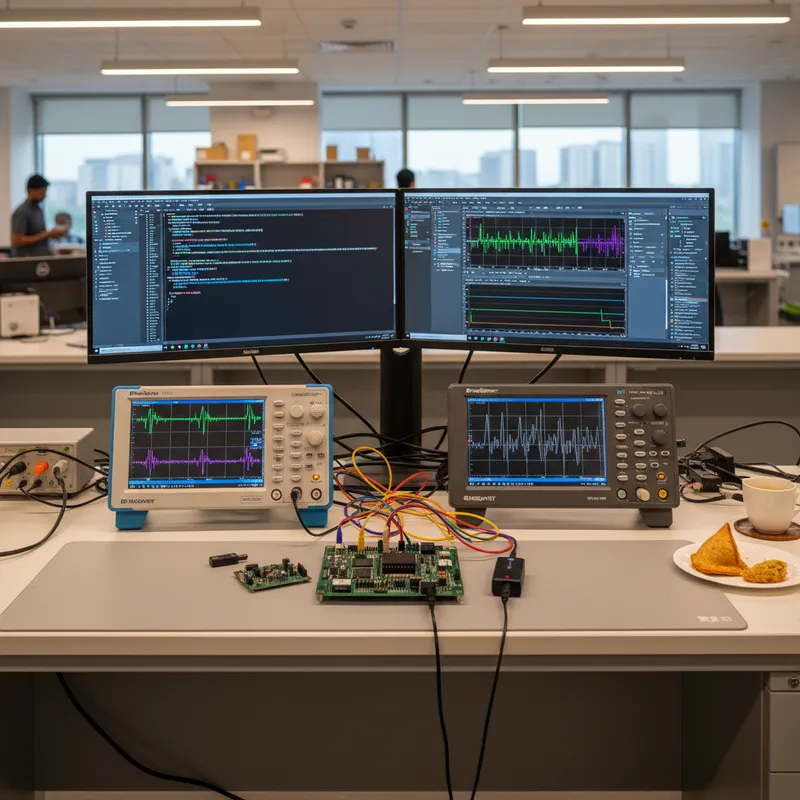
XDM-USB in the engineering lab: firmware development, programming recipe creation, NPI validation. Engineers work at their desks with USB connectivity, iterating on FlashTask projects until the programming recipe is validated.
XDM-ETH on the production floor: volume manufacturing with automotive Ethernet, cybersecurity provisioning, and MES-integrated traceability. The validated FlashTask project transfers from XDM-USB to XDM-ETH without modification.
This two-tier deployment is common among automotive tier-1 suppliers in Pune, Chennai, Bengaluru, and Hyderabad where engineering and production may be in different buildings or different cities. The XDM-USB travels with the engineering team. The XDM-ETH stays on the production line.
Cost Considerations
The XDM-USB is the lower-cost unit (no SSD, no automotive Ethernet PHYs, no HSM module). For facilities that need desktop programming capability without automotive Ethernet or cybersecurity requirements, the XDM-USB delivers production-grade programming at a more accessible price point.
The XDM-ETH commands a premium for its automotive Ethernet channels, onboard SSD, HSM key injection, and rack-mount form factor. The investment is justified for automotive production lines where these capabilities are production requirements.
For EMS contract manufacturers in Bengaluru, Chennai, and Noida who programme both automotive and non-automotive products, having both XDM-USB and XDM-ETH provides maximum flexibility across their customer base.
Why Buy from GSAS
GSAS Micro Systems is the authorised ProMik engineering partner in India, providing both XDM-USB and XDM-ETH with INR invoicing, FlashTask Pro licensing, production workflow consultation, and ongoing technical support. Engineering teams in Bengaluru, Hyderabad, Chennai, Pune, Mumbai, Delhi NCR, and Visakhapatnam help manufacturers select the right programming infrastructure for their specific production requirements.
Explore the XDM-USB, XDM-ETH, and full ProMik product range, or contact us for evaluation and pricing.
Also appears in:
Interested in ProMik tools?
Talk to our application engineers for personalized tool recommendations.
More from ProMik
View all →
Automotive ECU Programming and Traceability: Meeting IATF 16949 with ProMik
5 Apr · 7 min

Scaling Electronics Manufacturing in India: Programming Infrastructure for Growth
5 Apr · 7 min
FlashTask Pro: Production Programming Project Management with ProMik
5 Apr · 7 min
Gang Programmer vs Inline ISP: Choosing the Right Production Programming Approach
5 Apr · 7 min
Emulating Processor Power for Thermal Testing: Why Constant Power
7 Oct · 7 min
CRPS and Rack Power Supply Testing: The Six Tests That Matter
7 Oct · 7 min