
The Heat Problem
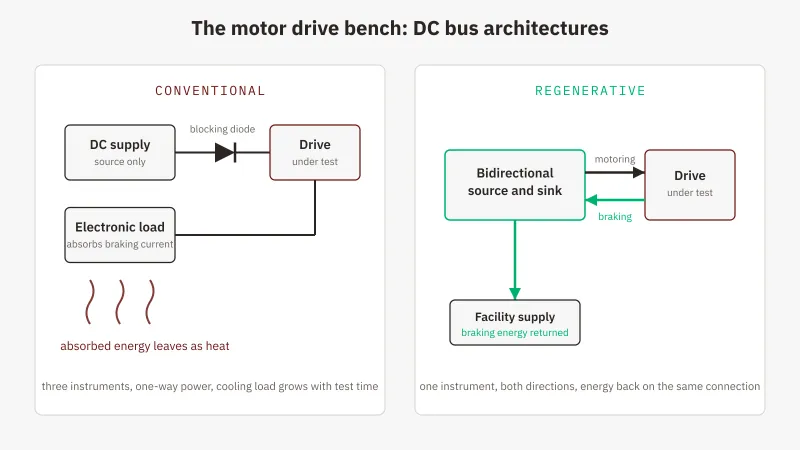
A traditional electronic load converts every absorbed watt into heat. At a few hundred watts that is a non-issue, a heatsink and a fan handle it, and the electricity bill is invisible inside the lab’s overhead. Above a few kilowatts the picture changes: the load now generates the thermal equivalent of multiple space heaters running continuously, and the electricity it consumes goes nowhere except into the air-conditioning system that has to remove it.
For battery cycling, EV charger validation, solar-inverter qualification, and grid-tied energy-storage testing, workloads that run for hours or days at full rated power, the dissipative model becomes the dominant operating cost of the test station, not a rounding error.
How Regenerative Loading Works
A regenerative electronic load absorbs DC power from the device under test, converts it to AC synchronised with the facility’s mains, and injects it back into the local electrical grid. Instead of being dissipated as heat, the absorbed power is consumed by other loads on the same distribution, lighting, HVAC, neighbouring test stations, the rest of the building.
The architecture is the same as a grid-tied solar inverter, with the energy source being the DUT instead of a PV string. The instrument enforces grid synchronisation, anti-islanding behaviour, and harmonic-content limits the same way a PV inverter does.
Some regenerative platforms also support a closed-loop or “energy-circulating” configuration, the regenerated AC feeds a companion source that drives the DUT, so the only grid-side draw is the conversion losses. This option matters in facilities where utility regulations restrict net energy injection.
When Regenerative Economics Turn Favourable
Regenerative platforms cost more than equivalently-rated dissipative loads, and the per-station sizing method that decides whether the premium pays back, power level, duty cycle and your industrial tariff worked against the actual workload, is covered in regenerative electronic load vs traditional. On top of that arithmetic sits the facility view: regenerative loading reduces the thermal envelope per station, so the same floor area supports more parallel test fixtures without an HVAC upgrade. The right way to size a buying decision is to compute the numbers for the actual workload, not to assume regenerative is always better, and not to assume it is only ever a niche choice. Both extremes are wrong.
What Is Driving Demand in India
EV programmes. Battery-pack qualification under AIS 156 and AIS 038, motor-controller validation, on-board charger testing, and DC fast-charger certification all sit in the kW-to-tens-of-kW band where regenerative becomes attractive. Indian EV development is concentrated around Bengaluru, Pune, Chennai, and Hyderabad, and most new high-power test infrastructure being built in those locations is regenerative by default.
Solar inverter manufacturing. Production test stations that load inverters at rated power for certification and quality testing run continuously enough that regenerative loading meaningfully changes the unit economics of the line.
Power-supply burn-in. SMPS, battery-charger, and LED-driver burn-in racks run for tens of hours per board. Recovering most of the absorbed energy and avoiding the matching cooling load both contribute.
Sustainability and CSR reporting. Larger Indian corporations and public-sector buyers increasingly ask suppliers to demonstrate energy-efficient manufacturing and testing. Regenerative test infrastructure is one of the line items that contributes here.
GW Instek’s Regenerative Platform
GW Instek’s regenerative offering is the RBS Series, a bidirectional DC source-and-sink available in 5 kW to 30 kW chassis with voltage options from 100 V to 2250 V and current to 510 A. It includes built-in EN50530 and Sandia PV simulation on models rated 500 V and above, eight battery chemistry models plus a user-defined slot, and supports static and dynamic MPPT tests including cloud-shading and cloud-movement irradiance profiles.
For workloads where regenerative does not pay back, bench-scale loading, fuse and breaker trip testing, AC rectifier load simulation, intermittent characterisation, GW Instek’s dissipative loads cover the rest of the portfolio: the PEL-5000G for high-power DC, and the AEL-5000 for AC/DC programmable loading.
Buying GW Instek Loads and Sources in India
GSAS Micro Systems is an authorized partner in India and supplies the full electronic-load and bidirectional-source portfolio with INR invoicing, model selection guidance, and post-sales calibration support from offices in Bengaluru, Hyderabad, Chennai, Pune, Mumbai, and Delhi NCR.
Also appears in:
Interested in GW Instek tools?
Talk to our application engineers for personalized tool recommendations.
More from GW Instek
View all →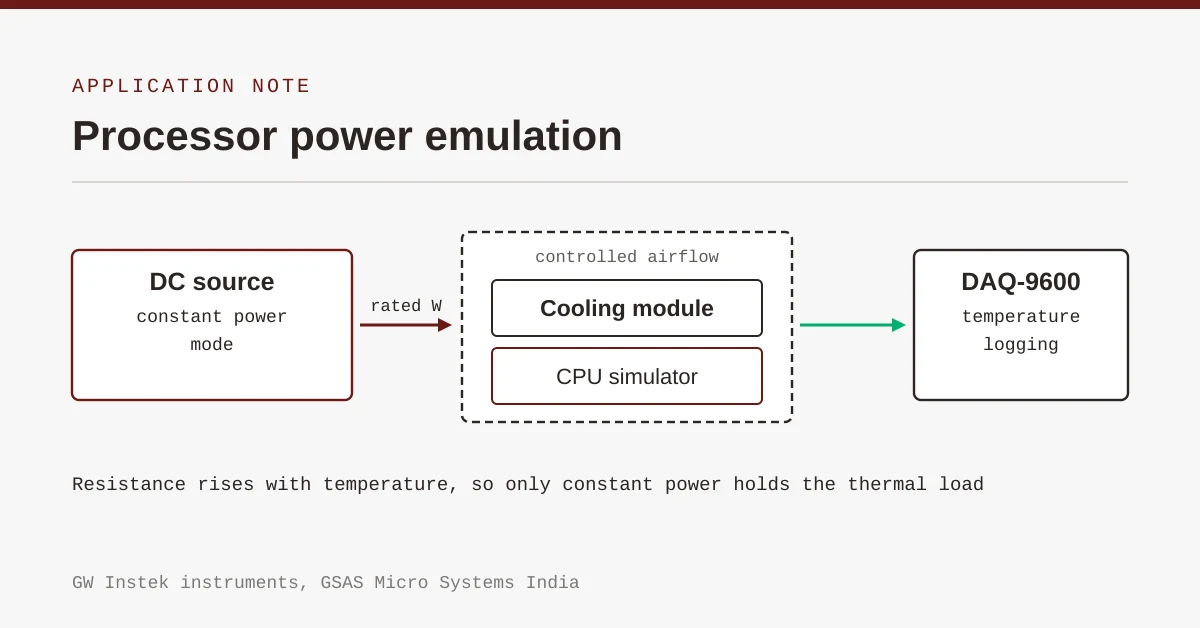
Emulating Processor Power for Thermal Testing: Why Constant Power
7 Oct · 7 min
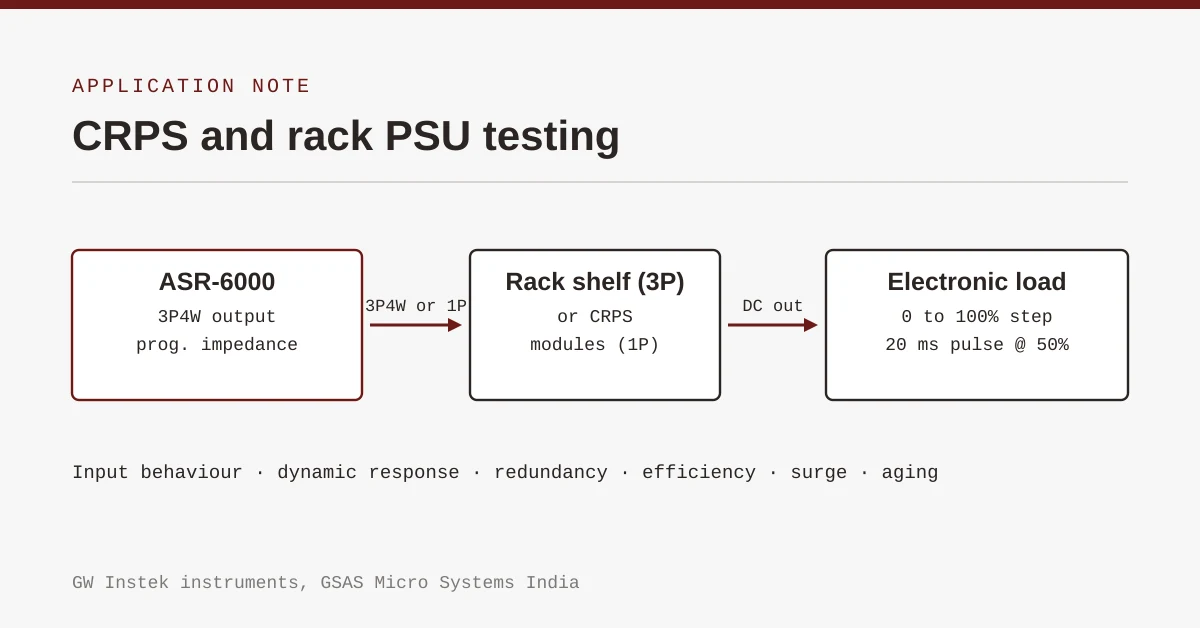
CRPS and Rack Power Supply Testing: The Six Tests That Matter
7 Oct · 7 min
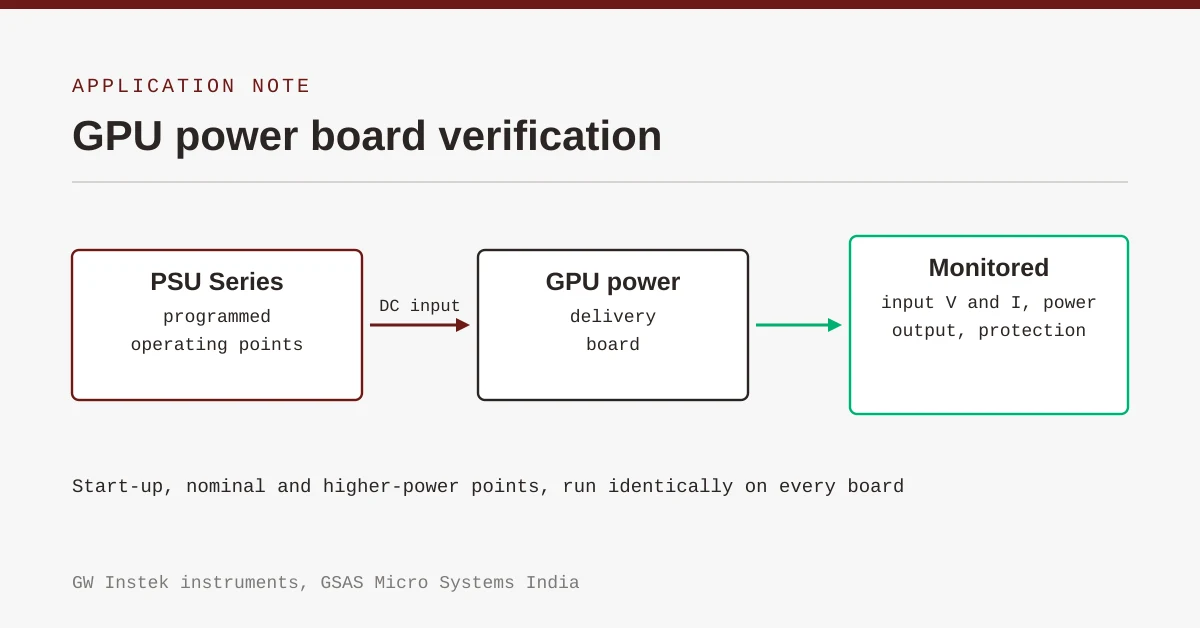
GPU Power Board Testing: DC Input Verification Before Integration
7 Oct · 6 min
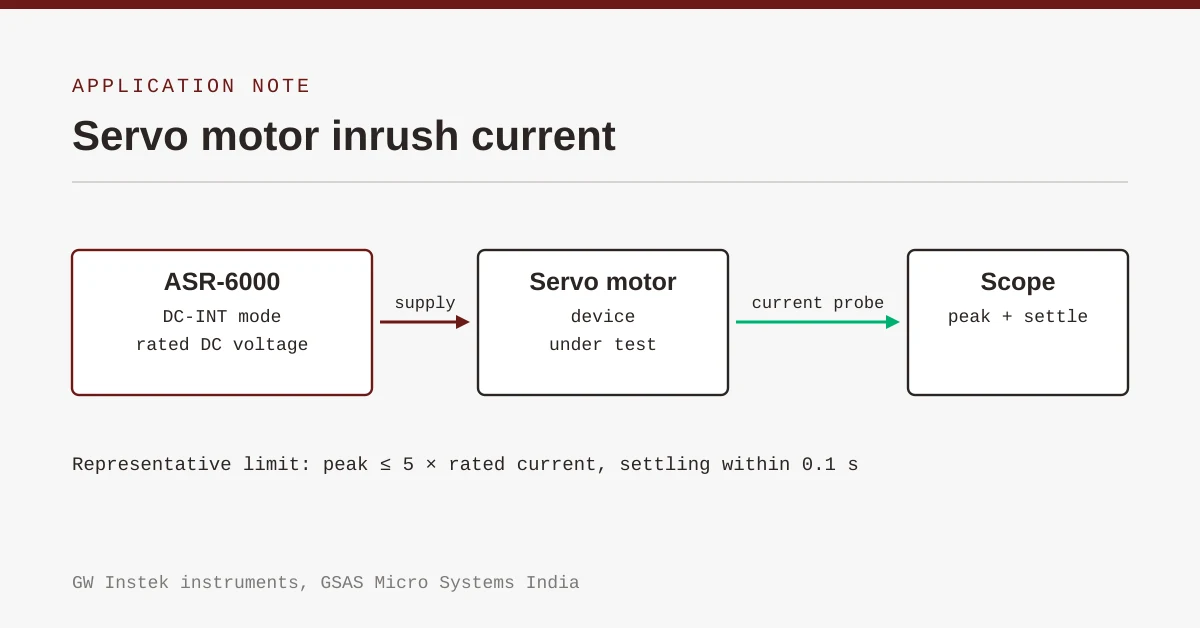
Servo Motor Inrush Current Testing: Method, Limits and Bench
7 Oct · 6 min

SuperTest Van Gogh 6.0: C23, C++23 and the C++20 Modules Gap
6 Oct · 7 min
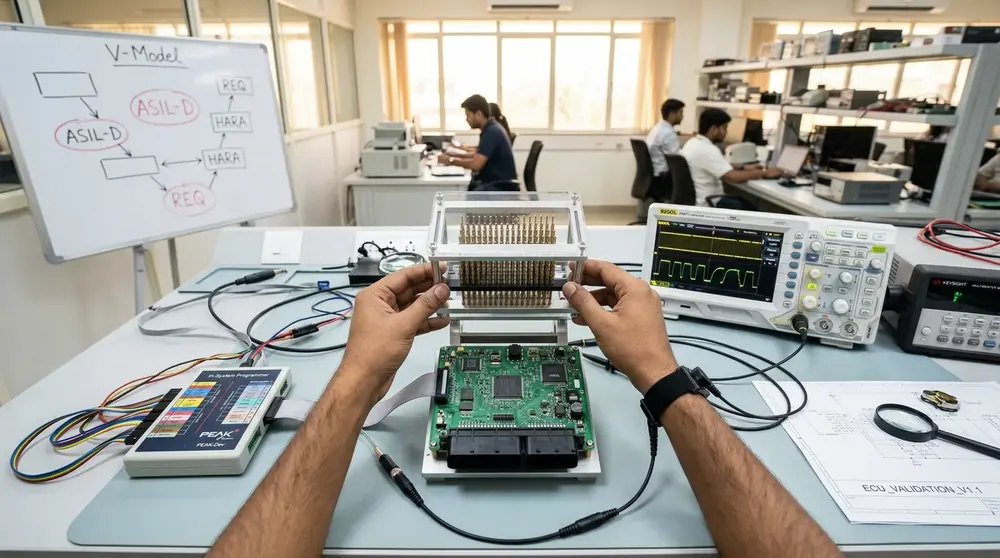
AI Inside the Engineering Process: What Is Worth Automating, and What Still Needs an Engineer
21 Sept · 11 min