
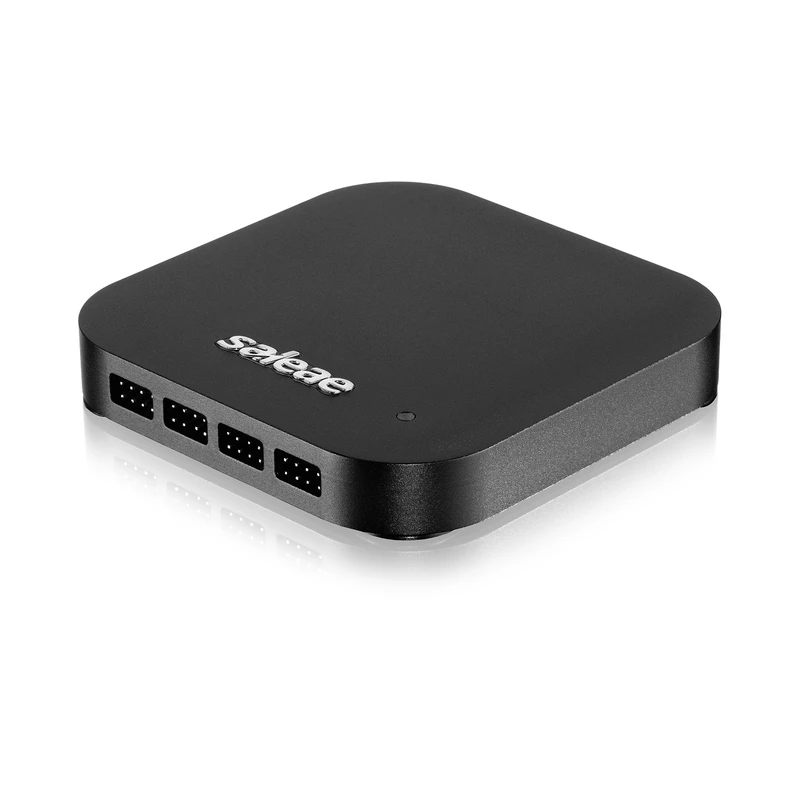
Most Indian embedded teams already know they want a Saleae Logic. The question that hangs in the procurement email is which one, and the answer is almost always less obvious than the spec table suggests. We sit on enough of these decisions every quarter at GSAS to know where the real fault lines run.
This is a short, opinionated guide to the three current Saleae Logic SKUs, Logic 8, Logic Pro 8, and Logic Pro 16. All three ship today on saleae.com; nothing here is end-of-life. The new Logic MSO line is a separate product class (mixed-signal oscilloscope, not logic analyzer) and gets its own buying guide.
The spec table you actually care about
| Logic 8 | Logic Pro 8 | Logic Pro 16 | |
|---|---|---|---|
| Digital channels | 8 | 8 | 16 |
| Analog channels | 8 (shared) | 8 (shared) | 16 (shared) |
| Max digital sample rate | 100 MS/s | 500 MS/s | 500 MS/s |
| Max analog sample rate | 10 MS/s | 50 MS/s | 50 MS/s |
| Digital bandwidth | 25 MHz | 100 MHz | 100 MHz |
| Analog bandwidth (−3 dB) | 1 MHz | 5 MHz | 5 MHz |
| ADC resolution | 10-bit | 12-bit | 12-bit |
| Logic threshold | Fixed +1.2 V / +0.6 V | Selectable +0.6 / +0.9 / +1.65 V | Selectable +0.6 / +0.9 / +1.65 V |
| Input range (operating) | 0 V to +5 V | −10 V to +10 V | −10 V to +10 V |
| Host interface | USB 2.0 HS | USB 3.0 SuperSpeed | USB 3.0 SuperSpeed |
| Protocol decoders | 23 built-in + 50+ community (Logic 2) | Same | Same |
| Step-up option | - | - | Logic MSO 2×100 / 4×100 / 4×200 for analog precision |
Specs from the official Saleae datasheets at downloads.saleae.com. Logic 8 and Logic Pro 8 datasheets carry a 2018 revision; Logic Pro 16 was refreshed in 2026 and the Logic MSO datasheet ships alongside the new MSO line. The 23 built-in analyzer count is from the Saleae supported-protocols support page; the 50+ community analyzers are shared through the Logic 2 Marketplace, not bundled on the datasheet.
The four decisions that actually matter
1. Channel count is not about how many signals you have. It’s about how many you want to see at once.
Every team we work with does the same arithmetic the first time: count the signals on the board, pick the SKU that covers them. That logic is wrong. Logic 8 will sample 64 signals if you’re willing to move probes between captures. The real question is how many do you need to see on the same timebase to debug the bug you’re chasing?
For a single I²C bus with a reset line and an interrupt, three or four signals, Logic 8 is fine. For a board where the SPI chip-select, the SPI bus, the reset, the rail-good signal, and three GPIOs all need to align in time to find the glitch, that’s seven or eight, and you’ve now eaten the entire Logic 8 in one capture. Logic Pro 16 starts to earn its price the moment you can’t get the bug to repeat predictably and you need to capture everything at once.
A useful rule for Indian Tier-1 ECU teams and SoC bring-up groups: if you’ve ever found yourself wishing the analyzer had two more channels, you’re going to wish it again next week.
2. The 500 MS/s vs 100 MS/s gap matters less than it looks for most digital protocols, and a lot more than it looks for the analog side.
Both Pro SKUs sample digital at 500 MS/s; Logic 8 caps at 100 MS/s. For everyday I²C (up to 400 kHz), SPI (typically up to 10 MHz on most embedded boards), UART, CAN at 1 Mbit/s, LIN, SMBus, 100 MS/s is more than enough to capture clean edges. The Nyquist math is not where Logic 8 falls down.
Where the sample-rate gap matters is the analog side. Logic 8 samples analog at 10 MS/s at 10-bit; the Pro variants sample at 50 MS/s at 12-bit. If you’re looking at a rail under load and trying to see ripple, droop, or a brownout glitch, the difference between 10 MS/s 10-bit and 50 MS/s 12-bit shows up immediately. The Pro variants make Saleae a credible low-frequency mixed-signal tool for rail debug. Logic 8 doesn’t really.
3. Selectable thresholds are the boring spec that quietly decides whether the analyzer works on your board at all.
Logic 8’s threshold is fixed at +1.2 V (VIH) / +0.6 V (VIL). That works for 3.3 V CMOS, 5 V TTL, and most things in between. Where it fails: 1.8 V signaling on modern SoCs (the rail is at 1.8 V, the high level is around 1.2 V, right at the edge of the fixed threshold), 1.2 V LPDDR-class signaling on test points, and any time you’re working with a part that runs below 1.8 V logic levels.
The Pro variants give you three selectable thresholds, +0.6 V, +0.9 V, or +1.65 V, covering 1.2 V signaling cleanly and giving margin on 1.8 V and 3.3 V too. For semiconductor design houses and any team working with current-generation Arm Cortex-M parts, the selectable threshold is the spec that determines whether you actually capture clean transitions on your board, not the sample rate.
4. The operating input range matters more for protected debug than people admit.
Logic 8 takes 0 V to +5 V on its inputs (absolute max −25 V to +25 V, Saleae’s protection is good). The Pro variants take −10 V to +10 V operating. For most low-voltage embedded work this is academic. For automotive bring-up where you might end up accidentally probing a 12 V rail thinking it’s the reset line, the Pro variants survive without doing anything; Logic 8 will run outside operating range and your protection diodes will earn their lunch. Logic 8s probed onto an unexpected 12 V rail are a more common RMA than Logic Pros, where the wider input range absorbs the same accident.
So which one?
Logic 8: when the design is a hobbyist project, an educational kit, an Arduino-class STM32 board, or a starter analyzer for a junior engineer who’ll grow into something bigger. Or when you want every engineer on the team to have one in their kit, and you’re buying ten. 8 channels, 25 MHz digital bandwidth, fixed threshold, USB 2.0. Bestseller for a reason.
Logic Pro 8: when you’re doing serious mixed-signal work on a board with 8 or fewer signals worth probing simultaneously, and the design uses modern SoC voltage rails (1.8 V or 1.2 V) where the fixed Logic 8 threshold falls down. 12-bit analog at 50 MS/s, selectable thresholds, USB 3.0. The right pick for sensor module bring-up and protocol-stack debug on most Arm Cortex-M parts.
Logic Pro 16: when the board is a multi-rail, multi-bus design where you genuinely need to capture more than 8 signals on the same trigger to find the bug. ECU bring-up, SoC validation, BMS state-machine debug. 16 channels, the same 12-bit / 50 MS/s analog and selectable thresholds as Pro 8. The flagship of the Logic family, and the default for any team that’s outgrown 8 channels even once.
The honest counter-argument
Saleae also sells the new Logic MSO line, a USB mixed-signal oscilloscope with 100 MHz to 200 MHz analog bandwidth, 1 GS/s to 1.6 GS/s, 12-bit Pro variants with 1 billion sample points of memory per channel. If your debug is really about analog precision and longer captures more than channel count, an MSO 2×100 or MSO 4×200 may be the right tool, not a Logic. We sell both; the right answer is a 30-minute conversation with a GSAS field application engineer, not a checklist.
What GSAS does
If you’re picking between Logic 8, Pro 8, and Pro 16, or against an MSO, a GSAS FAE will come to your bench in Bengaluru, Hyderabad, Chennai, Pune, Mumbai, or Delhi NCR and capture your live signal on the candidates before you commit a purchase order. You see the decode running on your hardware, not on a slide. We don’t bill pre-sales engineering.
Request a Quote for India pricing and lead time, or Contact us for a bench visit. Or read our GSAS Saleae engineering partner page for the full SKU lineup, the Logic MSO line, and our Python automation / HLA development practice.
Also appears in:
Interested in Saleae tools?
Talk to our application engineers for personalized tool recommendations.
More from Saleae
View all →
Saleae Logic MSO: Standard or Pro? The India Buying Decision
17 Jul · 6 min
Best Logic Analyzer in India (2026): A Vendor-Neutral Buying Guide for Embedded Teams
5 Jun · 10 min
AI Data Centers in India: Test, Measurement & Memory Boom
4 Jun · 14 min
Logic Analyzer vs Oscilloscope vs MSO: When You Actually Need Analog Channels (Saleae Logic MSO)
4 Jun · 10 min
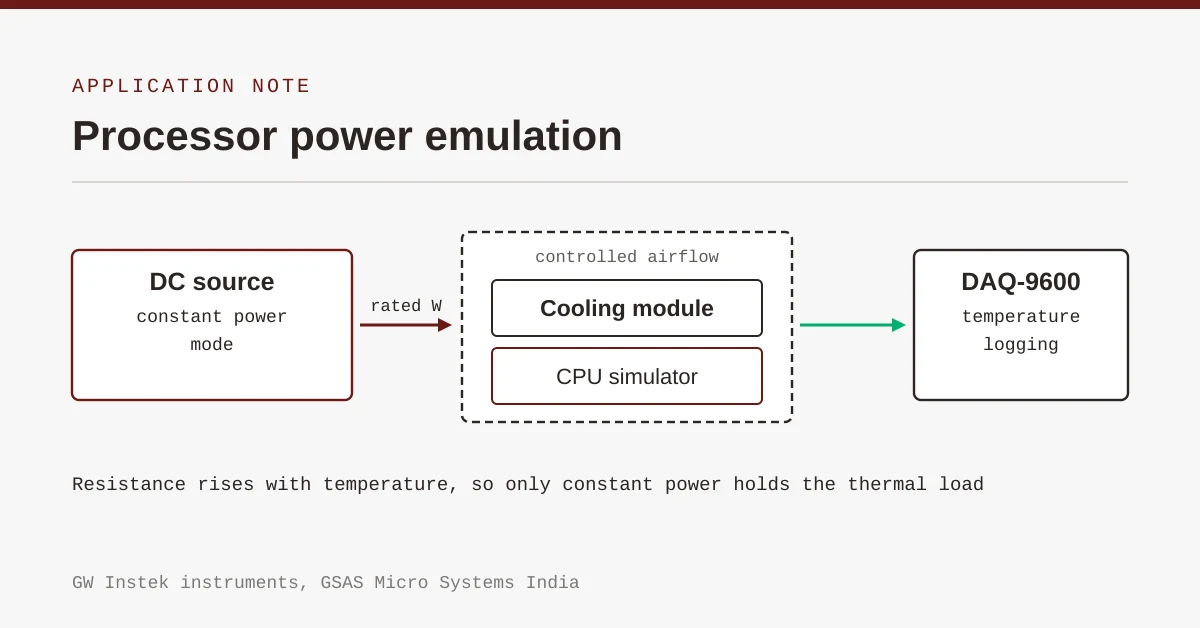
Emulating Processor Power for Thermal Testing: Why Constant Power
7 Oct · 7 min
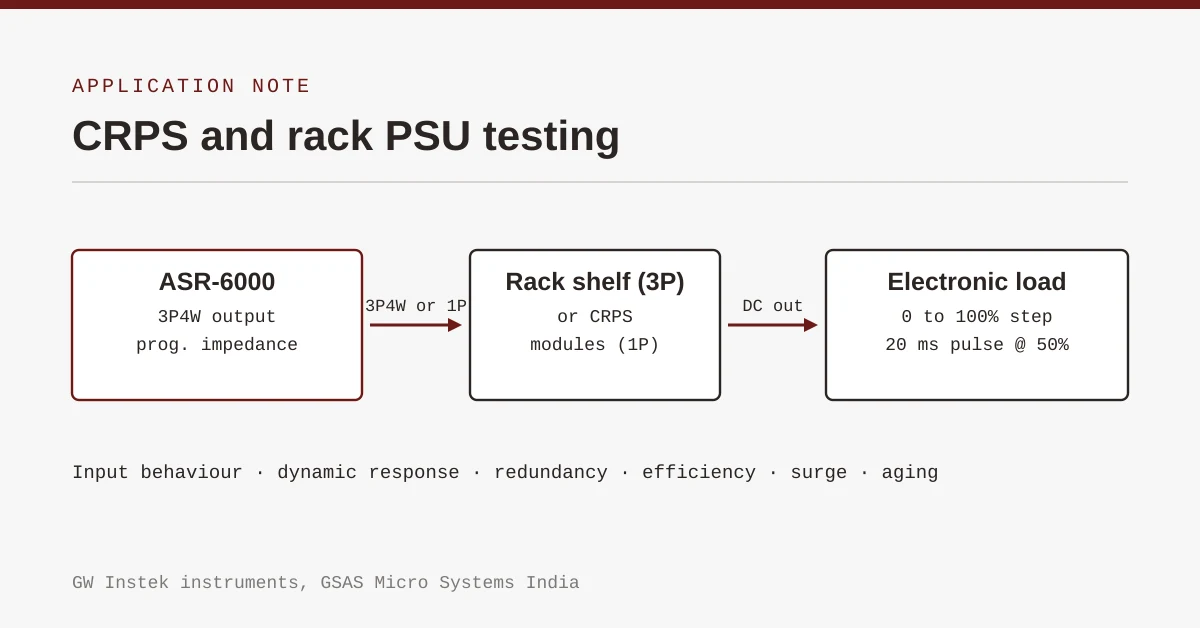
CRPS and Rack Power Supply Testing: The Six Tests That Matter
7 Oct · 7 min