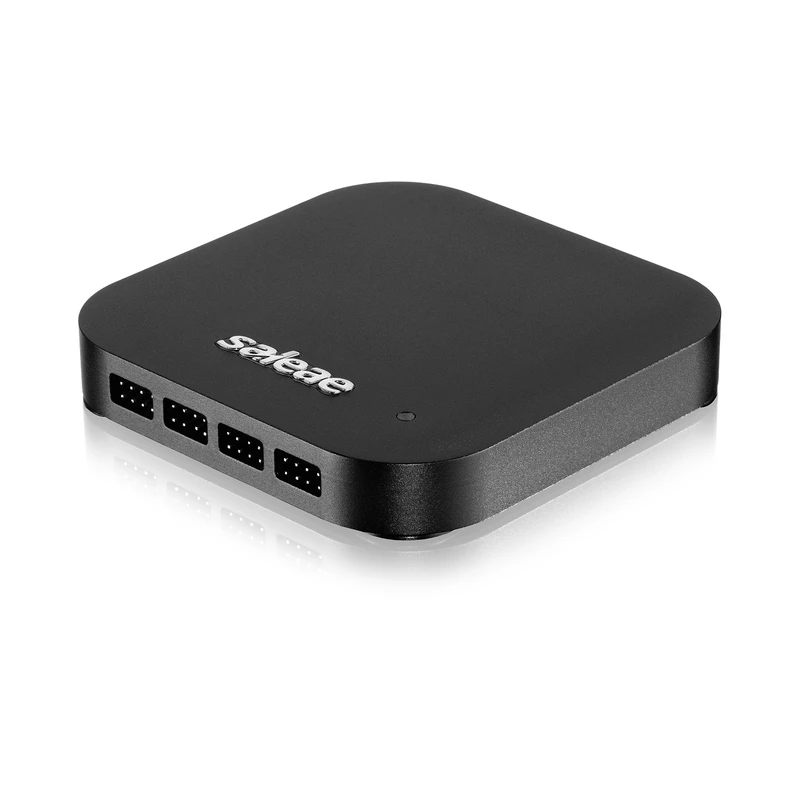
Every Indian embedded team has had this conversation. An engineer needs to look at an I²C bus, opens a marketplace tab, and finds a ₹500 blue board that says “24MHz 8 Channel USB Logic Analyzer”, and right next to it, a genuine Saleae Logic 8 at many times the price. Both claim to do the same thing. Both decode SPI, I²C, and UART. The procurement question writes itself: why pay for the Saleae when the clone works?
We get this question at GSAS more than any other Saleae question, so this post answers it honestly. There is no fabricated benchmark here and no number you can’t check on saleae.com. The clone is not useless, for some jobs it is genuinely fine. The point of this guide is to tell you exactly which jobs, and exactly where the cheap board stops being a bargain and starts costing you debug days you’ll never get back.
What you’re actually comparing
When Indian engineers search “saleae vs cheap logic analyzer”, they’re usually weighing four kinds of device:
- The ₹500–₹3,000 FX2 clone. The classic blue/black board built around a Cypress FX2LP chip, sold on Robu, Robocraze, and assorted marketplace listings as an “8-channel 24 MHz USB logic analyzer.” It runs on the open-source sigrok/PulseView stack (or a bundled copy of old Saleae software it was never licensed to use).
- Budget branded analyzers like DSLogic and innomaker’s LA2016, a real step up from the FX2 clone, with their own software and higher sample rates, sold in the mid price band.
- The genuine Saleae Logic family: Logic 8, Logic Pro 8, and Logic Pro 16, running Saleae’s own Logic 2 software.
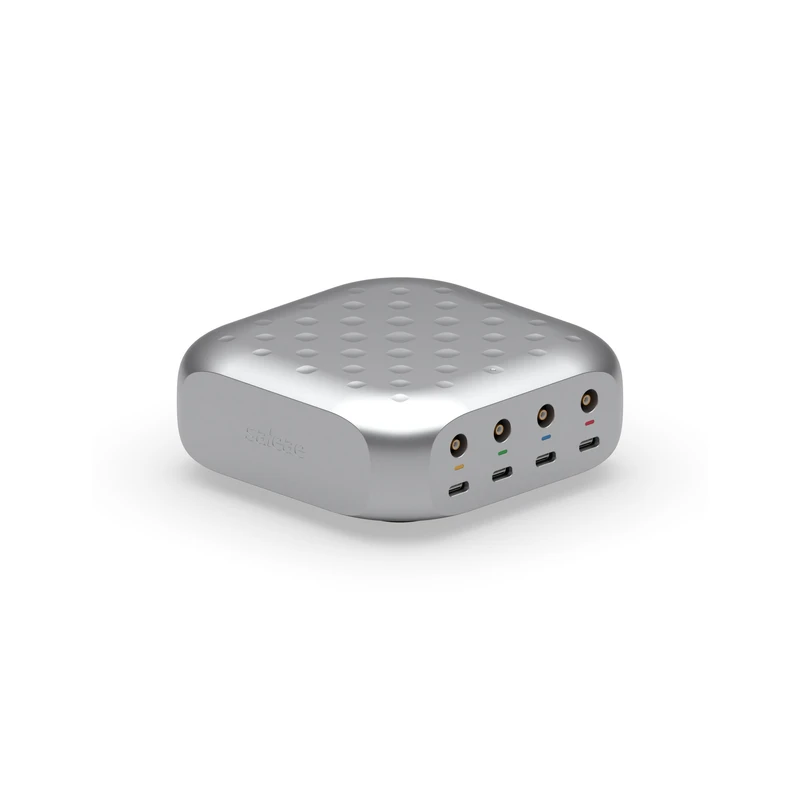
- The Saleae Logic MSO line (mixed-signal oscilloscopes) when analog precision matters more than channel count, a separate product class we cover in our Logic MSO guide.
This post focuses on the decision most POs actually hinge on: the genuine Saleae versus the cheap clone, with the budget branded analyzers as the honest middle ground.
Where the cheap clone is genuinely fine
Let’s be fair before we’re critical. If your need is:
- a single I²C bus at 100–400 kHz with a couple of GPIOs,
- a SPI flash read at a few MHz,
- a UART console you just want to sniff,
- a hobby project, a one-off bring-up, or teaching a student what a falling edge looks like,
…then a ₹500 FX2 clone running PulseView will decode it. The Nyquist math works out. For a student in a college lab or an engineer doing the occasional sanity check, the clone is a reasonable buy and we won’t pretend otherwise. If that’s your entire use case, you may not need a Saleae, and a GSAS engineer will tell you so. We’d rather you buy the right tool than the expensive one.
The trouble is that very few professional embedded teams stay inside that use case for long. The bug that pays for a real analyzer is never the one you planned for.
Where the cheap clone quietly costs you: six honest gaps
Here is where the genuine Saleae earns its price, point by point, with every spec verifiable on saleae.com.
1. Input protection: the gap that ends in a dead board
This is the difference that shows up as an RMA, not a spec-sheet footnote. The genuine Saleae Logic 8, Logic Pro 8, and Logic Pro 16 carry over-voltage protection rated for ±25 V on their inputs (per Saleae’s published electrical characteristics). That means the day an engineer probes what they thought was a reset line and it turns out to be a 12 V automotive rail, the Saleae shrugs.
A bare FX2 clone exposes the Cypress chip’s I/O pins through a header with little or no protection circuitry. The same accidental 12 V touch that a Saleae survives can quietly kill a clone, and because it was ₹500, nobody investigates; they just buy another one and lose a morning. For automotive ECU bring-up, BMS work, and power-electronics debug in India, exactly the work Tier-1 and EV teams do daily, input protection isn’t a luxury. It’s the reason the tool is still working next quarter.
2. 12-bit analog: the clone has no analog at all
The FX2 clone is digital-only. It sees ones and zeros and nothing in between. The genuine Saleae Logic family is mixed-signal: every channel is dual-purpose, so you can watch the protocol and the analog rail it rides on, on the same timebase.
The Pro models sample analog at 50 MS/s with 12-bit resolution; the entry Logic 8 samples analog at 10 MS/s, 10-bit. When your I²C transaction fails intermittently and the real cause is a rail drooping under load, a digital-only clone shows you a clean bus and a mystery. The Saleae shows you the droop. That single capability, seeing why a digital edge went wrong, not just that it did, is what separates a debug tool from a logic viewer. We unpack the analog side in depth in our mixed-signal MSO guide.
3. Selectable thresholds: works on a 1.8 V SoC, or doesn’t
Modern Arm Cortex-M and SoC designs increasingly run logic at 1.8 V, and some test points sit even lower. A fixed-threshold capture device guesses wrong on these rails and shows you noise.
The Saleae Logic Pro 8 and Logic Pro 16 offer three selectable thresholds, mapped to the rail you’re probing:
| Signaling | Saleae threshold |
|---|---|
| 1.2 V | 0.6 V |
| 1.8 V | 0.9 V |
| 3.3 V | 1.65 V |
(Saleae notes the threshold is uncalibrated and may vary up to ±15%, “more than accurate enough to record standard IO families,” in their words.) The entry Logic 8 uses a fixed threshold (0.6 V low / 1.2 V high), which covers 3.3 V CMOS and 5 V TTL cleanly but starts to struggle below 1.8 V. A typical FX2 clone is fixed at a single legacy logic level. On a current-generation low-voltage board, selectable thresholds decide whether you capture clean transitions at all, see our deeper treatment in the Saleae Logic buying guide.
4. USB streaming depth: capturing the bug that happens once an hour
The FX2 clone’s architecture limits you to short buffered captures. The genuine Saleae continuously streams data to the PC over USB for long-duration captures, the Pro models over USB 3.0 SuperSpeed, the Logic 8 over USB 2.0, so you can leave a capture running and catch the intermittent fault that fires once an hour.
This is the difference between “I think I saw the glitch” and “here is the glitch, time-stamped, with the analog rail underneath it.” For long soak tests, field-failure reproduction, and the genuinely hard bugs, the ones worth a senior engineer’s week, streaming depth is the feature that finds them.
5. Logic 2 software: 23 built-in analyzers, 50+ community, free forever
The clone’s software is its weakest link: PulseView is capable but rough, and the bundled “Saleae software” some clones ship is an unlicensed old build that breaks on modern OS versions.
The genuine article runs Logic 2: free, on Windows, Mac, and Linux, the same binary. It ships with 23 built-in protocol analyzers (SPI, I²C, Serial/UART, CAN, and more) and adds 50+ community-shared analyzers through the in-app Logic 2 Marketplace, covering the long tail (CAN-FD, I3C, SD/MMC, and dozens more). When nothing fits, you write your own application-layer decoder in Python with the High-Level Analyzer (HLA) framework, covered hands-on in our HLA and custom decoders guide and our I²C/SPI/UART decode walkthrough. The software is not a free bonus; for most teams it is the reason to buy Saleae.
6. Python automation: your CI rack survives the engineer who built it
Saleae’s Logic 2 Automation API drives capture, decode, export, and .sal diff against a known-good baseline, all from a Python script. That turns the analyzer from a manual bench instrument into a node on your hardware-in-the-loop CI/CD rack: a nightly regression that runs unattended on a bench Raspberry Pi or x86 mini-PC. We document the full workflow in our Python automation with GitHub Actions guide.
A clone has no comparable scriptable interface. For Indian product teams building automated test infrastructure that has to outlive any single engineer, this alone justifies the genuine tool.
The number that changes the math: warranty and returns
Here is the spec that procurement teams in India consistently overlook. Every genuine Saleae carries a 3-year warranty and a 180-day return policy: full refund, no questions asked, including return shipping (per Saleae’s published returns and warranty policy). If you buy the wrong model, you have six months to swap it. If it fails, it’s covered for three years.
A clone has no meaningful warranty and no return path. When it dies, and the unprotected ones do, that money is simply gone. Run the math over a three-year horizon for a team of engineers, and the “expensive” tool stops looking expensive. A clone you replace three times is not cheaper than a Saleae you keep.
Genuine vs clone: the honest scorecard
| What you’re checking | ₹500 FX2 clone | Genuine Saleae Logic |
|---|---|---|
| Decodes everyday I²C / SPI / UART | Yes | Yes |
| Analog channels (mixed-signal) | No | Yes, 12-bit on Pro models |
| Input over-voltage protection | Minimal / none | ±25 V rated |
| Selectable thresholds for 1.8 V rails | No (fixed) | Yes (Pro 8 / Pro 16) |
| Long continuous USB streaming captures | Limited | Yes (USB 3.0 on Pro) |
| Polished software (Logic 2) | PulseView / unlicensed builds | Logic 2, free, Win/Mac/Linux |
| Built-in protocol analyzers | Via sigrok | 23 built-in + 50+ community |
| Python automation / CI integration | No | Logic 2 Automation API |
| Warranty | None meaningful | 3-year |
| Returns | None | 180-day full refund |
| India bench pre-sales + RMA | None | GSAS, pan-India |
All Saleae figures verifiable on saleae.com. The clone column reflects the typical FX2-based board sold in the Indian market; specific listings vary.
So: is the genuine Saleae worth it for your team?
Buy the clone if you are a student, a hobbyist, or a professional whose entire need is occasional single-bus sniffing at low speed, with no analog requirement, no automation, and no high-stakes hardware on the bench.
Buy a genuine Saleae the moment any of these is true for your team:
- you work on boards with rails that can damage an unprotected input (automotive, EV/BMS, power),
- you need to see analog and digital together to find the real cause of a fault,
- your designs run 1.8 V or lower logic and you need selectable thresholds,
- you chase intermittent bugs that need long streaming captures,
- you’re building automated, scriptable test infrastructure,
- or you simply can’t afford to lose engineer-days to a tool that lies to you.
For most professional Indian embedded teams, semiconductor design houses, Tier-1 ECU and EV groups, medical-device labs, IoT product companies, the honest answer is that the Saleae pays for itself the first time it finds a bug a clone would have hidden.
Frequently asked questions
Is a genuine Saleae really worth it over a ₹500 clone in India?
For professional work, yes, and the deciding factors aren’t marketing. They’re measurable: ±25 V input protection, 12-bit mixed-signal analog, selectable thresholds for 1.8 V rails, USB streaming for long captures, the Logic 2 software with Python automation, and a 3-year warranty with 180-day returns. For a student doing occasional low-speed single-bus work with no analog need, the clone is a fair buy. GSAS will tell you honestly which camp you’re in.
Is the Saleae vs DSLogic vs innomaker decision different from the clone decision?
Yes. DSLogic and innomaker’s LA2016 are genuine branded products, not unlicensed clones, a real step up from FX2 boards. The Saleae differentiators against them are the mixed-signal 12-bit analog on the same channels, the maturity and cross-platform polish of Logic 2, the breadth of built-in plus community protocol analyzers, the Python Automation API for CI, and Saleae’s 3-year warranty and 180-day return policy. Where analog visibility, software, and automation matter, the genuine Saleae leads.
Will the cheap clone’s free PulseView software decode my protocol?
For common protocols (I²C, SPI, UART) PulseView via sigrok works. The gaps appear with newer or application-layer protocols, with reliability on current OS versions, and with no scriptable automation path. Saleae’s Logic 2 ships 23 built-in analyzers, 50+ community analyzers, and a Python HLA framework so you can write your own decoder, see our HLA guide.
What’s the real risk of using an unprotected clone on automotive or EV hardware?
A bare FX2 clone exposes its input pins with little protection. A momentary touch on a 12 V or higher rail can destroy it. A genuine Saleae is rated for ±25 V over-voltage protection, so the same accident is survivable. On automotive ECU, EV/BMS, and power-electronics benches in India, that protection is the single most under-appreciated reason teams standardise on genuine Saleae.
Does GSAS let me try a Saleae before I buy?
Yes. A GSAS field application engineer will bring the candidate models to your bench, in your city, and capture your live signal in Logic 2 so you see the decode running on your hardware before you raise a PO. We don’t bill pre-sales engineering. Request a quote or read the full lineup on our Saleae engineering partner page.
Why Indian teams buy genuine Saleae through GSAS
GSAS Micro Systems is an authorized engineering partner in India. Buying genuine through GSAS gets you more than a box: on-site protocol-decode pre-sales engineering, Python and HLA scripting support, GST-compliant invoicing, and India-side RMA coordination within Saleae’s 3-year warranty, none of which a marketplace clone listing can offer.
Before you commit a purchase order, a GSAS field application engineer can visit your bench in Bengaluru, Hyderabad, Chennai, Pune, Mumbai, or Delhi NCR and capture your live SPI, I²C, CAN, LIN, or async-serial traffic on the candidate model, so the decision is made on your hardware, not on a spec sheet. Request a quote for India pricing and lead time, contact us for a bench visit, or explore the complete Saleae lineup, Logic 8, Logic Pro 8, Logic Pro 16, on our Saleae engineering partner page.
Also appears in:
Interested in Saleae tools?
Talk to our application engineers for personalized tool recommendations.
More from Saleae
View all →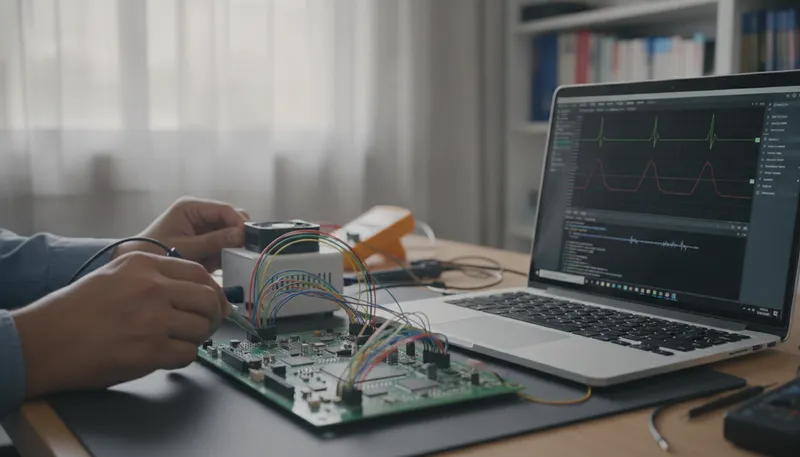
Saleae Logic MSO: Standard or Pro? The India Buying Decision
17 Jul · 6 min
Best Logic Analyzer in India (2026): A Vendor-Neutral Buying Guide for Embedded Teams
5 Jun · 10 min
AI Data Centers in India: Test, Measurement & Memory Boom
4 Jun · 14 min
Logic Analyzer vs Oscilloscope vs MSO: When You Actually Need Analog Channels (Saleae Logic MSO)
4 Jun · 10 min
Emulating Processor Power for Thermal Testing: Why Constant Power
7 Oct · 7 min
CRPS and Rack Power Supply Testing: The Six Tests That Matter
7 Oct · 7 min