There is a specific moment in every embedded debug session in India where the wrong instrument is sitting on the bench. The bus decodes cleanly on the logic analyzer, the firmware swears the rail is at 3.3 V, and the board still resets at random. The logic analyzer can’t see the analog brownout. The benchtop oscilloscope can’t decode the I²C transaction that triggered it. You need both, on one timebase, on one trigger, and that is the entire reason the mixed-signal oscilloscope (MSO) category exists.
This post is the decision before the buying decision. If you have already decided you want an MSO, read our Saleae Logic MSO, why the new mixed-signal line matters instead, which assumes you have chosen the category. This one is for the engineer or procurement lead still asking the upstream question: logic analyzer, oscilloscope, or MSO, and do I actually need analog channels at all?
GSAS Micro Systems is an authorized India engineering partner. The framework below is the one our field application engineers use on bench visits with embedded, semiconductor, and automotive teams across India, not a marketing checklist.
The one-line definitions, so the rest of the post makes sense
The three instruments overlap enough to confuse a first-time buyer, so here is the clean separation:
- A logic analyzer captures digital signals, high or low, many channels at once, and decodes them into protocol transactions (I²C reads, SPI frames, UART bytes, CAN messages). It does not measure voltage shape. A signal is a 1 or a 0 against a threshold.
- An oscilloscope captures the analog shape of a signal, voltage versus time, on a small number of channels (usually 2 or 4) at high bandwidth. It sees ripple, overshoot, rise time, brownout, ringing. It is poor at watching 16 digital lines at once or decoding a long protocol stream.
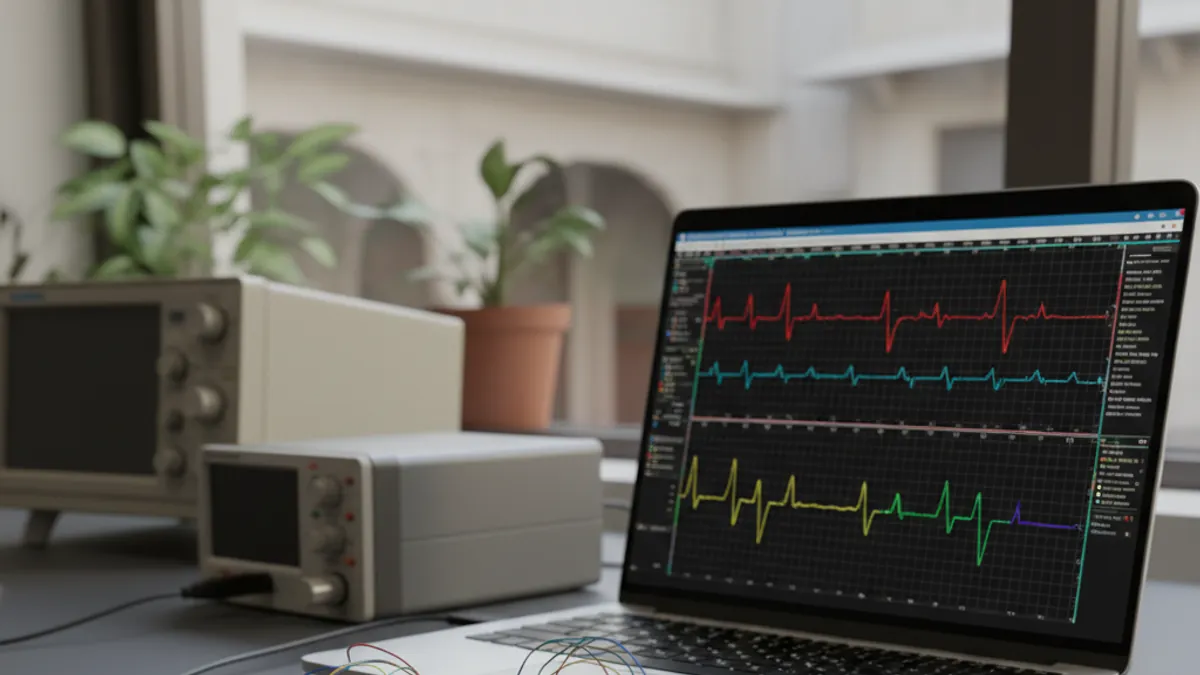
- A mixed-signal oscilloscope (MSO) does both in one instrument, on one timebase. Analog scope channels plus digital logic channels, captured together, triggered together, displayed together. When an analog event causes a digital fault, or vice versa, the MSO is the only tool that shows you both sides of the cause-and-effect on the same screen.
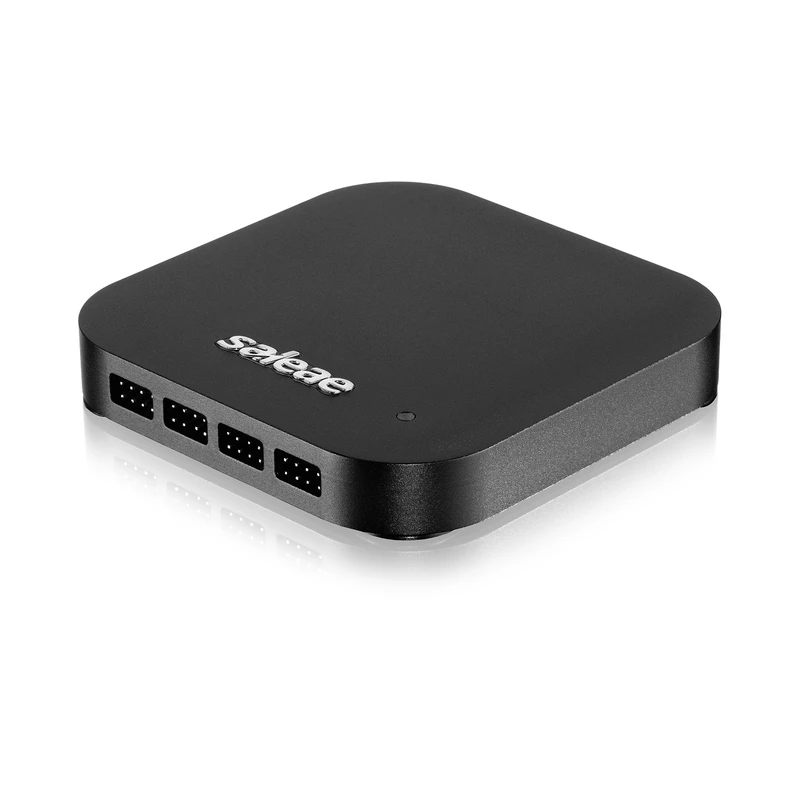
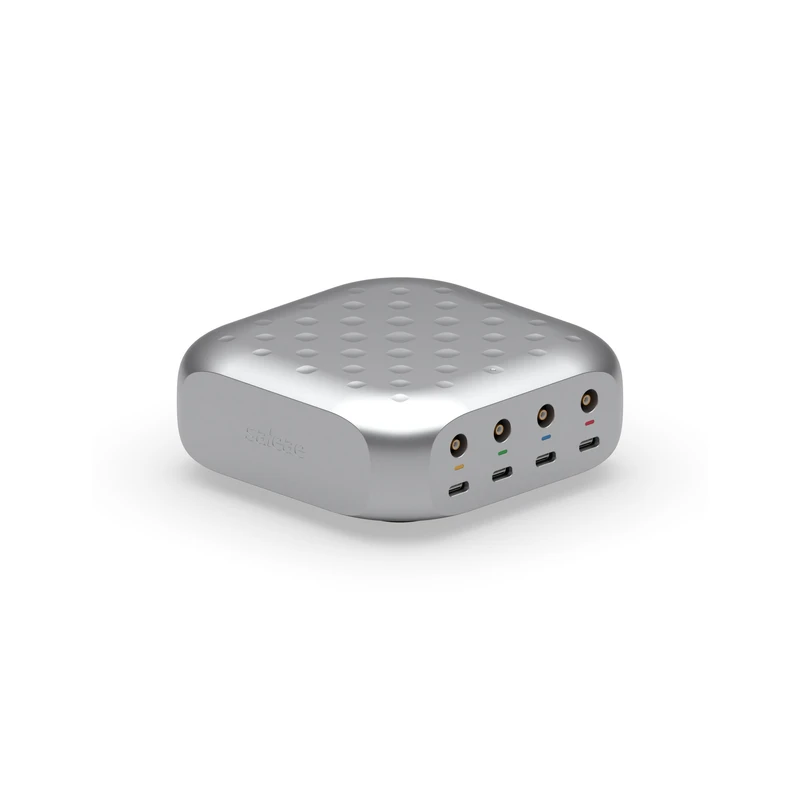
The Saleae line maps directly onto this: the Logic 8, Logic Pro 8, and Logic Pro 16 are USB logic analyzers (with a modest analog capability bolted on). The Logic MSO 2×100, Logic MSO 4×100, and Logic MSO 4×200 are true USB mixed-signal oscilloscopes.
The decision tree (read this if you read nothing else)
Three questions decide it, in order. Answer them top to bottom and you have your category.
Question 1, Is your bug digital-only? If you only need to decode what is on the bus, find the missing ACK, the corrupted SPI byte, the CAN arbitration loss, the UART framing error, and you do not care about the analog shape of the signal, you need a logic analyzer. Most protocol-level firmware bugs live here. Buy a Logic 8 / Logic Pro 8 / Logic Pro 16, not an MSO. You will spend less and lose nothing.
Question 2, Is your bug analog-only, and above ~5 MHz of analog content? If you are chasing ripple on a switching regulator, ringing on a high-speed edge, an eye diagram, RF, or any pure waveform-quality problem with no protocol decode involved, you need an oscilloscope at the right bandwidth. If the analog content sits above roughly 5 MHz, the small analog capability inside a Logic Pro will not be enough, you want a real scope, and that is either a benchtop scope or a Saleae Logic MSO (100–200 MHz analog).
Question 3, Does the bug live at the boundary between analog and digital? This is the MSO question, and it is the most common real-world bug on a modern board:
- The rail droops and then the bus glitches, and you need to see which caused which.
- The chip-select is timed correctly in logic but the analog edge is too slow and the slave misreads it.
- The reset releases electrically before the rail is in regulation, so the MCU boots into a brownout.
- Power sequencing across four rails has to be correct and the digital enable lines have to fire in the right order.
If you nodded at any of those, you need a mixed-signal oscilloscope: and you need analog channels. This is the moment the Saleae Logic MSO line earns its place on the bench.
”Do I actually need analog channels?”: the honest test
This is the question searchers actually type, and the honest answer is: most digital bugs do not need analog channels, and the bugs that waste the most time do.
You do not need analog channels when the failure is purely a protocol or timing issue you can see as 1s and 0s. A logic analyzer with selectable thresholds handles the entire category, and for Indian teams working on current-generation Arm Cortex-M parts with 1.8 V or 1.2 V GPIOs, the threshold flexibility matters more than analog capability for clean digital capture. (That is the Logic Pro 8 / Pro 16 selectable +0.6 V / +0.9 V / +1.65 V thresholds, see our Saleae Logic buying guide for that decision.)
You do need analog channels the moment the digital picture is correct but the board still misbehaves, because the cause is in the analog domain the logic analyzer cannot see. Brownout, slow edges, supply-rail droop under load, noisy resets, marginal signal integrity that pushes a 1 below threshold. A logic analyzer will tell you the signal “went low.” An MSO will tell you it sagged to 1.1 V on a 1.8 V rail and that is why it went low. That difference is hours, sometimes days.
A useful rule from the bench: if you have ever found yourself probing the same net first with the logic analyzer and then with the scope to correlate them by eye, you have already paid for an MSO in wasted time. The whole value of an MSO is that the correlation is automatic, one capture, one trigger, analog and digital aligned to the same sample clock.
The channel-count heuristic
The single most common mistake we see in procurement emails is counting the signals on the board instead of the signals you need to see at the same instant. They are different numbers, and the second one is the one you buy for.
Here is the heuristic, ordered by what the bench actually requires:
| What you need to see at one instant | Category | Saleae model that fits |
|---|---|---|
| 1 bus + a couple of control lines, digital only (3–8 signals) | Logic analyzer | Logic 8 |
| Modern-SoC digital, 1.8 V / 1.2 V rails, 8 signals, needs selectable thresholds | Logic analyzer (Pro) | Logic Pro 8 |
| Many correlated digital buses / parallel lanes, >8 signals on one trigger | Logic analyzer (Pro) | Logic Pro 16 |
| 1 analog rail + 1 analog signal + the digital bus, together | MSO | Logic MSO 2×100 |
| Up to 4 analog rails/signals + the digital bus (≤100 MHz analog) | MSO | Logic MSO 4×100 |
| 4 analog at 200 MHz (DDR margin, SerDes edges, fast switching) + digital | MSO | Logic MSO 4×200 |
The MSO pods are the only rows that give you real analog scope channels. All three MSO variants ship with 8 digital channels built in, expandable to 20 via additional Saleae Digital Probes (4 channels each, up to 5 probes), so moving from a Logic Pro 16 to an MSO does not cost you digital channel count in practice, it adds analog scope channels on top.
When 4 analog channels beat a benchtop scope (the part procurement asks about)
This is the comparison that decides real purchase orders in India: a Saleae Logic MSO 4×100 or 4×200 versus the default reflex of buying a 4-channel benchtop mixed-domain oscilloscope (a Tektronix MDO, Rigol MSO5000-class, GW Instek GDS, or Keysight DSOX), instruments that typically sit in the ₹50,000 to ₹3,00,000-plus band depending on bandwidth and brand, plus a separate USB logic analyzer for serious protocol decode.
The MSO 4×200 collapses that two-instrument bench into one USB pod that runs Saleae’s Logic 2 software. Four real analog channels at 200 MHz, 1.6 GS/s analog sampling, with the same protocol decoder stack, 23 built-in analyzers plus 50+ community-shared decoders via the Logic 2 Marketplace, and digital channels every Saleae Logic device has, one screen, one capture, one timebase, one trigger, analog and digital correlated automatically.
The MSO wins on:
- Workflow correlation: analog and digital in one capture with one trigger, instead of two instruments whose software does not talk to each other.
- Protocol decode depth: Logic 2’s 23 built-in plus 50+ community analyzers, HLA framework, and
.salcapture files are a software stack a benchtop scope’s bolt-on bus decode does not match. - Python automation: Saleae ships a Python Automation API for the MSO line. The Logic 2 Automation API drives capture, decode, export, and known-good
.saldiff from a script, the same interface across the whole Saleae line, ideal for an unattended CI/CD bench. See our Saleae Python automation for CI/CD post. - Deep memory: the Pro variant of each MSO holds 1 billion sample points per channel and streams over USB 3.0, which is how you trap a 10-second-rare fault that a shallow-memory benchtop scope misses.
- Form factor and cost: a pod that runs from a laptop, ships with 10:1 passive scope probes, and gives every engineer a portable mixed-signal bench instead of one shared benchtop instrument.
The benchtop scope still wins, and this is where you should not substitute an MSO, when you need:
- Analog content above 200 MHz: RF, high-speed serial above the MSO’s analog bandwidth. Buy the higher-bandwidth dedicated scope.
- Calibrated, vendor-certified measurement traceability for compliance-grade work.
- A physical knob-and-button interface required by some compliance and automotive certification environments.
- No host PC available at the point of measurement.
For everyday embedded debug under 200 MHz of analog content, which is the majority of bring-up, power-sequencing, and protocol work in Indian product teams, four real analog channels in an MSO 4×200, paired with deep memory and Logic 2’s decode stack, do beat the reflex purchase of a benchtop scope plus a separate analyzer.
A worked example: the random-reset bug
To make the abstract concrete, here is the textbook case the MSO is built for, the kind that lands on benches in Bengaluru and Pune every week.
A 4-rail industrial-control board resets intermittently under load. The firmware logs nothing useful. On a logic analyzer alone, the reset line “goes low”, true, but useless. You cannot see why. On a benchtop scope alone, you can watch one rail droop, but you cannot decode the SPI transaction to the power-management IC that commanded the droop, and you cannot correlate the reset assertion to the bus traffic on the same trigger.
On a Logic MSO 4×100: four analog channels on the 12 V, 5 V, 3.3 V, and 1.8 V rails; eight digital channels on the reset line, the watchdog, and the SPI bus to the PMIC. One capture. You trigger on the reset edge, scroll back, and watch the 3.3 V rail sag to 2.9 V a few microseconds before the reset, and the SPI write that reconfigured the regulator current limit, decoded inline, immediately before that. Cause, mechanism, and effect, on one screen. That capture is the difference between solving the bug in an afternoon and chasing it for a week.
FAQ
Is a logic analyzer the same as an oscilloscope?
No. A logic analyzer captures many digital channels and decodes protocols but reads each signal only as a 1 or 0 against a threshold, it does not show the analog voltage shape. An oscilloscope captures the analog waveform (voltage versus time) on a few channels at high bandwidth but is poor at watching many digital lines or decoding long protocol streams. An MSO combines both.
When do I actually need an MSO instead of a logic analyzer?
When your bug lives at the boundary between analog and digital, a rail that droops and causes a bus glitch, a slow analog edge that a slave misreads, a reset that releases before the rail is in regulation. If the digital decode looks correct but the board still misbehaves, the cause is usually in the analog domain a logic analyzer cannot see. That is the MSO case.
Does the Saleae Logic Pro 16 already have analog channels: why would I need an MSO?
The Logic Pro 16 has analog capability on its inputs (12-bit, up to 50 MS/s, ~5 MHz analog bandwidth) which is enough for low-frequency rail debug. It is not a substitute for a real oscilloscope. When you need 100–200 MHz analog bandwidth, deep capture memory, and 10:1 scope probes, you need the Logic MSO line, not the Pro 16. The buying guide that separates these is our Saleae Logic analyzer comparison.
Can a Saleae Logic MSO replace my benchtop oscilloscope?
For embedded debug with analog content up to 200 MHz, generally yes, and it adds protocol decode, Python automation, and a portable form factor a benchtop scope does not have. It does not replace higher-bandwidth scopes (RF, fast SerDes above 200 MHz), compliance-grade calibrated measurement, or workflows that require a physical knob-and-button instrument with no host PC.
How many analog and digital channels do the Saleae MSO pods have?
The MSO 2×100 has 2 analog channels. The MSO 4×100 and MSO 4×200 have 4 analog channels. All three ship with 8 digital channels built in, expandable to 20 via additional Digital Probes. Analog bandwidth is 100 MHz on the 2×100 and 4×100, and 200 MHz on the 4×200.
What’s the difference between MSO Standard and Pro?
Same hardware on every pod, the Pro variant is a firmware/licence unlock that raises analog vertical resolution from 9-bit to 12-bit and deepens capture memory (up to 1 billion sample points per channel on the 4×200 Pro). Standard for routine debug. Pro for long-duration captures, DDR margin work, and traceable safety-critical evidence. You can upgrade Standard to Pro on the same hardware later, ask GSAS for the licence.
How to choose with GSAS: in India
The decision tree narrows it to a category. The bench confirms the model. GSAS is an authorized India engineering partner, and our pre-sales engineering is not billed. A GSAS field application engineer will come to your bench in Bengaluru, Hyderabad, Chennai, Pune, Mumbai, or Delhi NCR and capture your live signal on the candidate instruments, logic analyzer, MSO, or both, so you see the analog reconstruction and the protocol decode running on your hardware before you commit a purchase order, not on a slide.
We quote and ship the full Saleae line through standard Indian procurement frameworks, direct PO, GeM, SAP Ariba, Coupa, and TReDS, with INR pricing, GST invoicing for input tax credit, and India-side RMA. For pricing context, see our Saleae Logic India pricing and buyer’s guide. To start, Request a Quote with the model name and quantity, or Contact GSAS for a bench visit.
Related reading
- Saleae Logic MSO in India, why the new mixed-signal line matters: the next step once you have chosen MSO: variant-by-variant selection
- Saleae Logic Pro 16 vs Logic Pro 8 vs Logic 8, picking the right analyzer: if the decision tree pointed you to a logic analyzer
- Saleae Logic in India, buyer’s guide and pricing: procurement routes, GST, and INR bands
- Decoding I²C, SPI, and UART with Saleae Logic 2: practical protocol-decode patterns
- Saleae Python automation for CI/CD: driving capture and decode from a script
- Saleae engineering partner page: full GSAS Saleae catalogue, Logic and MSO lines
Also appears in:
Interested in Saleae tools?
Talk to our application engineers for personalized tool recommendations.
More from Saleae
View all →
Saleae Logic MSO: Standard or Pro? The India Buying Decision
17 Jul · 6 min
Best Logic Analyzer in India (2026): A Vendor-Neutral Buying Guide for Embedded Teams
5 Jun · 10 min
AI Data Centers in India: Test, Measurement & Memory Boom
4 Jun · 14 min
Debugging Automotive CAN, CAN-FD and LIN with Saleae Logic 2: A Bench Workflow for Indian ECU Teams
4 Jun · 12 min
Emulating Processor Power for Thermal Testing: Why Constant Power
7 Oct · 7 min
CRPS and Rack Power Supply Testing: The Six Tests That Matter
7 Oct · 7 min