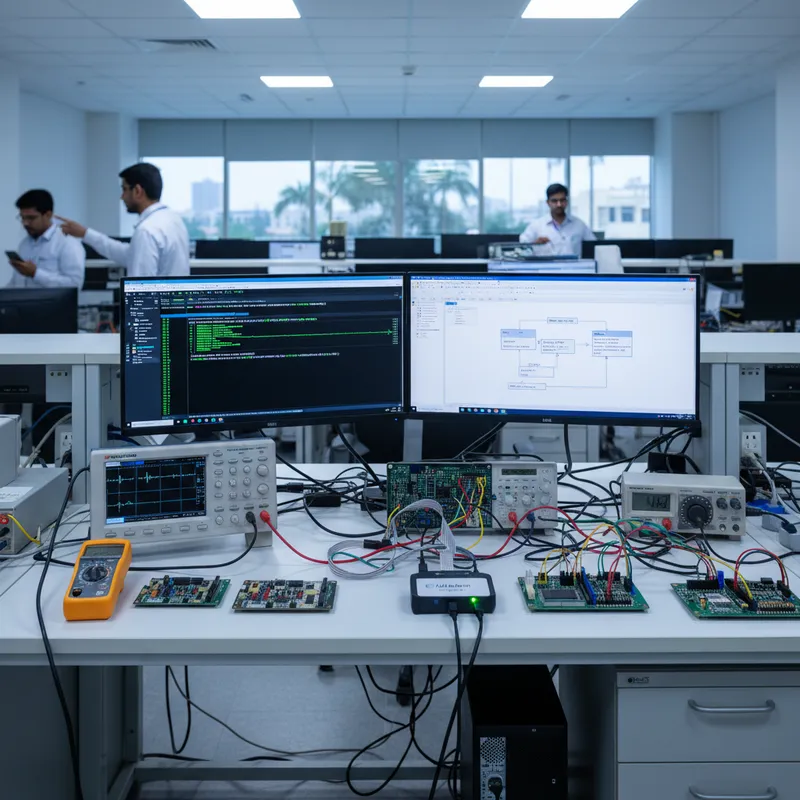
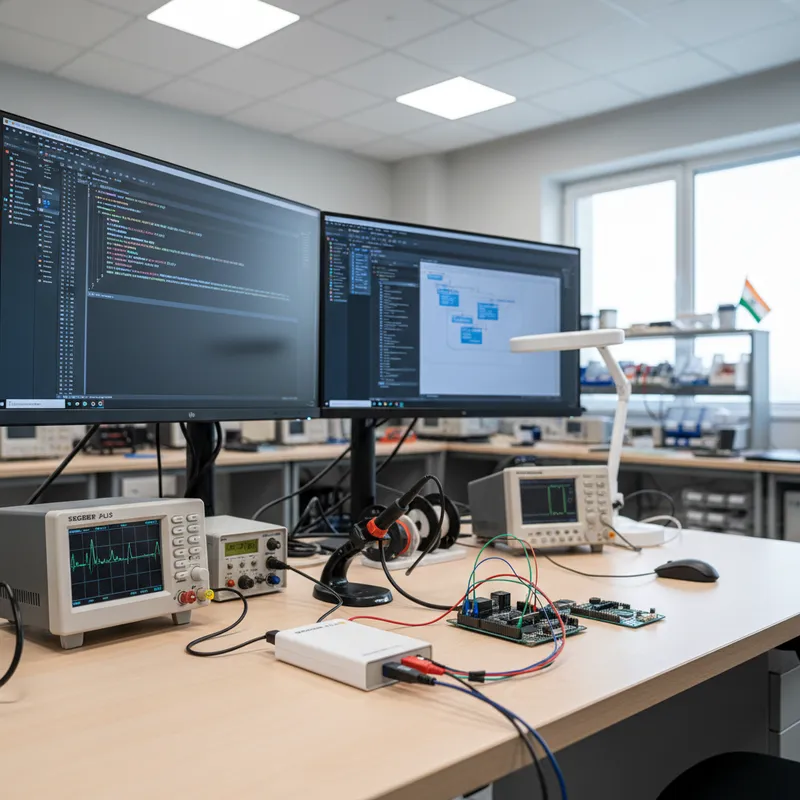
The Espressif ESP32 is among the most widely deployed Wi-Fi microcontrollers in Indian product engineering. Walk into any startup hardware team in Bengaluru, Pune, Chennai, or Hyderabad and you will find ESP32-based prototypes on every bench, solar monitoring gateways, smart energy sub-meters, asset tracking nodes, retail kiosks, building automation controllers, and a long tail of consumer IoT devices heading into Indian and export production. The chip is cheap, the SDK (ESP-IDF) is open and well-supported, and the Espressif documentation is excellent. For early-stage prototyping this is a great story.
But the moment an Indian team starts shipping ESP32 products at commercial volume, the debug story needs to level up. ESP-PROG and the on-chip USB-Serial-JTAG bridge on the newer parts are perfectly serviceable for board bring-up, but they do not give teams unlimited flash breakpoints (included with J-Link PLUS and above), high-throughput RTT (Real-Time Transfer), SystemView RTOS profiling, or the multi-core Ozone timeline that a serious commercial Wi-Fi/BLE/Matter project eventually needs. This is where SEGGER J-Link fits. This guide explains how J-Link supports the Espressif ESP32 family, which probe to buy for Indian ESP32 work, and where Flasher fits into production programming. GSAS Micro Systems is an authorized SEGGER engineering partner in India, every tool discussed here is available with INR invoicing and local engineering support.
The ESP32 family in 2026
Espressif has expanded the ESP32 line into a full microcontroller family spanning two different CPU architectures:
- ESP32 (classic): dual-core Xtensa LX6, Wi-Fi 4 + Bluetooth Classic/BLE. Still the workhorse for cost-sensitive Indian consumer IoT.
- ESP32-S2: single-core Xtensa LX7, Wi-Fi 4, native USB. Used in some HMI and USB-peripheral designs.
- ESP32-S3: dual-core Xtensa LX7 with vector instructions for AI acceleration, Wi-Fi 4 + BLE 5. The current sweet spot for Indian edge-AI-at-the-sensor designs and voice-enabled products.
- ESP32-C3: single-core 32-bit RISC-V (RV32IMC), Wi-Fi 4 + BLE 5. The low-cost RISC-V entry point, positioned by Espressif as a drop-in successor to the ESP8266 in many Indian consumer designs.
- ESP32-C6: single-core RISC-V, Wi-Fi 6 + BLE 5 + 802.15.4 (Thread / Matter / Zigbee). This is the part Indian Matter and Thread product teams are adopting for 2026 launches.
- ESP32-H2: RISC-V, BLE 5 + 802.15.4, no Wi-Fi. Thread and Zigbee co-processor role.
- ESP32-P4: high-performance dual-core RISC-V with MIPI DSI/CSI, targeted at HMI and camera products.
The important architectural split for debug purposes is Xtensa versus RISC-V. The classic ESP32 and the S2/S3 are Xtensa cores, a Cadence-licensed architecture. The C3, C6, H2, and P4 are RISC-V. These two paths are supported very differently across the debug tool ecosystem, and J-Link is no exception.
SEGGER J-Link support for ESP32: what actually works
SEGGER has been steadily expanding J-Link coverage across the ESP32 family, but support status varies by variant and by the specific J-Link software version. Before committing a program, always check the current SEGGER wiki and the release notes for your licensed J-Link software version to confirm support for your specific ESP32 part number. The summary below reflects the general picture in 2026, but Espressif silicon evolves quickly.
- RISC-V ESP32 variants (C3, C6, H2, P4): J-Link’s RISC-V debug path supports these parts, because they are standard RV32IMC (or extended) cores speaking the RISC-V debug specification. RTT, unlimited flash breakpoints (on J-Link PLUS and above), Ozone, and SystemView all work on the RISC-V side the same way they work on any other SEGGER-supported RISC-V chip.
- Xtensa ESP32, S2, S3: SEGGER provides J-Link support for Xtensa LX6 and LX7 cores through a dedicated code path that Espressif and SEGGER have coordinated on. The feature level (flash breakpoints, RTT, Ozone integration) depends on the specific J-Link software release. Verify your exact needs against SEGGER’s current documentation before purchasing, do not assume feature parity with the mature Cortex-M path.
For the majority of Indian ESP32 commercial products, which in 2026 are increasingly ESP32-C3, C6, S3, and P4, the RISC-V and Xtensa paths both get the team the core upgrade they need over ESP-PROG: unlimited flash breakpoints (on J-Link PLUS and above), serious RTT throughput, and tooling that will already be familiar from their STM32 or Nordic work.
Which J-Link model for ESP32 work
- J-Link BASE Compact: entry-level for hobby or early-prototype ESP32 work. Commercial licensing, smaller form factor. Pair with ESP32-C3 / C6 RISC-V parts on a low-volume project.
- J-Link PLUS / PLUS Compact: the everyday choice for Indian teams shipping ESP32 commercial products. Unlimited flash breakpoints, up to 1 MB/s download speed, USB 2.0 Hi-Speed, commercial license. Use this for serious ESP32-S3 and ESP32-C6 work.
- J-Link ULTRA: USB 2.0 Hi-Speed with download speeds up to 4 MB/s and high-speed RTT. Worth the upgrade when the ESP32 firmware is streaming heavy Wi-Fi or BLE stack telemetry, Matter commissioning traces, or audio/voice inference logs.
- J-Link PRO: adds Ethernet, so the probe can sit on the lab network away from the debug PC. For ESP32 testbeds where the target sits in a powered lab rig (solar simulators, Indian BIS EMI test chambers) and a ground loop between the debugger PC and the target must be avoided, pair the probe with the separate SEGGER J-Link Isolator: galvanic isolation is not built into the probe itself.
For teams already carrying J-Links for their Cortex-M work on STM32, Nordic, NXP, or Renesas, the same probe works on ESP32, which is the single biggest argument for bringing SEGGER into an Indian ESP32 lab. One probe per engineer, one driver stack, one Ozone install, across every chip on the bench.
RTT for ESP32 Wi-Fi, BLE, and Matter stack debug
This is where the upgrade from ESP-PROG to J-Link pays for itself. ESP32 firmware in production volume increasingly runs dense networking stacks, Wi-Fi 4 or Wi-Fi 6, BLE 5, Matter over Thread or over Wi-Fi, ESP-MESH, ESP-NOW. All of these stacks generate prolific diagnostic output during commissioning and during edge-case failure investigation.
Putting that output onto a UART does two things a commercial project cannot afford: it burns physical pins on the production board, and it slows the firmware down to the UART baud rate, which distorts the real-time behavior of the exact Wi-Fi or BLE code under investigation. RTT eliminates both problems. It uses the debug pins already in place, streams at rates that will not throttle the CPU, and does not stop the cores. For an Indian team chasing a Matter commissioning timeout or a Wi-Fi reconnection race condition on an ESP32-C6, RTT is the logging mechanism that actually works. See the Cortex-M hardfault debug with RTT guide for the broader RTT workflow and the RTT reference post for deeper architectural detail.
SystemView for FreeRTOS-based ESP32 projects
ESP-IDF is built on FreeRTOS. Almost every ESP32 commercial project has FreeRTOS tasks, one for the Wi-Fi stack, one for the BLE stack, one for the application, one for sensor sampling. When timing bugs appear on the bench, raw task counters are a blunt instrument. SystemView instruments FreeRTOS scheduling events (task switches, ISR entries, semaphore operations) and streams them live over RTT to the SystemView host application, which renders them on a timeline aligned to microseconds. For Indian teams debugging why an ESP32-S3 Matter commissioning fails under specific BLE peripheral churn, SystemView often reveals the priority inversion or the ISR stall that pure print logging would never expose. The SystemView RTOS profiling guide and the SystemView v4 ELF integration post cover the workflow in detail.
Multi-core Ozone debug on ESP32-S3 and ESP32-P4
The dual-core ESP32 variants (classic, S3, and the upcoming P4) need a debugger that can coordinate two cores. Ozone supports multi-core debug workflows the same way it handles i.MX RT1170 and RP2350 work, the multi-core debug guide walks through the principles, which apply directly to ESP32-S3 debug sessions where one core is running the Wi-Fi driver and the other is running the application task loop.
Flasher for ESP32 production programming
Most Indian ESP32 production lines use esptool.py over USB-serial. This is fine for low-to-medium volume, it works, it is free, and the EMS operators know it. But it is slow for a real production line: each board takes tens of seconds at best, the UART flow control is not especially robust on long harnesses, and there is no HSM-backed Root-of-Trust injection path.
SEGGER Flasher is an alternative for higher-volume Indian ESP32 lines. Whether Flasher is the right choice for your specific ESP32 variant depends on the current SEGGER device database, confirm support before speccing it into your EMS purchase order. Where it fits, the advantages are the same ones Indian EMS teams already value on their STM32 and Nordic lines: standalone operation (no host PC on the line), deterministic cycle times, image signing and encryption workflows via Flasher Secure, and rack-scale parallel programming via Flasher ATE2.
For lower-volume Indian ESP32 production runs, Flasher Compact or Flasher PRO sit on the bench next to the J-Link the engineering team already owns, and the flash algorithm comes from the same SEGGER device database, so there is no line-versus-lab drift.
Buy SEGGER J-Link and Flasher for Espressif ESP32 in India from GSAS
GSAS Micro Systems supplies the full SEGGER range for Espressif ESP32 development and production in India. Whether you are a Bengaluru startup debugging an ESP32-C6 Matter prototype, a Pune energy-meter team shipping ESP32-S3 firmware in volume, or a Chennai consumer electronics brand moving from ESP-PROG to a proper commercial debug bench, we will help you pick the right J-Link model and verify SEGGER’s current support status for your exact ESP32 variant before you commit a purchase order. Visit our partner page at /partners/segger or contact our engineering team for a hands-on demo at any of our Bengaluru, Chennai, Hyderabad, Delhi NCR, Mumbai, or Pune offices.
Further reading
- SEGGER J-Link supported devices list, authoritative catalogue; check which ESP32 variant and core architecture your project targets before committing
- SEGGER Knowledge Base, J-Link, wiki articles covering J-Link configuration, script files, and device-specific notes
- SEGGER RTT, Real-Time Transfer technology overview
- SEGGER Ozone, standalone debugger product page
- SEGGER SystemView, the RTOS-aware profiling tool for FreeRTOS-based ESP32 projects
- Espressif ESP32 product family overview, silicon vendor reference for variant selection
- GSAS partner page, SEGGER, full tool, probe, and middleware range available in India
- GSAS blog, buying the right J-Link for your project
- GSAS blog, multi-core debug on dual-core Cortex-M targets, principles apply to ESP32-S3 and ESP32-P4
- GSAS blog, SEGGER RTT on Cortex-A/R Linux targets, companion workflow for heterogeneous ESP32 + AP designs
Interested in SEGGER tools?
Talk to our application engineers for personalized tool recommendations.
More from SEGGER
View all →
Meet the GSAS Team at electronica India 2026, Stall H3.I45
15 Sept · 3 min
J-Link Is Now Validated by ST for StellarStudio
13 Sept · 2 min
An AI Agent That Drives the Debugger: SEGGER and Embedder Connect J-Link to the Loop
13 Sept · 6 min
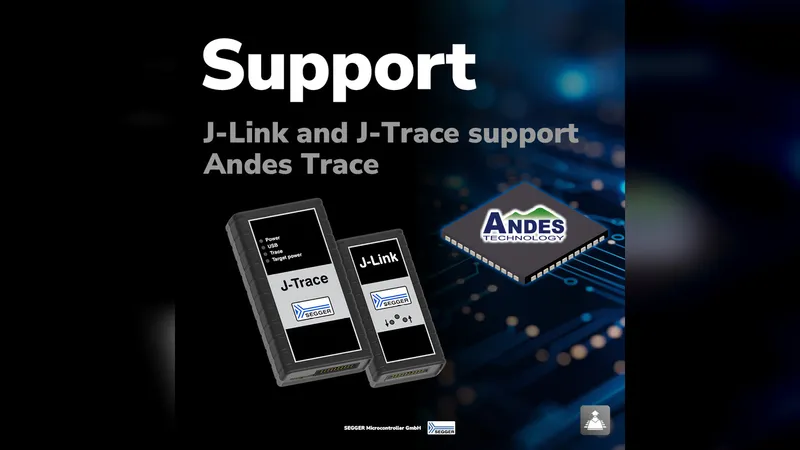
SEGGER J-Link and J-Trace Now Support Andes Trace: Why This Matters for RISC-V
21 Jul · 6 min
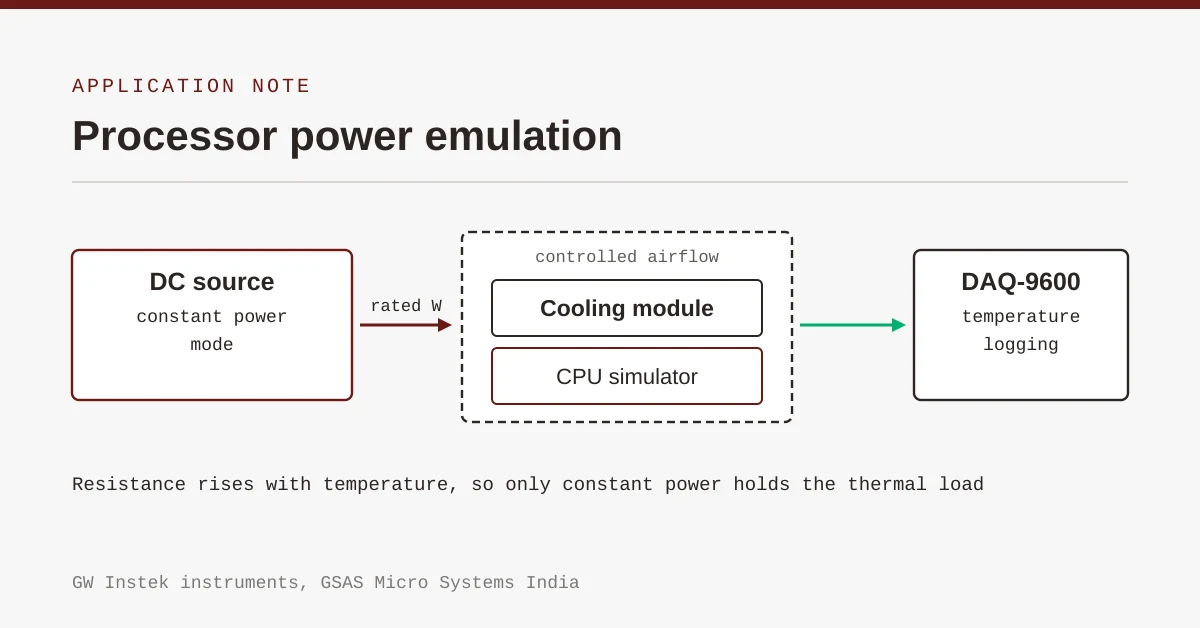
Emulating Processor Power for Thermal Testing: Why Constant Power
7 Oct · 7 min
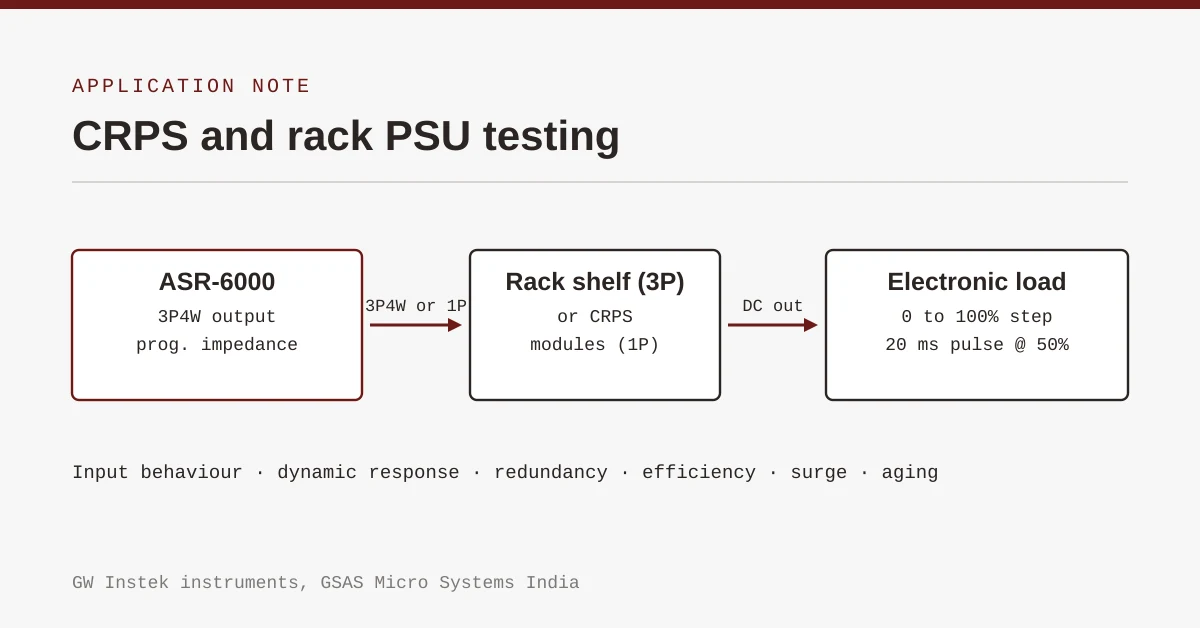
CRPS and Rack Power Supply Testing: The Six Tests That Matter
7 Oct · 7 min