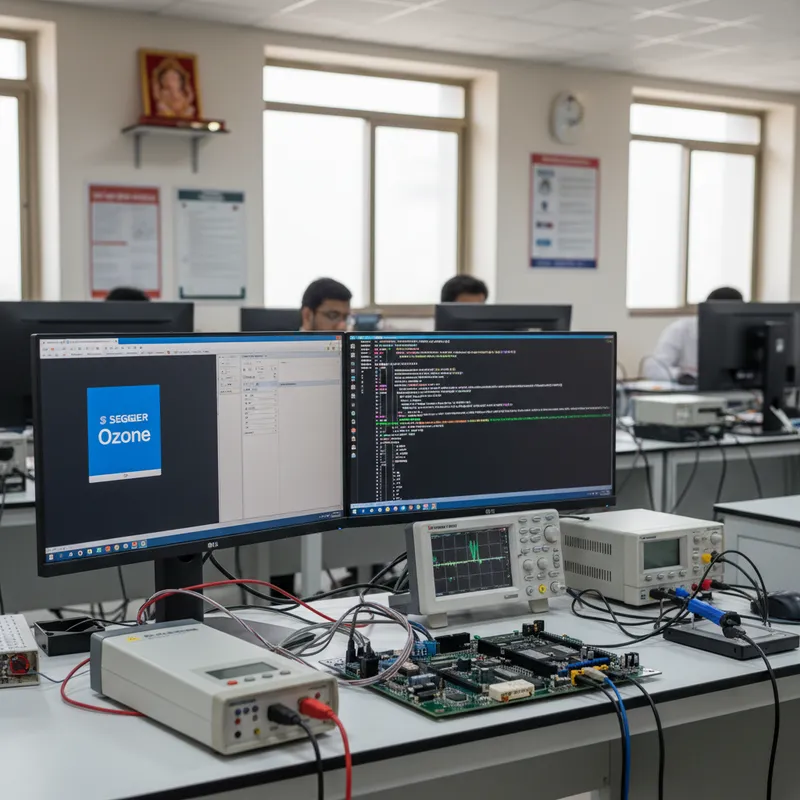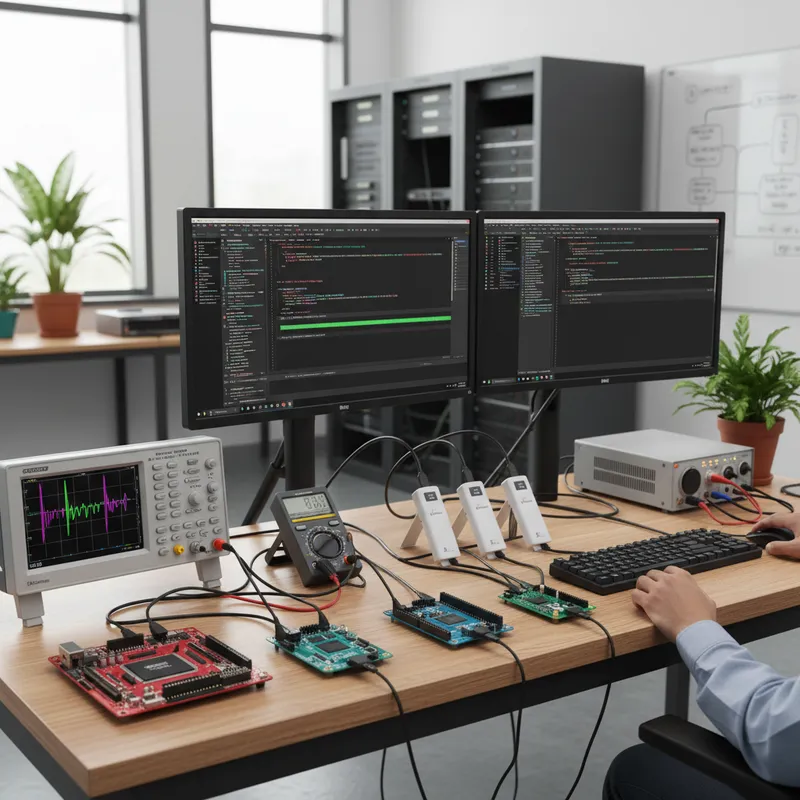
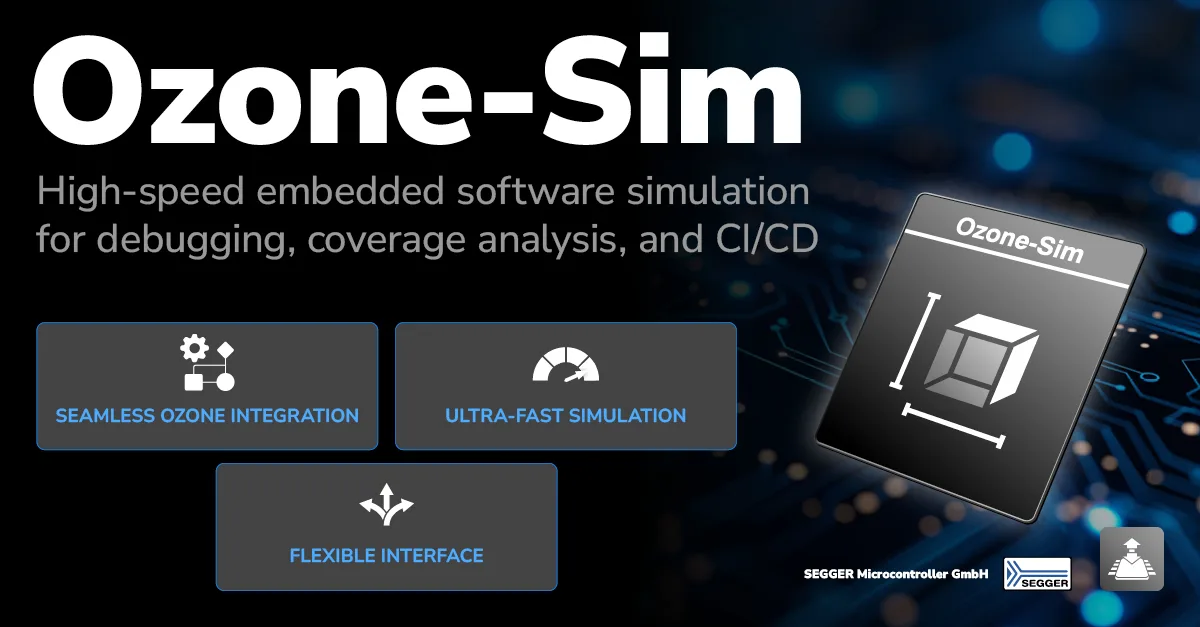
Embedded software development usually starts long before a prototype board exists. Firmware teams write drivers, bring up an RTOS, and build application logic while the hardware team is still routing a board or waiting on parts to arrive. SEGGER’s new Ozone-Sim, launched in June 2026, closes that gap. It is a high-performance instruction set simulator for Arm and RISC-V that runs an embedded application on an ordinary PC, with no target board and no J-Link probe required.
Ozone-Sim ships bundled inside the standard Ozone package but runs under its own license key. Full hardware-free simulation inside Ozone needs active licenses for both Ozone and Ozone-Sim. Once licensed, it lets a firmware team debug, profile and validate code in software long before silicon lands on the bench, and it keeps earning its place afterward, as a fast, repeatable stand-in for hardware-in-the-loop regression testing.
Why simulate instead of waiting for hardware
SEGGER built Ozone-Sim to solve a scheduling problem every embedded team recognizes: software is ready to test before hardware is.
“Software development often starts long before production hardware is available, yet development teams need fast and reliable ways to test and analyze their code,” says Johannes Lask, Product Manager at SEGGER. “By enabling software execution in a simulated environment, Ozone-Sim helps teams start development earlier, automate testing, and gain insight into application behavior throughout the development process.”
That statement describes exactly what changes for a firmware team once Ozone-Sim is in the toolchain: development, testing and analysis no longer wait on a populated board.
Ozone-Sim is not Ozone’s 2025 third-party simulator support
One point is worth clearing up, because SEGGER made two related but separate announcements. In September 2025, SEGGER opened Ozone, its debugger, to work with third-party debug probes and simulators over the GDB Remote Protocol, so engineers could drive Ozone with tools from other vendors. Ozone-Sim, launched separately in June 2026, is a different product: SEGGER’s own instruction set simulator for Arm and RISC-V, built into the Ozone package and needing no third-party hardware or software. This article is about the latter.
How Ozone-Sim works with Ozone
Ozone-Sim plugs into the same Ozone workflow engineers already use for hardware debugging, so there is no separate tool to learn. The workflow is five steps:
- Build the application. Compile and prepare the executable, the same as for any hardware target.
- Configure the simulation. Launch Ozone and select Ozone-Sim as the target/host interface.
- Load the executable. Import the compiled firmware into the simulation environment.
- Debug and analyze code. Run, inspect, profile and validate firmware behavior.
- Review execution insights. Examine execution metrics and backtraces.
Inside Ozone, Ozone-Sim carries the full analysis toolset: source-level debugging, profiling, backtracing, live instruction counters for real-time execution statistics, timeline analysis, execution statistics and code coverage. Ozone-Sim can display real-time code coverage and profiling just as when debugging on real hardware with J-Trace, and that coverage and profiling data can be exported to auto-identify functional or performance deviations. Switching between a real target and the simulated environment is straightforward, so a team can validate on Ozone-Sim first and confirm on hardware later without changing tools.
Speed is what makes that workflow practical rather than academic. Ozone-Sim runs embedded applications at hundreds of millions of instructions per second, up to 700 million instructions per second on an AMD Ryzen 9, according to SEGGER. At that rate, a simulated boot-to-idle run or a regression suite finishes in the time it would take to power up and re-flash a physical board.
Hardware-free testing and CI/CD
Beyond the interactive Ozone component, Ozone-Sim also runs as a standalone command-line simulator, purpose-built for headless, automated testing. That is the mode that matters for continuous integration: a build server has no J-Link, no target board and no operator, but it can still run the simulator on every commit.
The piece that makes this genuinely automatable is built-in semihosting. A simulated program can read configuration or test vectors as input, and write debug output, logs and results to files, all without any hardware I/O. A CI job can therefore pass test parameters on the command line, let Ozone-Sim execute the firmware, and collect structured results for a pass/fail gate, the same discipline software teams already expect from unit test runners, applied to embedded firmware.
Using Ozone-Sim in other IDEs
Ozone-Sim is not locked to the Ozone interface. It includes an integrated GDB server, so third-party debuggers and IDEs can connect over the standard GDB protocol. That covers Visual Studio Code, SEGGER Embedded Studio, or any generic GDB client already in a team’s workflow. A firmware engineer who prefers a different editor still gets hardware-free debugging, without adopting a new interactive tool.
Ozone-Sim currently targets Arm (Armv5 through Armv8, AArch32, Armv8-R AArch32, and a subset of Armv8.1-M including the M-Profile Vector Extension, Helium) and RISC-V (RV32 and RV64 with the A, C, D, E, F and M extensions), and it runs on Windows, macOS and Linux with modest host requirements.
Arm and RISC-V early software development
Because Ozone-Sim supports both Arm and RISC-V from day one, it fits directly into how new silicon is actually adopted. India’s RISC-V ecosystem, from IIT Madras’s Shakti cores and C-DAC’s Vega processors to commercial core IP from vendors like InCore Semiconductors, is moving from research to production, and one of the hardest parts of that transition is getting software teams productive before development boards are in hand. We covered that ecosystem in depth in SEGGER’s tooling for India’s RISC-V ecosystem. Ozone-Sim extends that story: a team building for Shakti, Vega, or an Arm-based SoC still in tape-out can start writing and testing drivers, RTOS ports and application code in software, and switch to Ozone on real silicon the moment boards arrive, with the same debugger and the same project setup.
Evaluate Ozone-Sim in India with GSAS
Getting a new simulator running correctly, licensed correctly, and wired into an existing build and CI pipeline is engineering work, not a shipping problem. GSAS Micro Systems is SEGGER’s engineering partner in India, and our field application engineers in Bengaluru, Hyderabad, Chennai, Pune, Mumbai and Delhi NCR help teams evaluate Ozone-Sim against their own firmware: setting up the 30-day evaluation, validating Arm and RISC-V targets including Shakti and Vega bring-up, and integrating the standalone simulator into a CI/CD test rig. That domain depth, not invoicing, is what an engineering partner is for. Reach out from Bengaluru, Hyderabad, Chennai, Pune, Mumbai or Delhi NCR and our FAEs will help you scope an evaluation.
Request a quote for Ozone-Sim licensing, book a demo, or talk to GSAS about integrating hardware-free simulation into your embedded workflow.
Source: SEGGER, Ozone-Sim product page (segger.com/products/development-tools/ozone-j-link-debugger/technology/ozone-sim/) and SEGGER press release, June 2026.
Also appears in:
Interested in SEGGER tools?
Talk to our application engineers for personalized tool recommendations.
More from SEGGER
View all →
Meet the GSAS Team at electronica India 2026, Stall H3.I45
15 Sept · 3 min
J-Link Is Now Validated by ST for StellarStudio
13 Sept · 2 min
An AI Agent That Drives the Debugger: SEGGER and Embedder Connect J-Link to the Loop
13 Sept · 6 min
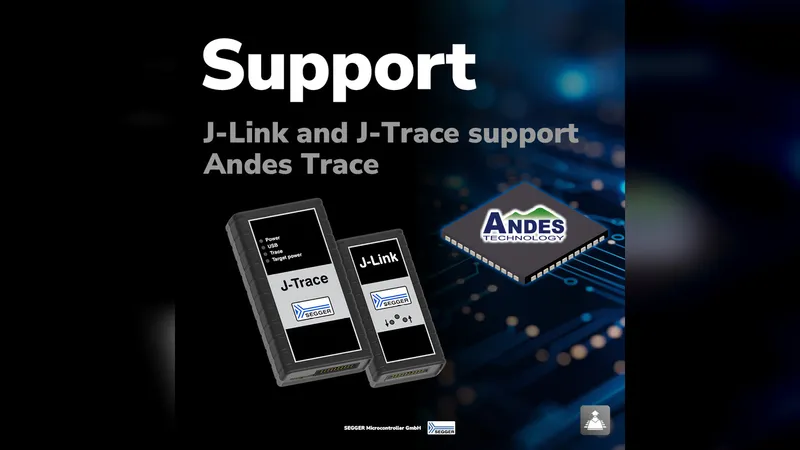
SEGGER J-Link and J-Trace Now Support Andes Trace: Why This Matters for RISC-V
21 Jul · 6 min
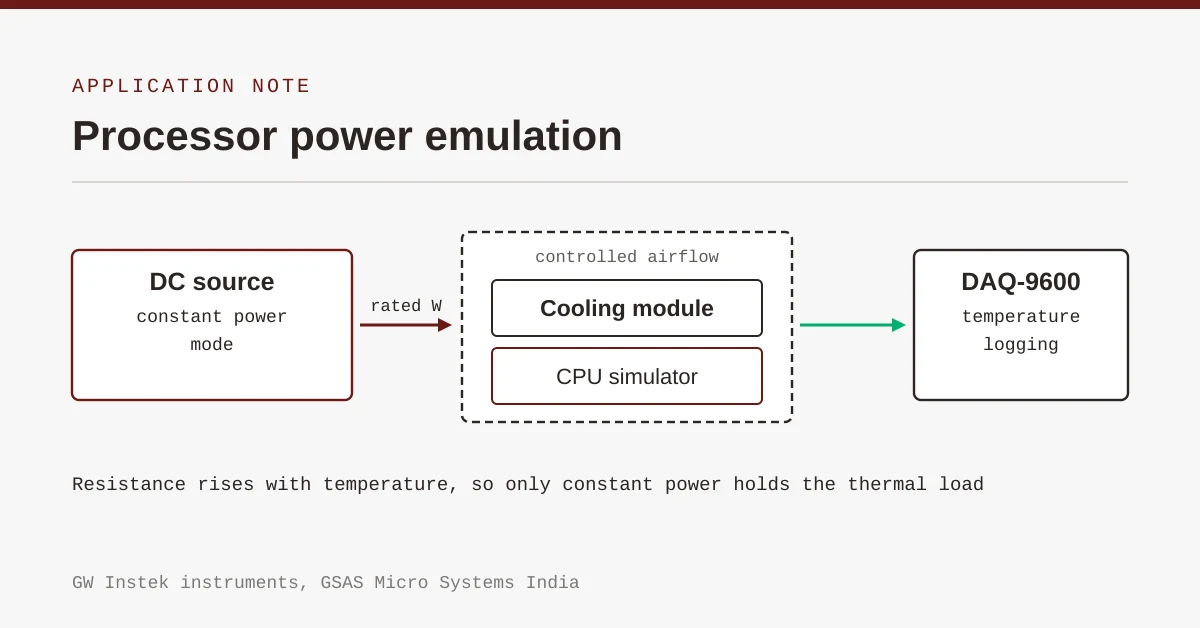
Emulating Processor Power for Thermal Testing: Why Constant Power
7 Oct · 7 min
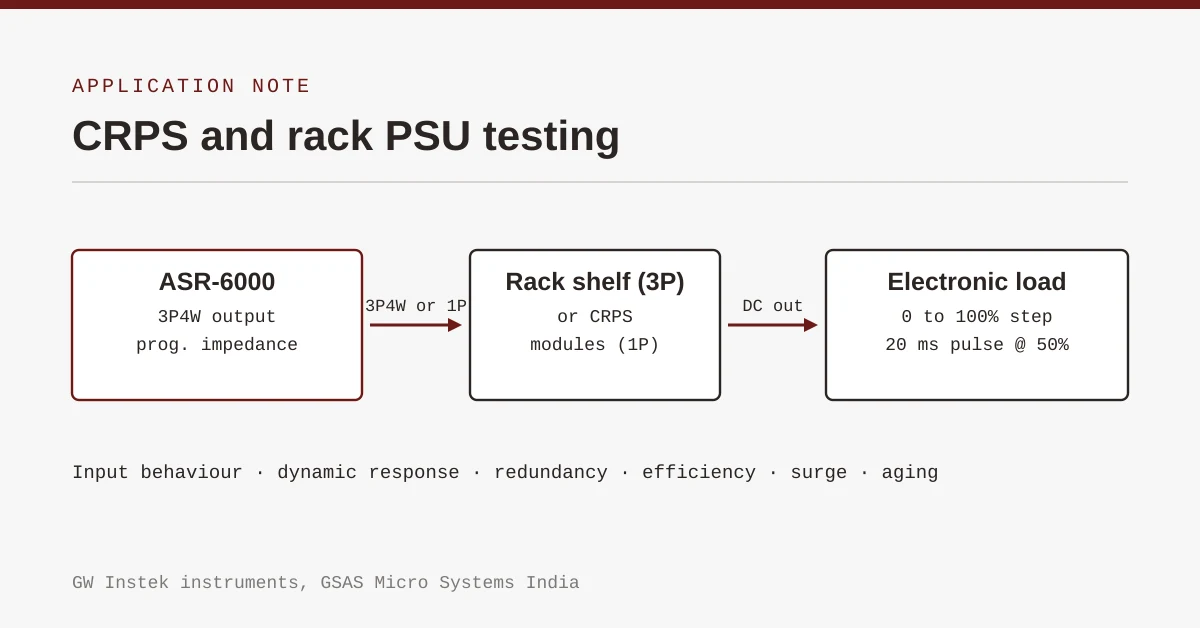
CRPS and Rack Power Supply Testing: The Six Tests That Matter
7 Oct · 7 min